
Waking up with a head that feels like it’s stuffed with wet cotton isn’t just annoying-it’s exhausting. If this has been your reality for more than three months, you aren’t dealing with a simple cold. You might be facing chronic sinusitis, formally known as chronic rhinosinusitis. This condition affects roughly 9% of the global population annually, turning daily life into a struggle with congestion, facial pressure, and a dull sense of smell. Unlike acute sinusitis, which clears up in weeks, chronic sinusitis is a persistent inflammatory state that requires a different approach to manage effectively.
The good news? It is manageable. Whether the root cause lies in stubborn allergies, structural blockages, or immune responses, modern medicine offers a clear path from diagnosis to relief. Let’s break down what is actually happening inside your sinuses, why standard antibiotics often fail, and when surgical intervention becomes the smarter choice.
Understanding the Diagnosis: More Than Just a "Bad Cold"
To treat chronic sinusitis, we first need to define it clearly. According to the European Position Paper on Rhinosinusitis and Nasal Polyps (EPOS) 2020 guidelines, a diagnosis requires at least two specific symptoms persisting for 12 weeks or longer. These symptoms are nasal obstruction or blockage, nasal discharge (including postnasal drip), facial pain or pressure, and a reduced or lost sense of smell.
If you’ve had four or more episodes of sinus infection in a year with symptom-free intervals in between, that is classified as recurrent sinusitis, not chronic. The distinction matters because the treatment strategies differ significantly. Chronic sinusitis is rarely about active bacterial infection alone; approximately 70% of cases involve underlying inflammatory or structural factors. This is why doctors rely on nasal endoscopy to look for pus or polyps, or CT scans to visualize mucosal changes deep within the sinus cavities.
There are three primary subtypes recognized by medical consensus:
- Chronic sinusitis without nasal polyps: Inflammation exists, but no growths obstruct the passages.
- Chronic sinusitis with nasal polyps: Soft, noncancerous growths develop in the lining of the sinuses, blocking drainage.
- Allergic fungal rhinosinusitis: A rare form triggered by an allergic reaction to naturally occurring fungi in the environment.
The Role of Allergies and Environmental Triggers
For many patients, the engine driving chronic inflammation is allergy. The American Academy of Allergy, Asthma & Immunology (AAAAI) notes that individuals with allergies face a 2.5 times higher risk of developing chronic sinusitis. When your immune system overreacts to pollen, dust mites, or pet dander, the sinus linings swell shut. Mucus gets trapped, creating a breeding ground for secondary issues.
Asthma plays a significant role here too. People with asthma have a 3-4 times higher risk of chronic sinusitis due to shared inflammatory pathways-a connection sometimes referred to as "one airway." If you have Samter’s triad (asthma, nasal polyps, and aspirin sensitivity), your case is even more complex, affecting about 9% of chronic sinusitis patients. In these scenarios, treating the nose often helps the lungs, and vice versa.
Environmental irritants also matter. Chronic exposure to tobacco smoke increases the risk of sinusitis by 35%. Even dry climates can exacerbate symptoms by drying out the mucosal lining, making it less effective at trapping particles and moving mucus. Using a humidifier in dry environments has been shown to reduce symptoms in 40% of patients, simply by keeping the nasal passages moist and functional.
First-Line Medical Management: What Actually Works
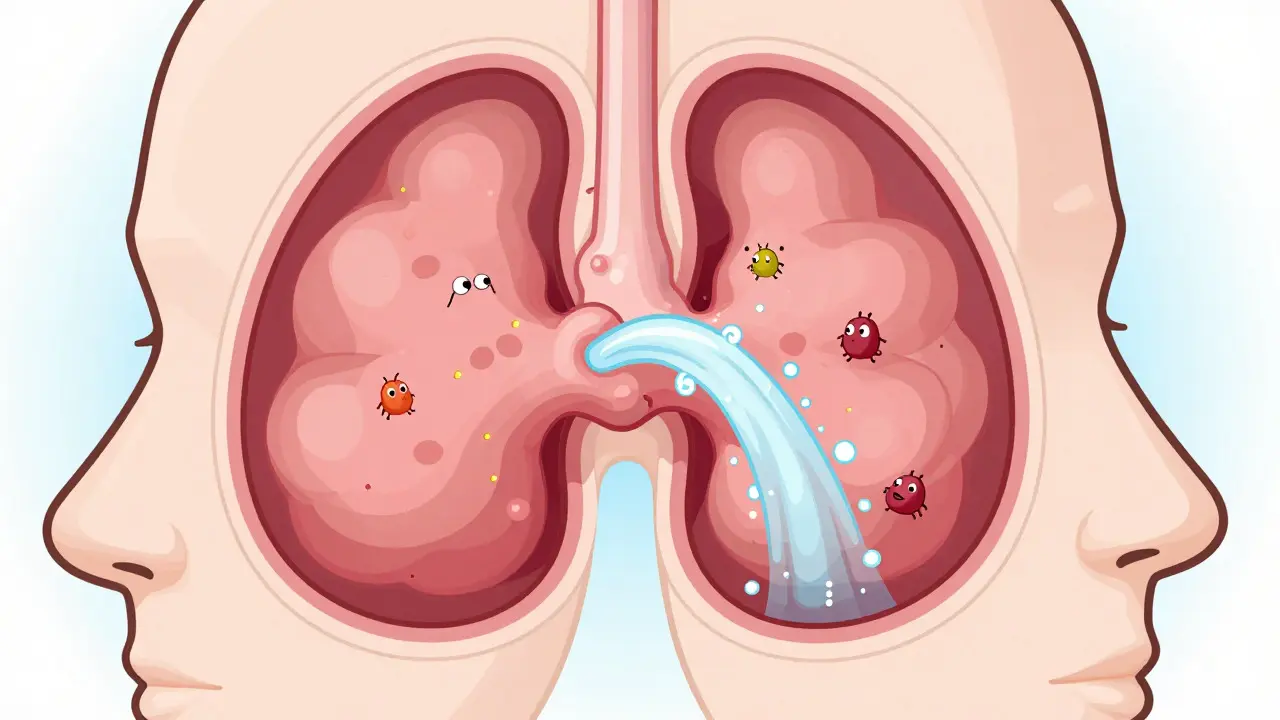
Before considering surgery or advanced biologics, standard protocol dictates a 12-week trial of medical management. The gold standard here is surprisingly simple: nasal saline irrigation combined with intranasal corticosteroid sprays.
Saline irrigation physically flushes out allergens, thick mucus, and inflammatory debris. Studies show that 80% of patients see improvement within 4-8 weeks of consistent use. However, technique matters. Use distilled or previously boiled water to avoid contamination, and aim the stream across the nasal septum rather than directly into it to prevent irritation.
Corticosteroid sprays like fluticasone (Flonase), budesonide (Rhinocort), and mometasone (Nasonex) tackle the inflammation itself. They reduce swelling in 60-70% of cases. The catch? Patience. These sprays don’t work instantly. Many patients stop using them after a few days because they don’t feel immediate relief, leading to the 55-65% adherence rate reported by the American Family Physician. Stick with it for at least four weeks to judge effectiveness.
What about antibiotics? Here is the hard truth: antibiotics usually don’t help chronic sinusitis unless there is a confirmed acute bacterial exacerbation. Since only a minority of chronic cases are driven by active bacteria, taking amoxicillin-clavulanate for a month often yields no benefit and contributes to resistance. Reserve antibiotics for when you have high fever, severe facial pain, and purulent discharge that suggests a new bacterial infection.
| Treatment Type | Mechanism of Action | Efficacy Rate | Key Considerations |
|---|---|---|---|
| Nasal Saline Irrigation | Physical removal of allergens/mucus | 80% improvement in 4-8 weeks | Must use sterile water; daily use required |
| Intranasal Corticosteroids | Reduces mucosal inflammation | 60-70% reduction in swelling | Delayed onset; consistency is critical |
| Antihistamines | Blocks histamine response in allergies | 45-60% symptom reduction | Only effective if allergies are the primary trigger |
| Oral Steroids | Systemic anti-inflammatory effect | High short-term efficacy | Limited to short courses due to side effects |
Advanced Therapies: Biologics and Desensitization
If standard sprays and rinses fail, especially in cases involving nasal polyps, the landscape of treatment has shifted dramatically with the advent of biologic therapies. These are monoclonal antibodies designed to target specific proteins involved in the inflammatory process.
Dupilumab (Dupixent), approved by the FDA in 2019 for chronic rhinosinusitis with nasal polyps, targets interleukin-4 and interleukin-13. Clinical trials demonstrated a 50-60% reduction in polyp size and a 30-40% improvement in symptoms. Other options include omalizumab (Xolair) and mepolizumab (Nucala), which show 35-55% efficacy in reducing polyp-related symptoms. By 2027, experts project that biologics will treat 25-30% of severe chronic sinusitis cases, potentially reducing the need for surgery by 15-20%.
For those with Samter’s triad, aspirin desensitization treatment is another powerful tool. After successful desensitization, 70-80% of patients report significant symptom improvement. This involves gradually introducing small amounts of aspirin under medical supervision to reset the immune response.

Surgical Options: When Medicine Isn't Enough
Surgery is not a cure-all, but it is a vital tool when medical management fails after 12 weeks or when structural abnormalities block drainage. The goal of surgery is never to remove the sinuses entirely, but to widen the natural openings so that medications can reach the inflamed tissue and mucus can drain properly.
Functional Endoscopic Sinus Surgery (FESS) is the gold standard. Using a tiny camera and specialized instruments, an ENT specialist removes bone and tissue blocking the sinus openings. Success rates for symptom improvement range from 75-90%, particularly in cases with structural issues like a deviated septum. Most patients return to normal activities within 7-10 days.
A less invasive alternative is balloon sinuplasty. Approved by the FDA in 2005, this procedure uses a catheter-mounted balloon to dilate the sinus passages without removing tissue. It shows 70-80% efficacy in improving drainage and offers a faster recovery time of 3-5 days. However, some studies suggest it may have lower long-term effectiveness compared to FESS for complex cases.
If nasal polyps are present, a polypectomy may be performed during FESS. While this provides immediate symptom relief in 85% of cases, recurrence rates hit 40-50% within 18 months if ongoing medical management (like steroid sprays) is not maintained. Surgery opens the door; medication keeps it open.
Living With Chronic Sinusitis: Long-Term Strategies
Managing chronic sinusitis is a marathon, not a sprint. Quality of life impacts are significant, with 65% of patients reporting interference with daily activities. Untreated, there is a small risk (less than 0.5%) of complications spreading to the eyes, brain, or spine, though this is rare.
Adopting a multidisciplinary approach yields the best results. Coordinated care between ENT specialists, allergists, and immunologists shows 35-45% better outcomes than seeing a single provider. Keep a symptom diary to identify triggers, stay hydrated to thin mucus, and consider emerging therapies like microbiome-based probiotics, which early NIH-funded studies suggest may reduce inflammation in 30-40% of patients as an adjunct therapy.
Remember, chronic sinusitis is primarily an inflammatory condition. Treating it requires addressing that inflammation consistently, whether through daily rinses, targeted biologics, or surgical restoration of anatomy. You do not have to live with constant congestion.
How long does it take for nasal steroid sprays to work?
Intranasal corticosteroids typically take 1 to 2 weeks to start showing noticeable effects, with full benefits realized after 4 to 8 weeks of consistent daily use. Many patients quit too early because they expect immediate decongestion similar to oral decongestants.
Is chronic sinusitis caused by bacteria?
Rarely. About 70% of chronic sinusitis cases are driven by inflammation, allergies, or structural issues rather than active bacterial infection. Antibiotics are only recommended if there is evidence of an acute bacterial exacerbation, such as high fever or sudden worsening of purulent discharge.
When should I consider sinus surgery?
Surgery is generally considered after a failed 12-week trial of maximal medical therapy, including saline irrigation and intranasal steroids. It is also indicated if you have structural abnormalities like a severely deviated septum or large nasal polyps that physically block drainage despite medication.
Can allergies cause chronic sinusitis?
Yes. Individuals with allergies have a 2.5 times higher risk of developing chronic sinusitis. Uncontrolled allergic rhinitis leads to chronic swelling of the sinus linings, preventing proper mucus drainage and creating a cycle of inflammation.
What are biologic therapies for sinusitis?
Biologics are injectable medications like dupilumab (Dupixent) that target specific immune system proteins causing inflammation. They are used for severe chronic sinusitis with nasal polyps that hasn't responded to other treatments, offering significant reduction in polyp size and symptom improvement.