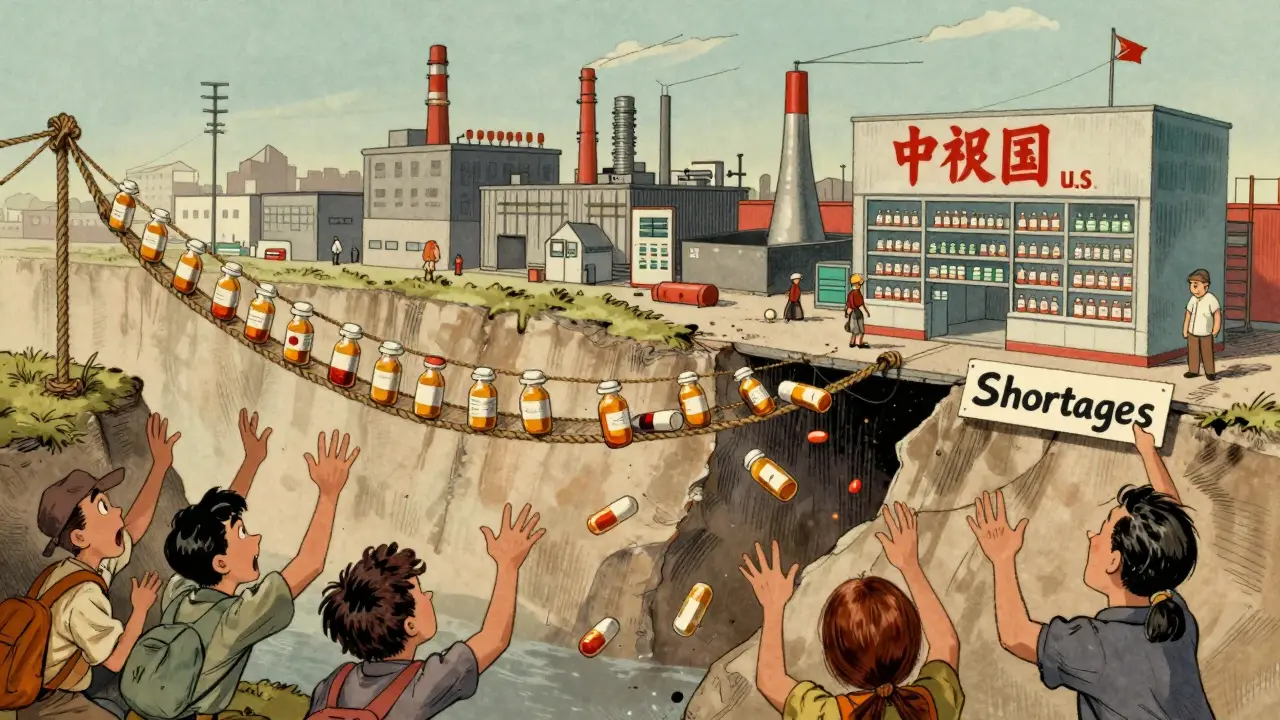
When you pick up your prescription, you probably don’t think about where the active ingredients came from. But if you’ve noticed your medication is out of stock more often lately, or your doctor switched you to a different brand, you’re not imagining it. Drug shortages are rising-and the root cause isn’t a lack of demand. It’s the fragile, overextended global supply chains that make up modern pharmaceutical manufacturing.
How Did We Get Here?
For decades, drugmakers chased efficiency. They outsourced the production of active pharmaceutical ingredients (APIs) to countries with lower labor costs and fewer environmental regulations. By 2025, nearly 80% of APIs used in U.S. medicines come from just two countries: China and India. That’s not just convenient-it’s a structural dependency. The U.S. stopped building large-scale API plants decades ago. Why build expensive, regulated factories when you can buy from overseas for half the price? But efficiency came at a cost. When the pandemic hit, global shipping slowed, ports backed up, and suddenly, the pills in your medicine cabinet weren’t guaranteed. Even today, the average lead time for shipments from China to the U.S. has increased by 50% since 2019. A single factory shutdown in Shanghai or a customs delay in Mumbai can ripple across the entire supply chain. One small plant making a critical antibiotic ingredient can cause nationwide shortages of dozens of generic drugs.Why Are Drug Shortages Getting Worse?
It’s not just delays. It’s fragility. Most drug manufacturers rely on a single supplier for their APIs. If that supplier faces a fire, a regulatory inspection, or a political dispute, there’s no backup. In 2024, when Chinese ports shut down for 12 days due to labor unrest, over 120 drug products went out of stock in the U.S. alone. The FDA reported 250 active shortages that year-up 40% from 2022. Tariffs are making it worse. The U.S. added 12 new tariff categories between 2024 and 2025, hitting $340 billion in imports-including many raw materials used in medicine. Some manufacturers passed those costs to consumers. Others cut corners, reducing quality control or switching to cheaper, less reliable suppliers. The result? More recalls, more delays, more shortages. And it’s not just China. India, which produces 40% of the world’s generic drugs, is tightening its own export rules. In 2025, India imposed new export restrictions on 14 key APIs to protect its domestic market. Suddenly, U.S. hospitals had to scramble to find alternatives for drugs like metformin, heparin, and ciprofloxacin.What’s Being Done?
Companies are waking up. In 2025, 78% of pharmaceutical manufacturers are actively diversifying their supplier base-a jump from just 35% in 2020. Some are turning to Mexico and Eastern Europe. Others are investing in small, automated “microfactories” that can produce critical drugs locally. One major U.S. drugmaker cut its supply chain disruption days from 120 to 45 in a year by adding a second API supplier in Spain and a third in Canada. Nearshoring isn’t cheap. Moving production from China to Mexico can save 30-40% on shipping, but labor costs there are 15-20% higher than in Asia. Still, the trade-off is worth it for drugs that can’t afford delays-like insulin, epinephrine, or cancer treatments. One Fortune 500 medical company achieved 99.2% on-time delivery after shifting insulin production to a facility in Monterrey. Their inventory buffer? Up 15% since 2023. Digital tools are helping too. AI-driven forecasting now predicts supply risks weeks in advance. Blockchain systems track every batch of API from factory to pharmacy, reducing quality disputes by 65%. And more companies are using digital twins-virtual models of their entire supply chain-to simulate disruptions before they happen.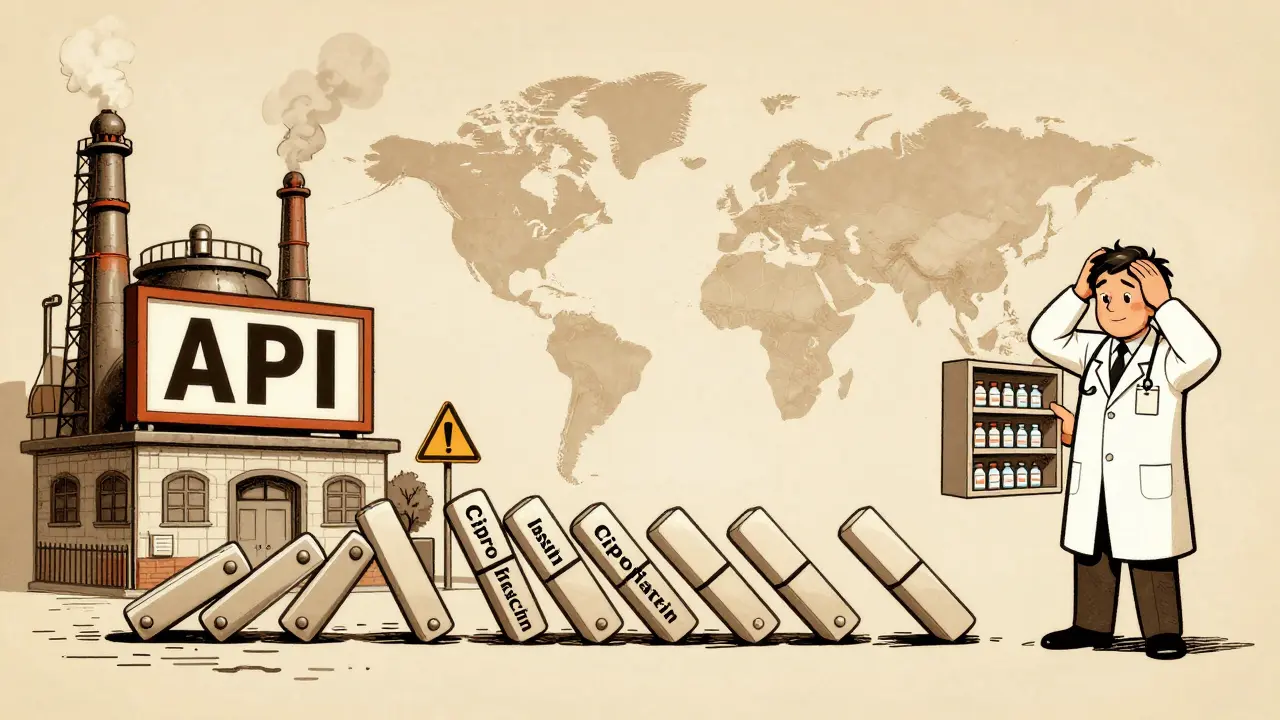
Why Can’t We Just Make Everything in the U.S.?
It sounds simple: bring production home. But it’s not that easy. Manufacturing APIs in the U.S. costs 4.8 times more than in China, according to IMD Business School. The infrastructure doesn’t exist. Skilled workers? In short supply. Regulatory approval? Takes years. Building a new API plant can cost $500 million and take five years to become fully operational. Plus, the global market doesn’t work that way. The U.S. doesn’t produce enough raw materials-like solvents, catalysts, and specialty chemicals-to support full domestic production. Many of those inputs come from the same countries we’re trying to reduce dependence on. So reshoring isn’t the answer. But over-reliance is. The goal now isn’t to eliminate foreign manufacturing. It’s to avoid putting all your eggs in one basket.What This Means for Patients
If you take a generic drug, you’re already feeling the impact. In 2025, 56% of patients reported difficulty getting their usual medication, according to a National Foreign Trade Council survey. Some switched to more expensive brand-name versions. Others skipped doses. A 2025 study in Health Affairs found that patients who missed insulin doses due to shortages were 30% more likely to be hospitalized. Doctors are changing how they prescribe. Many now keep a list of alternatives for every critical drug. Pharmacists are calling suppliers daily just to check stock. And hospitals are stockpiling more than ever-up 15% in inventory since 2023. But that’s not a long-term fix. Stockpiles expire. And if the next disruption hits during a global crisis, even those buffers won’t last.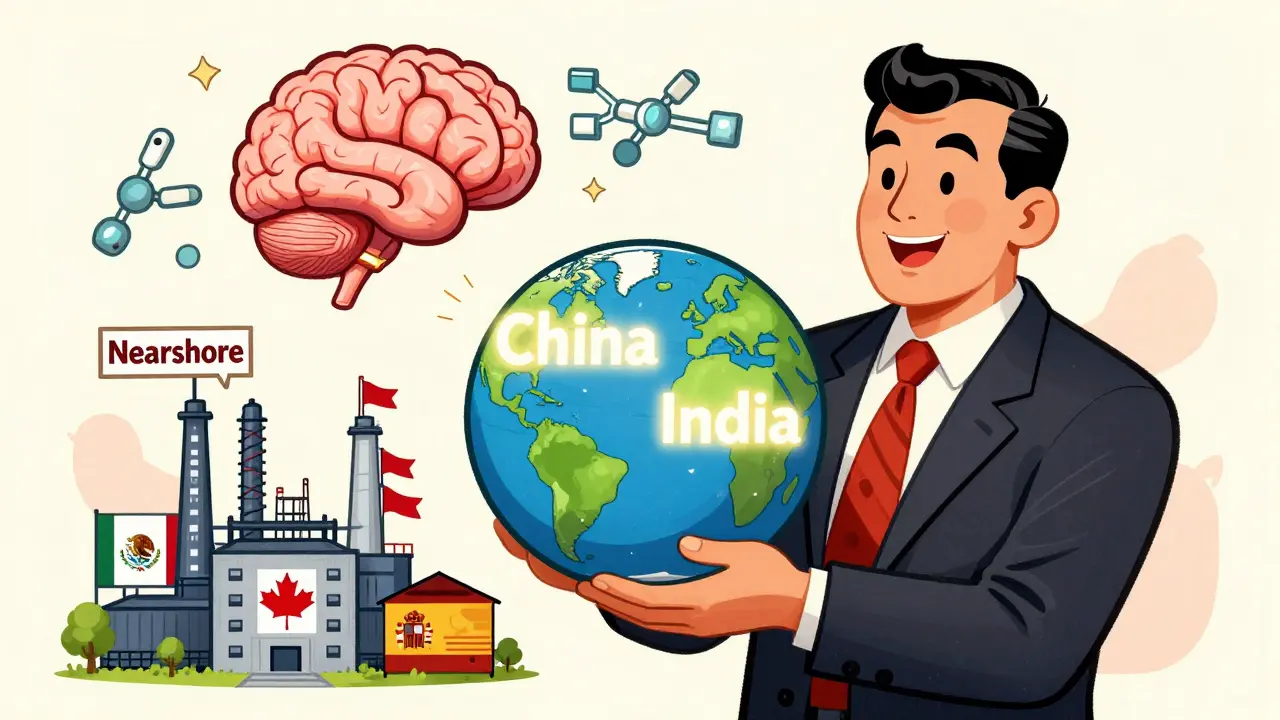
What’s Next?
The shift is happening-but slowly. By the end of 2025, 40% of pharmaceutical companies will have adopted multi-shoring strategies, sourcing from at least three different regions. The U.S. government is pushing for it too. The Inflation Reduction Act now includes $2.3 billion in grants to rebuild domestic API capacity, and the FDA is fast-tracking approvals for new suppliers. But the biggest change isn’t policy-it’s mindset. Companies are realizing that resilience isn’t optional. It’s survival. The days of choosing the cheapest supplier are over. Now, they’re choosing the most reliable one. For patients, that means better access to life-saving drugs. For manufacturers, it means higher costs and more complexity. But it also means fewer empty shelves and fewer patients left behind.What You Can Do
If you rely on a prescription drug, don’t wait for a shortage to act. Talk to your doctor now. Ask:- Is this drug made with ingredients from China or India?
- Is there a generic alternative from a different manufacturer?
- Can we keep a 30- to 90-day supply on hand?

9 Comments
so like... we just stopped making medicine stuff here? why? didn't we used to make all this?
i’ve had to switch my blood pressure med three times in the last year. no one tells you this stuff until you’re stuck without it.
we outsourced the pills and now we’re surprised when the pills disappear? wow. real brilliant.
the microfactories thing is actually kinda cool. small, automated, local - sounds like the future of a lot of stuff. not just medicine.
it’s not about nationalism. it’s about not letting your life depend on the whims of foreign bureaucrats and shipping delays. if your insulin comes from a factory that shuts down because someone didn’t get paid, that’s not capitalism - that’s negligence.
my cousin works in pharma logistics. she says the blockchain tracking is a game changer - no more guessing if a batch was stored right. but it’s slow to roll out. most small suppliers still use spreadsheets and hope.
they’re talking about ‘resilience’ like it’s a buzzword. meanwhile, my grandma’s heart meds are gone again. the FDA is slow, the companies are greedy, and we’re just supposed to ‘talk to our doctors’? like that’s gonna fix the system.
just read a report from a med school in mexico - they’re building a whole api hub near the border. not to replace china, but to be a backup. smart. we need more of this. also, the guy who wrote this? he gets it. real talk.
india’s just protecting its own people now. guess we can’t expect them to be the world’s pharmacy forever.
Write a comment