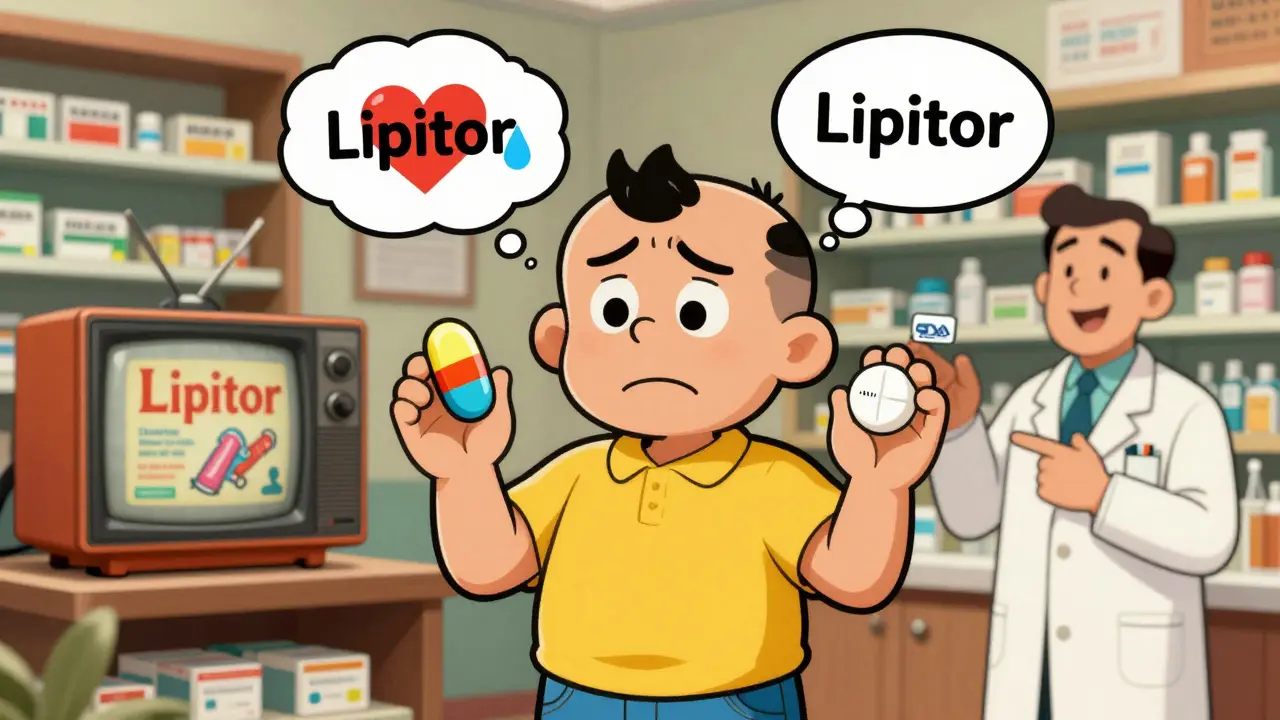
When you walk into a pharmacy and see two pills side by side-one labeled with a familiar brand name, the other a plain, cheaper generic-you might not think twice. But for millions of people, that choice triggers a gut reaction: Is the generic safe? Will it even work? The science says yes. The reality? Many still don’t believe it. And the gap between what we know and what we feel gets wider with age.
Why Generics Are Just as Good (But Still Feared)
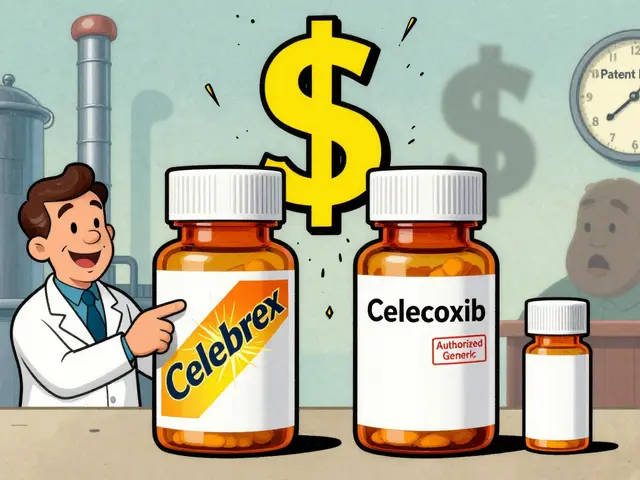
Generic drugs aren’t knockoffs. They’re exact copies of brand-name medicines in active ingredients, dosage, and how they work in your body. The FDA requires them to be bioequivalent-meaning they deliver the same effect, within a tiny margin of error. In the U.S., 9 out of 10 prescriptions filled are for generics. Yet they make up only about a quarter of total drug spending. Why? Because people are still paying more for the brand name-even when the generic costs 80% less. The problem isn’t science. It’s psychology. People don’t trust what they can’t see. A brand name feels like quality. A plain white pill with a code on it? It feels like a gamble. Studies show 35% of people think generics are less effective. Even when they know the facts, they still believe the brand works better. And that belief doesn’t change easily.Older Generations: Trusting the Brand, Not the Bottle
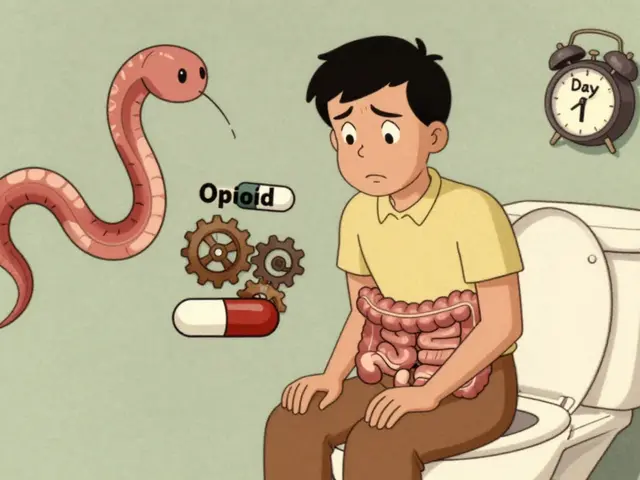
Baby Boomers-those born between 1946 and 1964-grew up in an era where brand names were everything. Think Tylenol, Advil, or Lipitor. These weren’t just drugs; they were household names, advertised on TV, recommended by doctors, and tied to trust. Many of them remember when generics were rare, poorly made, or even counterfeit. That memory sticks. A 68-year-old who’s been taking a branded blood pressure pill for 20 years isn’t going to switch just because a pharmacist says it’s the same. They’ve felt the effect. They’ve seen their doctor smile when the prescription was filled. They’ve trusted that logo. Switching feels like risking their health for a few dollars. And in their mind, it’s not worth it. Even healthcare providers who’ve been practicing for decades sometimes hesitate. One study found that only about half of doctors believed generics were as safe or effective as branded drugs. That skepticism trickles down. If your doctor says, “I’d take the brand myself,” you’re going to listen.Gen X and Millennials: More Skeptical, More Informed
Gen X (born 1965-1980) and Millennials (born 1981-1996) grew up with more information-and more advertising. They’ve seen drug ads, read online reviews, and shopped for prescriptions on apps. They know generics are cheaper. They’ve probably used them. But they’re also more likely to question everything. This group doesn’t trust brands blindly. They look up side effects. They check drug interaction apps. They compare prices. And they’re more likely to accept generics-if they’re convinced they’re safe. But here’s the catch: they need proof, not promises. A pharmacist saying “it’s the same” isn’t enough. They want data. Studies. Labels. Batch numbers. One 42-year-old told me she switched to a generic statin after reading a 2022 FDA report that tracked 12,000 patients on generics over five years. No difference in heart attacks. No rise in side effects. That’s what changed her mind-not price, not convenience. Facts.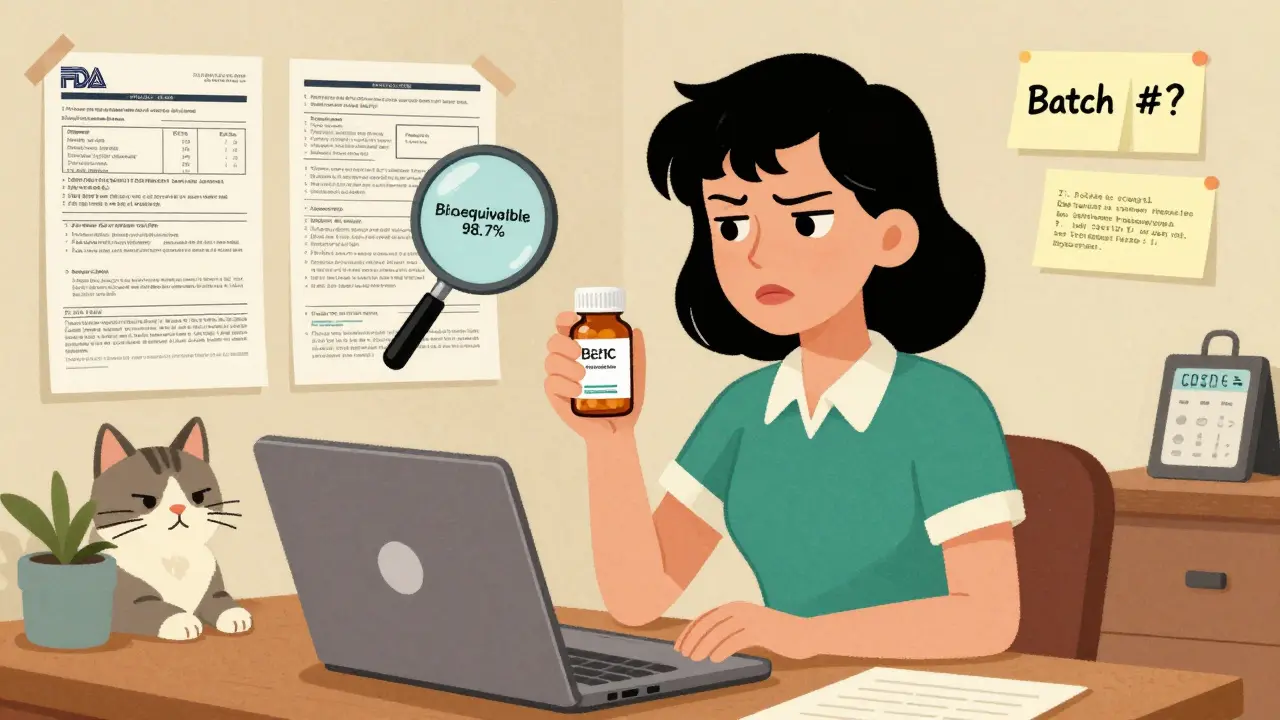
Gen Z: Price-Driven, But Not Blindly
Gen Z (born 1997-2012) doesn’t care about brand loyalty. They’ve never known a world without online pharmacies, price comparison tools, or insurance copays that make them choose between meds and rent. If a generic saves them $50 a month, they’ll take it. No hesitation. But here’s the twist: they’re also the most skeptical of corporate messaging. They’ve seen how brands manipulate emotions-“This pill will make you feel like yourself again!”-and they roll their eyes. They don’t trust marketing. They trust peer reviews, TikTok health influencers, and Reddit threads. A 23-year-old with anxiety told me he switched to a generic sertraline after reading 47 comments on a Reddit thread. Most said it worked fine. A few said it didn’t. He picked the one with the most consistent results. He didn’t care if it was made in India or Ohio. He cared about what real people experienced.The Real Barrier: Health Literacy, Not Age
Age isn’t the main driver. It’s experience-and how much people understand about how drugs work. A 70-year-old with a college degree and a history of managing diabetes might understand bioequivalence better than a 25-year-old who’s never read a drug label. Conversely, a 28-year-old nursing student knows more about generics than a 60-year-old who only sees pills as black-and-white solutions. What matters most is health literacy. Can you read a medication guide? Do you know what “active ingredient” means? Have you ever checked if your insurance covers the generic version? People with higher health literacy are more likely to choose generics-no matter their age. Studies show that when people are given clear, simple explanations-like “This generic has the same chemical as the brand, just without the logo and ads”-their willingness to switch jumps by nearly 40%. But if the message is vague-“It’s just as good”-they tune out.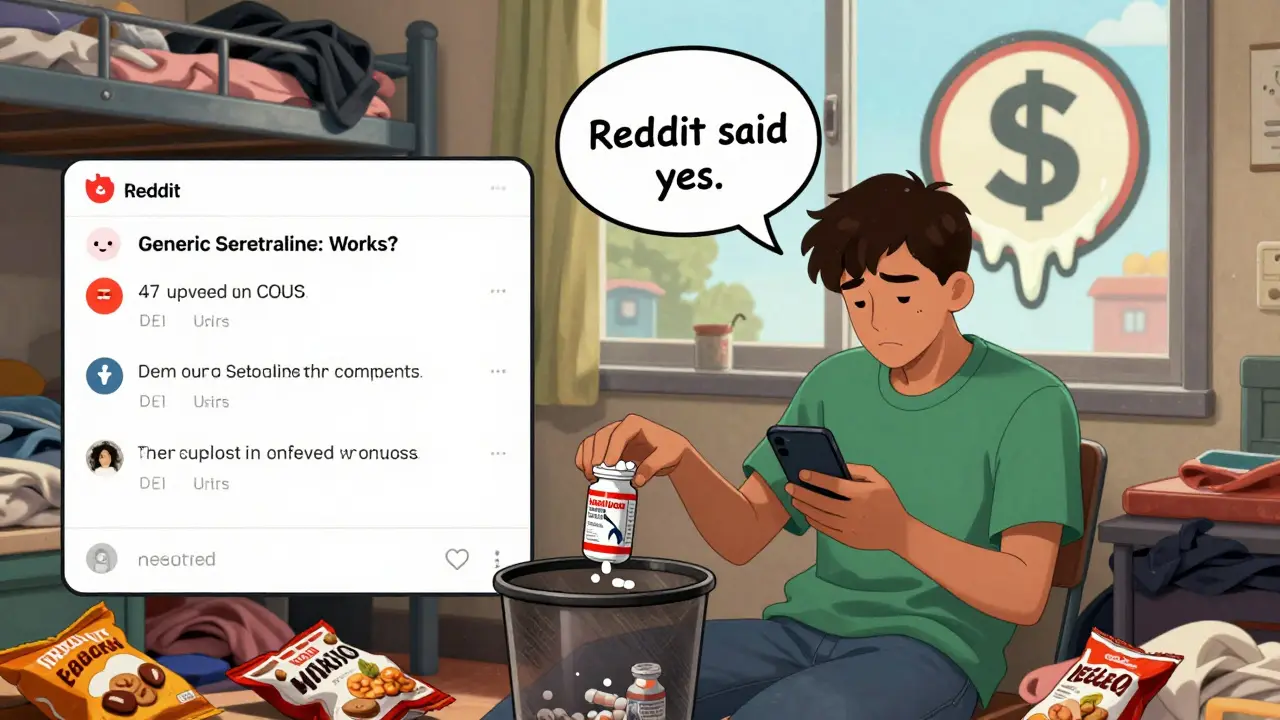


10 Comments
Let’s be real - the brand-name pill costs more because it comes with a 30-second TV ad starring a dog wearing sunglasses. The generic? It’s the same chemistry, just without the marketing budget. People still think it’s a gamble because they’ve been conditioned to equate price with quality. It’s not science. It’s advertising brainwashing.
And yet, we still pay extra for bottled water that’s just tap water with a fancy label. We’re all suckers for branding - even when we know better.
From a pharmacokinetic standpoint, the bioequivalence thresholds established by the FDA (80–125% Cmax and AUC ratio) are statistically robust and clinically insignificant in the vast majority of cases - particularly for narrow-therapeutic-index drugs, which are subject to even stricter scrutiny. The psychological aversion to generics is a cognitive bias rooted in availability heuristic and brand anchoring - not pharmacological reality.
That said, the real issue isn't the science - it's the lack of patient-facing translational education. Most patients don't understand what 'bioequivalent' means, and clinicians rarely take the time to explain it beyond 'it's the same thing.' We need visual aids, plain-language fact sheets, and maybe even QR codes on the bottle linking to FDA validation data.
I’m a pharmacist in rural Ohio. I’ve seen this play out for 18 years. The older folks? They’ll sit there with the brand-name prescription in hand, staring at the generic like it’s a trap. I hand them the pill. I say, ‘This is the same chemical, same dose, same everything - just no logo.’
Then I show them the FDA page on my phone. Half of them still don’t believe me. But one guy - 74, diabetic - finally switched after I printed out a side-by-side chart of his blood sugar logs. He said, ‘If my numbers didn’t change, then why am I paying twice?’
That’s the key. Show them proof. Not talk. Proof.
Interesting read. I'm from India, where generics are the norm. We don’t have the luxury of brand loyalty - we have to choose what works and what we can afford. But here’s the thing: in places like this, generics are often made by the same companies that make the branded versions. Same factory, same line, different label.
It’s not about trust in the pill. It’s about trust in the system. If you believe your government regulates quality, you take the generic. If you don’t? You pay extra - even if it’s just for peace of mind.
It is not merely a matter of psychological bias or inadequate health literacy - it is a systemic failure of the American pharmaceutical-industrial complex to prioritize profit over public welfare. The fact that 90% of prescriptions are filled with generics, yet they account for only 25% of expenditures, is not a triumph of consumer rationality - it is evidence of a population being systematically exploited through fear-based pricing strategies.
Pharmaceutical corporations spend billions on lobbying to extend patents, delay generic entry, and manipulate public perception. The FDA’s bioequivalence standards, while technically sound, are not universally enforced with transparency. Patients are being manipulated into believing that a $120 branded pill is inherently superior - when, in fact, the difference is purely aesthetic and commercial.
This is not a generational divide. It is a class divide. The wealthy buy the logo. The rest of us buy the science - and are told to be grateful for it.
Ugh. Another ‘let’s normalize generics’ think piece. Did you even consider that maybe - just maybe - some people have had bad experiences? Not all generics are created equal. Some are manufactured in facilities with questionable quality control. The FDA inspects, sure - but they inspect maybe one in twenty plants. And the ones that fail? They get fined and keep operating.
Also - who says I want to take a pill made in a factory that’s been flagged for ‘minor deviations’? I don’t need your ‘simple explanations.’ I need guarantees. And those don’t come with a sticker that says ‘generic.’
ok but what if the generic is actually just a placebo with fake chemicals?? like i read on a forum that big pharma secretly puts less active ingredient in generics so they can make more money and the FDA lets them because they’re paid off?? i switched back to brand after my anxiety got worse… i dont trust anyone anymore.
also the pills look different now. they used to be blue. now they’re white. that’s not a coincidence. they’re trying to mess with our minds.
Stop trying to make generics cool. They’re just cheap pills. You think people care about bioequivalence? No. They care about feeling better. If the brand worked for 20 years, why risk it?
Also - who even is the FDA? Some government app? I’m not taking a pill from a factory in China just because some dude in a lab coat says it’s ‘the same.’
My grandma’s Tylenol didn’t come with a barcode. It came with trust. You can’t code trust.
Also, I cried when I switched. I don’t even know why.
❤️
Key point missed: the 80–125% bioequivalence range is not a flaw - it’s a feature. It accounts for inter-subject variability in absorption. The median difference between brand and generic is 2.7%. That’s less than the natural variation in your own physiology from day to day.
Also - 90% of prescriptions are generics because pharmacists dispense them by default under state substitution laws. Patients don’t choose them - they’re handed them. That’s why trust lags. No consent. No education. Just a substitution.
Solution? Require a 30-second video explanation at the counter - from the pharmacist - explaining bioequivalence using a simple diagram. No jargon. No rush. Just clarity.
Jon’s right - the real problem is that generics are handed to people like a surprise gift. No explanation. No choice. No chance to ask. That’s why the distrust sticks. If you forced me to take a new coffee brand without telling me it’s the same beans, roasted the same way, just in a plain bag - I’d be mad too.
It’s not about the pill. It’s about the lack of respect in the handoff.
Write a comment