Medication Reaction Checker
This tool helps you determine if your symptoms require immediate emergency medical attention (911) or if it's safe to contact your doctor.
Check your symptoms
Check all symptoms you're experiencing:
It’s easy to brush off a rash or a stomach upset after taking a new pill. But what if that mild itch is the first sign of something dangerous? Knowing when to call 911 instead of waiting to see your doctor can save your life-or someone else’s. Medication reactions aren’t all the same. Some are annoying. Others kill. And the difference isn’t always obvious.
Not All Reactions Are Created Equal
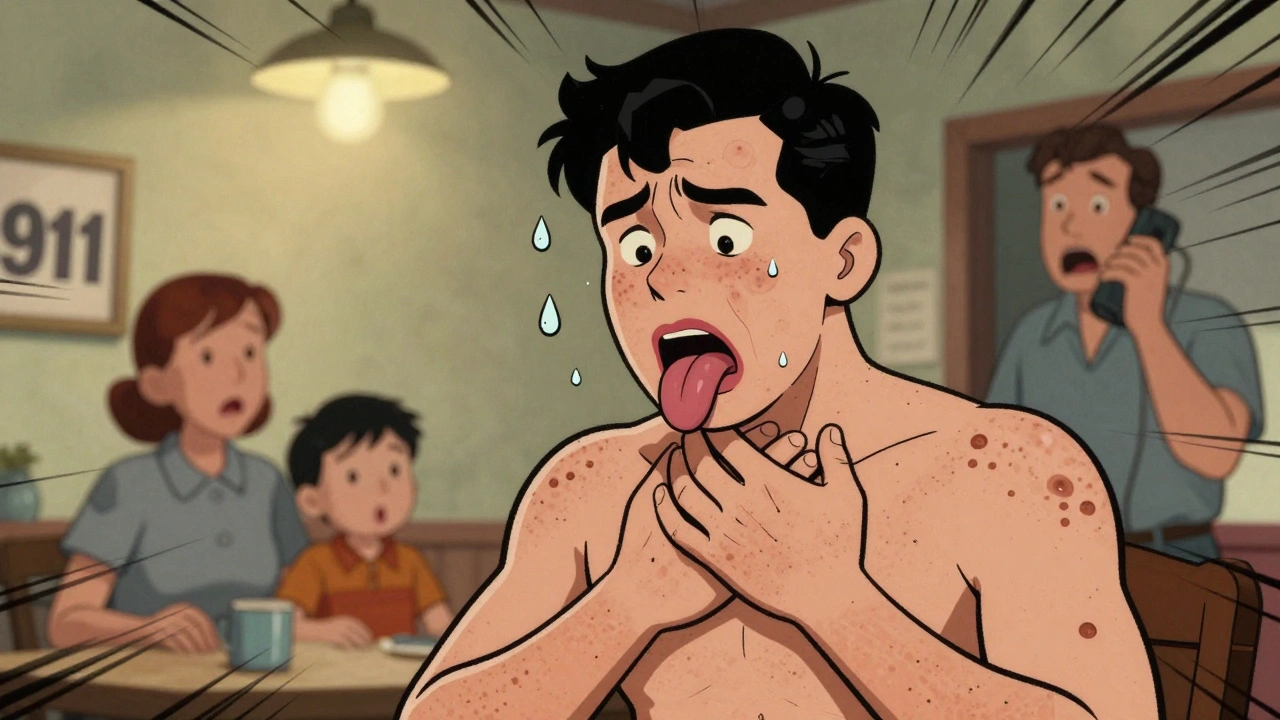
A lot of people think any weird feeling after taking medicine means they’re allergic. That’s not true. Most side effects-like nausea, drowsiness, or a mild headache-are just your body adjusting. They’re unpleasant, but not dangerous. You can usually call your doctor the next day if they stick around. But then there’s the other kind. The kind that hits fast, hits hard, and hits multiple systems at once. That’s when you don’t call your doctor. You call 911. The key is spotting the pattern. A single symptom? Probably fine. Two or more happening together? That’s the red flag.Call 911 If You Have These Symptoms
If you’re taking a new medication and suddenly feel like something’s very wrong, look for this combo:- Swelling of your tongue, lips, or throat
- Stridor-that high-pitched, squeaky sound when you breathe
- Wheezing or trouble catching your breath
- Hives or a sudden, widespread rash
- Vomiting or diarrhea at the same time as the rash
- Dizziness, fainting, or feeling like you’re going to pass out
- Fast, weak pulse or a sudden drop in blood pressure
Why You Can’t Wait
Time isn’t your friend here. Symptoms can go from mild to life-threatening in under 10 minutes. Swelling in your throat doesn’t wait for your doctor’s office to open. Breathing problems don’t care if you have an appointment tomorrow. Even if you use an epinephrine auto-injector-like an EpiPen-you still need to call 911. One shot might help for a while, but the reaction can come back. Hospitals need to monitor you for hours, even if you feel fine after the injection. Doctors and emergency responders say this clearly: If you’re unsure, call 911. It’s better to have an ambulance show up and it’s nothing, than to wait and find out it was everything.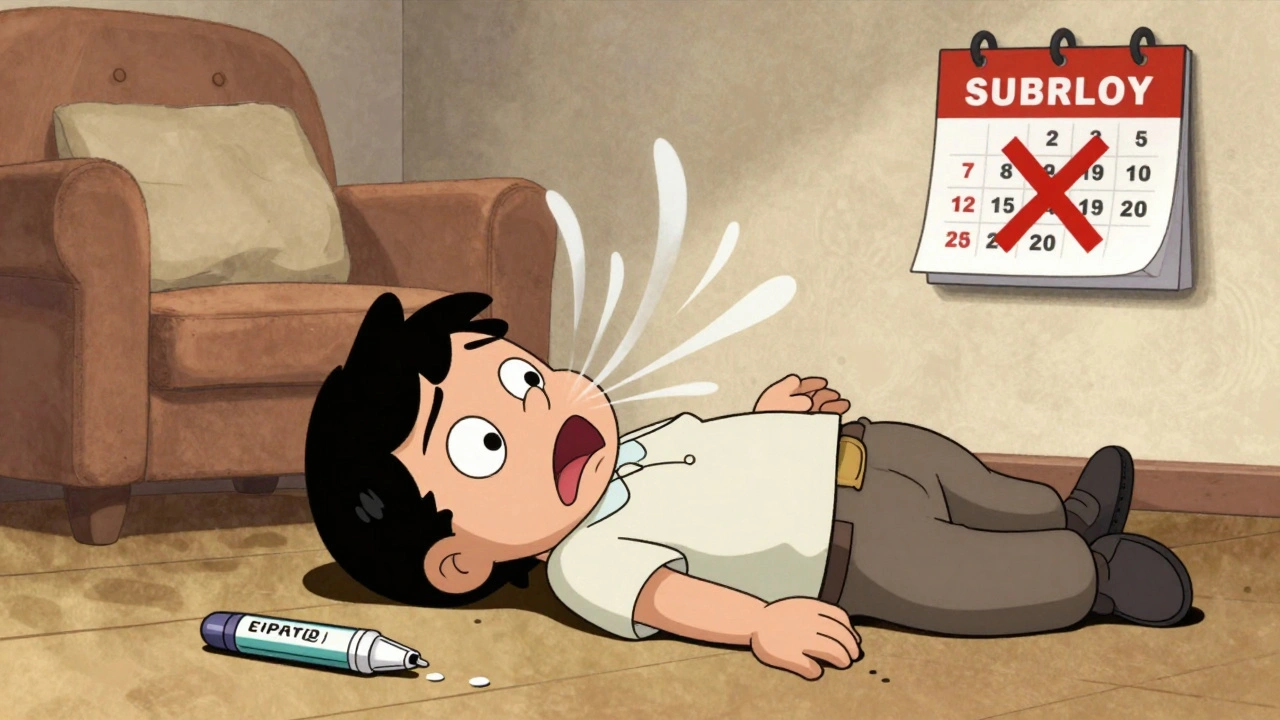
When It’s Okay to Call Your Doctor
If you only have one thing going on-like a simple rash without swelling or breathing trouble-you can probably wait until your doctor’s office opens. Same with itching alone, or a mild upset stomach with no other symptoms. These aren’t emergencies. But they still matter. Don’t ignore them. Write down what medicine you took, when, and what happened. Take a photo of the rash if you can. Your doctor will need that info to figure out if it’s a true allergy or just a side effect. Some reactions, like DRESS syndrome or serum sickness, don’t show up right away. They can take days or weeks. If you get a fever, swollen glands, or a spreading rash a few days after starting a new drug, call your doctor. Don’t wait until you’re struggling to breathe.What About Epinephrine?
If you’ve been told you’re at risk for severe reactions and have an epinephrine auto-injector, use it at the first sign of trouble. Don’t wait for symptoms to get worse. Don’t worry about side effects-epinephrine is safe. The risks of not using it are far greater. Yes, it can make your heart race. Yes, it can feel scary. But in anaphylaxis, that racing heart is keeping you alive. Even if you’re elderly or have heart disease, using epinephrine is still the right move. The danger of the reaction outweighs the risk of the medicine. And remember: using epinephrine doesn’t mean you’re “over it.” You still need to go to the ER. Always.Common Mistakes People Make
A lot of people delay because they don’t believe it’s serious. They think:- “It’s just a rash-I’ve had this before.” (Maybe, but this time it’s different.)
- “I’ll wait until morning.” (Anaphylaxis doesn’t keep business hours.)
- “I don’t want to bother anyone.” (You’re not bothering anyone. You’re saving your life.)
- “I’ve taken this before and never had a problem.” (Allergies can develop at any time-even after years of safe use.)
What Happens After 911?
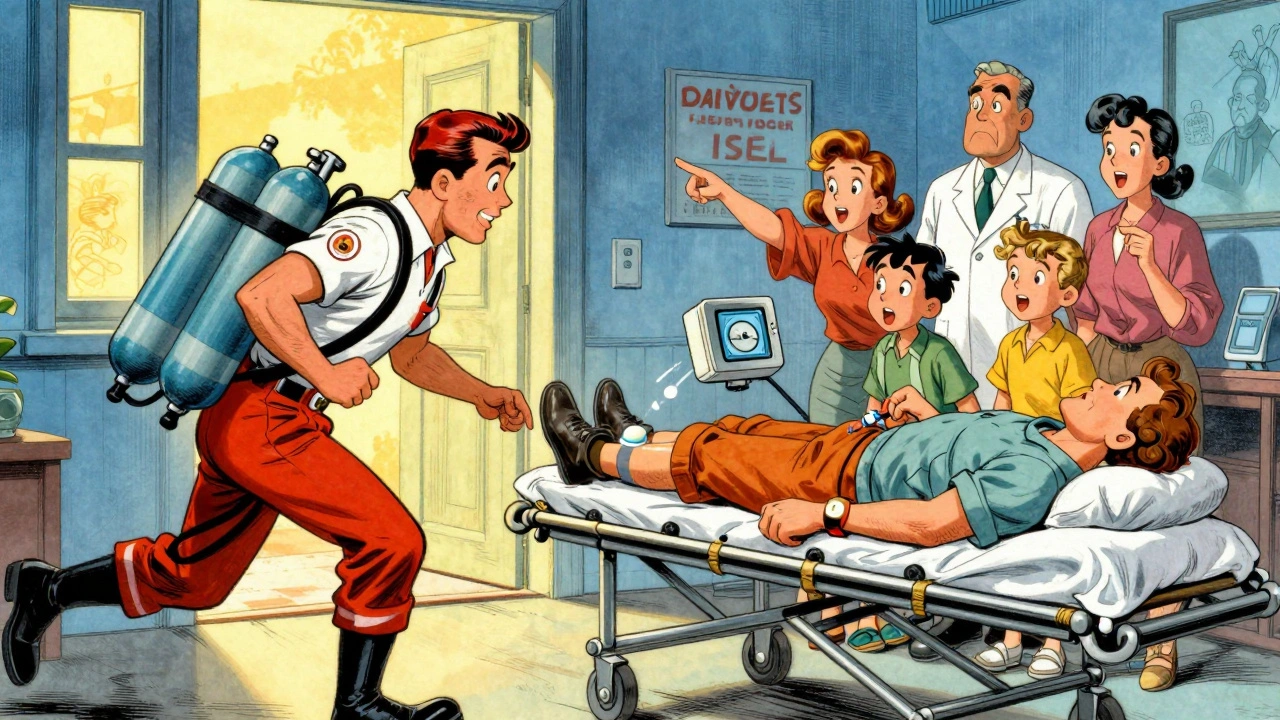
When paramedics arrive, they’ll give you oxygen, check your vitals, and likely give you more epinephrine if needed. They’ll start an IV and monitor you closely. You’ll be taken to the ER, where you’ll be observed for at least 4-6 hours. You’ll probably get antihistamines and steroids to calm your immune system. You might need more tests to figure out exactly what triggered the reaction. Afterward, you’ll likely be referred to an allergist to confirm the cause and get a plan for the future. You’ll also get a prescription for an epinephrine auto-injector if you don’t have one. And you’ll be told to wear a medical alert bracelet.How to Prepare
If you’ve ever had a bad reaction to a drug:- Keep a list of all medications you’ve reacted to-include the name and what happened.
- Share that list with every doctor you see.
- Ask for a medical alert bracelet.
- Carry your epinephrine auto-injector with you at all times.
- Teach someone close to you how to use it.
Final Thought: Better Safe Than Sorry
Medications save lives. But they can also hurt you. The line between a side effect and a life-threatening reaction isn’t always clear. And that’s why the rule is simple: if you have more than one symptom-especially if breathing, swallowing, or your heartbeat is affected-call 911 immediately. It’s not an overreaction. It’s the only right one.Can a medication reaction happen days after taking the drug?
Yes. While most severe reactions like anaphylaxis happen within an hour, some delayed reactions can show up days or even weeks later. Conditions like DRESS syndrome or serum sickness may start with a rash, fever, or swollen lymph nodes several days after taking a medication. If you develop new symptoms after starting a new drug-even if it’s been a few days-contact your doctor right away.
If I’ve taken a medicine before without problems, can I suddenly become allergic to it?
Absolutely. Allergies can develop at any time, even after years of using a drug safely. Your immune system can change, and what was harmless last year might trigger a reaction now. Never assume safety just because you’ve used something before.
Is it safe to use epinephrine if I have heart disease?
Yes. While epinephrine can raise your heart rate, the risk of not using it during anaphylaxis is far greater. Even for people with heart conditions, epinephrine is the life-saving first step. Delaying it increases the chance of death. Always use it if you’re having a severe reaction, then get to the ER immediately.
Do I need to go to the ER even if I feel better after using epinephrine?
Yes. One dose of epinephrine may stop symptoms temporarily, but the reaction can return-sometimes hours later. This is called a biphasic reaction. Hospitals monitor you for at least 4-6 hours to make sure it doesn’t come back. Never skip this step.
What should I do if someone else is having a severe reaction?
Call 911 immediately. If they have an epinephrine auto-injector, help them use it or use it for them if they’re unable. Lay them flat, elevate their legs if they’re dizzy, and don’t let them stand or walk. Stay with them until help arrives. Don’t give them anything to eat or drink.
Can I tell the difference between a drug allergy and a side effect?
It’s hard without medical training. But a key clue is the number of systems involved. A side effect usually affects one area-like nausea or drowsiness. An allergic reaction affects two or more: rash + vomiting, swelling + trouble breathing, dizziness + hives. When symptoms cross body systems, it’s more likely to be an allergy. When in doubt, treat it like an emergency.

15 Comments
I swear if I get one more rash from a pill I'm just gonna chug bleach and call it a day. I took amoxicillin 3 times and each time I broke out like I was in a horror movie. Doc said 'it's just a side effect'-BULLSHIT. I'm calling 911 next time. No more waiting. 🤬
Love this breakdown. As an Aussie who’s seen too many people downplay symptoms because 'it’s not that bad', this is exactly the kind of clarity we need. Anaphylaxis doesn’t care if you're 'too busy' or 'don’t want to bother anyone'. It’s not a suggestion-it’s a biological alarm bell. If two systems are firing? Call 911. Period.
Okay but… what if the hospital is owned by Big Pharma? 😳 I heard they *want* you to have reactions so they can sell you more drugs AND epipens. I’ve got a friend who got a rash after penicillin… then got billed $12k for a 3-hour ER visit. Coincidence? I think NOT. 🤔💉💸
Life is a paradox. We take pills to heal, yet they can unravel us. The body remembers what the mind forgets. A rash today may be the whisper of a storm tomorrow. We are not machines. We are ecosystems. And when one part screams, the whole system trembles. 🌪️
It is imperative to underscore that the delineation between adverse drug reaction and true anaphylaxis remains a critical diagnostic imperative. The clinical criteria outlined herein are scientifically valid and align with current guidelines promulgated by the American Academy of Allergy, Asthma & Immunology. One must not conflate benign side effects with immunoglobulin E-mediated responses.
If you’re unsure? Call 911. That’s it. No overthinking. No Googling. No waiting till tomorrow. Your life isn’t a Netflix episode where you can pause and come back later. Just. Call. 911.
This is gold. 🙌 Seriously, if you’ve got hives + nausea + dizziness? That’s not ‘bad digestion’. That’s your immune system screaming FIRE. I used my EpiPen last year after a shrimp taco (long story) and thought I was fine… until I passed out in the Uber. ER saved me. Don’t be me. Use it. Go. Period.
I used to be the person who waited. ‘It’ll pass.’ ‘It’s just stress.’ I almost died because I thought I could ‘tough it out’. Now I carry two EpiPens. I teach my kids how to use them. I tell strangers at the pharmacy. If this saves one person? Worth it. You’re not being dramatic. You’re being smart.
Ohhh so THAT’S why my mom’s face looked like a balloon after her blood pressure med? 😏 I thought she was just ‘being dramatic’. Now I know. She’s not dramatic. She’s a fucking survivalist. 🙃
The clinical significance of biphasic anaphylaxis cannot be overstated. Even in the absence of residual symptoms following epinephrine administration, prolonged observation remains medically indicated. Failure to adhere to this protocol constitutes a preventable risk factor for mortality. I encourage all patients to request documentation of their post-reaction monitoring period.
I had a reaction to ibuprofen once. It started with a tingle on my tongue… then my throat felt like it was filling with glue. I thought I was having a stroke. I called 911. Paramedics showed up in 4 minutes. They gave me epinephrine, steroids, IV fluids… I cried in the ambulance. Not from pain. From relief. I didn’t know I could feel so alive after almost dying. Don’t wait. Ever.
I KNOW they’re watching us. The government, the pharmaceutical companies, the aliens-they all want you to think this is just ‘a rash’. But I’ve seen the documents. The FDA has a secret list of drugs that cause delayed anaphylaxis… and they don’t tell you. I got a rash after my flu shot in 2019… now I can’t even drink coffee without checking the ingredients. 😭
This is so important. I work in a clinic and I’ve seen too many people come in days later because they ‘thought it was nothing’. One guy had DRESS syndrome from a painkiller-he was in the ICU for three weeks. He’s fine now, but he says he’ll never ignore symptoms again. Please. Don’t be that guy. Or girl. Or non-binary person. Just call.
I took cipro and got a rash… then my knee swelled up. I thought it was a bug bite. Took 3 days to go to the doc. Turned out it was a severe reaction. They said if I’d waited another day, I might’ve lost the knee. I carry my epipen now. And I text my friends when I take new meds. #betteralive
Lmao. You people are so gullible. Epinephrine? 911? Please. The real danger is the pharmaceutical-industrial complex. They profit from your fear. You think your rash is dangerous? Nah. It’s your trust in the system that’s killing you. Just stop taking pills. Eat turmeric. Pray. The body heals itself. 🙏💊💀
Write a comment