Not All Coughs Are the Same - And Neither Are the Medicines
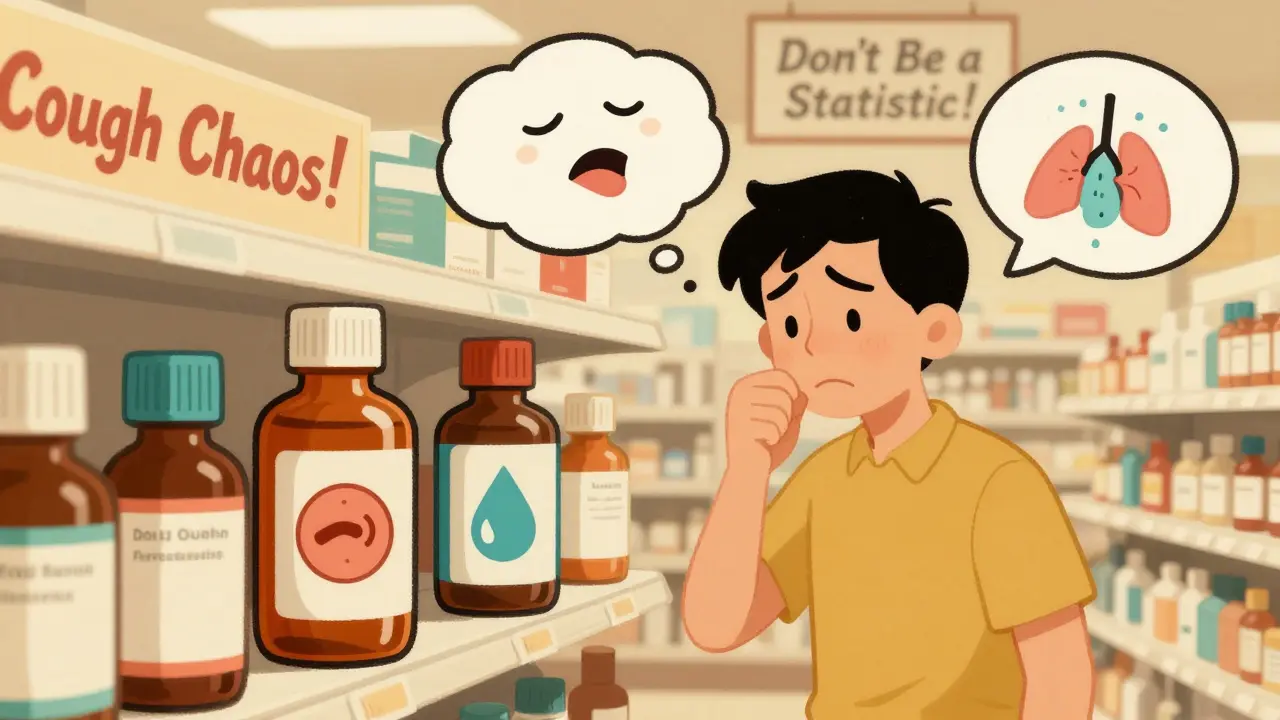
You’ve got a cough. It’s keeping you up at night. You walk into the pharmacy, and there are dozens of bottles lined up: Robitussin, Mucinex, Delsym, NyQuil, DayQuil - each with different labels, colors, and claims. You grab one because it says "cough relief" and hope for the best. But here’s the truth: if you’re using the wrong kind of cough medicine, you might actually be making things worse.
The difference between a cough suppressant and an expectorant isn’t just marketing. It’s pharmacology. It’s your body’s natural defense system. And getting it right matters - especially when you’re dealing with a cough that won’t go away.
What’s Actually Happening When You Cough?
A cough isn’t a disease. It’s a reflex. Your lungs and airways are trying to clear out something they shouldn’t have: mucus, dust, viruses, or irritants. There are two main types of coughs, and they need completely different treatments.
- Dry cough: No mucus. Just irritation. Feels scratchy. Often happens after a cold or from post-nasal drip. You cough because your throat is raw, not because you’re trying to clear anything out.
- Wet or productive cough: You’re bringing up mucus. It might be clear, white, yellow, or green. This is your body working - trying to flush out infection or inflammation from your lungs or bronchial tubes.
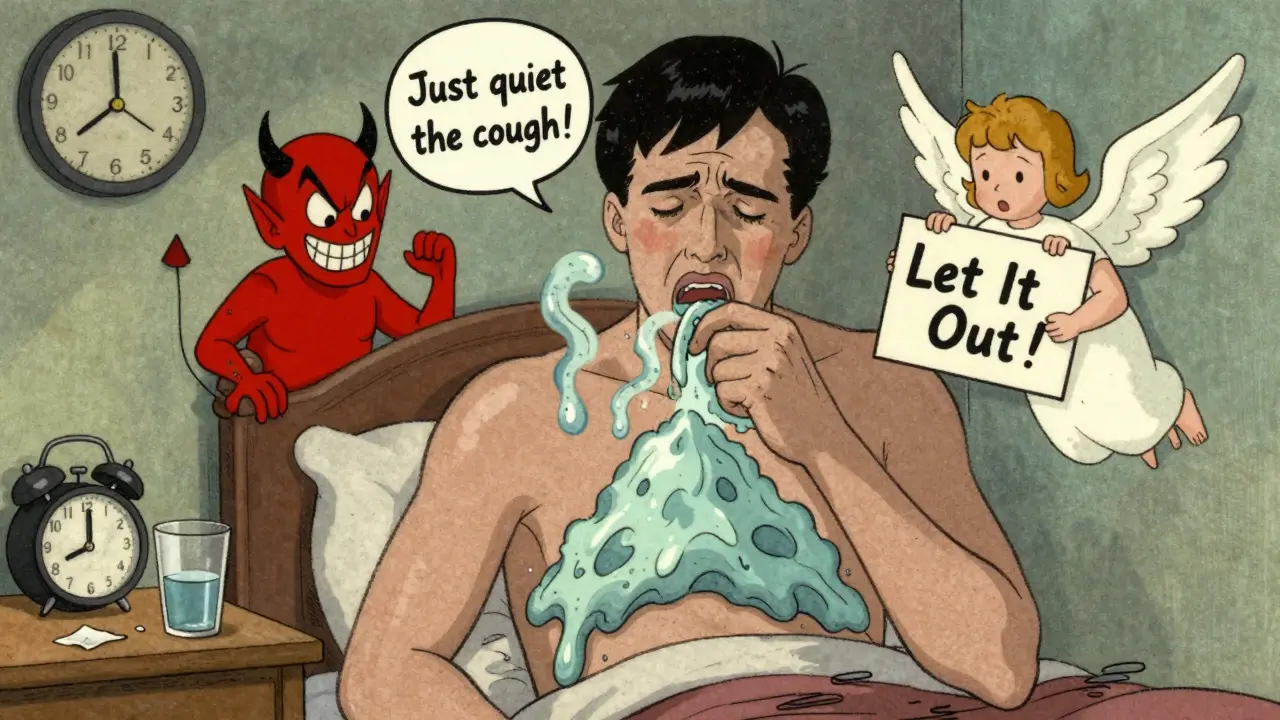
Here’s the key: suppressants silence the signal. Expectorants help the cleanup crew. Mixing them up is like turning off a smoke alarm instead of putting out the fire.
Cough Suppressants: When to Use Them (and When Not To)
The most common cough suppressant you’ll find on the shelf is dextromethorphan (often listed as DM or DXM). It’s in Delsym, Robitussin Maximum Strength, and many store brands. It works by calming the cough center in your brain - the part that triggers the reflex.
It’s effective. Studies show it reduces cough frequency by 60-70% in dry coughs. If you’re lying awake at 3 a.m. because your throat feels like sandpaper, a suppressant can help you sleep. That’s why it’s popular.
But here’s the catch: if you have a wet cough, suppressants are a bad idea. They stop you from coughing - even when you need to cough. Mucus builds up. Your airways get blocked. Your infection lingers longer. The American College of Chest Physicians says using suppressants for productive coughs (like bronchitis) is a Grade 1B recommendation - meaning strong evidence against it.
And there’s another risk: high doses of dextromethorphan can cause dissociative effects - hallucinations, dizziness, even out-of-body feelings. It’s been abused as a recreational drug. That’s why some pharmacies keep it behind the counter.
Expectorants: The Unsung Heroes of Productive Coughs
Now, let’s talk about guaifenesin. This is the only FDA-approved expectorant available over the counter. You’ll find it in Mucinex, Robitussin Chest Congestion, and generic versions. It doesn’t stop your cough. It makes your mucus easier to cough up.
How? It increases fluid in your airways. Think of it like adding water to honey. Thick, sticky mucus turns thinner, looser, and easier to clear. Clinical studies show it increases respiratory fluid volume by about 26% within 30 minutes of taking it.
This is why Mucinex has a 4.1/5 average rating across thousands of reviews. People say things like, “Finally able to sleep through the night,” or “I could actually breathe after two days.” But here’s the secret: guaifenesin only works if you drink enough water. If you take it and don’t hydrate, it’s like pouring oil on a dry engine. You need at least 64 ounces of water a day - that’s eight 8-ounce glasses. Most people don’t come close.
And unlike suppressants, expectorants are safe for longer use. They don’t interfere with your body’s natural healing. They just help it work better.
What’s in the Bottle? Decoding the Labels
Pharmacy shelves are designed to confuse you. A bottle might say "Cough & Cold Relief" and contain both a suppressant and an expectorant - plus a decongestant, an antihistamine, and even acetaminophen. That’s a multi-symptom formula.
Here’s how to read it:
- Dextromethorphan or DM = suppressant
- Guaifenesin = expectorant
- DM + Guaifenesin = combo product (use with caution)
According to a 2022 Kaiser Permanente survey, 43% of people used combo products for wet coughs - the exact wrong thing to do. You don’t need to silence your cough if you’re trying to clear mucus. You need help moving it out.
And here’s a tip: store-brand versions often have the same active ingredients as name brands - but worse labeling. A 2022 University of Michigan study found Mucinex scored 4.5/5 for clear instructions. Generic versions averaged 3.2/5. If the label doesn’t clearly say "expectorant" or "suppressant," you’re guessing.
Who Should Avoid These Medicines?
Not everyone can safely use OTC cough medicines.
- Children under 4: The FDA advises against all OTC cough and cold medicines for kids under 4. Their airways are small. The risks outweigh the benefits.
- People on MAOIs: These are antidepressants like phenelzine or selegiline. Mixing them with dextromethorphan can cause serotonin syndrome - a dangerous spike in brain chemicals.
- People with COPD or chronic bronchitis: Suppressants can trap mucus and lead to infections. Expectorants may help, but always check with your doctor first.
- Anyone with colored mucus: Yellow, green, or bloody mucus means infection. Suppressants won’t fix that. You may need antibiotics - and you definitely need to see a doctor.
The American Lung Association is clear: never use a suppressant if you’re coughing up colored mucus. That’s not a dry cough. That’s your body fighting something serious.
Real People, Real Mistakes
Reddit threads are full of stories like this:
"I used Robitussin DM for my phlegmy cough for 3 days before realizing I should’ve used the chest congestion version - no wonder I felt worse." - u/ColdSufferer2023
Pharmacists report that 40% of OTC cough medicine consultations are from people who picked the wrong type. You’re not alone. But you can fix it.
Here’s a simple test: before you buy anything, ask yourself:
- When I cough, do I bring up mucus?
- Is my cough keeping me awake, or is it just annoying?
- Do I feel congested in my chest?
If you answer "yes" to bringing up mucus or chest congestion - go for guaifenesin. If you’re coughing dry, no mucus, throat raw - dextromethorphan might help.

What About Combination Products?
They’re everywhere. And they’re dangerous if you don’t know what you’re taking.
Let’s say you have a wet cough with a sore throat. You grab a bottle labeled "Cough & Sore Throat Relief." It has dextromethorphan (suppressant) and guaifenesin (expectorant) - plus a painkiller. You think you’re covering all bases. But you’re not.
By suppressing your cough while still producing mucus, you’re trapping infection. You’re also taking more medication than you need. And you might be doubling up on acetaminophen if you’re already taking Tylenol for a headache. Overdose risk goes up.
Best practice? Go single-ingredient. If you need two things - say, a cough suppressant and a decongestant - buy them separately. That way, you control the dose. You know exactly what you’re taking. And you avoid hidden ingredients.
What’s New in 2025?
OTC cough medicine isn’t standing still.
In March 2023, Mucinex launched Mucinex MoistureLock - a new extended-release formula designed to keep your airways hydrated longer. It’s not magic, but it’s a step toward better delivery.
Also in development: a new version of dextromethorphan combined with naloxone. Naloxone blocks the parts of the brain that cause the high, without affecting the cough suppression. It’s still in clinical trials, but it could reduce misuse.
And starting in 2024, the FDA is rolling out new labeling rules. Expect to see icons on boxes: a mute button for suppressants, a water droplet for expectorants. Pilot studies show this cuts confusion by 35%.
Bottom Line: Choose Based on Your Cough, Not the Label
OTC cough medicines are tools - not cures. They don’t kill viruses. They don’t cure infections. They just help you feel better while your body heals.
Here’s your quick decision guide:
- Dry cough? No mucus? Throat scratchy? → Pick dextromethorphan (Delsym, Robitussin DM)
- Wet cough? Mucus coming up? Chest feels heavy? → Pick guaifenesin (Mucinex, Robitussin Chest Congestion)
- Not sure? → Wait 24-48 hours. Watch your symptoms. Drink water. Don’t rush to medicate.
- Colored mucus? Fever? Shortness of breath? → Call your doctor. This isn’t an OTC fix.
And always - always - drink water with expectorants. And never use suppressants if you’re coughing up anything but clear, thin fluid.
One more thing: if your cough lasts more than 10 days, gets worse, or comes back after you thought it was gone - see a doctor. You might have bronchitis, pneumonia, or something else that needs more than a bottle from the pharmacy.
Can I take a cough suppressant and an expectorant together?
You can, but you shouldn’t unless you’re under a doctor’s direction. Most combo products contain both, and using them for the wrong type of cough - like a wet cough - can trap mucus and delay recovery. If you have both a dry and wet cough, it’s better to treat one symptom at a time. Start with an expectorant if mucus is present. Only add a suppressant if the cough becomes dry and disruptive after a few days.
How long should I use OTC cough medicine?
Use OTC cough medicines for no more than 7 days. If your cough hasn’t improved by then, it’s time to see a doctor. Chronic coughs can be signs of asthma, acid reflux, or lingering infections. Long-term use of suppressants can also lead to dependency or mask serious conditions. Expectorants are safer for longer use, but still not meant to replace medical care.
Does guaifenesin make you sleepy?
No, guaifenesin doesn’t cause drowsiness. That’s one reason it’s preferred for daytime use. Dextromethorphan, on the other hand, can cause drowsiness in about 27% of users. If you need to stay alert, choose an expectorant. If you’re using a combo product and feel sleepy, check the label - it might have an antihistamine or other sedating ingredient.
Is Mucinex better than generic guaifenesin?
The active ingredient - guaifenesin - is identical. But Mucinex often has better formulation. Its extended-release tablets release the drug slowly over 12 hours, meaning fewer doses. Generic versions may be immediate-release, requiring you to take it every 4 hours. Also, Mucinex labeling is clearer and more reliable. If you’re choosing between them, the price difference is usually small - and the convenience and clarity might be worth it.
Can kids use OTC cough medicines?
The FDA advises against using any OTC cough or cold medicine in children under 4. For kids 4 to 6, only use if a doctor recommends it. For older children, expectorants like guaifenesin are generally safer than suppressants. Always use pediatric dosing, never adult. And never give aspirin to children - it can cause Reye’s syndrome. Honey (1/2 to 1 teaspoon) is actually more effective than cough syrup for kids over 1 year old, according to multiple studies.


10 Comments
OMG YES this is so true!! 🙌 I used Robitussin DM for my wet cough last winter and felt like I was drowning in phlegm for weeks. Then I switched to Mucinex + drank a gallon of water a day and BOOM - slept through the night. Why does no one tell you the water part?? 🤦♀️
The pharmacological distinction between suppressants and expectorants is not merely a matter of consumer preference; it is a matter of clinical integrity. The American College of Chest Physicians' Grade 1B recommendation against suppressant use in productive coughs is evidence-based and non-negotiable. Misuse of OTC medications constitutes a public health risk.
Dextromethorphan? Guaifenesin? You people are clueless. If you can’t read a label, don’t buy medicine. The FDA didn’t make these confusing on purpose - YOU are the problem. And if you’re using ‘Mucinex’ because it’s ‘brand name,’ you’re being scammed. Generic guaifenesin is 98% cheaper and identical. Stop being lazy and learn.
American pharmacy culture is a farce. You’re given a shelf of chemical cocktails and expected to self-diagnose. In the UK, pharmacists actually advise. Here? You get a smile and a ‘have a nice day’ while handing you something that could trap mucus in your lungs. Pathetic.
Bro i used to take cough syrup for my cold and felt worse, then i heard from my cousin in delhi that drink water + guaifenesin = magic. i did it and boom, no more chest tightness. also, honey for kids > syrup. simple. no need to overthink. just hydrate and listen to your body.
This post saved me. I’ve been using Delsym for my dry cough since last week and it finally let me sleep. I didn’t realize how much I needed that. Thank you for explaining the difference so clearly - I feel so much less guilty now.
Honestly, I used to just grab whatever looked nice. But after reading this, I started reading labels like a detective. Turns out I was using combo meds for weeks. Now I stick to single-ingredient. Life’s easier. Also, water. So much water. I’m not joking.
I didn’t know guaifenesin needed water. I took it once and felt nothing. Now I drink a whole bottle before bed. Best. Sleep. Ever.
My kid had a cough for 12 days. We tried everything. Then we tried honey. One teaspoon before bed. No more coughing at 3am. Why do we make this so complicated?
The FDA’s new labeling initiative with mute buttons and water droplets is long overdue. A 2022 University of Michigan study confirmed that ambiguous labeling leads to 43% misuse. Standardized icons aren’t just helpful - they’re necessary. This is public health 101, and it’s about time the industry caught up.
Write a comment