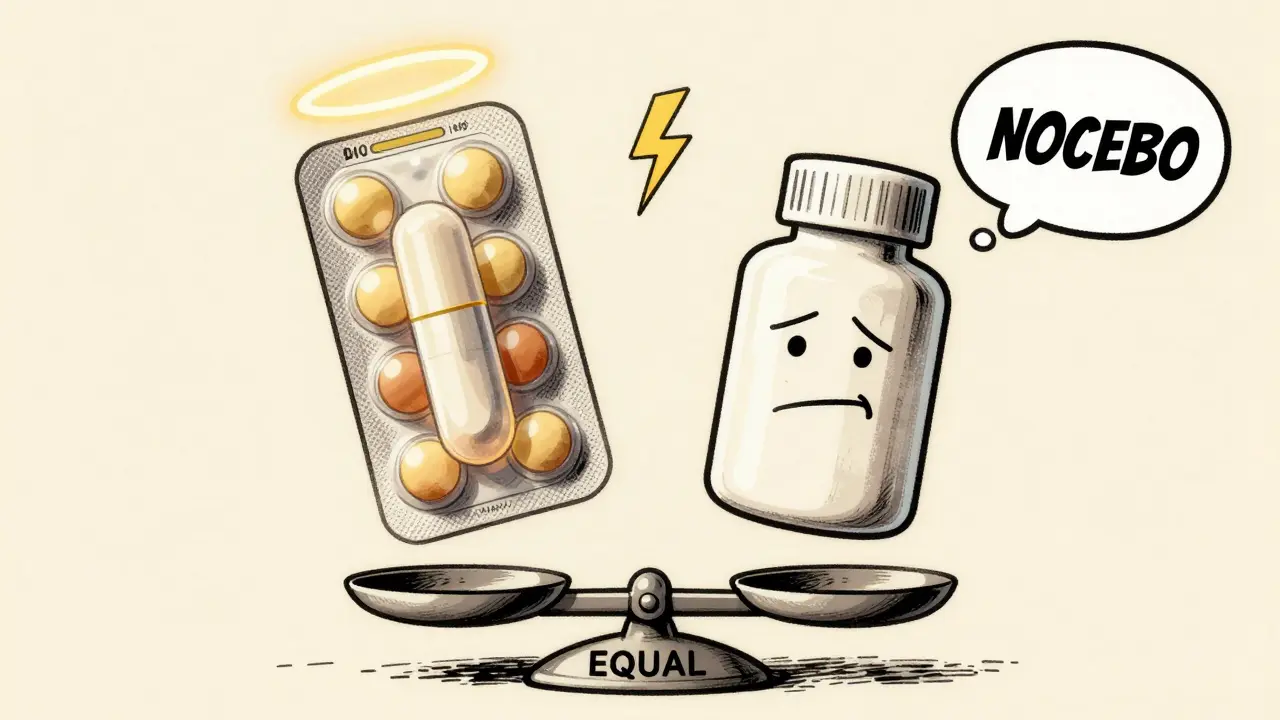
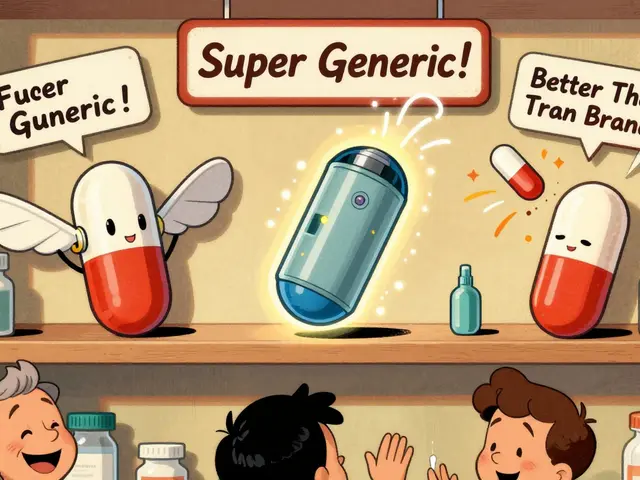
Ever switched from a brand-name pill to a generic version and felt like something was off? You’re not alone. Millions of people have had the same thought: generics just don’t seem to work as well. But here’s the twist - they do. Scientifically, they’re identical. So why does this feeling stick around?
They’re the Same Medicine - But Your Brain Says Otherwise
Generic drugs aren’t knockoffs. They’re not diluted, weaker, or made in sketchy factories. By law, they must contain the exact same active ingredient, in the same strength, and delivered the same way as the brand-name version. The U.S. Food and Drug Administration (FDA) requires them to prove bioequivalence - meaning they get into your bloodstream at the same rate and amount as the original. The acceptable range? Within 80% to 125% of the brand-name drug. That’s not a loophole - it’s a scientifically proven margin of safety. For most people, it’s like swapping one red apple for another. Same juice. Same taste. Same nutrition. Yet, patients still report feeling worse after switching. One woman on Reddit said her anxiety got worse after her doctor switched her from brand-name sertraline to the generic. Another stopped taking her thyroid medication because she felt "off." In both cases, blood tests showed identical drug levels. The problem wasn’t the medicine. It was the expectation.The Nocebo Effect: When Belief Makes You Sick
This isn’t just in your head - it’s a real, measurable phenomenon called the nocebo effect. It’s the opposite of placebo. Instead of feeling better because you believe a treatment works, you feel worse because you believe it won’t. A 2023 study in JAMA Network Open showed this clearly: patients told generics were "equally effective" had 34% better adherence. Those told they were "less effective" had 41% worse adherence. The drug didn’t change. The belief did. Pharmacists report patients refusing generics even after years of stable control. One pharmacist in Ohio described a man on generic warfarin for 5 years who suddenly stopped taking it because his cousin said generics "don’t work like the real thing." He ended up in the ER with a blood clot. The drug was fine. The fear wasn’t.Why Do Some People Doubt Generics More Than Others?
This isn’t random. Studies show non-Caucasian patients are nearly twice as likely to believe generics are inferior. In rural Alabama, some patients call generics "poor people’s medicine." Others think they’re "not real drugs" or "require higher doses." These beliefs aren’t based on science - they’re shaped by culture, media, and subtle messaging. Brand-name companies spend $1.8 billion a year on marketing that doesn’t say "generics are bad" - but implies it. Ads show sleek packaging, celebrity doctors, and emotional stories about "the original formula." Meanwhile, generics come in plain white bottles with no branding. It’s not that the product is inferior - it’s that the packaging screams "cheap." Even doctors aren’t immune. One in 11 physicians believe generics are less effective. One in four think they cause more side effects. That’s not based on evidence - it’s based on the same myths patients hear.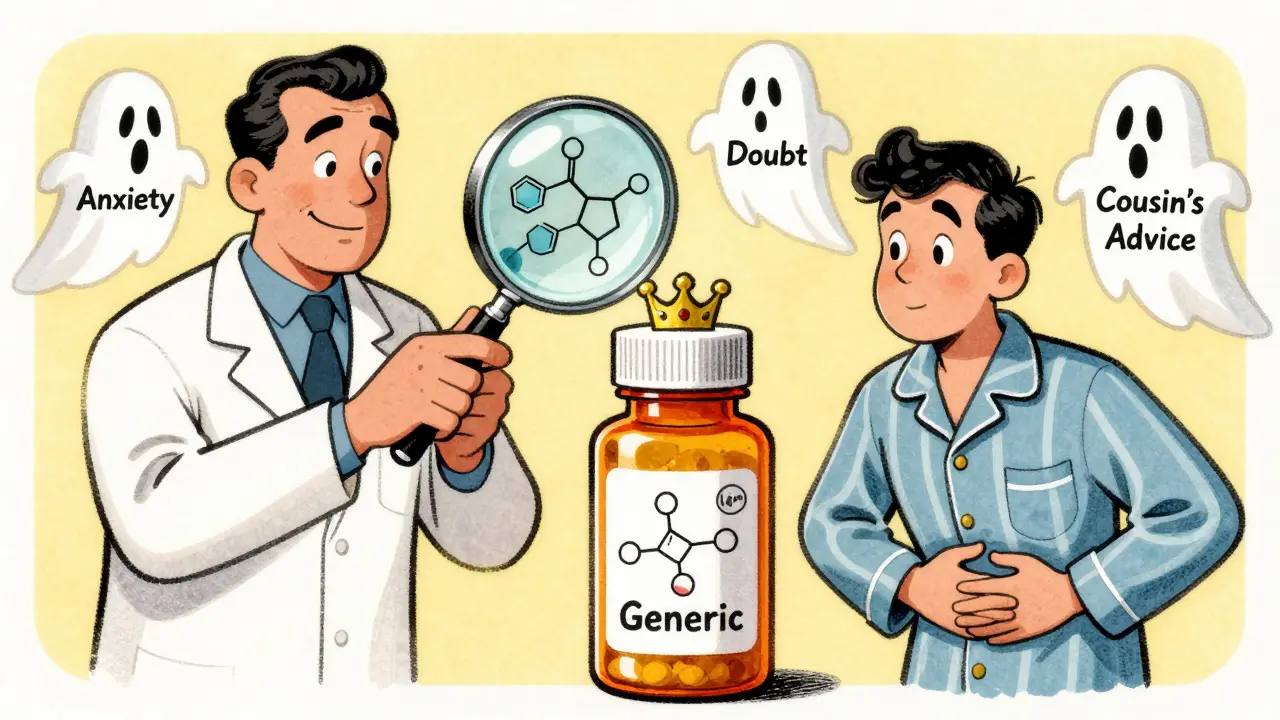
The Real Cost of the Misunderstanding
Generics save the U.S. healthcare system $1.7 trillion between 2009 and 2019. That’s money not spent on hospital stays, ER visits, and long-term care. But when patients stop taking their meds because they think the generic doesn’t work, those savings vanish. A 2019 study found that 22% of people who believed generics were inferior stopped taking them - compared to just 8% of those who didn’t. For chronic conditions - high blood pressure, diabetes, depression, thyroid disease - missing doses isn’t a minor hiccup. It’s a health emergency. One missed dose of levothyroxine might not do much. But 10 missed doses over a year? That’s a 40% higher risk of heart problems. And it’s all preventable.How to Fix This - Without Spending a Fortune
The fix isn’t more ads. It’s better communication. A 2022 review found three things work:- Show the active ingredient - When patients see that the generic has the exact same name as the brand (like "sertraline" on both bottles), acceptance jumps 87%.
- Give them FDA paperwork - A simple handout saying "This generic is approved by the FDA as equal to [brand name]" improves trust by 76%.
- Call out the nocebo effect - Saying something like, "Some people feel different after switching, but it’s often because they expect to - not because the medicine changed" reduces anxiety by 68%.
What’s Changing - And What’s Not
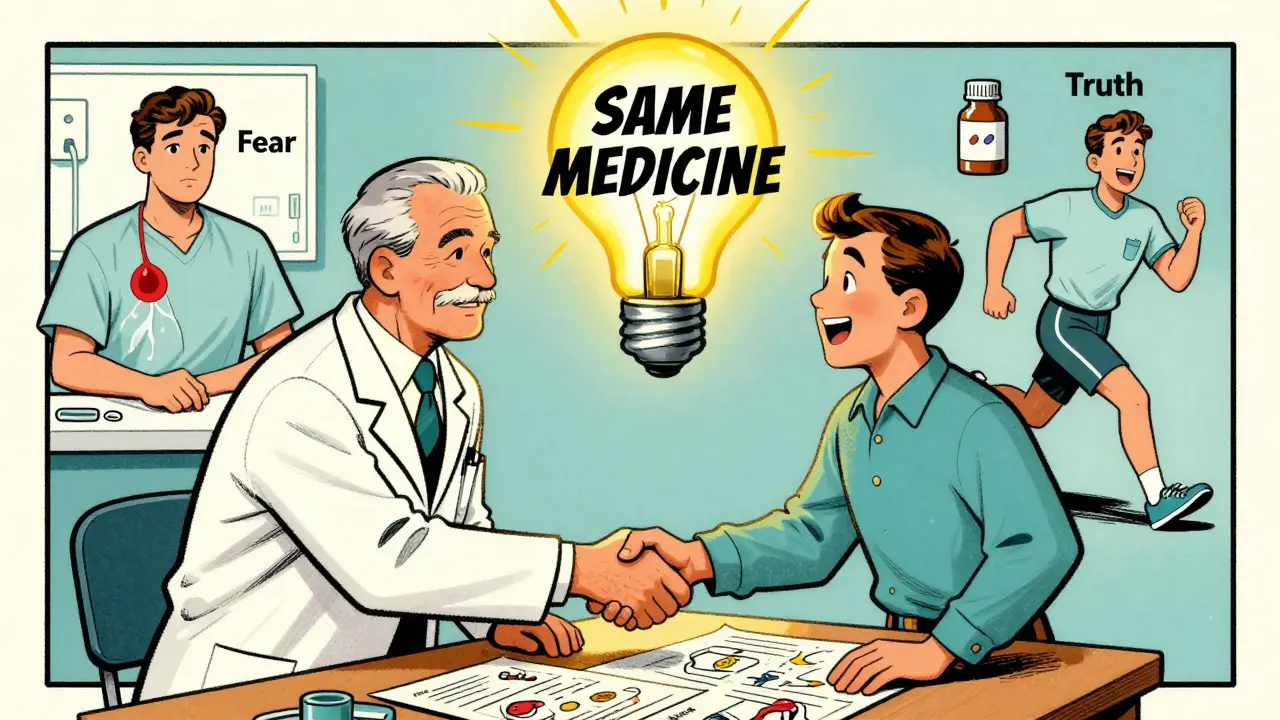
The FDA is finally acting. In 2023, they started requiring therapeutic equivalence ratings on generic packaging. Starting in 2024, they’re launching "Equivalence Explorer," an interactive tool that lets you compare drugs side by side. The American Medical Association now requires doctors to complete training on patient perceptions during continuing education. But the biggest change? It’s not policy. It’s conversation. Every time a doctor says, "This is the same drug," or a pharmacist says, "I take this same generic for my blood pressure," trust builds. The science is settled. Generics are safe. They’re effective. They’re identical. The only thing that’s different is what you believe.Are generic drugs really as effective as brand-name drugs?
Yes. By law, generic drugs must contain the same active ingredient, strength, dosage form, and route of administration as the brand-name version. The FDA requires them to prove bioequivalence - meaning they deliver the same amount of medicine into your bloodstream at the same rate. Studies show they work just as well for 90% of patients. The 80-125% bioavailability range is scientifically proven to be clinically insignificant for most drugs.
Why do some people feel worse after switching to a generic?
It’s often the nocebo effect - when your brain expects a change, your body reacts as if something’s wrong. Even if the medicine is identical, the change in pill color, size, or packaging can trigger anxiety. Some patients also confuse side effects from adjusting to a new formulation with the drug itself being less effective. In rare cases, inactive ingredients (like fillers) may cause reactions, but these are not related to the drug’s effectiveness.
Do generics have different side effects than brand-name drugs?
The active ingredient - the part that treats your condition - is identical. So the core side effects are the same. But inactive ingredients (like dyes or binders) can differ. These rarely cause issues, but in sensitive individuals, they might trigger mild reactions like stomach upset or rashes. These aren’t signs the drug is less effective - just a different formulation. If you have a known allergy to a filler, your doctor can help you choose a generic without it.
Are generics made in worse facilities than brand-name drugs?
No. All manufacturing facilities - whether for brand-name or generic drugs - must meet the same FDA standards called Current Good Manufacturing Practices (cGMP). The FDA inspects both equally. While some foreign generic plants get more inspectional observations, that doesn’t mean they’re unsafe. It often reflects differences in paperwork or labeling, not product quality. The final drug you get is held to the same safety and purity standards.
Should I avoid generics for drugs like warfarin or levothyroxine?
No. Even for drugs with narrow therapeutic windows - where small changes matter - studies show generics perform just as well. The FDA has added extra quality controls for these drugs, and multiple large studies have found no difference in outcomes between brand and generic versions. The American College of Clinical Pharmacy confirms therapeutic equivalence. If you’ve been stable on a generic for months, there’s no reason to switch back - unless your doctor recommends it based on lab results.
Why do brand-name companies spend so much on marketing if generics are the same?
Because perception drives behavior. Brand-name companies know patients and even doctors sometimes believe their drugs are superior. Their marketing doesn’t say "generics are bad" - it shows premium packaging, emotional stories, and "original formula" messaging. This subtly reinforces the idea that the branded version is more reliable. It’s not deception - it’s psychology. And it works.
Can I ask my doctor to keep me on the brand-name drug?
Yes. If you’ve had a bad experience or strong concerns, talk to your doctor. They can write "dispense as written" or "do not substitute" on the prescription. But ask yourself: Is it because the generic didn’t work - or because you expected it not to? Many people who switch back find no difference after a few weeks. Your doctor can help you test it out safely.
8 Comments
Okay but like-have you ever seen a generic pill that looks like it was designed by a sleep-deprived intern at a dollar store? 🤭 I switched to generic sertraline and for weeks I kept staring at it like it was a alien artifact. Same chemical, sure. But the shape? The color? The way it crumbles if you sneeze near it? My brain just wouldn’t shut up about it. I’m not blaming the science-I’m blaming the packaging that screams ‘bargain bin medicine.’
OMG YES. I had the SAME EXACT THING happen with my thyroid med!! I switched to generic levothyroxine and suddenly I felt like a zombie who’d been dragged through a dryer. My doctor said ‘it’s the same!’ but I swear I could feel the difference in my bones!! I went back to brand-no regrets. My anxiety? Gone. My energy? Sparkling. I don’t care if it costs $40 a month-I’m paying for peace of mind. 💅
Hey, I get it. The nocebo effect is real-but so is the fact that sometimes, even tiny differences in fillers can mess with sensitive people. I’ve got IBS, and I once had a generic version of my blood pressure med that gave me stomach spasms for three days. Switched back, problem vanished. Turns out, it was a dye in the generic that triggered me. Not the active ingredient. Just… the stuff holding it together. So yeah, scientifically identical? Mostly. But bodies aren’t lab reports. We’re messy, weird, and sometimes, we need the brand because our gut says so. And that’s okay.
Let’s be real here. The FDA’s bioequivalence standard of 80-125% is not a scientific miracle-it’s a legal loophole dressed up like a math problem. That’s a 45% swing in absorption rates. That’s not ‘same medicine,’ that’s ‘we’ll let it slide if it doesn’t kill anyone immediately.’ And don’t get me started on how many generics are manufactured overseas with inspection records that look like a toddler scribbled them. The FDA inspects, sure. But they inspect the paperwork, not the pill. If you think your generic is as safe as the brand, you’re trusting a bureaucracy that can’t even fix its own website. I’ve seen too many people get sick because they were told ‘it’s the same.’ It’s not. It’s the same on paper. In your body? Who knows.
okay so i just wanna say that the whole ‘nocebo effect’ thing is soooo overused. like yes, maybe i *thought* the generic wouldn’t work, but what if i just… knew? i’ve been on meds for 12 years. i know how my body feels when something’s off. and when i switched, i felt it. not in my head. in my chest. in my hands. in my sleep. i’m not ‘dramatic.’ i’m observant. and now i’m stuck paying $100 a month for the brand because i refuse to risk my life on a pill that looks like it came out of a vending machine in a gas station.
Look-I’m a pharmacist in rural Ohio. I’ve seen this play out a hundred times. A guy on generic warfarin for 7 years, fine. Then his cousin says, ‘They use sawdust in those!’ and suddenly he’s convinced his blood’s turning to sludge. He stops. Ends up in the ER. We check his INR-it’s perfect. He was fine. But his brain had already written the ending. That’s the real enemy here: misinformation wrapped in cultural fear. The fix? Simple. Show people the label. Point to the same exact drug name. Say, ‘I take this for my cholesterol.’ Let them see a real person-not a corporate ad-say it works. Trust isn’t built with brochures. It’s built with a quiet, confident pharmacist holding up a pill and saying, ‘This one? It’s the same. I promise.’
Ugh. I mean, I just can’t with this whole ‘generics are fine’ narrative. It’s so… basic. Like, have you seen the packaging? The font? The lack of any aesthetic cohesion? It’s like they’re trying to punish you for being poor. And don’t even get me started on how some generics come in bottles that smell faintly of regret and industrial cleaner. No, I don’t want to ‘trust the science.’ I want my medicine to feel luxurious. I want it to whisper, ‘You deserve better.’ And guess what? Brand-name does. Generic? It whispers, ‘You’re on Medicaid.’
Let me dismantle this entire article with precision. First, the FDA’s 80-125% bioequivalence range is not ‘scientifically proven to be clinically insignificant.’ That’s a lie. For drugs like levothyroxine, warfarin, and phenytoin-where the therapeutic window is razor-thin-a 25% variance in absorption can mean the difference between therapeutic effect and toxicity. Second, the claim that ‘most people’ respond identically ignores that ‘most people’ aren’t the ones who suffer the consequences when it fails. Third, the ‘nocebo effect’ narrative is a convenient dismissal of real, documented cases of adverse reactions to inactive ingredients in generics-like lactose, dyes, or gluten fillers that aren’t disclosed. And finally, the suggestion that ‘just talk to your pharmacist’ fixes systemic distrust ignores that millions of Americans have no pharmacist, no insurance, and no access to brand-name alternatives. This isn’t psychology. It’s structural neglect dressed up as a TED Talk.
Write a comment