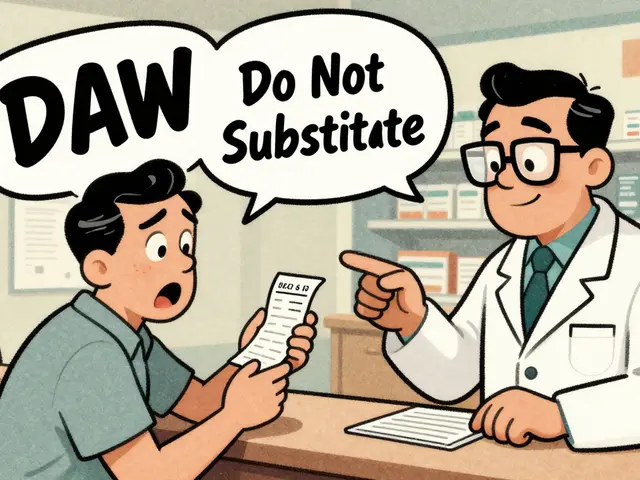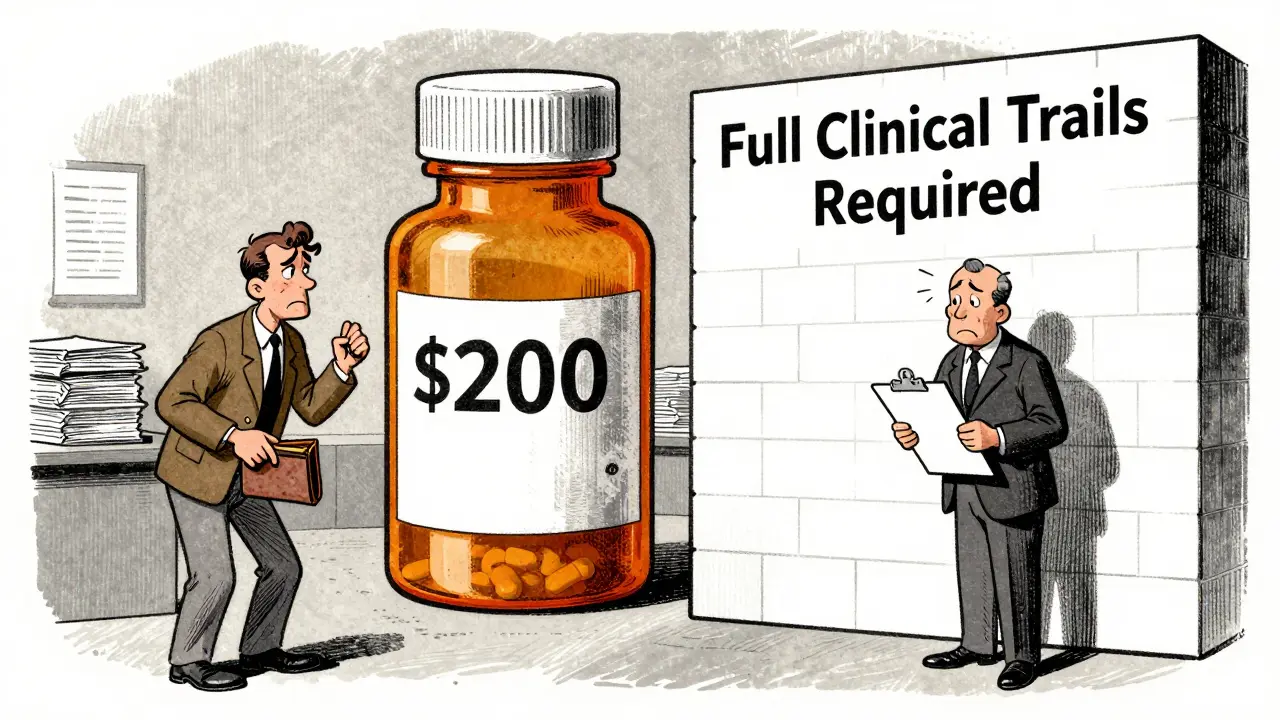
Imagine a world where your monthly blood pressure medication cost $200 instead of $5. For most of the 20th century, that was the reality for millions of Americans. The reason wasn't just greed; it was a broken legal system that forced generic drug makers to repeat expensive clinical trials just to prove their pills worked-trials that had already been done by the brand-name companies. Then came 1984. A bipartisan compromise between a conservative Republican senator and a liberal Democratic representative created one of the most successful legislative deals in U.S. history. It is called the Hatch-Waxman Act, officially known as the Drug Price Competition and Patent Term Restoration Act of 1984. This law didn’t just tweak the rules; it rebuilt the entire foundation of how we get medicines.
Today, about 90% of all prescriptions filled in the United States are generic drugs. That shift didn’t happen by accident. It happened because Hatch-Waxman solved two massive problems at once: it gave brand-name companies a way to recoup their research costs through extended patents, and it gave generic manufacturers a fast lane to market without reinventing the wheel. But like any major compromise, it has winners, losers, and unintended consequences that still spark debate today.
The Problem Before 1984: A Broken System
To understand why Hatch-Waxman matters, you have to look at what life was like before it existed. Prior to 1984, if a company wanted to sell a generic version of a popular drug, they faced a nightmare scenario. They had to submit a full New Drug Application (NDA) to the Food and Drug Administration (FDA). This meant spending hundreds of millions of dollars and years conducting their own safety and efficacy clinical trials, even though the chemical compound was identical to the brand-name version already on the market.
It made no economic sense. Why spend $50 million proving a pill works when Pfizer or Merck had already done it? As a result, very few generic drugs were available. In 1983, generics accounted for less than 19% of the prescription market. Patients paid premium prices because there was no competition.
Then came a court case that made things worse. In Roche Products, Inc. v. Bolar Pharmaceutical Co. (1984), the Federal Circuit Court ruled that generic companies couldn’t even start testing their drugs until the brand-name patent expired. Since FDA approval takes time, this effectively added years to the brand-name monopoly. If a patent expired in January, but it took six months to get FDA approval, the generic couldn’t hit shelves until July. That extra half-year of exclusivity was worth billions to big pharma.
Senator Orrin Hatch from Utah and Representative Henry Waxman from California saw this mess. Hatch represented states with strong pharmaceutical manufacturing interests. Waxman represented consumers who needed affordable care. They realized that neither side could win alone. Big pharma wanted protection for innovation. Generics wanted access to the market. The status quo served nobody well.
The Grand Compromise: What Hatch-Waxman Actually Did
The brilliance of the Hatch-Waxman Act lies in its balance. It didn’t favor one side over the other; it gave each side something vital while taking away some power from both. Here’s how the deal broke down:
- For Generic Manufacturers: The act created the Abbreviated New Drug Application (ANDA) pathway. Instead of repeating clinical trials, generics only need to prove bioequivalence. This means showing that their drug enters the bloodstream at the same rate and extent as the brand-name drug. No more redundant human trials. This cut development costs by roughly 80-90%.
- For Brand-Name Companies: The act introduced patent term restoration. Because the FDA review process eats up valuable patent time, the law allows brands to extend their patent life by up to five years after approval. This compensates them for the regulatory delay.
- For Everyone: The act established a "safe harbor" provision. Generic companies can now use patented methods to develop and test their drugs *before* the patent expires, as long as it’s for regulatory submission purposes. This fixed the Bolar problem mentioned earlier.
This structure created a predictable timeline. Brands got their money back during the patent period. Generics entered the market immediately after expiration. Patients got cheaper options sooner rather than later. It was a textbook example of effective legislation.

How the ANDA Process Works Today
The heart of the Hatch-Waxman framework is the ANDA process. If you’re a generic manufacturer, here is your step-by-step path to market:
- Select a Reference Listed Drug (RLD): You pick an existing brand-name drug approved by the FDA. All relevant data about this drug is listed in the FDA’s Orange Book.
- Demonstrate Bioequivalence: You conduct studies to show your product performs identically to the RLD in the body. This usually involves small-scale human trials comparing blood levels of the active ingredient.
- File the ANDA: You submit your application to the FDA. Crucially, you must address any patents listed in the Orange Book for that drug.
- Patent Certification: You choose one of four certifications:
- Paragraph I: No patent information exists.
- Paragraph II: Patents exist but have expired.
- Paragraph III: Patents exist and will expire on a specific date (you wait until then).
- Paragraph IV: You believe the patent is invalid or won’t be infringed (you challenge it).
- Approval: If the FDA agrees your drug is bioequivalent and your patent stance is valid, you get approval to manufacture and sell.
This streamlined process is why we see so many generics today. More than 10,000 generic products are currently available in the U.S., costing 80-85% less than their brand-name counterparts. For patients managing chronic conditions like diabetes or hypertension, this price difference is often the line between adherence and abandonment of treatment.
The Patent Linkage System and Paragraph IV Challenges
The most controversial-and financially significant-part of Hatch-Waxman is the patent linkage system. When a brand-name company files an NDA, they must list all relevant patents in the FDA’s Orange Book. When a generic company files an ANDA, they must certify against those patents.
If a generic company chooses Paragraph IV certification, they are essentially saying, "Your patent is weak, and we’re going to launch early." This triggers a legal battle. The brand-name company has 45 days to sue for patent infringement. If they do, the FDA imposes a 30-month stay. During this time, the FDA cannot approve the generic drug while the courts decide the issue.
Why would a generic company risk this lawsuit? Because of the 180-day market exclusivity reward. The first generic company to file a substantially complete ANDA with a Paragraph IV certification gets 180 days of sole generic market access. During this window, they can charge higher prices than later entrants. This incentive turned patent litigation into a lucrative business model for certain generic firms.
This dynamic has led to complex strategies. Some generic companies "camp" outside FDA offices waiting for the exact moment a patent expires to file their applications. Others engage in strategic timing to maximize their exclusivity period. While this encourages patent challenges, critics argue it also incentivizes frivolous lawsuits designed solely to trigger the 30-month stay.
| Feature | Before 1984 | After Hatch-Waxman |
|---|---|---|
| Generic Approval Pathway | Full NDA required | Abbreviated New Drug Application (ANDA) |
| Clinical Trial Requirement | Repeat full safety/efficacy trials | Prove bioequivalence only |
| Development Cost Reduction | N/A (High cost) | Approximately 80-90% lower |
| Generic Market Share (1983 vs 2023) | <19% | ~90% |
| Patent Protection Mechanism | Standard patent term only | Patent term restoration + Orange Book listing |
| Incentive for Early Entry | None | 180-day market exclusivity for first filer |

Unintended Consequences: Evergreening and Pay-for-Delay
No legislative compromise is perfect. Over the decades, loopholes emerged that allowed some stakeholders to exploit the system. Two major issues dominate current debates: evergreening and pay-for-delay settlements.
Evergreening occurs when brand-name companies make minor changes to a drug-like altering the dosage form or adding a new indication-to secure new patents or regulatory exclusivity periods. This keeps generics off the market longer than intended. For example, a company might patent a new coating for a pill that dissolves slower, arguing it’s a novel invention deserving of fresh patent protection, even though the active ingredient remains the same.
Pay-for-delay settlements are perhaps more damaging. These are agreements where a brand-name company pays a generic challenger to drop its patent lawsuit and delay entry into the market. Essentially, the brand shares its monopoly profits with the generic to keep competitors out. The Federal Trade Commission (FTC) estimated that these practices cost consumers approximately $35 billion annually between 1999 and 2012. While not explicitly illegal under antitrust laws, they violate the spirit of competition.
These tactics have drawn sharp criticism. Stat News argued that unaffordable prescription drugs are the "real legacy of Hatch-Waxman," suggesting the balance tipped too far toward brand protection. Conversely, industry groups argue that without robust patent incentives, innovative drug discovery would stall, harming patients in the long run.
Modern Updates: GDUFA and Current Debates
The FDA hasn’t sat idle. Recognizing bottlenecks in the ANDA review process, Congress passed the Generic Drug User Fee Amendments (GDUFA) in 2012, reauthorized in 2017 and 2022. These amendments allowed the FDA to collect user fees from generic applicants to hire more reviewers and improve efficiency. The result? Average ANDA review times dropped from 30 months in 2012 to under 12 months by 2022.
However, tensions remain. Recent legislative proposals, such as the Preserve Access to Affordable Generics and Biosimilars Act, aim to crack down further on pay-for-delay agreements and tighten rules around citizen petitions used to block approvals. The core question persists: Does the 1984 balance still serve the public interest in 2026?
As we look forward, the Hatch-Waxman framework remains the bedrock of U.S. pharmaceutical policy. It successfully democratized access to essential medicines by unleashing generic competition. Yet, as drug development becomes more complex and biologic therapies emerge, lawmakers face the challenge of adapting this old compromise to new realities. Whether through stricter enforcement against anti-competitive behavior or reforms to the exclusivity periods, the goal remains the same: ensuring patients get safe, effective, and affordable treatments without stifling the innovation that saves lives.
What is the main purpose of the Hatch-Waxman Act?
The Hatch-Waxman Act aims to balance two competing interests: encouraging innovation by protecting brand-name drug patents and promoting competition by facilitating the timely entry of lower-cost generic drugs. It achieves this through the ANDA pathway for generics and patent term restoration for brands.
What does Paragraph IV certification mean?
Paragraph IV certification is a statement by a generic drug applicant that a patent listed in the FDA's Orange Book is either invalid, unenforceable, or will not be infringed by the generic product. Filing this certification often leads to patent litigation but can grant the generic company 180 days of market exclusivity if they are the first to file.
How much cheaper are generic drugs compared to brand-name drugs?
On average, generic drugs cost 80-85% less than their brand-name equivalents. This significant price difference is due to the reduced development costs associated with the ANDA process, which eliminates the need for duplicative clinical trials.
What is the 30-month stay in the Hatch-Waxman process?
The 30-month stay is a period during which the FDA cannot approve a generic drug application if the brand-name manufacturer sues for patent infringement within 45 days of receiving notice of a Paragraph IV certification. This pause allows the courts to resolve the patent dispute before the generic enters the market.
Who sponsored the Hatch-Waxman Act?
The legislation was sponsored by Senator Orrin Hatch, a Republican from Utah, and Representative Henry Waxman, a Democrat from California. Their bipartisan collaboration created the compromise that balanced the interests of brand-name and generic pharmaceutical companies.