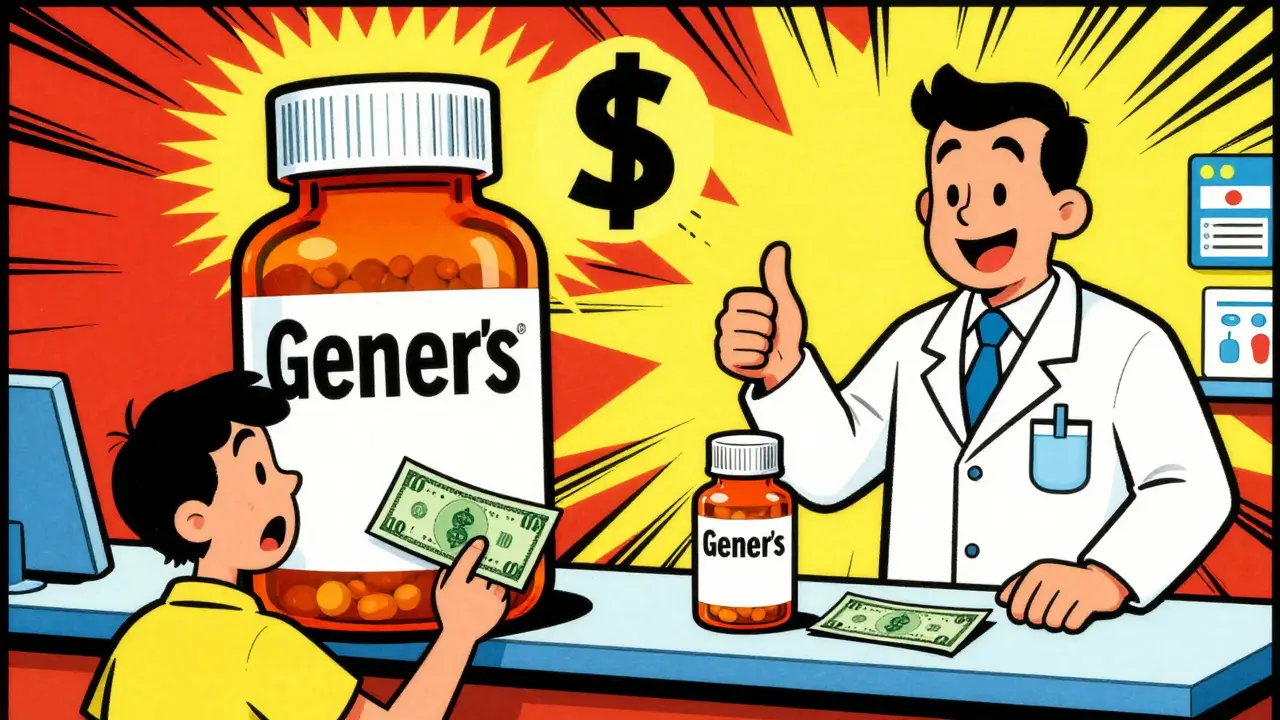
Imagine paying $800 for a medication when an identical version costs just $10. For millions of Americans, this isn't a hypothetical scenario-it’s their daily reality thanks to generic drugs. In 2024 alone, generic and biosimilar medications saved the U.S. healthcare system a staggering $467 billion. Over the last decade, from 2015 to 2024, those savings have piled up to reach $3.4 trillion. That is enough money to fund every public school in the country for years, or pay off a significant chunk of the national debt.
Yet, most people don’t realize how fragile this financial safety net is. We often hear about rising healthcare costs, but we rarely talk about the single biggest factor keeping those costs from spiraling completely out of control: competition. When brand-name patents expire and generics enter the market, prices plummet. But what happens when that competition is blocked? The answer is billions in wasted taxpayer money and higher premiums for everyone.
The Math Behind the Miracle: How Generics Cut Costs
To understand why generics are so powerful, you have to look at the sheer volume they represent. In 2024, Americans filled 3.9 billion generic prescriptions compared to only 435 million brand-name prescriptions. That means nine out of ten pills you swallow are generic. Despite making up 90.2% of all prescriptions, generics accounted for only 12% of total prescription drug spending.
Let’s break down that disparity. Americans spent $98 billion on generic medicines in 2024, while brand-name drugs cost $700 billion. This massive gap creates the "savings" figure cited by the Association for Accessible Medicines (AAM) and IQVIA Institute. These organizations calculate savings by comparing what patients actually paid for generics against what they would have paid if forced to buy the brand-name equivalent. It’s a straightforward comparison: without generics, your monthly blood pressure medication might jump from $15 to $150. Multiply that by millions of patients, and you get hundreds of billions in annual relief.
| Metric | Generic Medications | Brand-Name Medications |
|---|---|---|
| Prescriptions Filled | 3.9 Billion (90.2%) | 435 Million (9.8%) |
| Total Spending | $98 Billion (12%) | $700 Billion (88%) |
| Average Cost per Prescription | ~$25 | ~$1,609 |
This data reveals a critical truth: generics are not just a nice-to-have option; they are the backbone of affordable healthcare. Without them, the average American household would face drastically higher insurance premiums and out-of-pocket expenses. The U.S. healthcare system, which spent $4.9 trillion in 2023, relies on this price differential to keep overall expenditures manageable.
Biosimilars: The New Frontier in Savings
While traditional generics cover small-molecule drugs like aspirin or statins, a newer category called biosimilars is making waves in the biologic drug market. Biologics are complex medications made from living organisms, used to treat conditions like cancer, rheumatoid arthritis, and Crohn's disease. They are notoriously expensive, often costing tens of thousands of dollars per year.
Biosimilar medications are highly similar versions of these biologics. Because developing them is more complex than copying a simple chemical formula, their adoption has been slower. However, the impact is growing fast. In 2024, biosimilars generated $20.2 billion in savings. Since the first biosimilar entered the market in 2015, they have saved patients and insurers a cumulative $56.2 billion.
The potential here is enormous. A 2021 estimate by the Rand Corporation projected that biosimilars could reduce direct spending on biologic drugs by $54 billion over a decade. Given that we’ve already hit $56.2 billion in just under ten years, that projection looks conservative. As more biologic patents expire, expect biosimilars to become a major driver of healthcare cost containment, much like generics did for chronic conditions two decades ago.
The Hidden Threats Blocking Competition
If generics save so much money, why aren’t we seeing even bigger savings? The problem lies in tactics used by brand-name manufacturers to delay or block generic competition. These strategies create artificial monopolies, forcing patients to pay premium prices long after a drug should be available generically.
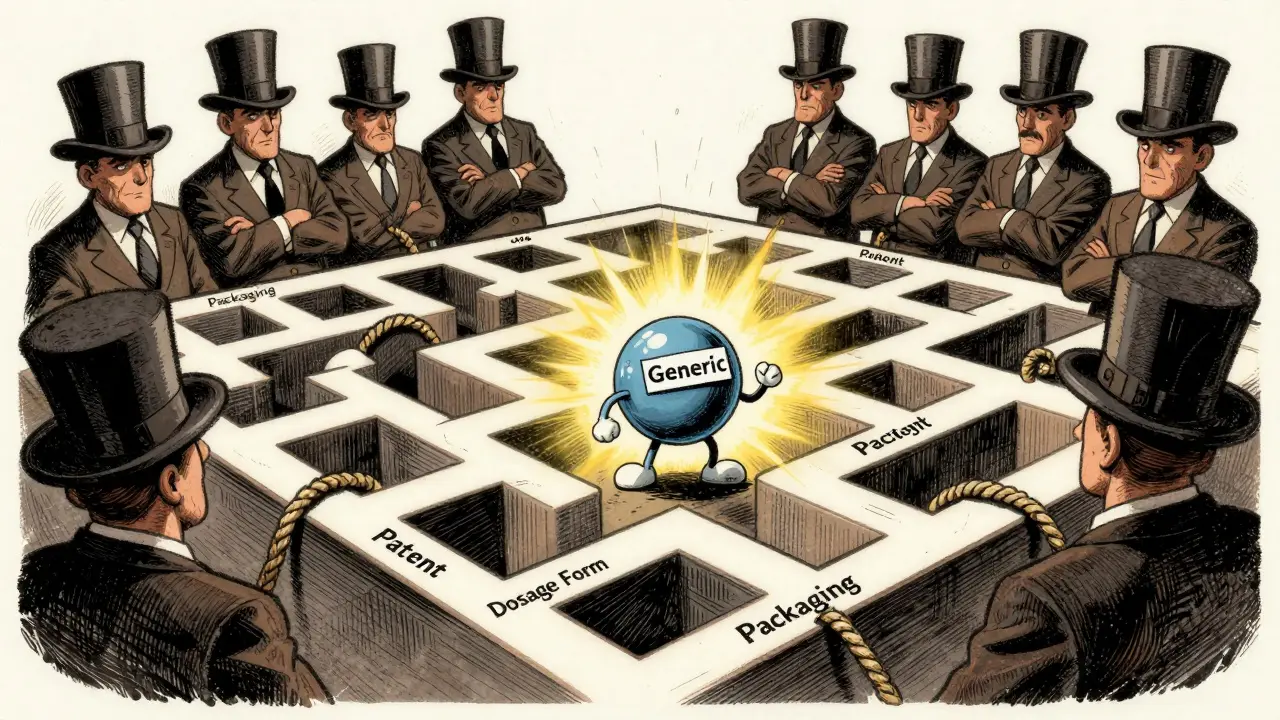
One common tactic is patent thicketing. Instead of filing one strong patent, companies file dozens of weak ones covering minor aspects of a drug, such as its packaging or dosage form. This creates a legal maze that generic makers must navigate before they can launch. A study published in JAMA Health Forum in August 2024 found that lost competition due to patent thickets on just four widely prescribed brand-name drugs cost the system more than $3.5 billion over two years.
Another issue is pay-for-delay settlements. Here, a brand-name company pays a generic manufacturer to stay out of the market for a certain period. While it may seem like a private business deal, the real losers are patients and taxpayers. Blue Cross Blue Shield estimated in 2023 that these anti-competitive practices drive up prescription drug costs by nearly $12 billion annually, with about $3 billion of that burden falling on federal programs like Medicare and Medicaid.
Then there’s product hopping, where a brand company slightly modifies a drug (e.g., changing from a tablet to a capsule) and switches doctors’ prescriptions to the new version before the original patent expires. This forces generic makers to start over, delaying competition. The Congressional Budget Office (CBO) estimates that ending product hopping could reduce federal spending and increase revenues by $1.1 billion over ten years.
Who Benefits Most? Federal Programs and Patients
The savings from generics don’t just disappear into thin air-they directly support some of the largest healthcare programs in the country. In 2024, generics delivered $142 billion in savings to Medicare and $62.1 billion to Medicaid. These figures are crucial because they help keep these government-funded programs solvent, allowing them to serve more beneficiaries without requiring massive tax increases.
For individual patients, the benefit is immediate and tangible. Consider the experience shared on Reddit’s r/healthcare subreddit, where a user detailed switching from an $800 brand-name medication to a $10 generic alternative. Such stories are common. A survey by Managed Healthcare Executive found that while 42% of patients had abandoned prescriptions due to cost, 89% of those who switched to generics reported satisfaction with both efficacy and savings, averaging $147 per month in reduced expenses.
However, access isn’t always smooth. Some patients report issues with generic substitution, particularly when Pharmacy Benefit Managers (PBMs) design formularies that steer patients toward higher-cost options. Additionally, administrative barriers like prior authorizations have increased by 47% from 2019 to 2023, according to the American Medical Association. These hurdles can prevent patients from getting the cheap alternatives they need, undermining the very savings generics are meant to provide.
The Role of Policy and Regulation
The foundation of today’s generic market was laid by the Hatch-Waxman Act of 1984, officially known as the Drug Price Competition and Patent Term Restoration Act. This landmark legislation created a streamlined pathway for generic approval, ensuring that generics are bioequivalent to brand-name drugs without requiring costly clinical trials. It also granted 180 days of market exclusivity to the first generic applicant, incentivizing companies to challenge patents.
Today, policymakers are looking to strengthen this framework. Legislation like S.1041, the Affordable Prescriptions for Patients Act, passed the Senate HELP Committee in June 2024 with bipartisan support. Aimed at cracking down on patent abuse, the CBO projects it could generate an additional $7.2 billion in annual savings. If enacted, such laws could accelerate generic entry and maximize the financial benefits for consumers.
State-level actions also play a role. California’s Generic Drug Discount Program, for example, achieves 98% generic utilization through mandatory substitution laws. In contrast, states with more flexible policies, like Texas, see lower rates (87%). This variation highlights how regulatory choices directly impact savings outcomes.
Looking Ahead: Sustaining the Savings
The future of generic savings looks promising but faces challenges. The FDA approved 1,145 generic drugs in 2024, a 7.3% increase from the previous year. Specialty generics, including complex injectables and inhalers, are becoming a larger share of approvals, opening new avenues for cost reduction in high-spending therapeutic areas.
However, consolidation in the manufacturing sector poses a risk. The top 10 generic manufacturers now control 63% of the market, up from 51% in 2015. This concentration can lead to supply shortages and reduced competitive pressure. In December 2024, the FDA reported shortages affecting 287 generic medications, disrupting care for millions of patients.
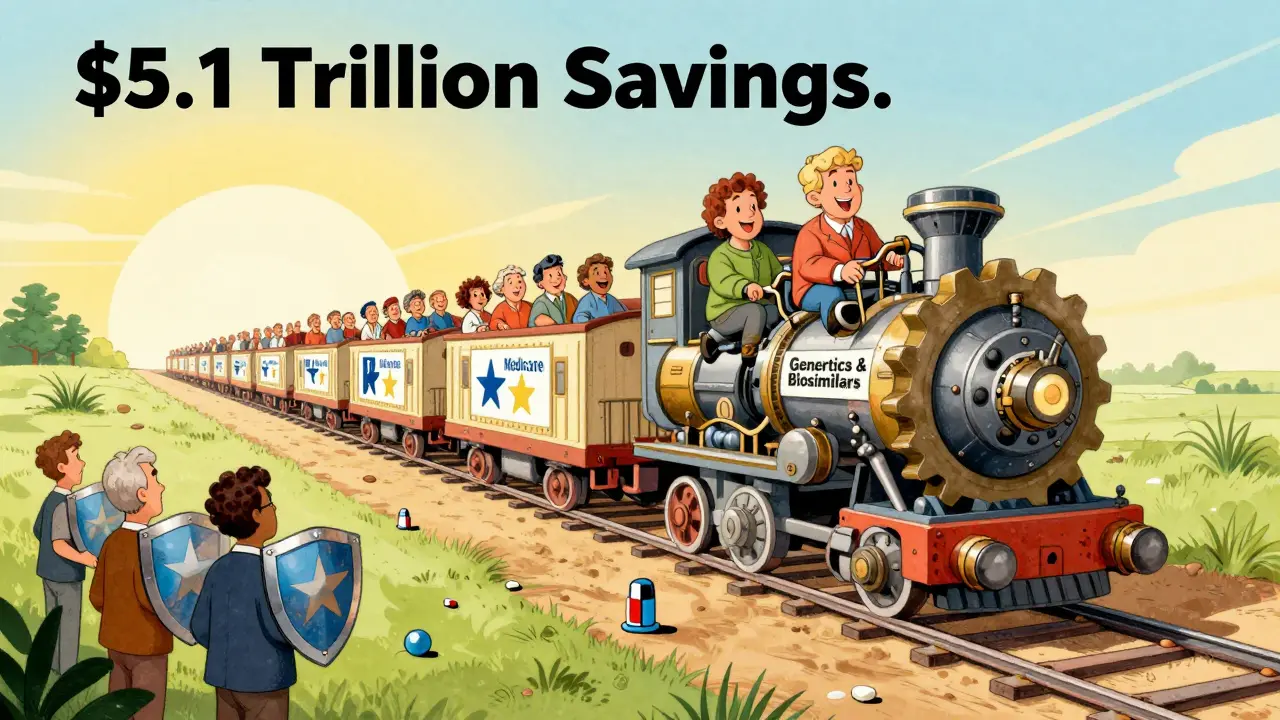
Despite these hurdles, the long-term outlook remains positive. The IQVIA Institute projects that generics and biosimilars will generate $5.1 trillion in cumulative savings from 2025 to 2034 if current trends continue. Achieving this requires vigilance-ensuring that regulations promote competition, that supply chains remain robust, and that patients have easy access to affordable alternatives.
In essence, generic drugs are not just cheaper pills; they are a vital economic engine for the healthcare system. By understanding their value and advocating for policies that protect competition, we can ensure that these trillion-dollar savings continue to benefit patients, providers, and taxpayers alike.
What is the difference between a generic drug and a biosimilar?
Generic drugs are copies of small-molecule brand-name drugs, like aspirin or metformin. They must be chemically identical to the original. Biosimilars, on the other hand, are copies of biologic drugs, which are complex molecules made from living cells, used for conditions like cancer or autoimmune diseases. Biosimilars are "highly similar" to the reference biologic but may have minor differences in inactive ingredients.
Are generic drugs as effective as brand-name drugs?
Yes. The FDA requires generic drugs to demonstrate bioequivalence, meaning they deliver the same amount of active ingredient into the patient’s bloodstream in the same amount of time as the brand-name drug. While some patients report perceived differences in side effects or efficacy, these are often due to inactive ingredients or placebo effects. Clinical studies consistently show generics are therapeutically equivalent.
Why do brand-name companies use patent thickets?
Patent thickets involve filing numerous overlapping patents on minor aspects of a drug (e.g., packaging, dosage forms) to create legal barriers for generic competitors. This strategy delays generic entry, allowing the brand-name company to maintain monopoly pricing and higher profits for longer periods.
How much did generics save Medicare in 2024?
According to the Association for Accessible Medicines (AAM), generics delivered $142 billion in savings to Medicare in 2024. This significant contribution helps sustain the program’s budget and reduces the financial burden on federal taxpayers.
What is the Hatch-Waxman Act?
The Hatch-Waxman Act, passed in 1984, established the modern regulatory framework for generic drugs in the U.S. It created an abbreviated approval pathway for generics, ensuring they are safe and effective without duplicating expensive clinical trials. It also balanced incentives for innovation by extending patent terms for brand-name drugs while promoting competition through generic entry.