The Pharmaceutical Benefits Scheme (PBS) is the backbone of Australia’s healthcare system when it comes to prescription drugs. It’s not just a subsidy program - it’s the reason millions of Australians can afford life-saving medications without going broke. Since 1948, the PBS has ensured that whether you’re in Sydney, Perth, or a remote town in the Northern Territory, you can get essential medicines at a price you can handle. And at the heart of this system lies the generic drug market - the quiet engine that keeps costs down and access high.
How the PBS Works - And Why It Matters
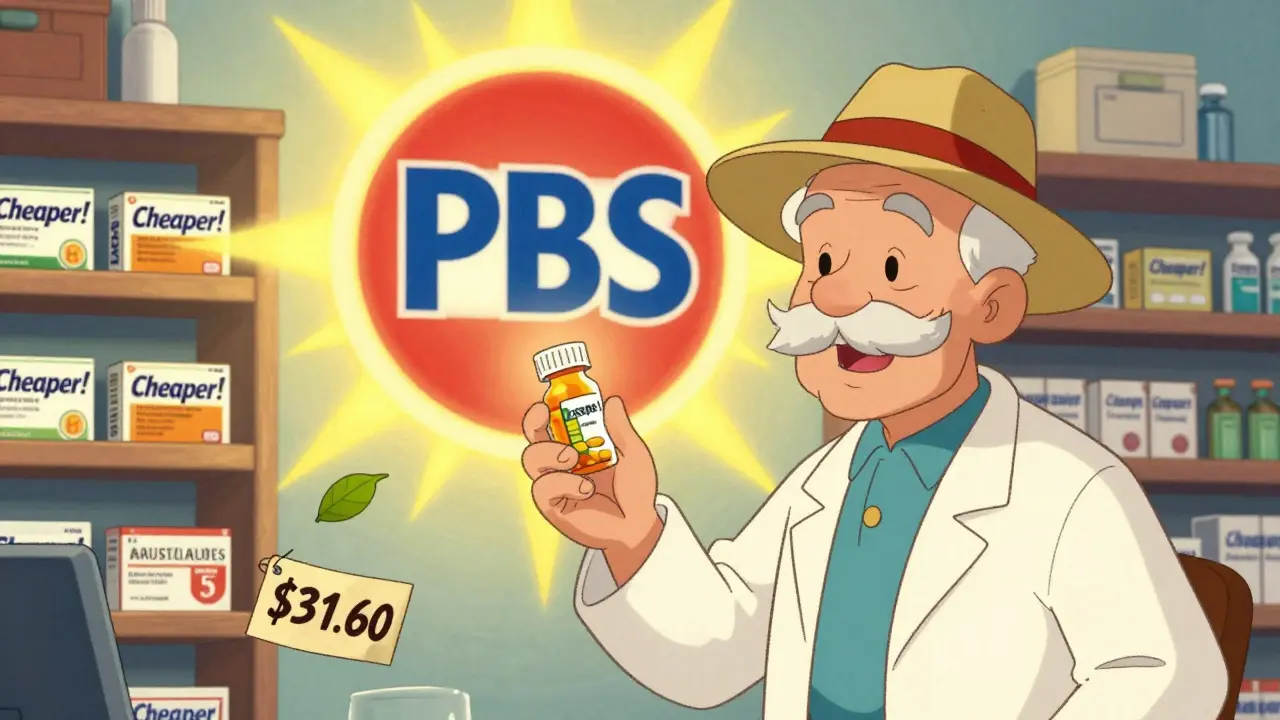
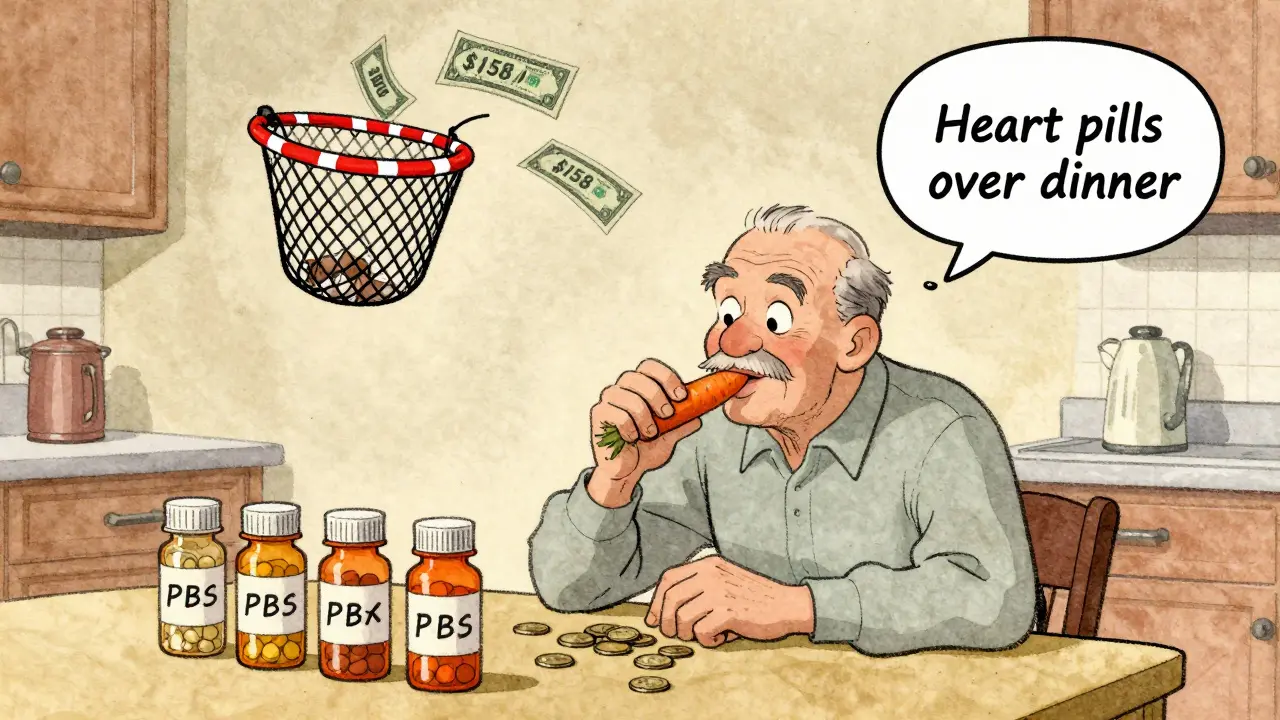
The PBS doesn’t give you free medicine. It cuts the price. For most people, a prescription that might cost $100 out-of-pocket gets slashed to $31.60 - and even less if you’re on a concession card. That’s because the government pays about 90% of the cost. The rest? You pay. But here’s the catch: if you’re taking five different medications every month, that $31.60 adds up fast. For many self-funded retirees or low-income workers, that’s $158 a month just to stay alive.
The PBS covers over 5,400 medicines, from insulin to blood pressure pills to cancer drugs. About 87% of all prescriptions in Australia are subsidized through it. That’s not small. That’s the majority of people getting their meds because the system works. But it’s not perfect. The process to get a new drug listed can take nearly two years. Meanwhile, patients pay full price, sometimes thousands of dollars, while waiting. One study found people wait an average of 14.2 months after a drug is approved by regulators before it shows up on the PBS. That’s a long time to be paying out-of-pocket.
The Rise of Generic Medicines in Australia
Generic drugs are the secret sauce behind the PBS’s affordability. These are chemically identical versions of brand-name drugs, made after the patent expires. In Australia, 84% of all prescriptions for off-patent medicines are filled with generics - higher than the OECD average. But here’s the twist: even though generics make up most of the volume, they only account for 22% of the total PBS spending. Why? Because the original brand-name drugs are still expensive, and they’re often prescribed first - even when a cheaper generic exists.
The PBS pushes generics hard through something called reference pricing. If five drugs treat the same condition, the government sets the subsidy based on the cheapest one. So if you pick a more expensive brand-name drug, you pay the difference. That’s why pharmacists now routinely ask: “Do you want the generic?” It’s not just a suggestion - it’s how the system saves billions.
Since 2020, the government has made it even easier for generics to win. After six months, the reference price drops to 60% of the original drug’s price. After a year, it drops again - to 43%. That forces manufacturers to compete. In cardiovascular drugs, prices tumble 74% within a year of generic entry. For statins, 95% of prescriptions are generic within 18 months. That’s the power of smart policy.
Who Controls the Generic Market?
The generic drug market in Australia isn’t fragmented. It’s dominated. Five companies - Symbion, Sigma, Mylan, Aspen, and Hospira - control nearly 70% of the market. That’s a lot of power in a few hands. And while competition drives prices down, consolidation can also mean less innovation and fewer suppliers if one company exits the market.
These companies don’t just make pills. They lobby, they bid, they time their launches. When a patent expires, they race to be first. The first generic to enter gets the highest market share - sometimes 80% - because pharmacies and doctors trust the first one that’s listed. After that, others come in, prices drop further, and the cycle continues.
But not all drug classes behave the same. Biologics - complex drugs made from living cells, like those used for rheumatoid arthritis or Crohn’s disease - are harder to copy. Generics for these, called biosimilars, take longer to enter the market and face more regulatory hurdles. As a result, only 63% of biologic prescriptions are filled with generics, compared to 95% for simple pills like metformin or atorvastatin.
The Hidden Costs: When the System Fails
For all its success, the PBS has cracks. The biggest? Cost-related non-adherence. In 2024, 12.3% of Australians - about 1.8 million people - skipped doses or didn’t fill prescriptions because they couldn’t afford it. That’s not a small number. That’s people choosing between their meds and groceries. For those on concession cards, the rate is just 4.7%. The difference? A $24 co-payment gap. That’s not just a number - it’s a life-or-death divide.
One Reddit user, ‘MedicareWarrior’, wrote: “I take five meds. $31.60 each. That’s $158 a month. I’m 68, retired, no pension. I eat less so I can take my heart pills.” Stories like this aren’t rare. The Australian Council of Social Service found that 28% of low-income households with chronic illnesses cut back on food to pay for medicine. That’s not healthcare. That’s survival.
Then there’s the administrative mess. Nearly half of all prescribers say the authority-required listings are a nightmare. Some medicines need prior approval before they can be dispensed. That means doctors fill out forms, wait days for a response, and patients go without. Electronic approvals take 1.8 days. Paper? Over a week. In the meantime, patients suffer.
What’s Changing in 2025 and Beyond
Change is coming - and fast. On January 1, 2026, the general patient co-payment drops from $31.60 to $25. That’s a $6.60 cut. It might not sound like much, but over a year, it saves the average patient $79. For someone on five meds, that’s $395 saved. The government estimates this will save Australians $784 million over four years. But it also means the government will pay more - $689 million extra. It’s a trade-off: less pain for patients, more pressure on the budget.
Also in 2025, the Highly Specialised Drugs Program (HSDP) is getting easier to access. It used to have eight strict rules for rare disease drugs. Now, two of them are being relaxed. That means more people with ultra-rare conditions might finally get treatment. Drugs like Talazoparib for prostate cancer and Relugolix for endometriosis are being added to the PBS, helping an extra 150,000 Australians.
The future of the PBS is digital. The Department of Health is rolling out real-time prescription monitoring and AI tools to spot inappropriate prescribing. In 2024, the Auditor-General found $1.2 billion in PBS spending was potentially unnecessary. That’s money going to drugs that don’t help, or that are overused. AI could fix that - but only if it’s used right.
How Australia Compares to the World
Australia’s PBS is often called one of the most efficient drug systems on Earth. Compared to the U.S., where a single insulin prescription can cost over $300, Australia’s $25 co-payment is a miracle. But it’s not the cheapest. The UK’s NHS pays even less for the same drugs - about 15-20% lower. Canada is also faster at approving new medicines.
The big difference? Flexibility. The UK’s NICE system has a strict cost-per-QALY threshold of £20,000-£30,000. If a drug exceeds that, it’s usually rejected. Australia’s PBAC uses a looser benchmark - around AU$50,000 per QALY - and still approves drugs costing over AU$150,000 per QALY if they’re for rare diseases. That’s why Australians get access to more cutting-edge treatments than the UK, even if they wait longer.
And while the U.S. lets drugmakers set any price they want, Australia negotiates. The government doesn’t just buy drugs - it bargains. That’s why the PBS spends $13.5 billion a year on medicines, while the U.S. spends over $600 billion. One country pays for outcomes. The other pays for profits.
What This Means for You
If you’re an Australian on the PBS:
- Always ask your pharmacist: “Is there a generic?”
- If you’re on multiple meds, track your spending. Once you hit the safety net ($1,571.70 in 2025), your co-payment drops to $7.70.
- Use the PBS App. It shows you prices, eligibility, and new listings.
- If you’re denied a drug, ask your doctor about an authority request. Many get approved on appeal.
- If you’re struggling to pay, contact Services Australia. There are hardship programs.
If you’re a healthcare worker:
- Know your PBS listing categories - general, restricted, authority-required.
- Use the PBS Tools portal. It saves hours.
- Advocate for your patients. The system works best when prescribers push back on delays.
Frequently Asked Questions
What is the PBS safety net and how does it work?
The PBS safety net is a cap on how much you pay for medicines in a calendar year. Once you’ve spent $1,571.70 (in 2025) on PBS co-payments, you switch to the concessional rate of $7.70 per script - even if you’re not a concession card holder. This applies to all PBS-subsidised medicines you buy that year. The system tracks your spending automatically through your Medicare card. You don’t need to apply - it happens in the background.
Why are some medicines not on the PBS?
Not all medicines make it onto the PBS because they don’t meet the cost-effectiveness threshold set by the Pharmaceutical Benefits Advisory Committee (PBAC). A drug must prove it works better than existing options and offers good value for money. Many new cancer drugs, for example, extend life by only a few months at a very high cost. While they may be clinically effective, they often don’t pass the PBAC’s economic test. Some are also too new - the approval process can take over a year.
Can I get PBS medicines overseas?
No. The PBS only covers medicines dispensed in Australia. If you’re traveling, you’ll need to pay full price for prescriptions abroad. Some reciprocal health agreements allow emergency treatment, but not ongoing PBS subsidies. Always bring enough medication for your trip, and carry a doctor’s letter explaining what you’re taking.
How long does it take for a generic drug to appear on the PBS after a patent expires?
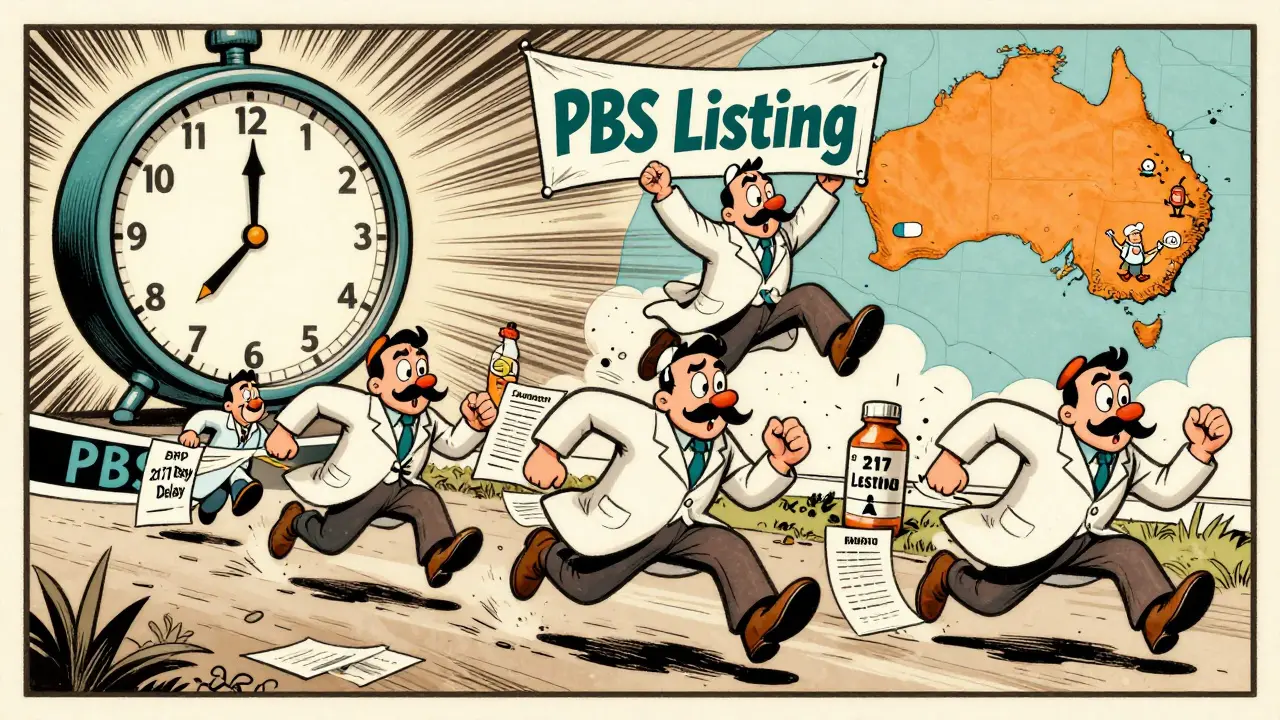
It can take up to 217 days on average for a generic to be listed after a patent expires, according to the Australian Productivity Commission. This delay is due to the time it takes for manufacturers to apply, for the PBAC to review, and for pricing negotiations to be finalized. During this gap, patients pay the higher brand-name price. The government has been trying to speed this up, but bureaucracy and negotiations still slow things down.
Are biosimilars as safe as the original biologic drugs?
Yes. Biosimilars are not copies - they’re highly similar versions of complex biologic drugs. They undergo rigorous testing by the Therapeutic Goods Administration (TGA) to prove they work the same way, with no meaningful difference in safety or effectiveness. Many patients switch to biosimilars without issue. The PBS encourages their use because they cost 30-50% less than the original, freeing up funds for other treatments.
What’s Next?
The PBS isn’t going away. But it’s changing. As Australia ages, more people will need more medicines. Biologics and gene therapies are getting pricier. The government can’t keep subsidizing everything. That means harder choices: which drugs to fund, which to delay, which to reject.
But the core idea remains: no one should go without medicine because they can’t afford it. The PBS, despite its flaws, still makes that possible for most Australians. The real challenge now is making sure it stays that way - without breaking the bank.

14 Comments
So Australia pays $25 for meds while Americans pay $300 for insulin? Cool. So we’re the ones with the broken system and they’re the ones saving lives? 🤔 Guess that’s why everyone’s moving to Oz now. Not the weather. Not the kangaroos. The pharmacy counter.
That stat about 1.8 million people skipping doses because they can’t afford it… that’s not a policy failure. That’s a moral one. And yet we’re still arguing about co-pays like it’s a budget spreadsheet. 🤷♂️
generic drugs = life saver 💊❤️ but also like… why do big pharma still get rich off the same pills?? 🤨 #capitalismisweird
I live in the US and I just learned about PBS today. It’s kind of beautiful. People shouldn’t have to choose between medicine and food. Ever.
Reference pricing works. It’s not magic. It’s math. And it’s saving billions. Stop pretending generics are inferior. They’re not. They’re just cheaper.
Hey, if you’re on five meds and paying $158/month, you’re not alone. But here’s the thing - you’re also not powerless. Hit up Services Australia. Use the PBS app. Track your spending. The safety net kicks in. You’ll get down to $7.70. It’s not perfect, but it’s there. Don’t give up.
Wow. So Australia’s system is great… until you realize the government’s just forcing pharmacies to push generics so they don’t have to raise taxes. Classic. Everyone’s a hero until you check the fine print.
Is it just me or does the 14-month wait for new drugs feel insane? I get cost-effectiveness, but if someone’s dying while waiting… that’s not efficiency. That’s cruelty wrapped in bureaucracy.
They say generics are safe… but what if they’re secretly made in China? 😳 I heard the TGA just rubber stamps everything now. My aunt’s blood pressure med stopped working after they switched. Coincidence? I think not. 🕵️♀️
I’m curious - how many of those 5,400 PBS-listed drugs are actually backed by strong clinical evidence? Or are we just covering everything because it’s ‘possible’?
Why are we still pretending this is a ‘system’? It’s a band-aid on a hemorrhage. $25 co-pay? That’s still too much for people living paycheck to paycheck. The government should just pay for it all. Full stop. 🇦🇺
So Australia thinks it’s so advanced because it has generics? Please. We in India make 40% of the world’s generics. We export them to the US, Europe, Africa. You’re just buying what we already figured out decades ago. Your PBS is just a middleman with a nice website.
Why are you even talking about Australia like it’s some miracle? We in Nigeria have people walking 20km for medicine and you’re debating $6.60 co-pays? This is rich. First world problems with a flag
Wait - so the government pays $689 million extra just to cut co-pays from $31.60 to $25? That’s a $79 annual saving for the average patient… but a $689 million hit to the budget? That’s like paying $1000 to save $80. Who approved this? 🤔
Write a comment