
When a generic drug gets tentative approval from the FDA, it doesn’t mean it’s ready to hit shelves. It means the agency has confirmed the drug is safe, effective, and manufactured to the same standards as the brand-name version - but it can’t be sold yet. Why? Because patents or exclusivity rights on the original drug are still in force. This status exists to speed up market entry once those legal barriers fall. But in practice, many tentatively approved generics sit idle for years. Some never launch at all.
Why Do Generic Drugs Get Tentative Approval in the First Place?
The FDA created tentative approval under the Hatch-Waxman Act of 1984 to balance innovation and access. Without it, generic manufacturers would have to wait until a brand-name drug’s patent expired before even starting the review process. That could mean years of delay after the patent ends. Tentative approval lets companies finish their applications early. Once the patent expires, the FDA can flip the switch from tentative to final approval - ideally within days. But that’s not how it usually works. As of 2023, over 2,500 generic applications have received tentative approval. Yet the median time between that approval and actual market launch is still over 16 months. Why the gap? It’s not one problem. It’s a chain of delays, each one adding up.Review Cycles Are Slowing Everything Down
The FDA’s review process for generic drugs isn’t fast. Even with the Generic Drug User Fee Amendments (GDUFA), which was meant to fix this, most applications still go through multiple rounds of feedback. In 2022, the average number of review cycles was 3.2 - down from nearly four in 2017, but still too high. Most of these cycles happen because the application is incomplete. The most common missing pieces? Chemistry, manufacturing, and controls (CMC) data. About 35% of all deficiencies fall into this category. That includes unclear descriptions of how the drug is made, inconsistent batch testing, or poorly documented stability studies. Another 28% relate to bioequivalence studies - the tests that prove the generic behaves the same way in the body as the brand drug. If the study design doesn’t meet FDA standards, the application gets sent back. Manufacturing facilities are another big issue. In fiscal year 2022, 41% of complete response letters (CRLs) - the official FDA notice that an application is rejected - cited problems with the production site. Common findings: poor quality control systems, failure to monitor environmental conditions in clean rooms, or equipment that wasn’t properly validated. These aren’t minor oversights. They’re red flags that suggest the drug might not be consistently safe or effective.Patent Litigation Is the Biggest Roadblock
Even if the FDA says a generic is ready, it still can’t launch if the brand-name company sues. This is called the 30-month stay. When a generic applicant certifies that a patent is invalid or won’t be infringed (a Paragraph IV certification), the brand company can file a lawsuit. That triggers a 30-month pause on final approval - no matter how strong the generic’s case is. Between 2010 and 2016, 68% of tentatively approved generics were held up by this legal delay. And it’s not just lawsuits. Brand companies file “citizen petitions” - formal requests asking the FDA to delay approval on technical grounds. Between 2013 and 2015, 67 petitions were filed, mostly by brand manufacturers. The FDA approved only three. Yet those petitions still added months, sometimes years, to the timeline. One study found petitions filed within 30 days of patent expiration delayed entry by an average of 7.2 months. Even worse, some companies use “product hopping” - making tiny changes to their drug (like switching from a pill to a capsule) to trigger new patents. A 2018 FTC study found this tactic affected 17% of top-selling drugs. And “pay-for-delay” deals - where brand companies pay generics to stay off the market - delayed nearly 1,000 generic launches between 2009 and 2014.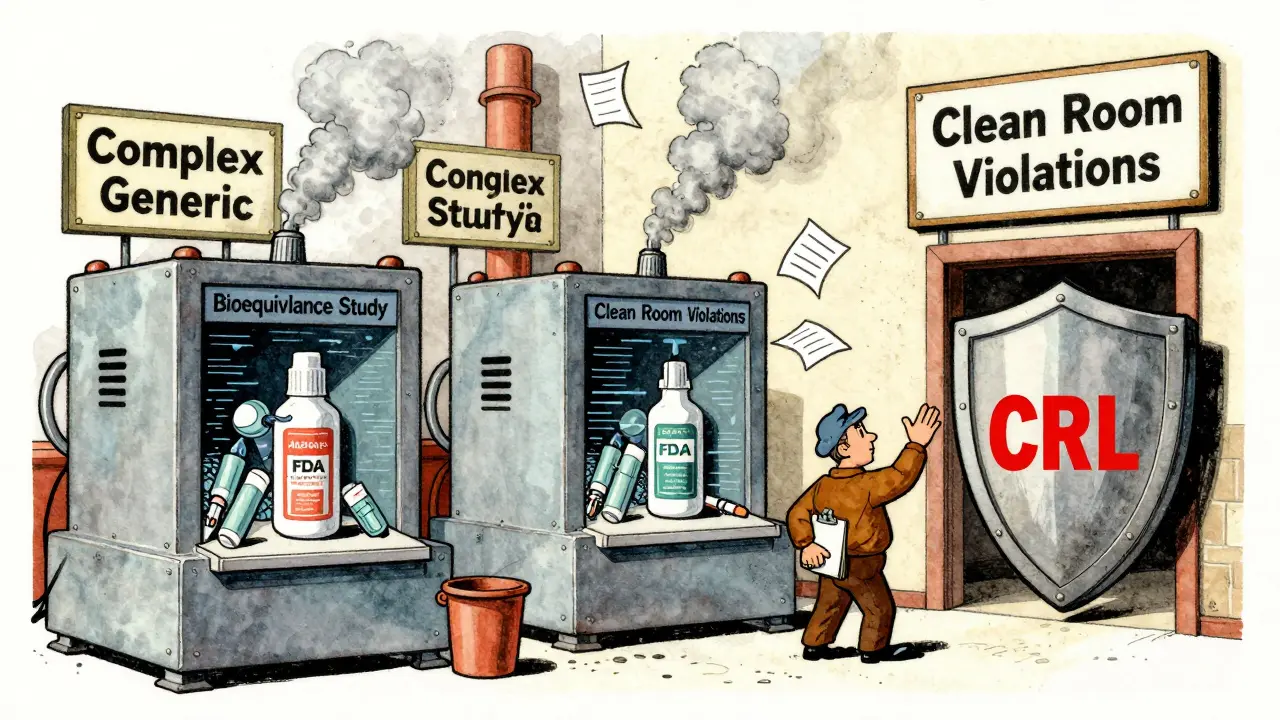
Manufacturing Complexities Are Holding Back Advanced Drugs
Not all generics are created equal. Simple pills? Easy. Inhalers? Creams? Injectables? Much harder. Complex generics - like topical creams, nasal sprays, or extended-release tablets - face longer reviews. In 2022, complex dosage forms had 2.3 times more review cycles than standard oral tablets. On average, they took 14 months longer to get tentative approval. Why? These drugs are harder to replicate. The way a cream is spread, how a spray is delivered, or how a tablet releases medicine over time - these details matter. But many applicants don’t have the right data. The FDA’s 2020 guidance tried to clarify what’s needed, but only 12% of complex generic applications met the 10-month approval target in 2021. Even after approval, scaling up production is a hurdle. A 2020 FDA survey found that 62% of complex generics faced launch delays longer than 12 months after patent expiry, simply because manufacturers couldn’t ramp up production fast enough.Market Economics Often Kill Good Applications
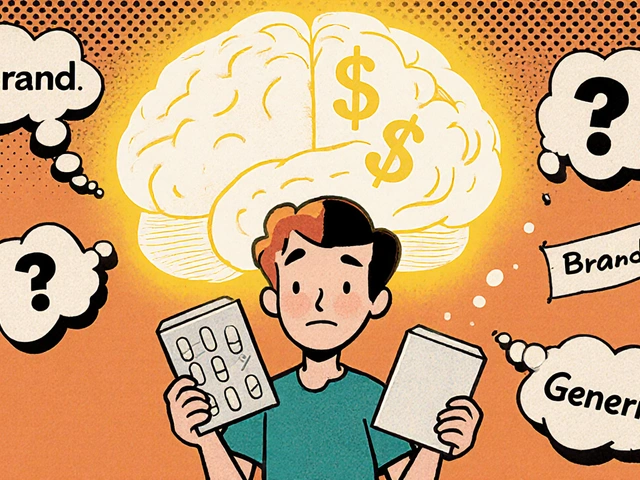
Here’s something surprising: even when a generic clears every hurdle, it might never be sold. About 30% of tentatively approved drugs never launch. For drugs with annual U.S. sales under $50 million, that number jumps to 47%. Why? Profit margins. If a brand drug sells for $100 a month and the generic market is crowded, the price might drop to $5. If only one or two companies make it, they might keep prices high - around 80% of the brand’s cost - for two years. That discourages new entrants. So companies wait. They wait to see if the market will be profitable. They wait for competitors to enter first. They wait for the right time. The FDA’s 2021 report found 517 brand drugs still had no generic version. Of those, 312 had tentative approvals - but were stuck in legal or economic limbo.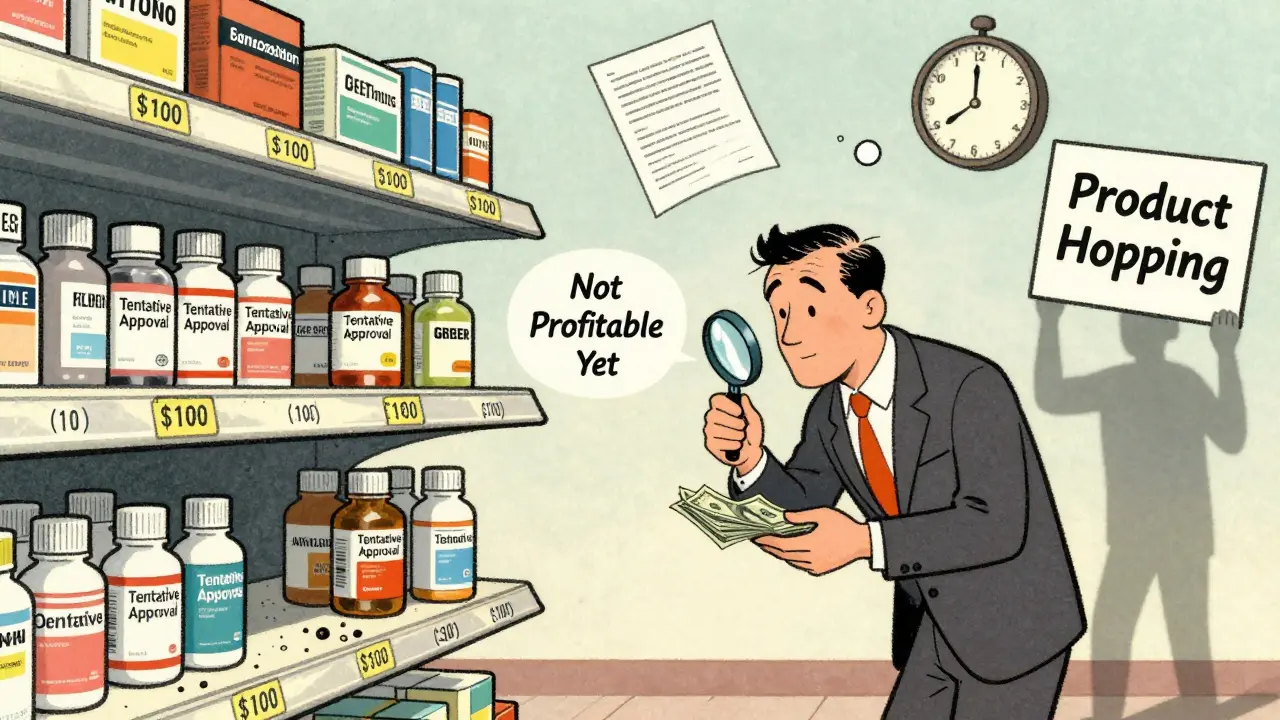

14 Comments
So we’re telling patients to wait years for cheap meds while pharma plays chess with patents? Wild.
i thoght the fda was supposed to make this faster?? like why is it taking 16 months after approval?? i mean cmon
It’s not just bureaucracy-it’s a systemic betrayal of public trust. The FDA’s intent was noble: accelerate access. But what we’ve got is a labyrinth where innovation is strangled by legal loopholes and profit calculus. A cream that takes 14 months longer to approve? That’s not science-it’s a market manipulation tool disguised as regulation. And don’t get me started on product hopping. You change the capsule shape, slap on a new patent, and suddenly the generic is a criminal for daring to exist. This isn’t healthcare. It’s corporate theater with lives on the line.
The data on complex generics is alarming. Manufacturing consistency for inhalers and topical formulations requires precision that many applicants simply aren’t equipped to deliver. It’s not laziness-it’s a lack of infrastructure and investment in specialized production capabilities. The FDA’s guidance is clear, but without funding or incentives for manufacturers to upgrade, we’re just repeating the same cycle.
There’s a quiet irony here: the system designed to lower drug prices ends up enriching the very companies it was meant to disrupt. Tentative approval was supposed to be a bridge-but now it’s a holding cell. And the worst part? The people who suffer aren’t the CEOs or the lawyers. They’re the diabetic in Ohio who can’t afford insulin, the cancer patient waiting for a $5 generic instead of a $500 brand. We’ve optimized for legal technicalities, not human outcomes.
Another US problem. India makes generics faster and cheaper. Why don’t we just import?
It’s obvious. The FDA is too soft. If we had real enforcement, no company would dare file frivolous citizen petitions. We need to jail the executives who delay life-saving drugs. This isn’t capitalism-it’s criminal negligence.
Patent litigation delays are the most significant barrier. Legal mechanisms must be reformed to prevent abuse.
Big Pharma doesn’t want competition. They know if generics hit the market, their profits vanish. So they use every trick in the book-lawsuits, petitions, product hopping. The system is rigged. But the good news? The CREATES Act and CGT pathway are real steps forward. We just need to push harder, fund the FDA properly, and stop letting lawyers run healthcare.
Wait… so the FDA is in cahoots with Big Pharma?? I knew it!! They’re hiding the real cure for cancer in a vault and letting people die so they can sell $1000 pills!! 🤫💊👁️🗨️
Why are we even talking about patents? Capitalism is a scam. The real issue is that we treat medicine like a commodity instead of a right. Also, who decided that a pill has to be round? That’s arbitrary. Maybe the FDA should just let people make their own drugs at home. Free market health care baby
One cannot help but observe that the structural impediments to generic drug market entry are not merely procedural but deeply ideological. The conflation of intellectual property with moral entitlement has rendered the public trust in pharmaceutical governance increasingly tenuous. The Hatch-Waxman Act, while laudable in intent, has been subverted by a legal architecture that privileges corporate continuity over collective well-being. One must ask: in a society that professes to value equity, why is access to essential therapeutics contingent upon the whims of litigation and shareholder returns?
They’re just waiting… waiting… waiting… and meanwhile, people are dying… and nobody’s doing anything… and it’s all so… so… frustrating…
If 30% of tentatively approved generics never launch, and nearly half of low-revenue ones are abandoned, then the real problem isn’t the FDA-it’s the market structure. Why do we let profit margins dictate whether a life-saving drug gets made? We’ve outsourced healthcare ethics to quarterly reports. That’s not innovation. That’s surrender.
Write a comment