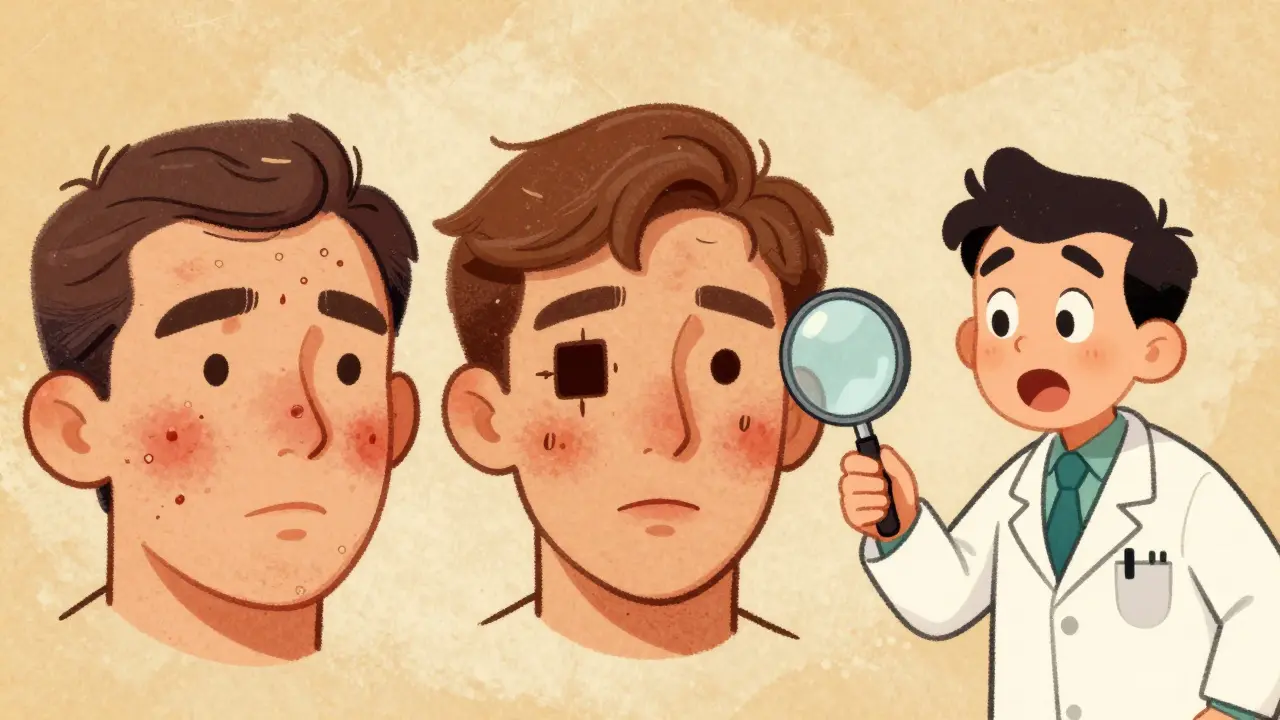
Acne scars don’t go away on their own. If you’ve had cystic breakouts or deep pimples that left behind pits, ridges, or dark spots, you know how frustrating it is. No amount of foundation or concealer can fully hide them. The good news? We now have more effective ways to treat them than ever before - and it’s not just about expensive lasers or miracle creams. The real answer lies in combining the right procedures with consistent, science-backed skincare.
Why Acne Scars Don’t Heal Like Normal Cuts
Acne scars aren’t just leftover marks - they’re structural damage. When a deep pimple inflames the skin, it destroys collagen and elastin. The body tries to repair it, but often messes up the process. Instead of rebuilding smooth skin, it leaves behind depressions or raised bumps. About 95% of people with moderate to severe acne end up with some form of scarring, according to the American Academy of Dermatology.
There are three main types of atrophic (depressed) scars, which make up 80-90% of cases:
- Rolling scars: Wide, wavy dips under the skin - like the surface of a rolling hill.
- Boxcar scars: Sharp-edged, round or oval depressions, similar to chickenpox scars.
- Ice pick scars: Deep, narrow holes that look like the skin was punctured with a needle.
Each type responds differently to treatment. Rolling scars respond best. Ice pick scars? Much trickier. That’s why a one-size-fits-all approach rarely works.
Microneedling: The Gentle But Powerful Option
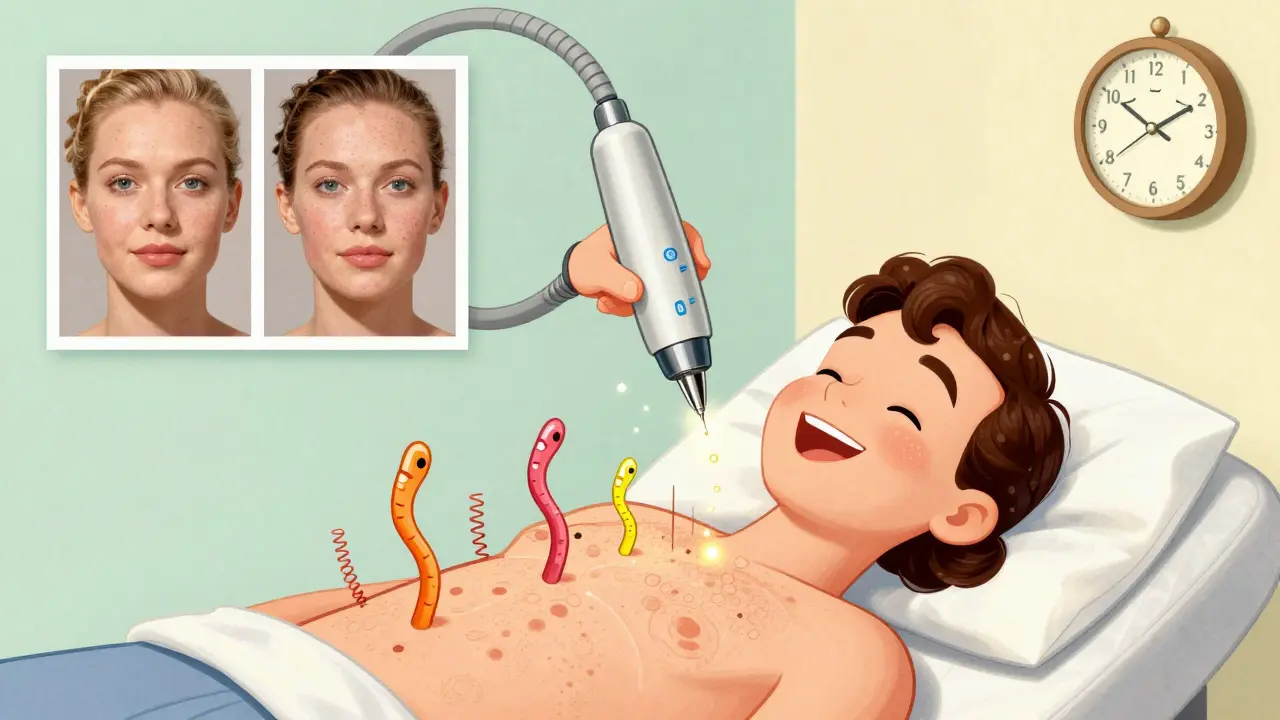
Microneedling has become a go-to because it’s effective without the long downtime of lasers. It works by using tiny needles to create controlled micro-injuries in the skin. This tricks your body into making new collagen - the same protein that gives skin its structure and bounce.
Standard microneedling uses needles between 0.25mm and 2.5mm long. For acne scars, most dermatologists use 1.5mm to 2.5mm depth with 2-3 passes. Automated devices like the Dermapen can deliver up to 200 punctures per second, making the process more precise and less painful than manual rollers.
But the real game-changer? RF microneedling. Devices like Morpheus8 add radiofrequency energy right through the needles. This heats the deeper layers of skin without burning the surface. It’s especially helpful for boxcar and rolling scars because it remodels tissue from below. Studies show RF microneedling improves skin texture by 50-70% after 3-6 sessions spaced 4-6 weeks apart.
The biggest advantage? Recovery is quick. Most people have redness and mild swelling for 24-48 hours. You can wear makeup the next day. That’s why it’s popular among people who can’t take a week off work.
Laser Treatments: Faster Results, Longer Recovery
If you want more dramatic results and don’t mind a longer healing time, lasers are still the gold standard for moderate to severe scarring. There are two main types:
- Ablative lasers (like fractional CO2 and Er:YAG): These vaporize thin layers of skin. CO2 lasers are powerful - they can remove up to 20% of skin in one session. They’re best for deep boxcar and rolling scars.
- Non-ablative lasers (like Fraxel 1540nm): These heat the skin without removing the top layer. They’re gentler, with less downtime, but need more sessions.
A 2023 study in the Journal of Cosmetic Dermatology found that ablative CO2 lasers delivered slightly better scar reduction than RF microneedling - but the difference was small. The real trade-off was recovery: CO2 patients had 7-14 days of redness, peeling, and sensitivity. Microneedling? Usually just 1-2 days.
For people with darker skin tones (Fitzpatrick IV-VI), lasers carry a higher risk of post-inflammatory hyperpigmentation (dark spots). That’s why dermatologists often recommend RF microneedling first for these skin types. It’s safer and still effective.
One standout device is the new ProFractional-XC laser, cleared by the FDA in May 2023. It combines two wavelengths to target both surface texture and deeper tissue. In trials, patients saw 65% improvement in just three sessions with only five days of downtime.
Topical Strategies: The Secret Weapon
Too many people think lasers and microneedling are the whole story. They’re not. Topical treatments are what make the results last - and sometimes, they’re the only thing you need for mild scarring.
The most proven ingredient? Tretinoin. A 2023 study in Dermatologic Surgery found that using 0.05% tretinoin nightly for 12 weeks before any procedure boosted results by 22%. Why? It speeds up cell turnover and stimulates collagen. It’s not a miracle cure, but it prepares your skin to heal better.
After treatment, silicone gel is a must. It reduces scarring and hyperpigmentation by 35%, according to clinical trials. Apply it daily for 8-12 weeks. Brands like ScarAway and Dermatix are widely available.
Newer products like Skinbetter Science’s AlphaRet Scar Correcting Treatment combine retinaldehyde (a gentler form of retinol) with growth factors. In independent testing, it improved scar appearance by 30% in 12 weeks - no needles, no lasers.
Don’t skip sunscreen. UV exposure worsens pigmentation and slows healing. Use SPF 30+ daily, even on cloudy days. Zinc oxide-based sunscreens are ideal because they protect against both UVA and UVB without irritating post-treatment skin.
Which Treatment Is Right for You?
There’s no single best option. It depends on your scar type, skin tone, downtime tolerance, and budget.
| Treatment | Best For | Number of Sessions | Downtime | Improvement Rate | Best For Darker Skin? |
|---|---|---|---|---|---|
| RF Microneedling (e.g., Morpheus8) | Rolling, boxcar scars | 3-6 | 1-2 days | 50-70% | Yes |
| Fractional CO2 Laser | Deep boxcar, rolling scars | 1-3 | 7-14 days | 60-80% | No |
| Fractional Er:YAG Laser | Mild to moderate scars | 3-5 | 3-5 days | 55-75% | Yes |
| Tretinoin + Silicone Gel | Mild scarring, prevention | N/A (ongoing) | None | 20-30% | Yes |
Here’s what most dermatologists recommend now:
- Mild scarring: Start with tretinoin and silicone gel. Give it 6-12 months.
- Moderate scarring: Try 3 sessions of RF microneedling. If you still see gaps, add one laser session.
- Severe scarring: Ablative laser first (CO2 or Er:YAG), then follow up with microneedling to smooth out remaining texture.
Ice pick scars? They’re the toughest. Even lasers only improve them by 30-35%. Dermatologists often use punch excision or TCA cross (chemical peels) for these - but that’s a separate procedure.
What Patients Really Say
Real-world feedback tells a different story than marketing claims.
On RealSelf.com, 92% of CO2 laser patients say it was “worth it,” but 65% report moderate to severe downtime. Microneedling gets an 85% “worth it” rating - with only 22% calling downtime more than mild.
One Reddit user, u/ScarredButHopeful, shared: “Six Morpheus8 sessions cut my boxcar scars by half. No burning, no peeling - just red for two days after each.” Another, u/LaserLover, wrote: “One CO2 treatment erased 70% of my rolling scars… but I couldn’t leave the house for 10 days.”
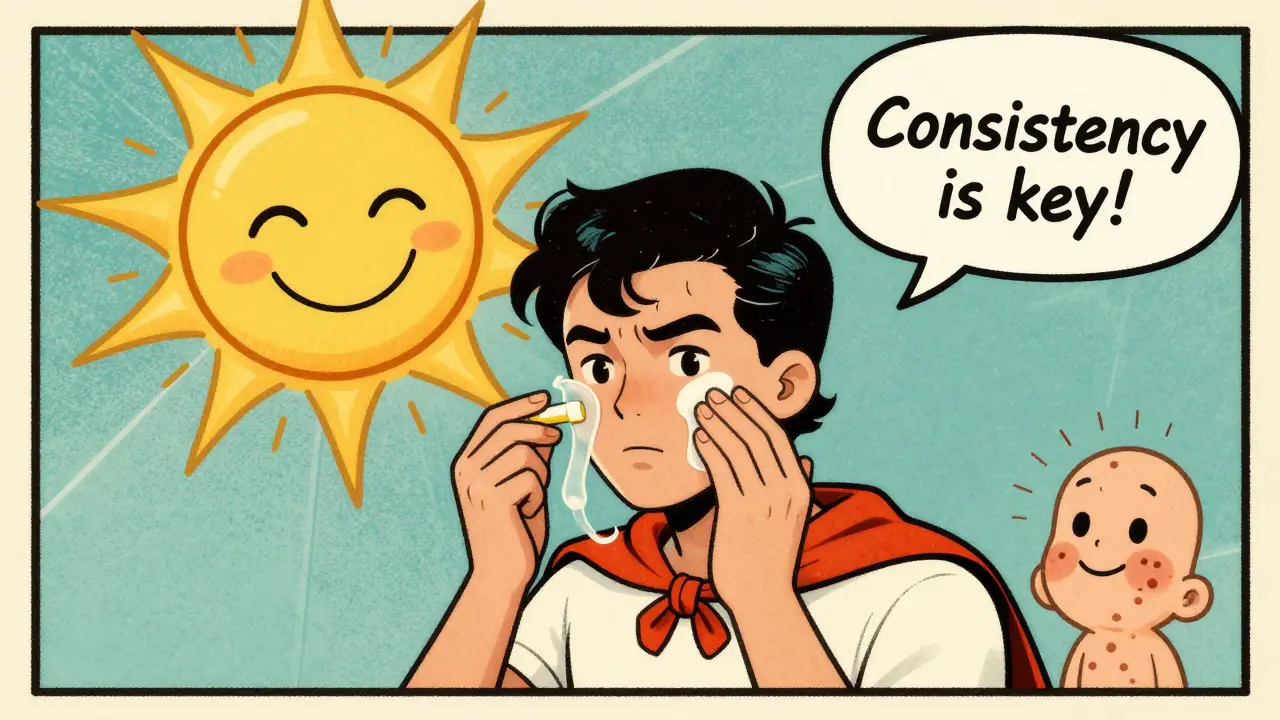
The most common complaint? Inadequate aftercare. A 2023 JAMA Dermatology commentary pointed out that 70% of treatment failures happen because patients stop using tretinoin or skip sunscreen. The procedure isn’t the cure - consistent skincare is.
What to Avoid
Don’t fall for quick fixes. Chemical peels at spas, DIY microneedling rollers, or over-the-counter “scar creams” with no active ingredients won’t fix deep scars. They might temporarily brighten skin, but they won’t rebuild collagen.
Also, don’t rush treatments. Spacing sessions too close together can damage your skin barrier. Wait at least 4 weeks between microneedling sessions. For lasers, wait 6-8 weeks.
And never skip the pre-treatment prep. If your skin is sunburned, inflamed, or not properly conditioned with retinoids, you increase your risk of complications - especially hyperpigmentation.
Where to Go From Here
If you’re serious about treating acne scars, start with a dermatologist. They’ll assess your scar type, skin tone, and medical history. Don’t just pick the cheapest option - choose the one that fits your life.
Here’s a simple plan:
- Start using 0.05% tretinoin nightly (after patch testing).
- Apply silicone gel every morning and night.
- Wear SPF 30+ every day, rain or shine.
- After 3 months, schedule a consultation with a board-certified dermatologist who specializes in acne scars.
- Based on your scars, they’ll recommend whether to start with RF microneedling, a non-ablative laser, or both.
It’s not a quick fix. But if you stick with it, you’ll see real, lasting change. And that’s worth more than any overnight miracle.”
Can acne scars be removed completely?
Complete removal isn’t realistic - but significant improvement is. Most people see 50-80% reduction in scar visibility with the right combination of treatments. Ice pick scars respond the least, often improving by only 30-35%. The goal isn’t perfection, but confidence. Many patients say their scars become barely noticeable, even under close inspection.
Is microneedling better than lasers for dark skin?
Yes, for most people with darker skin tones (Fitzpatrick IV-VI). Lasers carry a higher risk of causing dark spots (post-inflammatory hyperpigmentation) because they heat the skin more intensely. RF microneedling delivers energy deeper without affecting the surface pigment, making it safer. Studies show hyperpigmentation occurs in 5-8% of microneedling patients versus 15-20% with lasers in these skin types.
How long do results last?
Results from microneedling and lasers are long-lasting because they stimulate your body’s own collagen. Once new collagen forms, it stays - unless you get new acne or sun damage. Most people see stable results for 3-5 years. But to maintain them, keep using tretinoin and sunscreen. Without ongoing care, your skin can revert to its previous texture.
Can I do microneedling at home?
Home microneedling rollers (under 0.5mm) are safe for general skin texture, but they won’t fix acne scars. Scar treatment needs needles at least 1.5mm long to reach the dermis - that’s a medical-grade device only licensed professionals should use. Home devices can cause infection, uneven scarring, or worsen pigmentation if not used correctly. Stick to professional treatments for real results.
What’s the cheapest effective option?
Topical tretinoin and silicone gel. Tretinoin costs around $20-$50 a month with a prescription. Silicone gel is $30-$60 for a tube that lasts 3-6 months. Together, they can improve mild scarring by 20-30% over 6-12 months. It’s slow, but it’s the most affordable, safest, and scientifically proven start. Many people avoid expensive procedures altogether by sticking with this routine.

15 Comments
This whole post is just a fancy ad for dermatologists. Everyone knows you don’t need to spend $5k on lasers to fix acne scars. Just stop picking at your face and use Neosporin like your grandpa told you to. Done.
While the scientific basis presented is commendable, I must respectfully observe that in many parts of India, access to RF microneedling or fractional CO2 lasers remains prohibitively expensive. For the majority, consistent topical care with tretinoin and sunscreen remains the only viable path forward. Simplicity, patience, and discipline yield results.
Yo, I tried the Morpheus8 thing after 8 years of ice pick scars and holy crap it actually worked. Not perfect, but like… I can take selfies now without filtering my whole face off. I did 5 sessions, spent like $2k total, and honestly? Worth every penny. My mom still thinks I got Botox though 😅
Topical tretinoin? How quaint. If you’re not doing ablative lasers by 25, you’re already behind. This post is for the mediocre.
Given the pathophysiology of atrophic acne scarring, collagen remodeling via fractional energy delivery systems remains the gold standard. However, the efficacy of topical retinoids as adjuvant therapy is well-documented in the 2023 Cochrane meta-analysis. Failure to integrate multimodal protocols constitutes clinical negligence.
I did the whole thing - lasers, microneedling, tretinoin, silicone gel, even drank collagen powder (yes, really). My scars are still there… but now I don’t care. I’m just proud I didn’t give up. You don’t need perfect skin. You just need to stop letting it ruin your life.
Life is pain… and scars are just the universe’s way of saying, "Hey, you survived." 🌱 But seriously - sunscreen isn’t optional. It’s the silent hero. Don’t let your skin forget that. 🌞✨
For anyone feeling overwhelmed - start small. Tretinoin + sunscreen. Just those two. Do it for 3 months. If you hate it, stop. But if you stick with it? You’ll be amazed. You don’t need to fix everything at once. Healing isn’t a race.
So let me get this straight - you spent $3k on lasers… but still skip sunscreen? Babe. That’s like buying a Ferrari and driving it in the rain with no tires.
RF microneedling isn’t magic. It’s just a fancy needle. And no, silicone gel won’t erase your trauma.
Hey, I know this stuff feels overwhelming - I’ve been there. But trust me, you don’t need to do all of it. Pick ONE thing. Just one. Maybe tretinoin. Maybe sunscreen. Maybe silicone gel. Do that one thing for 6 months. Then add another. Progress isn’t about going all-in on day one. It’s about showing up, even when you’re tired. You’ve got this. I believe in you.
I spent 10 years hating my face. I cried in the mirror every morning. I thought I’d never be beautiful. Now I look at my scars and I think… they’re part of me. Not a flaw. A story. But still. I wish someone had told me this sooner. I lost so much time.
To everyone struggling - your worth is not defined by your skin. You are loved. You are enough. And yes, healing is possible. Start with tretinoin. Start with sunscreen. Start with hope. You are not alone.
mfw i spent 6 months on tretinoin and my skin looks like a dried up raisin but my scars are barely visible. worth it. also sunscreen is life. also why do people still use chemical peels at spas like its 2009
AMERICA NEEDS TO STOP LETTING THESE SKIN INDUSTRIES RAKE IN BILLIONS ON FALSE PROMISES. MICRONEEDLING IS A SCAM. LASERS ARE A SCAM. TRETINOID IS THE ONLY REAL THING. AND NO ONE TELLS YOU THIS BECAUSE THEY’RE ALL IN THE GAME. 🇺🇸💔
Write a comment