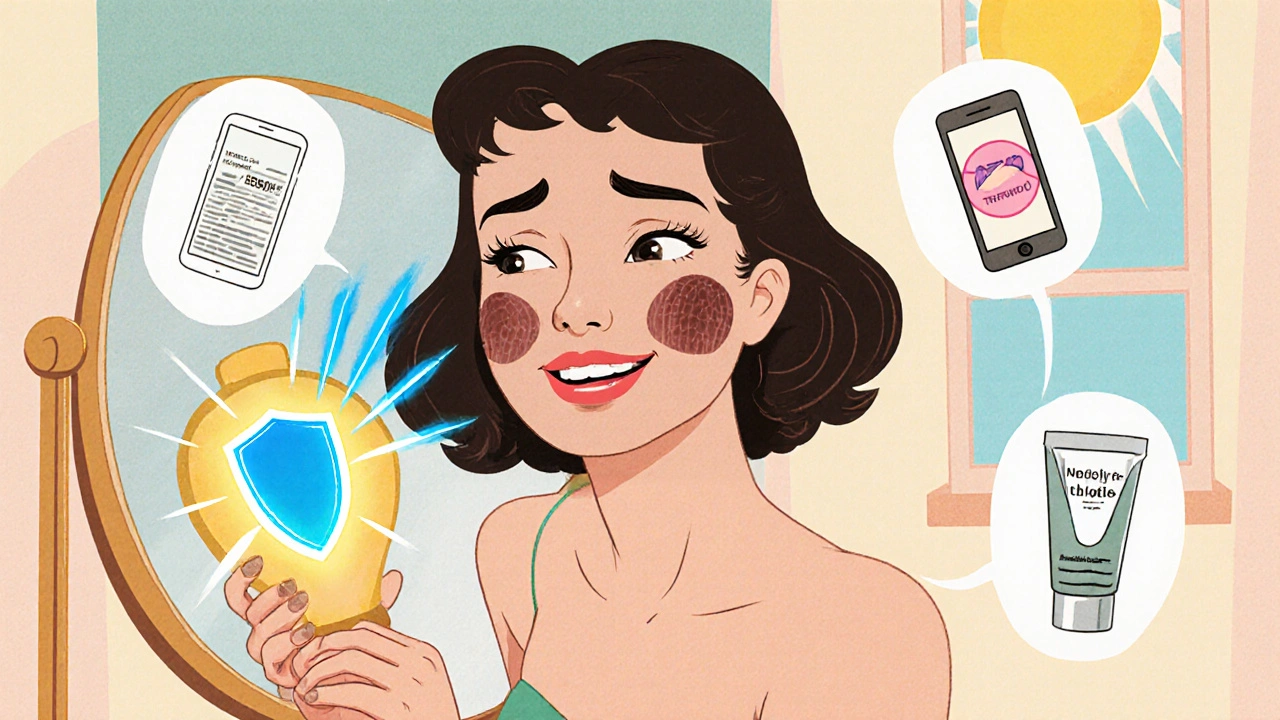
When your skin suddenly develops dark patches-on your cheeks, forehead, or around your mouth-it’s easy to assume it’s just sun damage. But if you’ve tried sunscreen, exfoliated, and used brightening serums without results, you might be dealing with something deeper: melasma. And confusing the two can cost you time, money, and even make your skin worse.
What’s Really Going On With Your Skin?
Hyperpigmentation means your skin is making too much melanin in certain spots. That’s the pigment that gives skin its color. But not all dark spots are the same. Two of the most common types-melasma and sun damage (also called solar lentigines)-look similar but behave completely differently. Sun damage shows up as small, flat, brown spots. They’re most common on your face, hands, shoulders, and arms. These spots don’t appear overnight. They build up slowly over years of sun exposure. By age 60, about 90% of fair-skinned people have them. They’re a direct result of UV rays hitting your skin and triggering melanocytes-the pigment-producing cells-to go into overdrive. Melasma is different. It shows up as larger, irregular patches, often symmetrical. Think of it like a mask: both cheeks, the bridge of your nose, or your upper lip turning darker. It’s not just from the sun. Hormones play a big role. It’s most common in women, especially during pregnancy (hence the nickname “the mask of pregnancy”), while taking birth control pills, or during hormone replacement therapy. People with medium to dark skin tones-Fitzpatrick types III to VI-are far more likely to get it. In fact, Black, Asian, and Hispanic populations develop melasma 3 to 5 times more often than those with lighter skin.Why Sunscreen Alone Isn’t Enough for Melasma
Most people think if they wear sunscreen, they’re protected. But for melasma, that’s not enough. Standard sunscreens block UV rays, but melasma gets triggered by more than just UV. Visible light-like the blue light from your phone or computer screen-and even infrared heat can worsen it. Studies show visible light contributes to 25-30% of melasma cases. That’s why dermatologists now recommend mineral sunscreens with iron oxide. Zinc oxide and titanium dioxide block UV, but iron oxide blocks visible light. You need SPF 50+, and you need to apply it every day-even indoors. Window glass doesn’t stop visible light. So if you sit near a window at home or in the office, your skin is still getting hit. Dr. Kourosh at Harvard Medical School puts it bluntly: “The sun is stronger than any medicine I can give you.” If you’re not blocking every type of light, your treatment won’t work. And that’s why so many people see no improvement-they’re missing this critical step.Topical Treatments: What Actually Works
There are dozens of creams and serums promising to fade dark spots. But not all are created equal. Here’s what the science says works-and what doesn’t. Hydroquinone (4%) is still the gold standard. It blocks the enzyme tyrosinase, which your skin needs to make melanin. Used alone, it can take 8-12 weeks to show results. But when combined with tretinoin and a corticosteroid (a triple combination), effectiveness jumps to 50-70% improvement in melasma after 12 weeks. The catch? You can’t use it forever. Long-term use (more than 3-6 months) carries a 2-5% risk of ochronosis-a rare but irreversible blue-black discoloration. That’s why dermatologists prescribe it in cycles: 3 months on, 1 month off. Tretinoin (0.025-0.1%) doesn’t lighten pigment directly. Instead, it speeds up skin cell turnover. Think of it like a gentle exfoliator that pulls dark cells to the surface faster so they shed away. It’s often paired with hydroquinone to boost results. But it can cause redness, peeling, and irritation-especially at first. Start with a low concentration (0.025%) and use it every other night to let your skin adjust. Vitamin C (L-ascorbic acid, 10-20%) is a powerful antioxidant. It doesn’t just brighten skin-it neutralizes free radicals caused by UV and visible light. It also helps reduce oxidized melanin, which is what makes dark spots look so stubborn. Look for serums with 15% L-ascorbic acid and vitamin E for maximum stability and effect. Apply it in the morning before sunscreen. Tranexamic acid (5%) is a newer player. Originally used to reduce heavy menstrual bleeding, it was found to reduce melasma by blocking the interaction between skin cells and melanocytes. In clinical trials, it delivered 45% improvement in melasma after 12 weeks with almost no side effects. It’s now available in prescription creams and even oral form for stubborn cases. Kojic acid, niacinamide, and cysteamine are non-hydroquinone alternatives gaining traction. Niacinamide (5%) reduces pigment transfer between cells. Kojic acid inhibits tyrosinase too, but it’s less stable and can irritate sensitive skin. Cysteamine cream (10%) showed 60% improvement in a 16-week trial with minimal irritation-making it a promising option for those who can’t tolerate hydroquinone.
Lasers and Light Therapy: When They Help and When They Hurt
Laser treatments like IPL (Intense Pulsed Light) are great for sun damage. They target the pigment, heat it up, and the body naturally removes it. Results? Usually visible in 1-2 sessions. But for melasma? Risky. IPL and other light-based treatments can trigger a rebound effect in melasma. Heat from the laser can stimulate melanocytes to make even more pigment. Studies show a 30-40% chance of melasma worsening after IPL. That’s why dermatologists won’t even consider lasers until the skin has been stabilized with topical treatments for at least 8-12 weeks. This “melanocyte rest” phase is critical. For melasma, chemical peels (glycolic or lactic acid) done every 4-6 weeks can help-especially when combined with topicals. But again, they must be done carefully. Darker skin types are more prone to post-inflammatory hyperpigmentation (PIH), which can turn a melasma problem into a bigger one.Why Most People Fail at Treating Melasma
The biggest reason treatments don’t work? Inconsistent sun protection. YES Medspa’s data shows 70% of patients use less than the recommended amount of sunscreen-about a quarter-teaspoon for the face-and don’t reapply every 2 hours. That’s not enough. Even one missed application can undo weeks of progress. Another common mistake: giving up too soon. Melasma takes time. You won’t see results in 2 weeks. It takes 8-12 weeks to notice changes, and 6 months to reach peak improvement. And even then, recurrence rates hit 80% within a year if you stop your routine. Most patients expect a quick fix. But melasma isn’t a spot to erase-it’s a condition to manage. Think of it like high blood pressure: you don’t cure it, you control it. Daily sunscreen, consistent topicals, and avoiding triggers (heat, hormones, stress) are lifelong habits.What About Post-Inflammatory Hyperpigmentation?
Don’t confuse melasma or sun damage with PIH. That’s the dark mark left behind after acne, eczema, or even a scratch heals. It’s not caused by the sun. It’s caused by inflammation. It often appears where you had a breakout or injury-not just on sun-exposed areas. PIH is more common in darker skin tones. And here’s the kicker: lasers and aggressive peels can make PIH worse. Up to 25% of people see their pigmentation darken after laser treatment. For PIH, the safest bet is gentle topicals-niacinamide, azelaic acid, and time. Avoid heat, avoid picking, and be patient.
The Real Cost of Treatment
Prescription topicals cost $50-$150 a month. Laser sessions run $300-$600 each. Most people start with over-the-counter products-brightening serums, vitamin C, or “melanin blockers” from drugstores. But these rarely contain enough active ingredients to make a real difference. One study found 85% of melasma patients try OTC products before seeing a dermatologist. The global market for hyperpigmentation treatments is growing fast-projected to hit $22 billion by 2030. That’s because people are tired of living with dark spots. But expensive doesn’t always mean effective. The most effective treatment is simple: daily sunscreen with iron oxide, a proven topical regimen, and patience.What You Can Do Today
If you’re dealing with dark patches on your face:- Check if your spots are symmetrical and on the cheeks, forehead, or upper lip → likely melasma
- If they’re small, scattered, and on sun-exposed areas → likely sun damage
- Use a mineral sunscreen with zinc oxide and iron oxide every morning-no exceptions
- Apply vitamin C serum (15%) under sunscreen
- At night, alternate between tretinoin (0.05%) and hydroquinone (4%) every other night
- Don’t use lasers or peels without consulting a dermatologist first
- Give it at least 3 months before deciding if it’s working
Final Reality Check
There’s no magic cure for melasma. No cream will make it vanish overnight. And no laser will fix it if you keep exposing your skin to light and heat. The best outcome? A 40-60% improvement over 6 months. That’s not perfect-but it’s life-changing for many. The key isn’t finding the strongest product. It’s consistency. Sunscreen. Topicals. Time. And accepting that this isn’t a problem you solve-it’s one you manage. If you’ve tried everything and nothing worked, it’s not you. It’s likely that you missed the most important part: blocking visible light. Start there. Everything else follows.Can melasma go away on its own?
Yes, but only in some cases. Melasma triggered by pregnancy often fades within a year after giving birth. Birth control-related melasma may improve if you switch methods. But for most people, especially those with hormonal imbalances or chronic sun exposure, melasma doesn’t disappear without treatment-and it almost always comes back if you stop protecting your skin.
Is hydroquinone safe to use long-term?
No. Hydroquinone is effective for short-term use-typically 3 to 6 months. Long-term use increases the risk of ochronosis, a rare but permanent blue-black discoloration of the skin. That’s why dermatologists recommend cycling it: use it for 3 months, then take a break for 1-2 months before restarting. Always follow your doctor’s instructions.
Can I use vitamin C and tretinoin together?
Yes-but not at the same time. Use vitamin C in the morning under sunscreen. Use tretinoin at night. Using them together can cause irritation because vitamin C is acidic and tretinoin makes skin more sensitive. Space them out by 12 hours to avoid redness and flaking.
Why does my skin look darker after using a brightening cream?
It could be irritation or a reaction to the product. Some ingredients, especially high-strength acids or retinoids, can cause temporary inflammation, which triggers more pigment production-especially in darker skin tones. This is called post-inflammatory hyperpigmentation. Stop the product, use a gentle moisturizer, and consult a dermatologist before restarting.
Do I need to wear sunscreen on cloudy days or indoors?
Yes. Up to 80% of UV rays penetrate clouds. And visible light-which triggers melasma-passes right through windows. If you’re near a window at home, in your car, or at your desk, your skin is still being exposed. Daily sunscreen isn’t optional for melasma-it’s the foundation of treatment.
What’s the difference between melasma and freckles?
Freckles are small, light brown spots that appear in childhood and fade in winter. They’re genetic and become darker with sun exposure. Melasma is larger, patchy, and usually appears in adulthood. It’s hormone-driven and doesn’t fade with seasons. Freckles respond well to sun protection and light treatments. Melasma needs a more complex, long-term approach.



15 Comments
So let me get this straight... you're telling me I've been wasting $200 a month on serums because I didn't know blue light from my laptop was cooking my face like a microwave burrito? 🤯
Turns out my 'sunscreen' was just a placebo with SPF 30 and zero iron oxide. Guess I'll be buying a new one today. Thanks for the reality check.
This is one of the most thorough breakdowns of melasma I've ever read. Seriously.
Most dermatology content feels like a sales pitch. This? This is science with compassion.
It's not about quick fixes. It's about consistency. Sunscreen every day. No exceptions. Not just when it's sunny. Not just when you're going out.
And hydroquinone cycles? Yes. Ochronosis is real. I've seen it. It's not worth the gamble.
People think skincare is about glow-ups. It's actually about damage control. Melasma doesn't care how hard you work. It just waits for you to skip a day.
Patience isn't optional. It's the active ingredient.
Thanks for writing this. I'm sharing it with every friend who's ever cried over a dark spot.
While I appreciate the clinical precision of this article, I must note that the reliance on prescription-based interventions reflects a systemic over-medicalization of benign dermatological phenomena. The cultural imperative to 'correct' natural pigmentation patterns is both scientifically reductive and socioculturally problematic. Furthermore, the economic framing of treatment costs as a justification for pharmaceutical dependency warrants critical scrutiny. In sum: the solution is not more chemicals, but a reframing of aesthetic norms.
bro i tried hydroquinone for 2 weeks and my face looked like a bruise 😭
then i switched to niacinamide and now i look like a ghost
im just gonna wear a hat forever
THIS IS A SCAM. I've had melasma for 10 years and nothing works. You're all just selling creams. I tried iron oxide sunscreen and it left a gray cast like I was wearing foundation made of chalk. I'm not paying $150 a month to look like a zombie. Just accept your skin. It's fine. You're fine. Stop chasing perfection. Also, vitamin C? That stuff turns brown in the bottle. It's dead. Don't waste your money.
Let me be brutally honest - if you're still using chemical sunscreens, you're losing. You're not protecting your skin. You're just giving it a false sense of security while blue light and infrared cook your melanocytes like a sous-vide steak.
Hydroquinone? It's the only thing that works. But if you're scared of ochronosis, you're not ready for this battle.
And don't even get me started on people who think 'brightening' serums from Sephora are going to fix melasma. That's like using hand sanitizer to cure cancer.
Bottom line: If you're not using iron oxide, you're not treating melasma. You're just doing skincare cosplay.
Just wanted to say thank you for writing this. I've been struggling with this for years and no one ever explained the difference between sun damage and melasma. I thought I was just lazy about sunscreen. Turns out I just didn't know what I was up against.
Starting iron oxide sunscreen tomorrow. No more excuses.
It is curious how the medical-industrial complex has commodified skin pigmentation as a pathology requiring intervention. The emphasis on topical pharmaceuticals and laser therapies reflects a patriarchal aesthetic standard rather than dermatological necessity. Melasma is not a disease. It is a physiological response to hormonal fluctuation. To treat it as such is to pathologize femininity itself.
Furthermore, the data cited lacks longitudinal analysis and is heavily industry-funded. I remain skeptical.
I've been a dermatology nurse for 18 years. I've seen patients cry because their melasma didn't fade after one month. I've seen them try every product on the market. I've seen them get lasers and come back worse.
Every single time, the ones who improved? They did three things: mineral sunscreen with iron oxide every day, no exceptions. Hydroquinone + tretinoin on a cycle. And they stopped checking their face in the mirror every 2 hours.
It's not glamorous. It's not fast. But it works.
And yes - you need it indoors. Window glass doesn't stop visible light. I've measured it.
My mum had melasma after having me and it faded after a year. Now I have it and I'm 32 and not pregnant 😅
Switched to a zinc + iron oxide sunscreen and my cheeks look 30% less angry. Not gone, but better.
Also, vitamin C serum in the morning? Game changer. My skin doesn't look like a sad tomato anymore.
PS: I use the green one with the little leaf logo. It's Irish. 🇮🇪💚
Wait so you're telling me I've been using 'antioxidant' serums that were just sugar water and calling it science? And I thought I was being so smart buying all those fancy bottles...
Also I didn't know visible light was a thing. My phone is now in another room. I'm sorry, skin.
in india we use turmeric and lemon juice for dark spots. works better than any cream. why do you need all this science? its just skin. dont overthink.
also sunscreen is for white people. we dont get sun damage. we get sun glow.
Okay but if you're using hydroquinone and you're not using it in a cycle, you're literally risking permanent skin damage. I've seen it. I've had patients come in with blue-black patches and they thought it was 'just darker skin'.
And if you're using tretinoin and vitamin C at the same time? You're not being brave. You're being reckless.
Stop trying to fix your skin in a week. This isn't a TikTok trend. This is your skin. Treat it like you love it. Because you should.
Also - iron oxide isn't optional. It's the difference between progress and disaster. Stop skipping it.
The author's assertion that 'melasma is a condition to manage, not cure' is both accurate and dangerously passive. It normalizes chronic dysfunction under the guise of realism. The industry thrives on this narrative because it ensures lifelong revenue. The real failure is not in the patient's adherence - it's in the absence of a curative paradigm. Why are we not researching melanocyte reprogramming? Why are we still relying on tyrosinase inhibitors from the 1950s? This is not medicine. It's maintenance for profit.
While the preceding comment by user 5093 appropriately emphasizes the necessity of cyclical hydroquinone usage, I must dissent from the assertion that iron oxide is indispensable. Recent meta-analyses (e.g., JAMA Dermatology, 2023) suggest that broad-spectrum UVA/UVB protection, when applied with sufficient quantity and frequency, may suffice for most cases. The addition of iron oxide, while theoretically beneficial, introduces a cosmetic burden that may reduce compliance - a factor more clinically significant than the marginal photoprotection gain. Furthermore, the emphasis on visible light as a primary driver of melasma remains contentious within the peer-reviewed literature. I urge caution against overextrapolation of in vitro data to clinical practice.
Write a comment