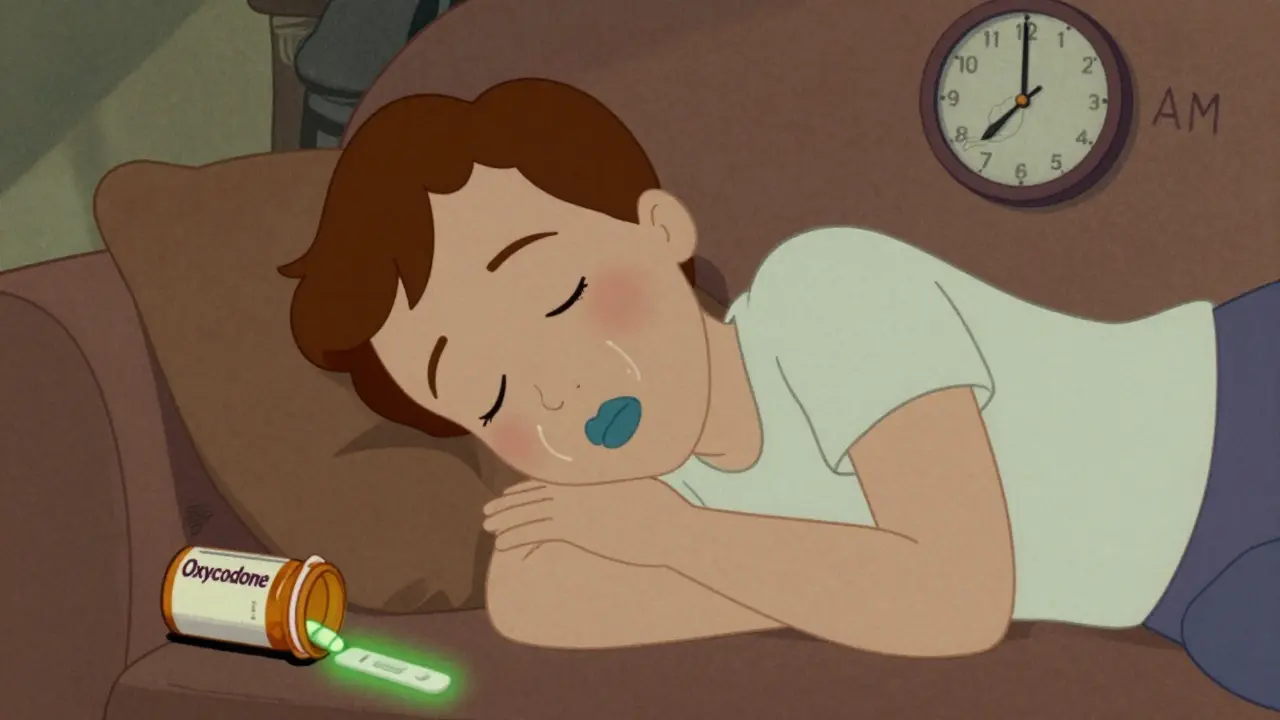
Knowing the signs of a medication overdose could save a life-yours or someone else’s. It doesn’t matter if it’s a prescription painkiller, a sleeping pill, or something bought off the street. Too much of any drug can shut down your breathing, stop your heart, or cause irreversible brain damage in minutes. You don’t need to be a doctor to spot the warning signs. You just need to know what to look for.
What Does an Overdose Actually Look Like?
An overdose isn’t always dramatic. It doesn’t always involve screaming, collapsing, or foaming at the mouth. More often, it’s quiet. Someone is unusually sleepy, barely responding to their name, or breathing so slowly you can barely see their chest rise. That’s the danger. By the time someone looks obviously sick, it might be too late. The most common cause of fatal overdose in the U.S. today is synthetic opioids like fentanyl. These drugs are 50 to 100 times stronger than morphine. A single counterfeit pill made to look like oxycodone can contain a lethal dose. And because people don’t know what’s in it, they take what they think is a normal dose-and it kills them.General Signs of Overdose Across All Drugs
No matter what drug is involved, some warning signs are universal:- Unresponsiveness-the person can’t be woken up, even when shaken or called loudly.
- Slow, shallow, or irregular breathing-fewer than 12 breaths per minute, or pauses longer than 10 seconds between breaths.
- Blue or gray lips and fingernails-this means oxygen levels are dropping dangerously low.
- Pale, clammy skin-especially on the face and extremities.
- Gurgling or snoring sounds-this isn’t sleep; it’s fluid building up in the airway because the person can’t swallow or breathe properly.
- Vomiting while unconscious-this is a major red flag for alcohol or depressant overdose.
- Confusion, agitation, or hallucinations-common with stimulants like cocaine or meth.
Signs by Drug Type
Different drugs affect the body in different ways. Recognizing the pattern helps you respond faster.Opioids (Heroin, Fentanyl, Oxycodone, Codeine)
Opioid overdoses follow a clear pattern called the “triad”:- Pinpoint pupils-the black part of the eye shrinks to the size of a pinhead.
- Unconsciousness-the person can’t be roused, even with pain.
- Slow or stopped breathing-this is what kills. Breathing drops below 8 per minute.
Stimulants (Cocaine, Methamphetamine, Adderall)
These drugs overwork the heart and brain:- High body temperature-over 104°F (40°C). Skin feels hot and dry.
- Fast, pounding heartbeat-pulse over 120 beats per minute.
- Seizures-uncontrolled shaking or convulsions.
- Paranoia, aggression, or hallucinations-the person may believe they’re being chased or attacked.
- High blood pressure-systolic over 180 mmHg.
Depressants (Alcohol, Benzodiazepines, Barbiturates)
These drugs slow everything down:- Slurred speech-like they’re drunk, but not from alcohol.
- Loss of coordination-tripping, falling, can’t walk straight.
- Very slow breathing-as few as 6 breaths per minute.
- Vomiting while passed out-this is deadly. People choke on their own vomit.
- Low body temperature-skin feels cold to the touch.
What to Do If Someone Overdoses
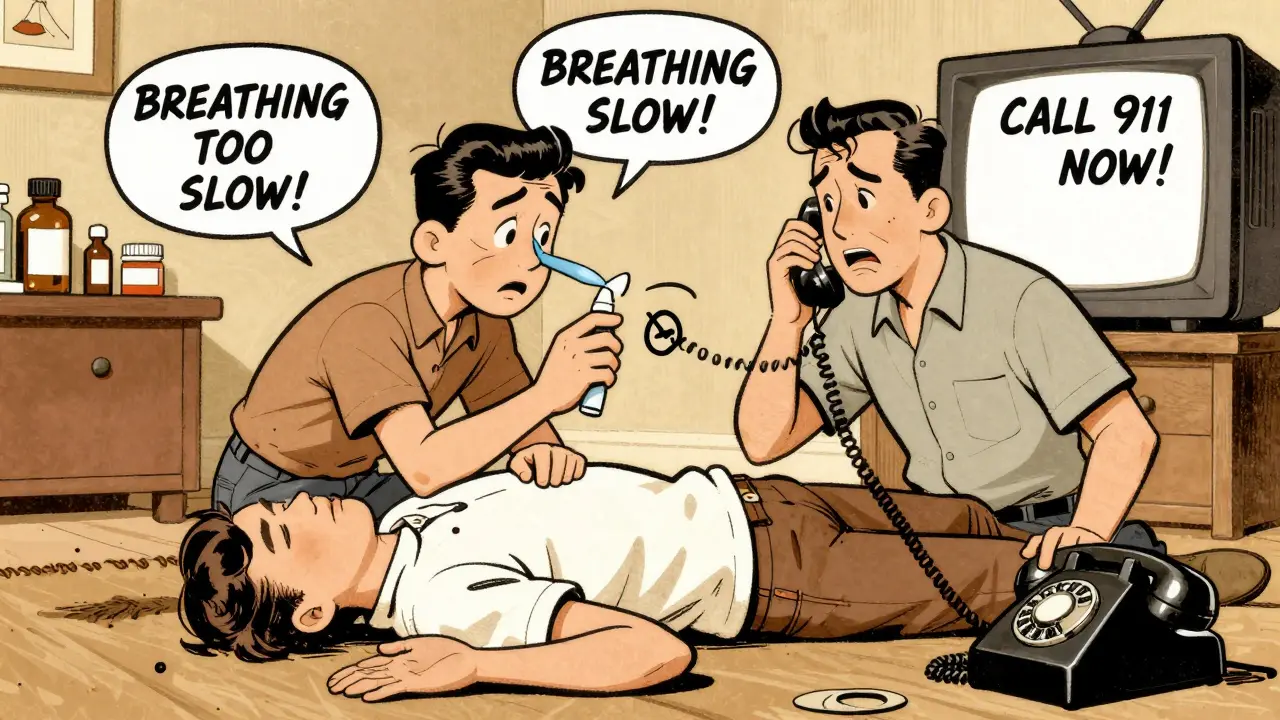
Time is everything. Here’s what to do-step by step:- Call 911 immediately. Don’t wait. Don’t try to handle it alone. Say, “Someone is overdosing. They’re not waking up and not breathing right.”
- Give naloxone if you have it. Naloxone (brand name Narcan) reverses opioid overdoses. It comes as a nasal spray. Spray one dose into one nostril. If there’s no response after 2-3 minutes, give a second dose. You can’t overdose on naloxone-it’s safe even if the person didn’t take opioids.
- Put them on their side. This is called the recovery position. It stops them from choking if they vomit.
- Stay with them until help arrives. Even if they wake up, they can crash again. Don’t leave them alone.
- Don’t try home remedies. No ice baths, no coffee, no slapping them. These don’t work-and can make things worse.
What NOT to Do
Many people make these mistakes-and they cost lives:- Don’t let them “sleep it off.” One in three fatal overdoses happens because someone waited too long.
- Don’t give them a cold shower. It can cause shock or heart rhythm problems.
- Don’t try to make them vomit. They could choke.
- Don’t assume they’re just drunk. Many overdoses happen in people who drink alcohol with other drugs.
Prevention: How to Reduce the Risk
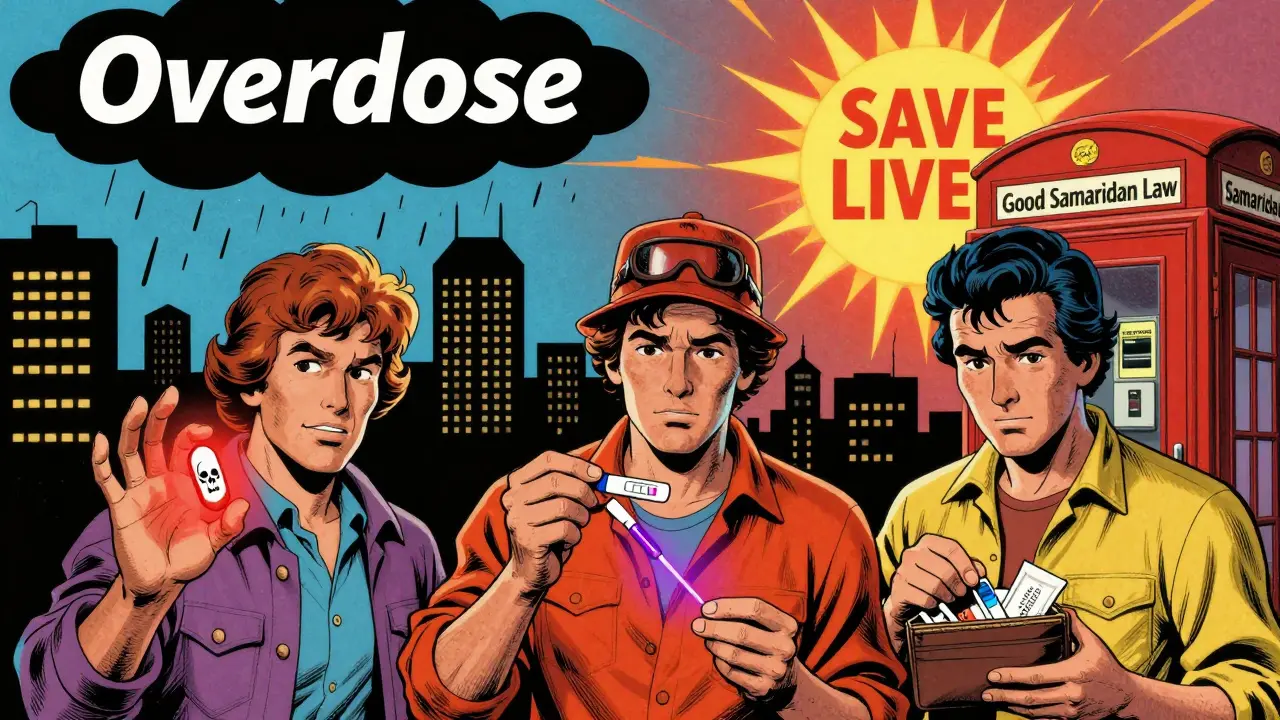
The best way to avoid an overdose is to prevent it before it happens:- Use fentanyl test strips. These cost about $1 each. Put a tiny bit of powder in water, dip the strip, and wait a minute. If it shows fentanyl, don’t use it. In 2022, 67% of counterfeit pills tested in California contained fentanyl.
- Don’t use alone. If something goes wrong, someone can call for help. Many states now have “Good Samaritan” laws that protect people who call 911 during an overdose.
- Carry naloxone. Since March 2023, Narcan has been available over the counter at pharmacies for around $40-$50. Keep one in your bag, car, or medicine cabinet.
- Know your tolerance. If you’ve been away from opioids for a week or more, your body has lost tolerance. A dose you used to take can now kill you.
- Check pill colors and markings. Fake pills look real-but they’re often made in unregulated labs. If a pill looks different from what you usually take, don’t take it.
Why This Matters Right Now
In 2022, over 107,000 people in the U.S. died from drug overdoses. Most were from synthetic opioids. Fentanyl is now found in nearly every drug supply-from cocaine to counterfeit Xanax. The death rate among Black Americans rose 21% between 2020 and 2022. It’s no longer a problem that affects only one group. It’s everywhere. And it’s getting worse. Experts predict overdose deaths will hit 120,000 per year by 2025 unless something changes. But change is possible. States with naloxone distribution programs saw a 14% drop in overdose deaths. People who carried naloxone saved 85% of opioid overdoses when they acted within 2-3 minutes. You don’t need to be an expert to make a difference. You just need to know the signs. You just need to act.Can you overdose on over-the-counter medications?
Yes. Acetaminophen (Tylenol) is the most common cause of fatal overdose from over-the-counter drugs. Taking more than 4,000 mg in 24 hours can cause liver failure. Cold and flu pills often contain acetaminophen, so taking multiple products can push you over the limit. Ibuprofen and other NSAIDs can also cause overdose symptoms like vomiting, dizziness, and kidney damage if taken in large amounts.
Is naloxone safe to use if I’m not sure it’s an opioid overdose?
Yes. Naloxone only works on opioids and has no effect on other drugs like alcohol, cocaine, or benzodiazepines. If someone is unresponsive and you suspect an overdose, giving naloxone won’t hurt them-even if they didn’t take opioids. It’s safe, non-addictive, and can be given multiple times if needed.
How long does naloxone last, and can the overdose return after it wears off?
Naloxone works for 30 to 90 minutes. But many opioids, especially fentanyl, last much longer. That means the person can slip back into overdose once naloxone wears off. That’s why you must always call 911-even if they wake up after naloxone. They need medical monitoring for several hours.
Can you get in trouble for calling 911 during an overdose?
In 47 U.S. states, Good Samaritan laws protect people who call for help during an overdose. You won’t be arrested for drug possession if you’re seeking help. The law is designed to remove fear so people act instead of watching someone die. If you’re unsure, call anyway. Emergency responders prioritize saving lives over enforcement.
Are there new treatments for overdoses coming soon?
Yes. Researchers are testing monoclonal antibody treatments that can reverse opioid overdoses for up to 24 hours-far longer than naloxone’s 90-minute window. These are still in clinical trials but could become available by 2027. Another emerging threat is xylazine, a veterinary sedative now mixed into street drugs. It doesn’t respond to naloxone and causes severe skin ulcers. Awareness and testing are key.

8 Comments
It's wild how we treat overdose like it's a moral failure instead of a medical emergency.
People die quietly because we're too scared to act.
Not because they're weak.
Because we're too busy judging.
Just call 911. That's it. That's the whole fucking philosophy.
Most people don't realize fentanyl isn't even a drug anymore it's a structural component of the black market supply chain now like a fucking architectural element
And naloxone is just a temporary patch on a collapsing building
Until we address the socioeconomic decay that enables this we're just rearranging deck chairs on the Titanic
So let me get this straight
You want me to carry a $50 spray in my pocket so I can save someone who chose to do drugs
Meanwhile my taxes pay for their rehab and their funeral
Thanks for the moral math
i didnt even know tylenol could kill you like that
wait so if i take 2 cold meds and 1 pain pill am i basically playing russian roulette
oh god i think i did that last week
This is the most important thing you'll read this year.
Save this post.
Share it with someone who needs to see it.
One conversation could save a life.
Do it now.
The entire opioid crisis is a grotesque symptom of late-stage capitalist alienation
Wherein the commodification of pain relief became the commodification of human despair
And now we're medicating the symptoms while the structural rot festers beneath
Meanwhile the pharmaceutical industrial complex profits from both the addiction and the antidote
Naloxone isn't salvation it's a corporate-sponsored Band-Aid on a severed artery
And yet here we are applauding ourselves for handing out Narcan like it's a civic virtue
When what we really need is a complete dismantling of the healthcare profit model
Until then we're just performing compassion while the machine grinds on
The information presented here is both comprehensive and clinically accurate.
It is commendable that such a detailed public health resource has been made accessible to laypersons.
One might consider distributing this material through community centers, schools, and primary care clinics to maximize impact.
International adaptations would benefit from culturally specific examples and localized emergency protocols.
Thank you for the thoroughness.
I used to think if someone overdosed it was their fault
Then my cousin died alone in his apartment with a half-used pill bottle and no one knew he was even struggling
Now I carry Narcan in my backpack
And I talk to my friends about it like it's normal
Because it should be
It's not about judgment
It's about showing up when it matters
You don't need to be a hero
Just be the person who calls 911
That's enough
That's everything
Write a comment