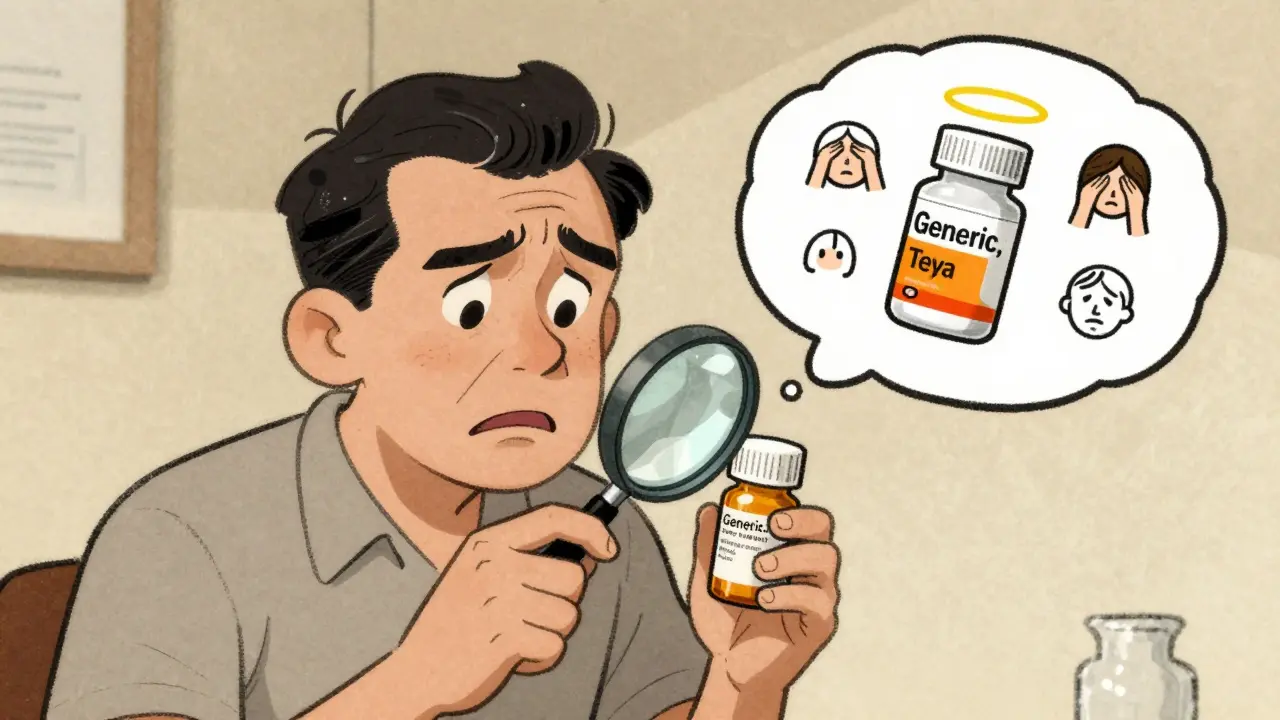
When you pick up a generic pill at the pharmacy, you’re likely saving money-maybe half or even more compared to the brand-name version. But what happens when something goes wrong? What if the generic version of your levothyroxine doesn’t seem to work the same? Or if your generic sertraline gives you headaches when the brand never did? That’s where MedWatch reporting comes in. It’s the U.S. Food and Drug Administration’s main system for collecting safety data on all drugs, including generics. And while it’s designed to catch problems early, it’s not perfect-especially when it comes to tracking which generic manufacturer is to blame.
How MedWatch Works for Generic Drugs
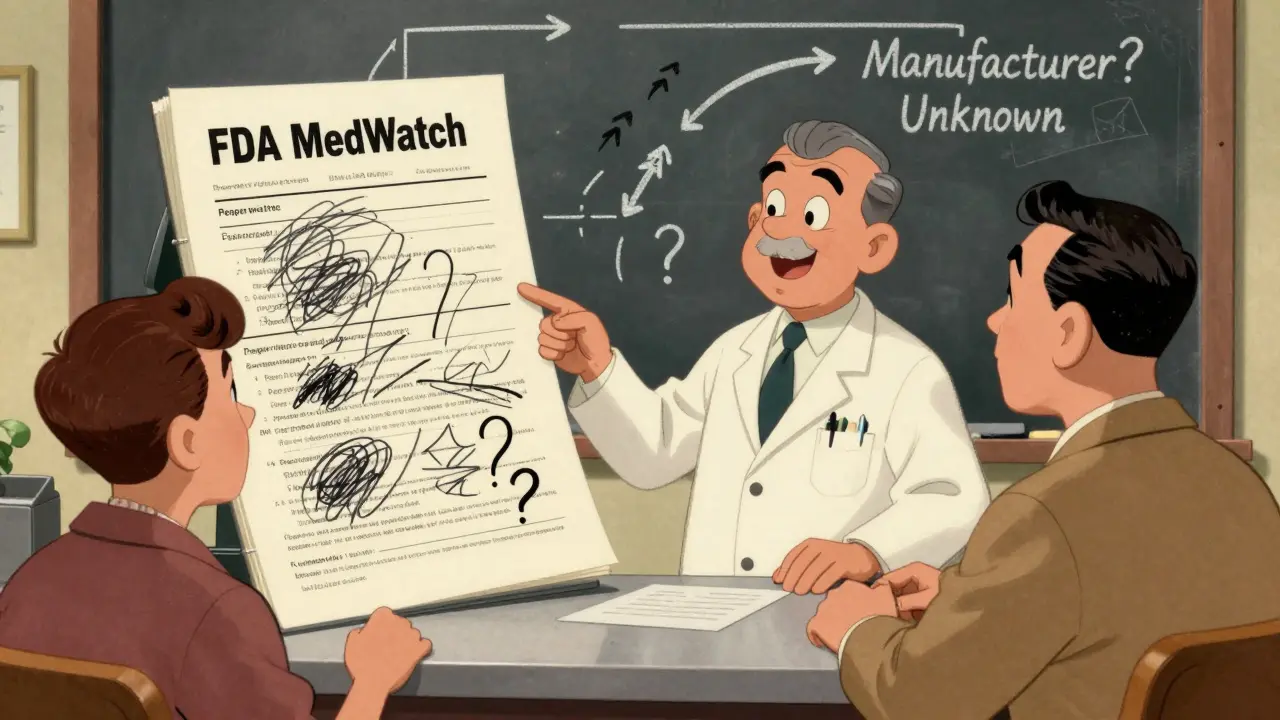
MedWatch, launched in 1993, is the FDA’s voluntary reporting program for adverse events, product defects, and therapeutic failures. It’s not just for brand-name drugs. In fact, with generics making up about 90% of all prescriptions filled in the U.S., they’re the backbone of the system. But here’s the catch: MedWatch doesn’t automatically know if a report is about a generic or a brand-name drug. The system relies on the person filing the report to say so.
When a patient, doctor, or pharmacist submits a report, they’re asked to list the drug name. For generics, the FDA’s official guidance says to write the generic name first, then add “generic” and the manufacturer’s name if known. For example: “sertraline, generic, Teva.” But in practice, most people don’t know who made their pill. The packaging rarely says it clearly. And even if it does, most patients won’t think to write it down.
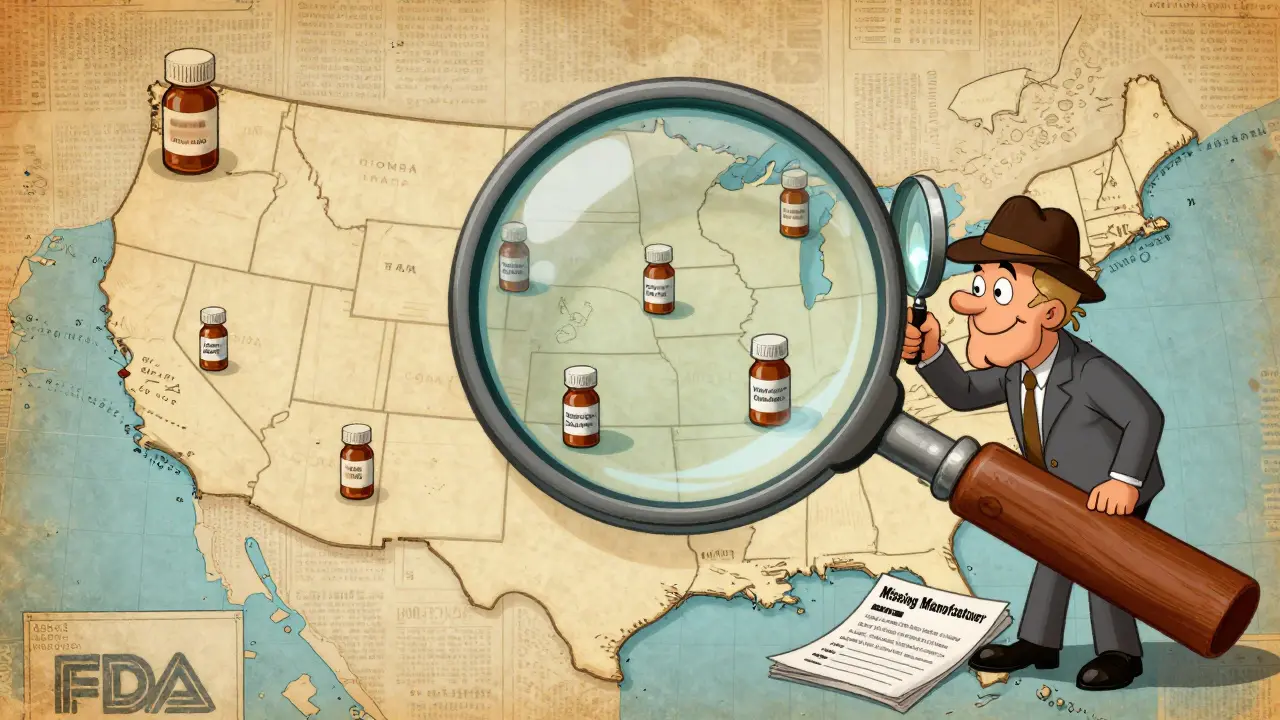
That’s a problem. In a review of over 5,000 reports involving generics from 2020 to 2024, only 32.7% included the manufacturer’s name. Compare that to brand-name reports, where 89.4% named the maker. Without that detail, the FDA can’t tell if one company’s version of a drug is causing more issues than another’s. That’s like trying to figure out which brand of coffee gives you heartburn when you only know it’s “coffee.”
The Biggest Issue: Therapeutic Inequivalence
Patients don’t always report side effects. They report when things stop working-or feel different. That’s called therapeutic inequivalence. It’s not a side effect. It’s when the generic version doesn’t control your seizures, your blood pressure, or your thyroid levels like the brand did. It’s not rare. In fact, it’s one of the top reasons people file MedWatch reports for generics.
Take levothyroxine. It’s a hormone replacement drug. Even tiny changes in absorption can throw your whole system off. Dozens of patients have reported sudden fatigue, weight gain, or heart palpitations after switching to a different generic version. In 2022, a cluster of these reports led the FDA to investigate a specific generic version of bupropion XL made by Mylan. Within 11 months, they updated the label to warn about inconsistent absorption. That’s how MedWatch should work: a pattern of reports triggers action.
But here’s the catch again: if you don’t know who made your pill, you can’t report it accurately. And if you don’t report it accurately, the FDA can’t connect the dots.
Why Reporting Is So Hard for Patients
Most patients aren’t pharmacists. They don’t know what an NDC code is. They don’t check the label for the manufacturer. When they get a refill and the pill looks different, they assume it’s the same drug-just a new batch. They don’t realize that different generic manufacturers can use different fillers, coatings, or manufacturing processes. Those differences don’t affect bioequivalence in lab tests-but they can affect how the drug works in your body.
A 2024 survey by the American Society of Health-System Pharmacists found that 71% of pharmacists said they don’t have time to help patients fill out detailed MedWatch reports. And 63% of patients who tried to report a problem couldn’t identify the manufacturer. The MedWatch online form doesn’t even have a dedicated field for it. You have to type it in manually, and most people don’t.
That’s why the FDA has started offering Spanish-language forms and training modules for pharmacists. But the system still relies on people knowing what to look for-and caring enough to report it.
What the FDA Is Doing to Fix It
The FDA knows this is a gap. In 2022, researchers developed a new algorithm to automatically identify generic drugs in the Adverse Event Reporting System (FAERS), which runs MedWatch. The algorithm uses patterns in drug names, dosage forms, and report timing to guess whether a drug is generic or brand. By January 2024, it was fully integrated into the system. It’s 92% accurate at spotting generics.
That’s a big step. But it’s still guessing. It can’t tell you whether it’s Teva’s sertraline or Mylan’s. And it can’t fix the fact that most reports are missing key details.
The FDA’s Generic Drug User Fee Amendments (GDUFA) III plan, launched in 2023, promises to improve this. One goal: link MedWatch to electronic health records by 2026. That means when your doctor prescribes a generic, the NDC code and manufacturer name get pulled in automatically. No more guessing. No more typos. Just clean data.
How You Can Help
If you’ve had a bad reaction to a generic drug, you can report it. Here’s how to make it useful:
- Check the pill bottle or packaging for the manufacturer name. It’s usually printed near the NDC number.
- Write down the exact drug name: “sertraline, generic, Teva” - not just “sertraline.”
- Describe what happened: “I switched from brand to generic in January. Within two weeks, I had severe nausea and dizziness. My depression got worse.”
- Include dates: when you started the new version, when symptoms began, how long they lasted.
- Submit it online at www.fda.gov/MedWatch or call 1-800-FDA-1088.
Even if you’re not sure-report it anyway. One report might not change anything. But ten? A hundred? That’s how the FDA finds patterns.
Why This Matters for Everyone
Generics save the U.S. healthcare system over $300 billion a year. But if we don’t know which ones are safe, we’re gambling with public health. The FDA can’t approve a drug based on lab tests alone. Real-world use is the final test. And MedWatch is the only system that collects that data at scale.
Right now, only 4.7% of all adverse event reports mention “generic” in connection with therapeutic failure. That’s way too low. Experts believe most cases go unreported. If you’ve noticed a change in how a generic drug works for you-or someone you know-don’t assume it’s just you. It might be the same for others. And if enough people report it, the FDA can act.
The system isn’t perfect. But it’s the best tool we have. And it only works if people use it.
What’s Next for Generic Drug Safety
By 2027, experts predict a 22% rise in generic-specific safety reports. Why? Because the tools are getting better. The algorithm is smarter. The link to electronic records is coming. And awareness is growing.
But none of that matters if patients and providers don’t report. The FDA doesn’t have eyes everywhere. It depends on you. Your doctor. Your pharmacist. Your neighbor who switched generics and felt off.
Every report counts. Not because it fixes one pill bottle. But because it helps fix the system for everyone else.

12 Comments
Okay but like… I switched my levothyroxine last year and suddenly I was exhausted all the time? Like, napping at 3pm while my kid screamed for snacks? I thought it was stress-turns out, it was the generic! I only figured it out because I happened to check the bottle-Teva. I switched back to brand, felt human again. Why isn’t this on the label?!!!
I work in a pharmacy and this is SO real. Patients come in furious because their ‘new’ pill gives them nausea, but they have no idea who made it. We try to help, but we’re swamped. The MedWatch form? It’s a mess. No dropdown for manufacturer. You have to type it. Half the time they don’t even know what ‘Teva’ means. It’s not their fault-it’s the system’s failure.
Think about it-our bodies are not lab machines. Bioequivalence means same absorption rate in controlled conditions. But human bodies? Stress, gut health, even the time of day you take it-it all changes how a pill behaves. So why do we treat generics like interchangeable Lego blocks? The FDA tests them like they’re identical. But biology isn’t math. It’s messy. And we’re paying the price with our symptoms.
My mom had seizures after switching to a new generic for her seizure med. She didn’t say anything because she didn’t want to be ‘difficult.’ We found out months later when her neurologist noticed the pattern. If we hadn’t dug into the bottle, we’d never have known it was Mylan’s version. This isn’t just inconvenient-it’s dangerous. Why aren’t pharmacies required to tell you the maker when they hand you the bottle?
THIS IS WHY AMERICA IS BROKEN. BIG PHARMA LETS CHEAP COMPANIES MAKE LIFE-ESSENTIAL DRUGS AND THEN THEY DON’T EVEN TRACK WHO’S MAKING THE BAD ONES. WE’RE NOT LAB RATS. PEOPLE ARE DYING BECAUSE NO ONE CARES ENOUGH TO MAKE A SIMPLE LABEL. I’M REPORTING THIS TO MY CONGRESSWOMAN. ENOUGH.
I reported my sertraline headache last year. No one ever followed up. The form didn’t even have a box for manufacturer. I typed it in but I’m pretty sure it got lost. Why make a system that doesn’t ask for the most important info? It’s like asking for feedback but not letting people say what’s wrong.
Just switched my generic blood pressure med and now I feel like a zombie 🧟♀️💥. Checked the bottle-Aurobindo. I’m reporting it. If you’ve had weird side effects after a generic switch, please report it too. We need to flood the system. 🙏 #GenericSafety
It is worth noting that the current regulatory framework assumes uniformity where biological variance is inherent. The reliance on patient-reported data without structured manufacturer identification undermines the validity of the entire system. While technological integration with EHRs is a promising step, the cultural and educational barriers to reporting remain substantial and largely unaddressed.
India makes 40% of the world's generics and you think this is a US problem? We have stricter testing than you do. Your system is broken because you don't care about quality. Stop blaming the generics. Fix your pharmacy system.
People don’t report because they’re lazy. The system isn’t perfect, but it’s not broken. If you can’t find the manufacturer on the bottle, you shouldn’t be taking it. Simple.
So let me get this straight… the FDA has a $300 billion savings system… and the only way it works is if patients become drug detectives? And if they don’t? We just keep guessing who’s poisoning us? 😂 I mean… genius. Truly. Next up: ‘How to Survive Your Medication by Reading Tiny Print on Pill Bottles’.
I used to think generics were all the same until my thyroid went haywire after a switch. I didn’t know the manufacturer until I held the bottle up to the light and squinted. That’s not user error-that’s design failure. The system should auto-populate the manufacturer from the pharmacy’s electronic record. We’re in 2025. Why am I playing pharmaceutical whodunit? This isn’t a mystery novel. It’s my health.
Write a comment