Statin Muscle Pain Risk Calculator
This calculator estimates your risk of developing muscle pain from statins based on factors mentioned in medical studies. Please note: This is for informational purposes only and not a substitute for professional medical advice.
Your Risk Assessment
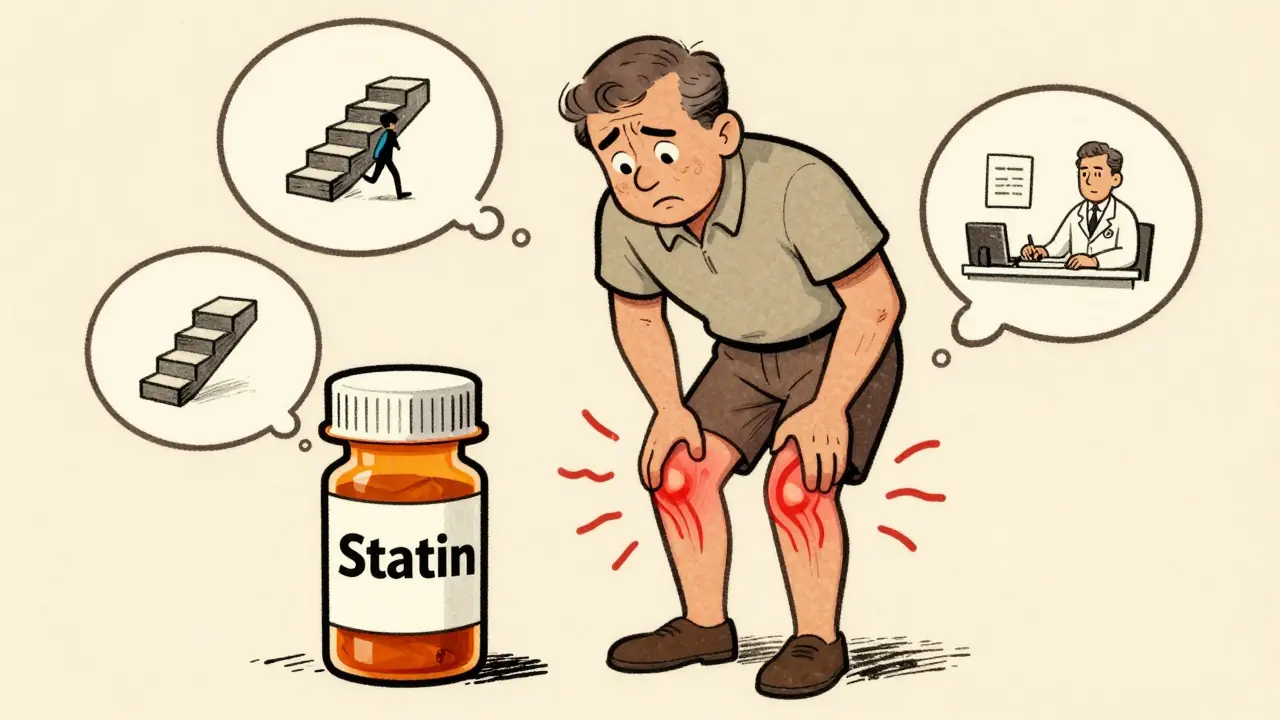
Many people start taking statins to lower their cholesterol and protect their heart. But for a lot of them, the first sign something’s wrong isn’t a lab result-it’s sore muscles. Thighs that ache when climbing stairs. Calves that feel tight after a short walk. Shoulders that hurt for no reason. It’s common. And it’s confusing. Because you’re taking the medicine to stay healthy, but it’s making you feel worse.
How Common Is Muscle Pain from Statins?
Doctors often say muscle pain from statins affects less than 5% of users. But if you’ve talked to other people on medication, you’d think it’s way more common. And you’d be right. In real life, about 15% to 20% of people on statins report muscle discomfort. Some studies even say up to 30% notice it. Why the difference? In clinical trials, people don’t always know if they’re taking the real drug or a sugar pill. But in the real world, if you’ve been told statins can cause muscle pain, your brain starts looking for it. That’s called the nocebo effect. One study found people who were warned about muscle side effects were 40% more likely to report pain-even when they were taking a placebo.
Still, that doesn’t mean the pain isn’t real. Many people genuinely feel it. The key is figuring out whether it’s the statin-or something else.
What Does Statin Muscle Pain Feel Like?
It’s not the same as a pulled muscle after a workout. Statin-related muscle pain is usually:
- Constant, not just after activity
- Affects both sides of your body equally
- Most common in thighs, hips, shoulders, or calves
- Feels like soreness, weakness, or stiffness
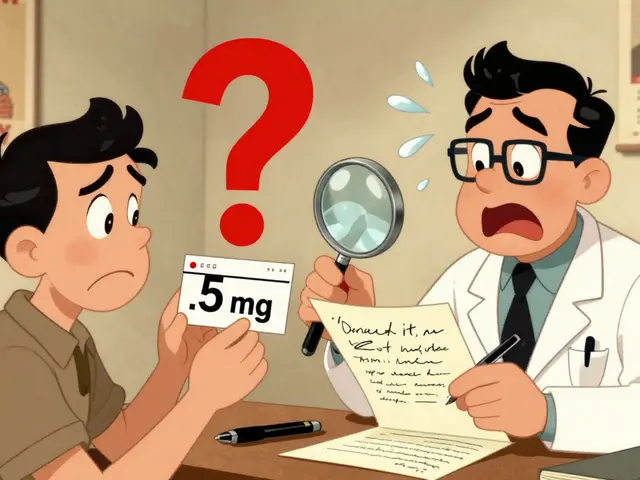
It usually shows up within the first few months after starting the drug-or after a dose increase. Some people notice it after just two weeks. Others take longer. It doesn’t always come with swelling or redness. In fact, most of the time, there’s no visible sign. That’s why it’s easy to miss or mislabel as aging or overexertion.
When Is It Serious?
Most muscle pain from statins is mild. But there’s a rare, dangerous condition called rhabdomyolysis. It happens in fewer than 1 in 10,000 people taking statins. Still, it’s important to know the signs:
- Severe muscle pain that doesn’t improve
- Dark, tea-colored urine
- Extreme weakness or fatigue
- Fever or nausea
If you have any of these, stop the statin and call your doctor immediately. Rhabdomyolysis can damage your kidneys. It’s rare, but it’s not something to ignore.
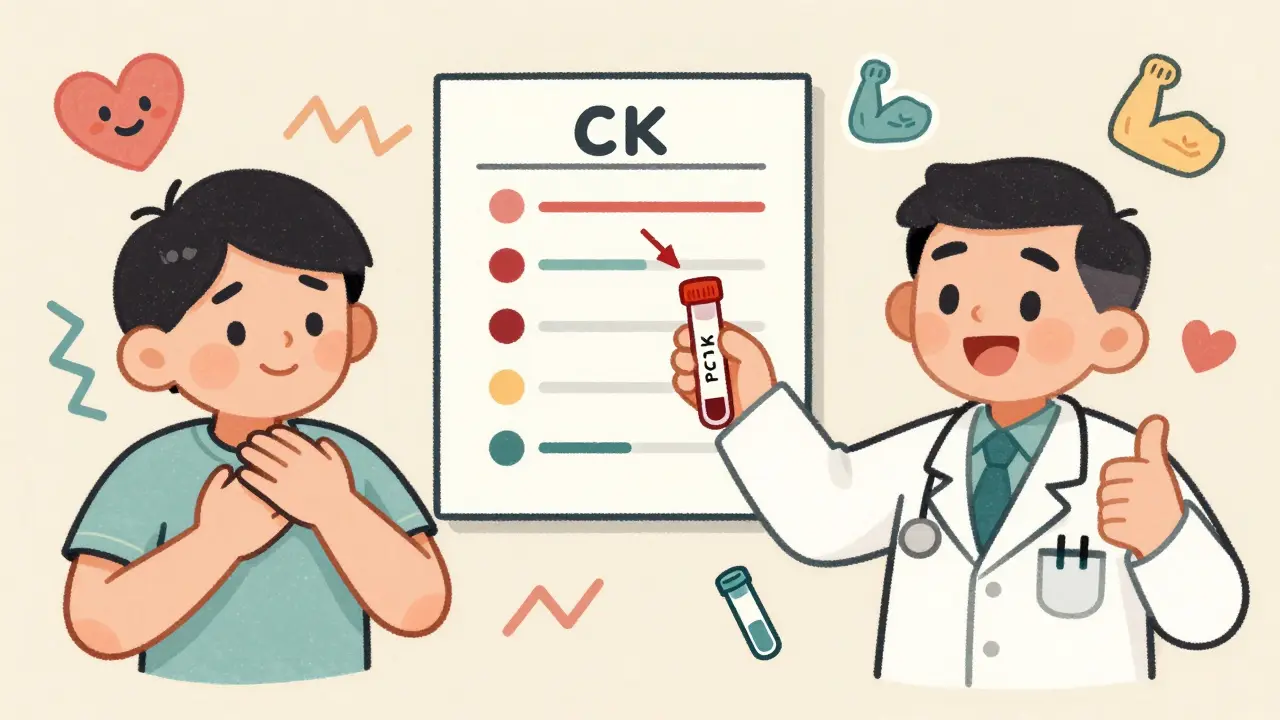
Doctors check for muscle damage using a blood test called creatine kinase (CK). If your CK is more than 10 times the normal level, that’s a red flag. Even if it’s 5 times higher, your doctor may pause the statin to see if things improve.
Who’s More Likely to Get Muscle Pain?
Not everyone is at the same risk. Some factors make muscle pain more likely:
- Age 80+: Risk goes up by about 30%
- Small body size: Especially under 100 lbs
- Female gender: Women report symptoms more often than men
- Thyroid problems: Undiagnosed hypothyroidism raises risk by 35%
- Liver or kidney disease: Doubles your chance of side effects
- Other medications: Fibrates, some antibiotics, or cyclosporine can interact with statins
High-dose statins like atorvastatin 80 mg or rosuvastatin 40 mg also carry more risk than lower doses. If you’re on a high dose and having trouble, talk to your doctor about switching to a lower one.
What Can You Do If Statins Hurt Your Muscles?
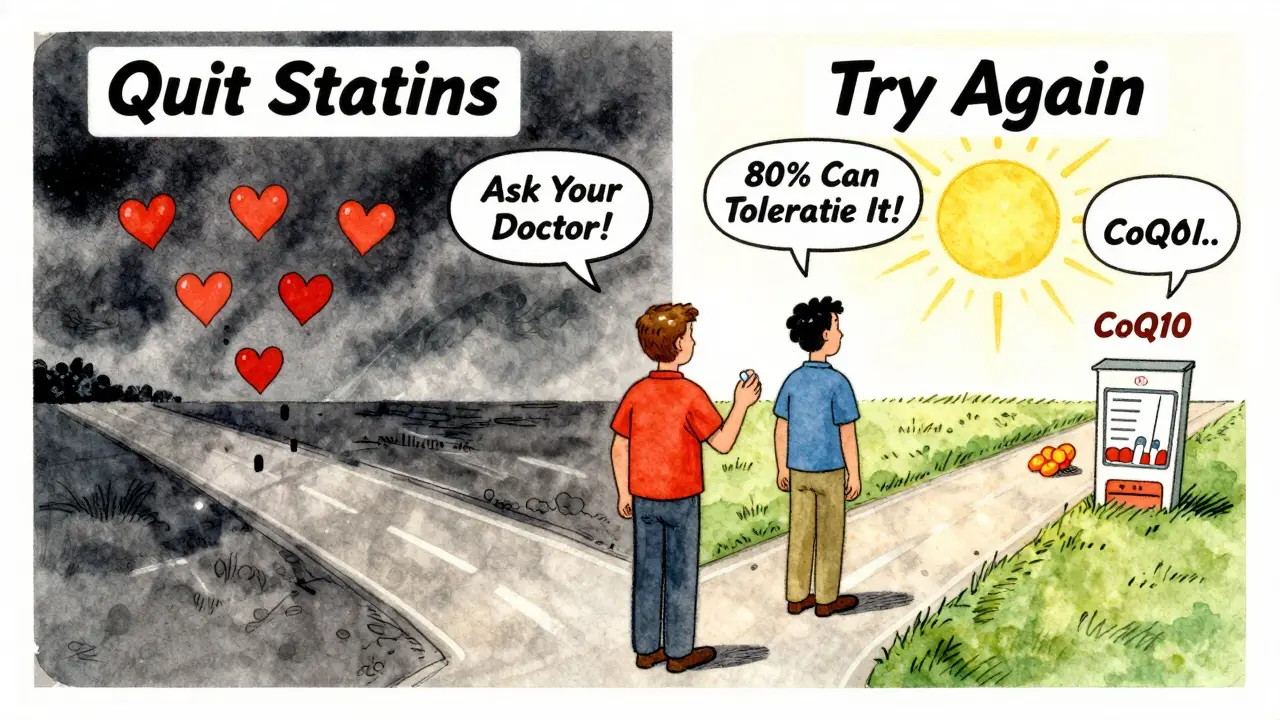
Don’t just quit. Stopping statins without guidance can raise your risk of heart attack or stroke by 25% to 50% within two years. Instead, follow a smart plan:
- Get tested: Ask for a CK blood test. This helps rule out serious muscle damage.
- Take a break: Stop the statin for 4 to 6 weeks. If your pain fades, that’s a clue it might be the drug.
- Rechallenge carefully: After the break, restart at a lower dose. If pain returns, it’s likely the statin.
Here’s the good news: about 60% of people who had muscle pain on one statin can tolerate a different one. Pravastatin and fluvastatin tend to cause fewer muscle issues. Switching from atorvastatin to pravastatin might be all you need.
Some people try coenzyme Q10 (CoQ10) supplements. The science is mixed. One study showed a 30% drop in pain for nearly half the users. But a major review found no clear benefit over placebo. It’s not a cure, but it’s safe to try if you want.
What If You Can’t Tolerate Any Statin?
If you’ve tried multiple statins and still have pain, there are non-statin options:
- Ezetimibe: A pill that blocks cholesterol absorption in the gut. Works well alone or with a low-dose statin.
- PCSK9 inhibitors: Injectable drugs like alirocumab or evolocumab. They cut LDL cholesterol by 50-60%. But they cost about $5,000 a year-way more than generic statins, which run $4 to $30 a month.
Many people avoid these because of cost. But if your heart risk is high and statins aren’t an option, they’re worth discussing with your doctor.
Why So Many People Quit Statins-And Why They Shouldn’t
On patient forums like Reddit and Drugs.com, muscle pain is the #1 reason people stop statins. Over 70% of negative reviews mention it. But here’s the twist: in blinded studies, when people were switched back and forth between statin and placebo without knowing which was which, only 20-25% actually had pain return when re-exposed to the real drug. That means a lot of the pain people blame on statins might be from other causes-aging, inactivity, vitamin D deficiency, or even stress.
That doesn’t make the pain any less real. But it does mean you might not need to give up statins forever. With the right approach, 80-90% of people who thought they couldn’t take statins end up back on them successfully.
What You Should Do Next
If you’re having muscle pain and you’re on a statin:
- Don’t stop cold turkey. Talk to your doctor first.
- Ask for a CK blood test.
- Write down when the pain started, where it hurts, and what makes it better or worse.
- Ask if switching to a different statin is an option.
- Check your thyroid and vitamin D levels-they can mimic statin side effects.
- If you’re on a high dose, ask if a lower dose might still work.
Statins save lives. They’ve been proven to cut heart attacks and strokes by 25% to 35%. But they’re not perfect. The goal isn’t to avoid side effects at all costs. It’s to find the balance: keep your heart protected without making your body feel worse.
There’s a way forward-even if statins hurt right now. You just need the right plan.
Can statin muscle pain go away on its own?
Yes, in many cases. If you stop the statin and the pain fades within a couple of weeks, it’s likely related to the medication. But don’t assume it’s gone for good. Some people can restart a different statin at a lower dose without issues. Always check with your doctor before restarting any medication.
Does taking CoQ10 help with statin muscle pain?
Some people report feeling better, but studies don’t prove it works for everyone. One trial showed a 30% reduction in pain for about 45% of users. Another major review found no significant benefit over placebo. It’s safe to try, but don’t expect a miracle. It won’t replace the need to work with your doctor on the right statin or dose.
Is it safe to take statins every other day?
For some people, yes. The STRENGTH trial is testing intermittent dosing, and early results show a 40% drop in muscle symptoms while still lowering cholesterol. If you’re struggling with side effects, ask your doctor if skipping a day or two each week could work for you. Not all statins are suited for this, but it’s an option worth exploring.
Why do women report more muscle pain from statins than men?
Women tend to be older when they start statins, have smaller body size, and are more likely to have other conditions like hypothyroidism-which increases side effect risk. They also report symptoms more openly. That doesn’t mean they’re more sensitive to the drug-it means a mix of biology, age, and reporting habits adds up.
Can I just switch to natural remedies instead of statins?
Diet, exercise, and supplements like red yeast rice can help lower cholesterol-but not as much as statins. Red yeast rice contains a natural form of lovastatin and can cause the same side effects. There’s no proven natural alternative that matches the heart protection statins provide. If you’re avoiding statins because of muscle pain, talk to your doctor about other prescription options like ezetimibe or PCSK9 inhibitors instead of relying on unproven remedies.
Final Thought: Don’t Give Up Before You’ve Tried Everything
Statin muscle pain is frustrating. It makes you feel like you’re being punished for trying to stay healthy. But quitting without a plan puts your heart at risk. The answer isn’t always to stop-it’s to switch, adjust, or find a better fit. With the right steps, most people can find a way to keep their heart safe without constant muscle pain.


12 Comments
I’ve been on atorvastatin for 3 years and my legs felt like concrete stairs every morning. I thought it was just aging-until I stopped for 6 weeks. Poof. Gone. Now I’m on pravastatin at half the dose and I hike every weekend. Don’t give up-just switch.
Also, CoQ10? I take 200mg daily. Feels like a placebo, but my legs don’t scream anymore. Worth a shot.
Statins cause myalgia in approximately 15–20% of patients, per observational cohort studies. The nocebo effect is well-documented; however, this does not invalidate patient-reported outcomes. Creatine kinase levels should always be assessed prior to discontinuation. Consider genetic polymorphisms in SLCO1B1, which increase myopathy risk by 4.5-fold in homozygous carriers.
OMG I CRIED WHEN I REALIZED IT WAS THE STATIN. I thought I was just getting old, then my yoga instructor said, ‘Girl, you’re not 70.’ I stopped for 3 weeks and my hips stopped feeling like they were stuffed with gravel. Now I’m on fluvastatin and I’m back to dancing. Thank you for writing this. I needed to know I wasn’t crazy.
CoQ10? I took it. Felt nothing. But I cried harder. So I keep taking it anyway. Emotional support supplement.
From a pharmacokinetic standpoint, statin-induced myotoxicity is mediated by mitochondrial dysfunction secondary to isoprenoid depletion. The HMG-CoA reductase inhibition cascade reduces ubiquinone synthesis, which compromises electron transport chain efficiency in skeletal muscle. Adjunctive CoQ10 supplementation may theoretically restore bioenergetic homeostasis, though clinical efficacy remains equivocal per Cochrane meta-analysis 2021. Consider therapeutic drug monitoring and CYP3A4/2C9 phenotyping for high-risk phenotypes.
Statins are a scam. My cholesterol was fine. I was told to take it because I’m a woman over 50. Now I can’t lift my grocery bags. My doctor says ‘it’s all in your head.’ Well, my muscles aren’t. I’m done with Big Pharma and their ‘clinical trials.’
Also, I don’t believe in CoQ10. It’s just sugar pills with a fancy name.
It is with profound empathy that I acknowledge the profound physical and psychological burden borne by individuals experiencing statin-associated muscle symptoms. The dissonance between therapeutic intent and somatic consequence is not merely clinical-it is existential. I urge all stakeholders to prioritize patient narrative as co-equal data in therapeutic decision-making.
STOP WHINING. I’ve been on Lipitor for 12 years. I lift weights. I’m 62. My muscles are fine. You’re just lazy. And CoQ10? That’s for people who think vitamin C cures colds. Get a real job. Get off the couch. Stop blaming your meds. You’re weak. 💪😤🇺🇸
Y’all. I was ready to quit statins. I thought my body was betraying me. Then I switched from rosuvastatin to pravastatin-same dose, different molecule-and it was like someone turned off a dimmer switch on my pain. I didn’t even know that was possible. I’m back to running 5Ks. And yes, I took CoQ10. It didn’t do much, but I like the glittery bottle. Sometimes you need the ritual as much as the science.
Also-THANK YOU for mentioning thyroid. I had zero symptoms until I got tested. My TSH was 7.8. Fix that, and my legs stopped screaming. Statins weren’t the villain. I was just missing a piece.
CK >10x ULN = stop. CK 5x = hold. No other data needed. You’re not special. Your pain is real, but your self-diagnosis isn’t. Get tested. Don’t Google. Statins save lives. Don’t be a statistic.
I was on simvastatin for 5 years. Felt like I’d been run over by a truck every morning. Stopped it. Waited. Started pravastatin at 10mg. No pain. My GP was surprised I didn’t just quit altogether. I didn’t want to risk a heart attack. But I also didn’t want to live like a zombie. Found the balance. Took time. Worth it.
Ugh I KNEW it was the statin. I told my doctor. She said ‘it’s probably anxiety.’ I cried in the parking lot. Then I started taking CoQ10 and magnesium and suddenly I’m ‘better’? No. I just stopped the statin. But now I look like a ‘compliant patient’ because I took supplements. 😒
Also, my sister died of a stroke because she stopped her statin ‘for natural remedies.’ Don’t be her.
Wow. So you’re telling me the entire medical establishment is wrong? That 40 years of clinical trials are just… wrong? That your muscles hurt because you’re too sensitive? That the 25% reduction in heart attacks is a myth? Cool. Cool cool cool. Go eat kale and pray to your crystals. I’ll be over here, alive, at 70, with clean arteries. 🤡
Write a comment