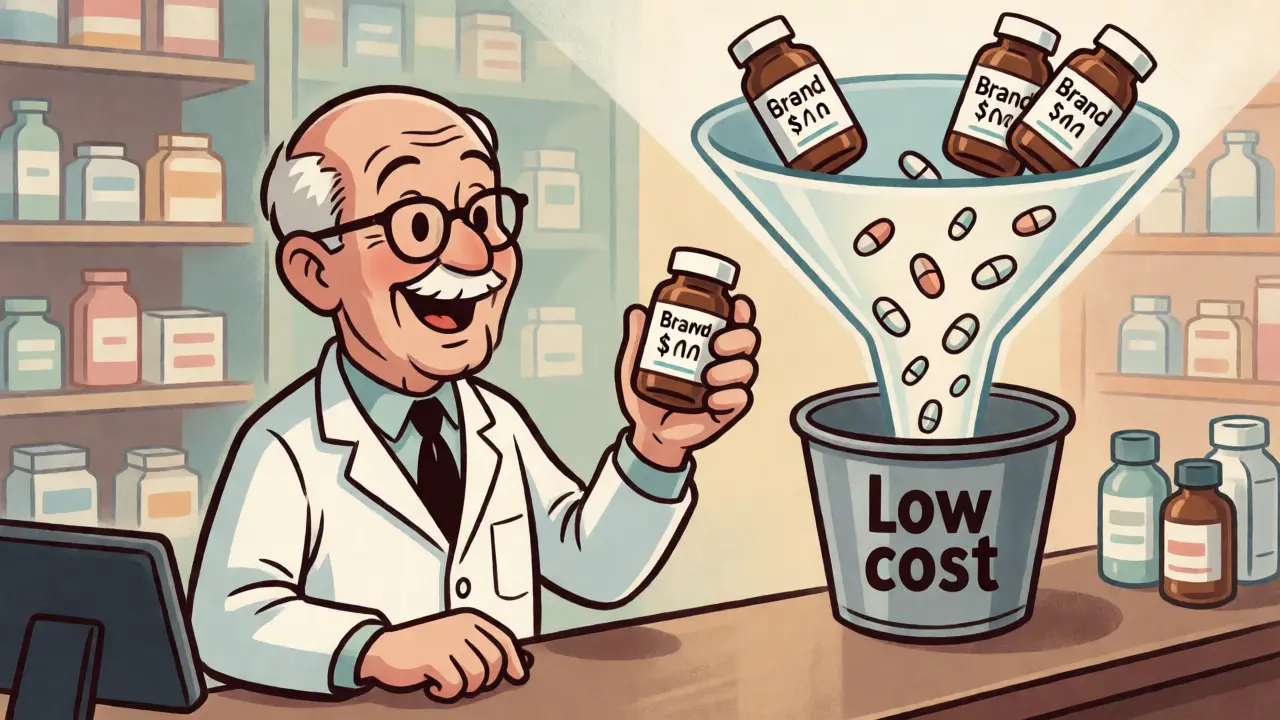
Imagine paying $15 for a month’s supply of heart medication instead of $150. That difference isn’t luck; it’s the result of how Medicare Part D formularies work. If you’re a beneficiary, understanding the mechanics behind generic drug coverage is your best defense against surprise pharmacy bills. It’s not just about picking the cheapest plan; it’s about knowing which tier your specific medications land in and how recent legal changes have reshaped your financial exposure.
The Core Mechanism: Tiered Formularies Explained
A formulary is essentially a list of approved drugs that a health plan agrees to cover. For Medicare Part D, these lists are structured into tiers to encourage cost-effective prescribing. Think of it as a funnel: the lower the tier, the less you pay. Most plans use a five-tier system, but generics dominate the bottom two.
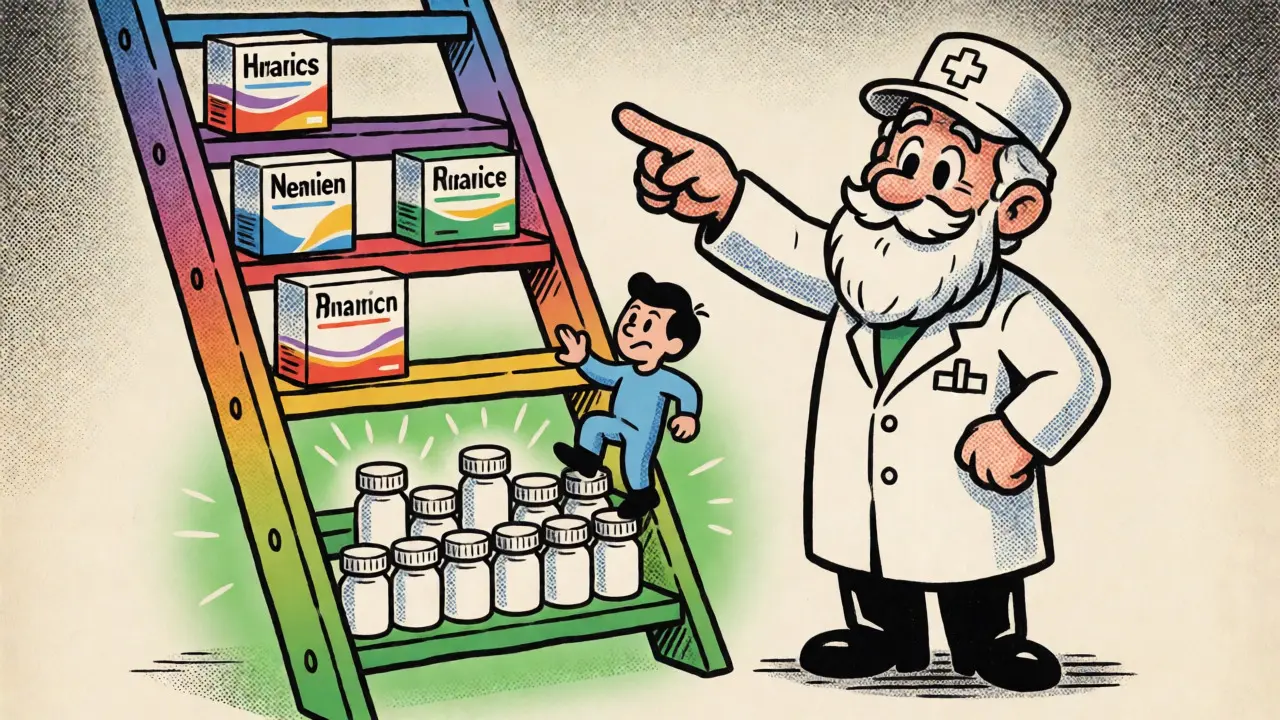
Tier 1 is reserved for preferred generics. These are the most commonly prescribed, low-cost drugs where competition has driven prices down. You’ll often see fixed copays here, ranging from $0 to $15 for a 30-day supply. Tier 2 holds non-preferred generics or brand-name drugs that are still relatively affordable. Here, costs might jump to 25-35% coinsurance or higher fixed copays up to $40. The goal? To steer patients toward Tier 1 options whenever medically appropriate.
Why does this matter? Because not all generics are created equal. Two drugs might treat the same condition (say, high blood pressure), but if one is on Tier 1 and the other is on Tier 2, your wallet feels the difference. This is known as "therapeutic interchange," and it’s a common source of confusion. Your pharmacist can substitute a therapeutically equivalent generic, but if it’s not on your plan’s preferred list, you might pay more than expected.
How the Inflation Reduction Act Changed the Game
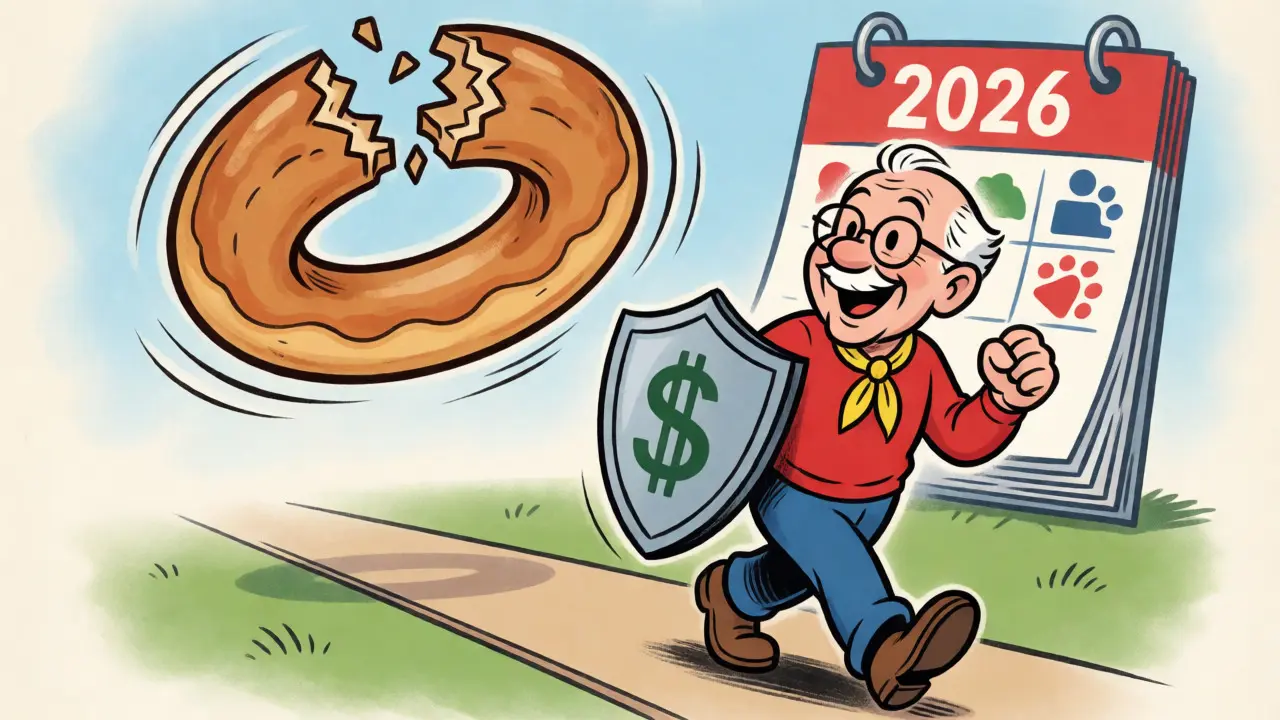
If you remember the "donut hole"-that terrifying gap in coverage where you paid full price until catastrophic coverage kicked in-you can breathe a sigh of relief. The Inflation Reduction Act eliminated this gap entirely starting January 1, 2025. As of 2026, there is no donut hole. Instead, we have a hard annual cap on out-of-pocket spending.
In 2026, this cap sits at $2,100. Once you hit that number in eligible drug costs, your share drops to $0 for the rest of the calendar year. This change fundamentally alters how generic coverage functions. Previously, even cheap generics could push you into the donut hole if you took many of them. Now, once you’ve paid your deductible and initial coinsurance, you’re protected. According to CMS data, this shift saves beneficiaries an average of $450 annually on generic drugs alone.
| Feature | Pre-2025 Structure | 2026 Structure |
|---|---|---|
| Out-of-Pocket Cap | No hard cap; catastrophic phase had 5% coinsurance | $2,100 hard cap; $0 cost-sharing after threshold |
| Donut Hole | Yes (coverage gap) | Eliminated |
| Deductible | Varied by plan | Max $615 (varies by plan, some $0) |
| Generic Coinsurance | Up to 25% during gap | 25% until cap reached |
Navigating Tiers: What Counts Toward Your Cap?
Here’s where things get tricky. Not every dollar you spend at the pharmacy counts toward that $2,100 cap. Only "eligible" costs count. For generics, this is straightforward: what you pay counts. But for brand-name drugs, the calculation includes manufacturer discounts, which can inflate the amount counted toward your threshold compared to what you actually paid out of pocket.
For generics, the math is simpler. During the initial coverage phase, you typically pay 25% coinsurance. Let’s say you take three different generic medications costing $20 each per month. That’s $60 a month, or $720 a year. If your plan has a $615 deductible, you pay that first. After that, you pay 25% of the remaining costs. With the new rules, once you hit $2,100 in total eligible expenses, you’re done. No more payments.
This structure rewards those who stick to Tier 1 generics. Since 92% of prescriptions filled under Part D are generics, optimizing your regimen for Tier 1 status can keep you well below the cap. However, if you rely on newer generics or specialty drugs that land in Tier 5, you’ll need to budget carefully, especially in the first few months of the year before the cap kicks in.
Plan Requirements and Protected Classes
You might worry that plans will drop your favorite generic to save money. The Centers for Medicare & Medicaid Services (CMS) has strict rules preventing this. Every Part D plan must cover at least two chemically distinct drugs in every therapeutic class. This ensures you always have options.
Furthermore, six "protected classes" require 100% coverage of available drugs. These include immunosuppressants, antidepressants, antipsychotics, anticonvulsants, antiretrovirals, and antineoplastics. If your generic falls into one of these categories, your plan cannot exclude it. Outside these classes, plans have more flexibility but must still cover at least 85% of drugs in each category. If a needed generic isn’t covered, you can request a "coverage determination." Data shows that 83% of such requests result in approval, so don’t hesitate to ask.
Strategies for Maximizing Savings
So, how do you make sure you’re getting the best deal? First, review your Annual Notice of Change (ANOC) every fall. Plans frequently move drugs between tiers. A drug that was Tier 1 last year might be Tier 2 this year. Using the Medicare Plan Finder tool allows you to input your specific medications and compare estimated costs across plans. Studies show that beneficiaries who actively compare plans save an average of $427 annually.
Consider plans with $0 deductibles. About half of standalone Part D plans offer this option. If you take multiple generics, skipping the deductible means you start paying only coinsurance immediately, potentially hitting your out-of-pocket cap faster and benefiting from the $0 cost-sharing sooner.
Also, watch out for "authorized generics." These are brand-name drugs sold as generics by the original manufacturer. They can sometimes be placed in higher tiers than true generics. Ask your pharmacist if there’s a standard generic alternative available, as it might be cheaper and lower on the formulary.
Frequently Asked Questions
What is the out-of-pocket cap for Medicare Part D in 2026?
The out-of-pocket cap for Medicare Part D in 2026 is $2,100. Once you reach this amount in eligible drug costs, you pay $0 for the remainder of the calendar year.
Do all generic drugs cost the same under Part D?
No. Generics are placed in different tiers (usually Tier 1 or Tier 2). Tier 1 generics have the lowest copays ($0-$15), while Tier 2 generics may have higher copays or coinsurance.
What happens if my generic drug is not on my plan's formulary?
You can request a "coverage determination" from your plan. If approved, the drug will be covered. Additionally, you can switch plans during the Annual Enrollment Period (October 15 - December 7) to find one that covers your specific medication.
Is there still a donut hole in Medicare Part D?
No, the donut hole (coverage gap) was eliminated effective January 1, 2025, by the Inflation Reduction Act. Beneficiaries now move directly from initial coverage to the out-of-pocket cap phase.
Can my doctor prescribe a generic that is not on my formulary?
Your doctor can prescribe any FDA-approved medication, but your insurance may not cover it. If it’s not on the formulary, you might have to pay full price unless you successfully appeal for a coverage determination.
Next Steps for Beneficiaries
Take control of your prescription costs today. Log into your plan’s member portal and check the current formulary for your medications. Note their tier placement. Then, use the Medicare Plan Finder to see if switching plans would lower your annual costs. Remember, the system is designed to reward generic usage, so staying informed about tier changes is your most powerful tool for saving money.
11 Comments
Man, I am absolutely exhausted just reading about tier structures and out-of-pocket caps. It feels like every single time I think I've figured out how this system works, they change the rules on us again. The idea that I have to constantly monitor which "therapeutic interchange" my pharmacist is using so I don't get hit with a surprise bill is honestly draining. I used to think healthcare was complicated, but now it feels like a full-time job just trying to keep my head above water financially. Why does everything have to be so convoluted? I just want to take my meds without worrying if I'm going to go bankrupt by December. It's sad, really, how much mental energy we waste on administrative nonsense instead of actually living our lives.
Finally some clarity! This explains exactly why my costs went down last year. No more donut hole anxiety for me. 🇺🇸
I appreciate you breaking this down so clearly. For anyone struggling with the transition from the old structure, the elimination of the donut hole is genuinely the biggest win here.
The $2,100 hard cap provides a level of predictability that we simply didn't have before. If you are currently paying high amounts for generics because you were stuck in the coverage gap phase, please check your plan's current formulary. You might find that sticking to Tier 1 preferred generics keeps you well under that threshold all year long. It is worth the effort to log into your member portal and verify the tier placement of each medication you take. Small changes in prescription choices can lead to significant savings when the math adds up over twelve months.
While the article presents a rosy picture of the new "hard cap," it conveniently glosses over the fact that insurance companies are already gaming the system by shifting more drugs into higher tiers or creating complex prior authorization hurdles. The average beneficiary isn't saving $450; they're being manipulated by actuarial tables designed to maximize profit margins. Furthermore, the assumption that beneficiaries will actively compare plans is naive at best. Most elderly people do not have the digital literacy or cognitive bandwidth to navigate the Medicare Plan Finder tool effectively. They rely on their doctors or pharmacists, who often have conflicts of interest or lack real-time formulary data. Until the government mandates transparent, universal pricing rather than tiered obfuscation, this is just another layer of bureaucratic theater disguised as reform.
hey thanks for this... really helped me understand why my copay changed last month. i was confused about the tier 1 vs tier 2 thing. glad the donut hole is gone finally. its too confusing otherwise.
This is truly wonderful news for all of us who are navigating the complexities of senior health care. It brings such hope to know that the financial burden is being alleviated through these structural changes. I encourage everyone to take advantage of the Annual Notice of Change period, as it is the perfect opportunity to ensure your specific needs are met. Remember, knowledge is power, and understanding your formulary is the first step toward financial peace of mind. Let us remain optimistic and proactive in managing our health resources. Together, we can make the most of these beneficial adjustments.
The assertion that "92% of prescriptions filled under Part D are generics" requires context. While statistically accurate, this figure includes many low-cost items that skew the perception of overall spending. The critical issue remains the volatility of specialty drug prices, which are often excluded from simple generic comparisons. Additionally, the claim that "83% of such requests result in approval" for coverage determinations is misleading without specifying the timeframe or the nature of the denials. One must also consider that "authorized generics" often carry price tags significantly higher than standard generics, yet are marketed as cost-saving measures. Precision in language matters when discussing financial exposure.
Wake up. The "elimination of the donut hole" is just a rebranding exercise. They raised premiums to offset the cap. Look at the fine print. The insurance lobby owns Congress. We are paying for this "savings" via tax hikes and reduced services elsewhere. It’s all smoke and mirrors to distract us from the fact that drug manufacturers still control the market. Nothing has changed except the name of the game.
It’s fascinating how language shapes our reality... 😌 The term "donut hole" itself was a metaphor for confusion, and now that it’s gone, do we lose the shared cultural understanding of that struggle? Or do we replace it with a new metaphor for the "cap"? 💭 It makes one wonder if simplifying the structure removes the human element of navigating uncertainty. 🤔 We trade chaos for rigidity, and perhaps that’s the true philosophical shift. Is security worth the loss of narrative complexity? 🧐 I’m not sure. But the silence where the fear used to be... it’s deafening. 🎶
YES! This is the breakthrough we needed! Stop worrying and start checking those formularies today! You have the power to save hundreds! Go check your plan NOW! Don't let the bureaucracy win! Empower yourself! Every dollar saved is a victory! Keep pushing forward! The system is changing FOR YOU! Embrace the change! Take action! Be smart! Be proactive! Be free from the donut hole forever! Let's go!
I completely agree with the point about authorized generics. That distinction is crucial and often missed by patients.
When a pharmacist offers an "authorized generic," it is technically the same pill as the brand name, just sold under a different label by the manufacturer. However, because it lacks the competition of other manufacturers producing the exact same molecule, the price stays artificially high. Plans often place these in Tier 3 or even Tier 4, whereas a true generic (produced by a third party) would be in Tier 1 or 2. Always ask: "Is this a true generic or an authorized generic?" If it's authorized, ask if there is a true generic alternative available. This small question can save you twenty dollars a month per drug.
Write a comment