Warfarin & Alcohol Risk Estimator
Enter your details below to see how different drinking patterns might affect your blood clotting status.
Assessment Result
Click calculate to view results.
Select your options and click Calculate to see your risk profile.
You take your Warfarin is a vitamin K antagonist anticoagulant used to prevent blood clots in conditions like atrial fibrillation and deep vein thrombosis. It requires careful monitoring of the International Normalized Ratio (INR) to ensure it stays within a therapeutic range, typically between 2.0 and 3.0 for most patients. pill every evening without fail. You’ve got your diet under control, avoiding sudden spikes in green leafy vegetables. But this weekend, you’re at a party, and someone hands you a fifth drink. Is it really that dangerous? The short answer is yes. Binge drinking while on warfarin isn’t just a bad idea; it’s a physiological gamble that can send your International Normalized Ratio (INR) is a standardized measure used to report prothrombin time results, indicating how long it takes for your blood to clot. levels into the red zone, drastically increasing your risk of major bleeding.
The Physiology of the Crash: Why Alcohol Messes With Your Clotting
To understand why mixing Alcohol is ethanol, a central nervous system depressant that affects liver function and enzyme activity. with warfarin is so volatile, you have to look at what happens inside your liver. Warfarin works by blocking Vitamin K, which your body needs to make clotting factors. Alcohol interferes with this process in two distinct, conflicting ways depending on whether you are drinking heavily right now or have been doing it for years.
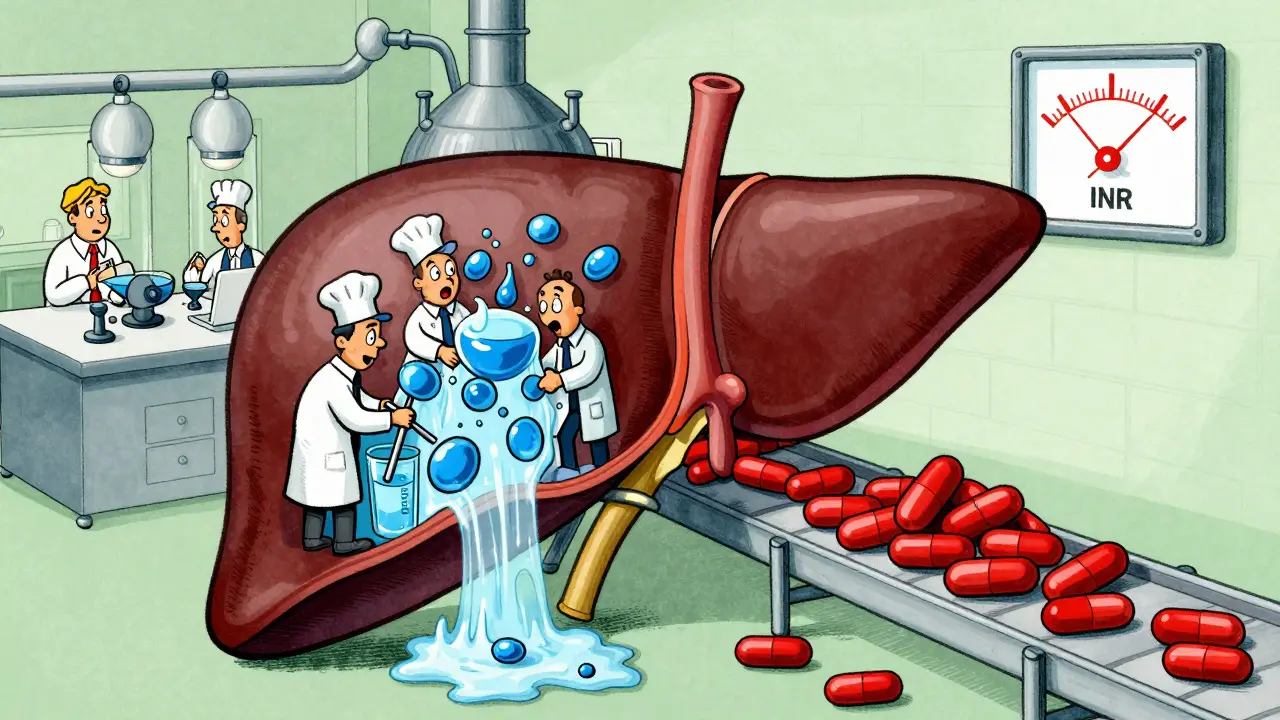
When you binge drink-defined by the National Institute on Alcohol Abuse and Alcoholism (NIAAA) is a U.S. government agency that conducts and supports research on alcohol use and abuse. as consuming five or more standard drinks for men, or four or more for women, within about two hours-you flood your system with ethanol. This acute intake competes with warfarin for the same metabolic pathways, specifically the CYP2C9 and CYP3A4 enzymes in your liver. Think of these enzymes as workers on an assembly line. If they are busy breaking down alcohol, they can’t break down warfarin. As a result, warfarin builds up in your bloodstream. Your INR shoots up. Your blood becomes thinner than intended, and the risk of internal bleeding skyrockets.
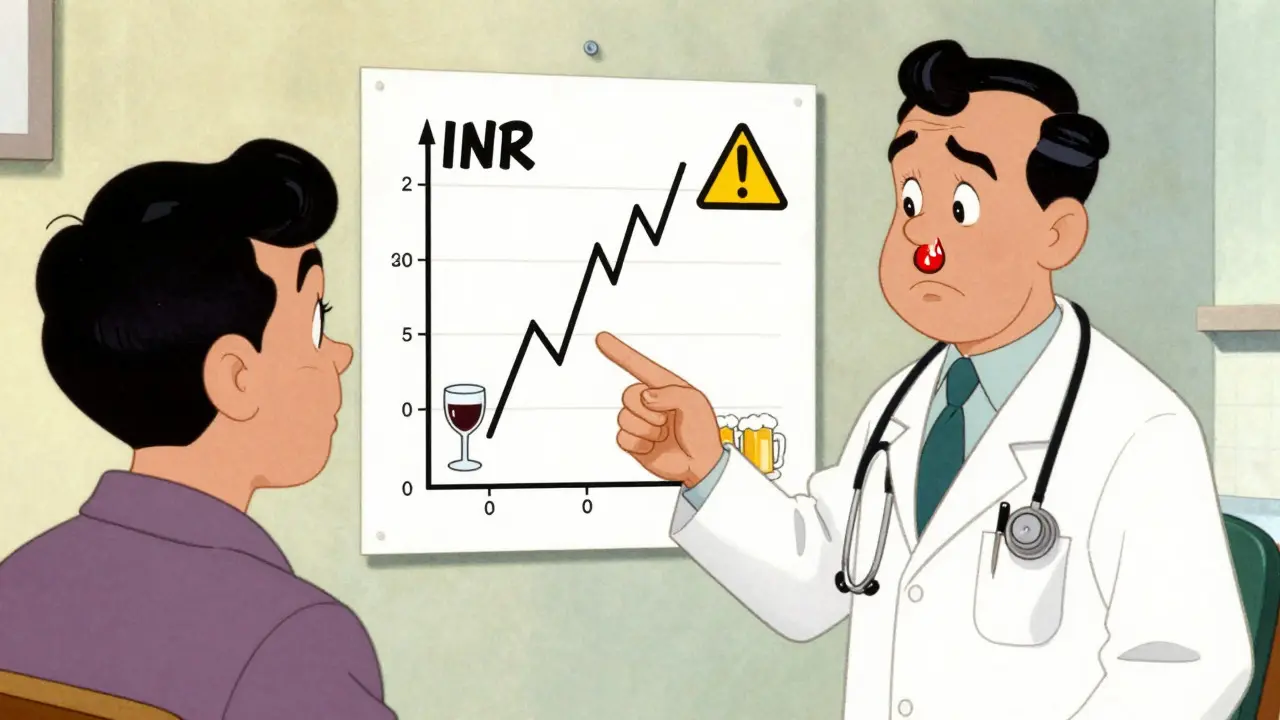
However, if you are a chronic heavy drinker, the opposite might happen initially. Chronic alcohol consumption induces these same enzymes, making them work faster. This means your liver breaks down warfarin more quickly, causing your INR to drop. Your blood becomes thicker, raising the risk of clotting. This unpredictability is exactly why doctors hate seeing patients who fluctuate between sobriety and bingeing. One week you’re at risk of a stroke; the next, you’re at risk of a hemorrhage.
| Drinking Pattern | Effect on Liver Enzymes | Impact on Warfarin Levels | Resulting INR Change | Primary Risk |
|---|---|---|---|---|
| Binge Drinking (Acute) | Inhibits CYP2C9/CYP3A4 | Increases (accumulation) | Rises significantly | Major Bleeding |
| Chronic Heavy Use | Induces CYP2C9/CYP3A4 | Decreases (rapid clearance) | Falls below therapeutic range | Blood Clots/Stroke |
| Moderate/Stable Use | Minimal interference | Stable | Stable (if monitored) | Low (with regular testing) |
The Data Doesn't Lie: A 2.3-Fold Increase in Bleeding
We aren’t just guessing here. The numbers are stark. A pivotal 2015 case-control study published in Pharmacotherapy by Sung et al. from the University of Michigan looked at patients on warfarin. They found that those who screened positive for moderate to severe alcohol misuse had a 2.3-fold increased risk of major bleeding events compared to those who didn’t misuse alcohol. That confidence interval was tight (1.5-3.6), meaning the result was statistically robust.
What makes this even scarier is the timeline. The study showed that patients who had been on warfarin for more than one year faced an even higher danger-a 3.1-fold increased risk of major bleeding if they engaged in heavy episodic drinking. Why? Because the cumulative effects of alcohol on liver function and Vitamin K metabolism worsen over time. Your liver gets less efficient at handling both the drug and the toxin simultaneously.
Genetics play a role too. If you carry specific genetic variants like CYP2C9*2 or CYP2C9*3, your body already struggles to metabolize warfarin efficiently. Adding alcohol to the mix for these individuals increases the risk of major bleeding by 4.2 times. If you don’t know your genotype, assume you are in the high-risk category when it comes to mixing substances.
Defining "Major Bleeding": What Should You Watch For?
"Major bleeding" sounds clinical, but it translates to life-threatening emergencies. According to the International Society on Thrombosis and Haemostasis (ISTH) is an international non-profit organization dedicated to improving the diagnosis, treatment, and prevention of thrombotic and hemorrhagic disorders., a major bleed involves visible symptoms plus a significant drop in hemoglobin (≥2 g/dL) or the need for a blood transfusion (≥2 units). But you won’t always have a lab test handy to tell you if you’re bleeding internally. You need to watch for physical signs.
- Gastrointestinal Bleeding: Look for black, tar-like stools or bright red blood in your stool. Vomiting material that looks like coffee grounds is another critical sign.
- Urinary Issues: Blood in your urine, or urine that turns brownish or pink.
- Unusual Bruising: Large bruises appearing without injury, or small red/purple spots on your skin (petechiae).
- Persistent Bleeding: Nosebleeds that won’t stop after 10 minutes of pressure, or cuts that continue to ooze.
- Neurological Symptoms: Sudden, intense headaches, dizziness, weakness, or confusion could indicate a subdural hematoma (bleeding around the brain).
- Menstrual Changes: Excessively heavy periods that require changing pads or tampons every hour.
If you experience any of these after a night of heavy drinking, do not wait for your next scheduled INR test. Go to the emergency room. Time is tissue, especially when dealing with intracranial or gastrointestinal hemorrhages.
Safe Limits: What Do the Guidelines Actually Say?
Does this mean you must abstain completely? Not necessarily. The British Heart Foundation (BHF) is the UK's leading heart charity, providing information and support for people with heart conditions. states that it is okay to consume alcohol if you stick to low-risk guidelines. In the UK, that’s no more than 14 units per week for both men and women. Crucially, they emphasize that you should not drink all 14 units in one session. Spread them out. Avoid binge patterns entirely.
In the United States, the American Heart Association (AHA) is a nonprofit organization focused on cardiovascular disease and stroke prevention through advocacy and education. and other health bodies often recommend no more than one drink per day for women and two for men. However, Dr. Gregory Y.H. Lip, Chair of the European Society of Cardiology’s Atrial Fibrillation guidelines committee, suggests an even stricter limit for patients on Vitamin K antagonists: no more than 8-10 units per week, with a hard stop on binge drinking.
The key takeaway is consistency. If you drink one glass of wine with dinner every night, your INR will likely stabilize at a slightly higher level, and your doctor can adjust your dose accordingly. But if you go dry for six days and then hit the bottle hard on Saturday, your INR will swing wildly. Warfarin hates inconsistency.
Alternatives: Are DOACs Safer with Alcohol?
Many patients ask if switching to a Direct Oral Anticoagulant (DOAC) like rivaroxaban or apixaban solves the problem. These drugs, also known as novel oral anticoagulants, have fewer food interactions and don’t require routine INR monitoring. It seems like a perfect solution, right?
Not quite. While DOACs avoid the complex Vitamin K interaction, alcohol still increases bleeding risk. Data from the FDA’s Adverse Event Reporting System shows a 1.8-fold increased risk of gastrointestinal bleeding with rivaroxaban in patients reporting heavy alcohol use. The mechanism is different-it’s largely due to alcohol’s direct irritant effect on the stomach lining combined with the blood-thinning effect-but the outcome is similar. So, switching medications doesn’t give you a free pass to binge drink. It just removes the need for weekly blood tests, which can sometimes lead to false security.
The National Institute for Health and Care Excellence (NICE) is the body responsible for developing evidence-based guidelines and recommendations to improve health and social care in the UK. advises that patients who regularly consume alcohol above recommended limits should be considered for alternative anticoagulants, but only as part of a broader strategy that includes addressing the alcohol consumption itself.
Action Plan: Managing Risk If You Drink
If you are on warfarin and choose to drink, you need a plan. Here is how to minimize harm based on current clinical consensus:
- Know Your Baseline: Understand your typical INR when sober. If your baseline is 2.5, a spike to 4.0 is dangerous. If your baseline is 3.5 (for mechanical valves), the margin for error is different. Discuss this with your anticoagulation manager.
- Test Early: The Anticoagulation Forum is a professional organization promoting best practices in anticoagulation therapy and patient safety. recommends getting your INR tested within 72 hours of a binge drinking episode. Don’t wait for your monthly appointment. Call your clinic and request an urgent test.
- Hydrate: Alcohol dehydrates you, which can concentrate blood components and affect readings. Drink water between alcoholic beverages.
- Avoid Grapefruit Juice: While we’re talking about interactions, grapefruit juice also inhibits CYP3A4 enzymes. Mixing grapefruit, alcohol, and warfarin is a triple threat to your metabolic stability.
- Use Technology: Some electronic health record systems, like Epic Systems’ updated modules, now flag patients with high AUDIT-C scores for increased monitoring. Ask your provider if your chart has these alerts active.
The Gap in Care: Why Doctors Might Not Be Asking
Here is a frustrating reality: many doctors aren’t asking about your drinking habits. The U.S. Preventive Services Task Force reported that only 15.3% of primary care providers routinely screen for alcohol misuse in patients on anticoagulation therapy. There is a historical reason for this. The FDA removed warfarin’s black box warning about alcohol use in 2010, citing a lack of definitive evidence at the time. This created a blind spot in clinical practice.
However, the science has caught up. Studies like the WAVE trial (Worries About Violence and Education) showed that structured educational interventions reduced warfarin-related bleeding events by 37%. The American College of Physicians even petitioned the FDA in 2022 to reinstate alcohol warnings. Until policy catches up fully, the burden falls on you. Be honest with your healthcare team. If you binge drink, tell them. They aren’t there to judge; they are there to keep you alive.
How long does alcohol stay in your system when taking warfarin?
While alcohol may leave your bloodstream in 24 hours, its effect on liver enzymes and clotting factors can last longer. Acute inhibition of warfarin metabolism can persist for several days after a binge. Therefore, your INR may remain elevated for 3 to 5 days after heavy drinking. This is why testing within 72 hours is recommended, but follow-up testing a few days later is often necessary to ensure stability.
Can I switch from warfarin to Eliquis (apixaban) if I want to drink socially?
Switching to a DOAC like apixaban eliminates the need for INR monitoring and reduces dietary restrictions, but it does not eliminate bleeding risk. Alcohol still increases the risk of gastrointestinal bleeding with DOACs. Switching may offer convenience, but it is not a license to binge drink. Consult your cardiologist to see if a DOAC is appropriate for your specific condition, such as atrial fibrillation or mechanical heart valves (where warfarin is usually still required).
What is the maximum safe amount of alcohol per week on warfarin?
Guidelines vary slightly by region. The British Heart Foundation recommends no more than 14 units per week for both men and women, spread out over the week. The American Heart Association generally suggests up to 1 drink per day for women and 2 for men. However, experts like Dr. Gregory Lip suggest limiting intake to 8-10 units per week for optimal safety. Consistency is more important than the exact number; avoid large fluctuations in consumption.
Does beer affect warfarin differently than wine?
The primary concern is the ethanol content, not the type of beverage. However, some beers and wines contain varying amounts of Vitamin K, though usually negligible compared to dietary sources. Red wine contains resveratrol, which has mild antiplatelet effects, potentially adding to the bleeding risk. Ultimately, a standard drink is a standard drink regardless of source. Monitor your total weekly units rather than focusing on the type of alcohol.
Should I skip my warfarin dose if I plan to binge drink?
Never adjust your warfarin dose without consulting your healthcare provider. Skipping a dose might seem logical to counteract the thinning effect, but warfarin has a long half-life. Missing a dose can cause your INR to drop dangerously low, putting you at risk of clotting, especially if the alcohol-induced enzyme inhibition wears off unevenly. Instead, get your INR checked frequently during periods of irregular alcohol use.