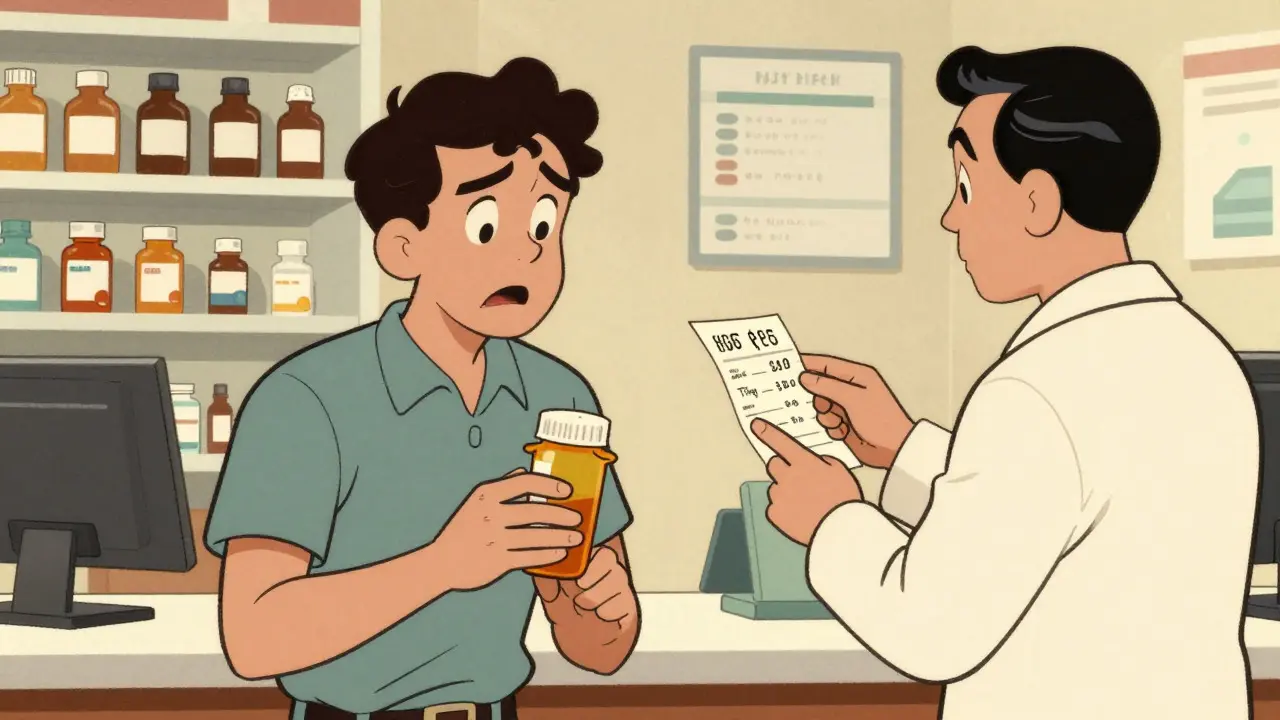
You fill your prescription for a common blood pressure medication, expecting the usual low cost of a generic. Instead, the pharmacist tells you the copay has jumped from $5 to $40. It feels like a mistake, or perhaps even a penalty, but in most cases, it is simply how tiered copays work. This structure is the backbone of modern prescription drug coverage in the United States, yet it remains one of the most confusing aspects of health insurance for patients. If you have ever wondered why two chemically identical drugs cost different amounts out-of-pocket, the answer lies not in clinical efficacy, but in complex contracts between insurers and manufacturers.
The Anatomy of a Tiered Formulary
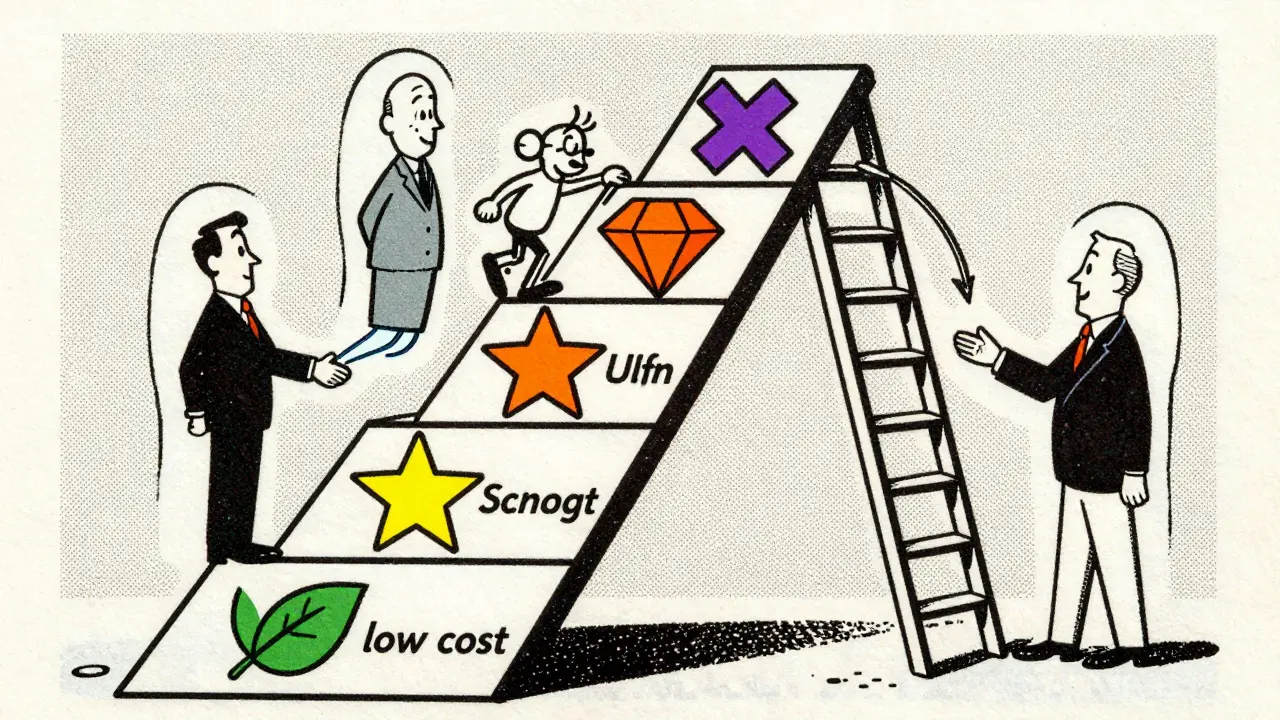
To understand why your bill changed, you first need to see the map. Most insurance plans use a tiered formulary, which categorizes medications into four or five distinct price levels. Think of it as a ladder where each rung represents a different level of financial responsibility for you, the patient.
- Tier 1 (Preferred Generics): These are typically the cheapest options. For a 30-day supply, copays usually range from $0 to $15. This is where most standard generics for conditions like high cholesterol or diabetes live.
- Tier 2 (Non-Preferred Generics & Preferred Brands): Here, costs rise. You might pay $25 to $50. This tier often includes brand-name drugs that the insurer favors, or generic versions that aren't the 'preferred' choice for that specific plan.
- Tier 3 (Non-Preferred Brands): These are brand-name drugs with no cheaper equivalent on the list. Copays can hit $60 to $100 or more.
- Tiers 4 & 5 (Specialty Drugs): Reserved for complex treatments like biologics or oncology drugs. Instead of a flat fee, you pay a percentage of the drug's cost (coinsurance), often 20% to 40%.
The critical nuance here is that 'Tier 1' does not automatically mean 'all generics.' While most generics sit in Tier 1, about 12% to 18% are classified as specialty drugs due to high acquisition costs or handling requirements, pushing them into Tiers 4 or 5. Furthermore, some plans split generics into 'preferred' and 'non-preferred' categories. If your doctor prescribes a non-preferred generic, you land in Tier 2, paying significantly more than a patient taking the preferred version of the same molecule.
Rebates vs. Clinical Value: The Real Reason for Higher Costs
So, if the drugs are clinically identical, why does the insurance company care which one you take? The short answer is money, specifically rebates. Pharmacy Benefit Managers (PBMs) like CVS Caremark, OptumRx, and Express Scripts negotiate contracts with drug manufacturers. In exchange for placing a manufacturer’s drug on their 'preferred' list, the manufacturer pays the PBM a rebate-a discount off the wholesale price.
Dr. Dennis G. Smith, former Director of the Center for Medicaid and CHIP Services, noted that preferred status has nothing to do with clinical superiority; it is entirely about the rebates and discounts PBMs negotiate. When a generic manufacturer offers a larger rebate than its competitor, that generic gets placed in Tier 1. The other generic, despite being just as effective, moves to Tier 2 because the PBM didn't get a deep enough discount from that specific maker. According to Avalere Health’s 2023 analysis, 68% of generic drugs moved to higher tiers resulted from expiring rebate contracts rather than any change in clinical guidelines.
This creates a paradox for patients. You might be prescribed Levothyroxine by Doctor A, who writes for Manufacturer X. Because Manufacturer Y offered a better deal to your insurer, Manufacturer X’s version is now Tier 2. Your copay jumps, not because the drug changed, but because the business deal behind it did. As Dr. Aaron Kesselheim of Harvard Medical School argued, this undermines the fundamental purpose of generic substitution by creating unnecessary financial barriers.
Common Scenarios That Trigger Higher Generic Copays
It isn't always about rebates. Several specific situations can cause your generic copay to spike unexpectedly:
- Specialty Classification: Some generics are expensive to produce or require special administration. For example, generic versions of certain biologics used for rheumatoid arthritis can cost thousands per month. Even though they are 'generic,' they fall under specialty tiers where you pay coinsurance rather than a flat copay.
- Mid-Year Formulary Changes: Insurers update their formularies annually, usually around October 1st for Medicare plans, but commercial plans can make changes mid-year. In 2023, 17% of commercial plans modified their formularies between January and June. If your drug loses preferred status during these updates, your cost increases immediately.
- Therapeutic Interchanges Gone Wrong: Sometimes, pharmacists automatically substitute your prescribed drug with a 'preferred' alternative to save you money. However, if you switch back to your original prescription later, you may find it is now considered non-preferred, raising your cost.
- High-Volume vs. Low-Volume Status: Starting in 2024, some major insurers began implementing 'generic value tiers.' High-volume, low-cost generics like atorvastatin were moved to $0 copays, while less commonly used generics shifted to higher tiers. If your medication falls into the 'less commonly used' category, your price may go up relative to the popular alternatives.
How to Navigate and Lower Your Costs
Understanding the system is the first step, but acting on it saves real money. You don't have to accept a higher copay without asking questions. Here is how you can take control:
Check the Formulary Before You Prescribe. Don't wait until the pharmacy counter. Use your insurer’s online tools, such as Humana’s Drug Cost Lookup or third-party platforms like GoodRx, to see exactly which tier your medication is in before the doctor writes the script. Ask your provider, 'Is there a Tier 1 alternative for this condition?'
Request a Therapeutic Interchange. If your current drug is Tier 2 but a Tier 1 alternative exists, ask your doctor to prescribe the preferred version directly. Data from the Medicare Rights Center shows that therapeutic interchange requests are successful 63% of the time, often reducing monthly costs by $30 to $150.
Appeal Unjustified Tier Changes. If your drug was moved to a higher tier mid-year, you have the right to appeal. For urgent cases, you typically have only 72 hours to file an exception request. Gather documentation from your doctor explaining why the current drug is necessary, and submit it to your plan. Many appeals succeed when patients prove that the lower-tier alternative would disrupt their treatment.
Look at Specialty Assistance Programs. If your generic is classified as a specialty drug, check if the manufacturer offers a patient assistance program. In 2023, these programs covered 22% of specialty drug costs for eligible patients, potentially lowering your coinsurance burden significantly.

Comparing Cost Structures: Flat vs. Tiered
To see why insurers switched to this model, compare it to the older flat copay system. In a flat system, you paid the same amount for every drug, whether it cost $10 or $1,000. This encouraged overuse of expensive brand-name drugs. Tiered systems create graduated incentives. Studies show that introducing higher tiers for non-preferred drugs reduced demand for those medications by 15.2% while keeping overall treatment rates stable. While this saves insurers money, it transfers the complexity to you. The table below illustrates the typical financial impact of tier placement on a standard 30-day supply.
| Formulary Tier | Drug Type | Typical Copay Range (30-Day Supply) | Primary Driver of Cost |
|---|---|---|---|
| Tier 1 | Preferred Generics | $0 - $15 | Lowest negotiated rebate / High volume |
| Tier 2 | Non-Preferred Generics / Preferred Brands | $25 - $50 | Lower rebate / Brand name preference |
| Tier 3 | Non-Preferred Brands | $60 - $100+ | No generic alternative / High acquisition cost |
| Tier 4/5 | Specialty Drugs (incl. some generics) | 20% - 40% Coinsurance | Complex handling / Rare conditions / High cost |
Frequently Asked Questions
Are all generic drugs supposed to be in Tier 1?
No. While most generics are in Tier 1, about 12-18% are classified as specialty drugs or non-preferred generics. Specialty generics often treat rare conditions or have high production costs, placing them in Tiers 4 or 5 where you pay coinsurance instead of a flat copay. Additionally, if multiple generic versions exist, only the one with the best rebate contract to the PBM stays in Tier 1; others move to Tier 2.
Why did my generic copay increase overnight?
This usually happens due to a mid-year formulary update or an expired rebate contract. Insurers renegotiate deals with manufacturers regularly. If the rebate for your specific generic drops, the PBM may move it to a higher tier to reflect the lower discount received. Check your plan's news releases or call customer service to confirm if a recent formulary change affected your medication.
What is the difference between a copay and coinsurance in this context?
A copay is a fixed dollar amount you pay at the pharmacy (e.g., $10), common for Tiers 1-3. Coinsurance is a percentage of the drug's total cost (e.g., 20%), typical for Tiers 4-5 (specialty drugs). If your generic is classified as a specialty drug, you will likely pay coinsurance, meaning your cost fluctuates based on the drug's actual price, which can be much higher than a standard copay.
Can I appeal a higher tier classification for my medication?
Yes. You can file a 'formulary exception' request. For urgent needs, you generally have 72 hours to decide. Provide your doctor's notes explaining why the higher-tier drug is medically necessary and why the lower-tier alternative won't work. Success rates vary, but documenting medical necessity significantly improves your chances of having the tier downgraded or the full cost covered.
Do Medicare Part D plans use the same tiered system?
Yes, 99% of Medicare Part D plans use tiered formularies, typically with four tiers. The structure is similar to commercial plans, with preferred generics in Tier 1 and specialty drugs in higher tiers. Note that starting in 2025, the Inflation Reduction Act caps total out-of-pocket spending at $2,000 annually, but the tiered structure itself remains in place, so understanding your tier is still crucial for managing monthly cash flow.