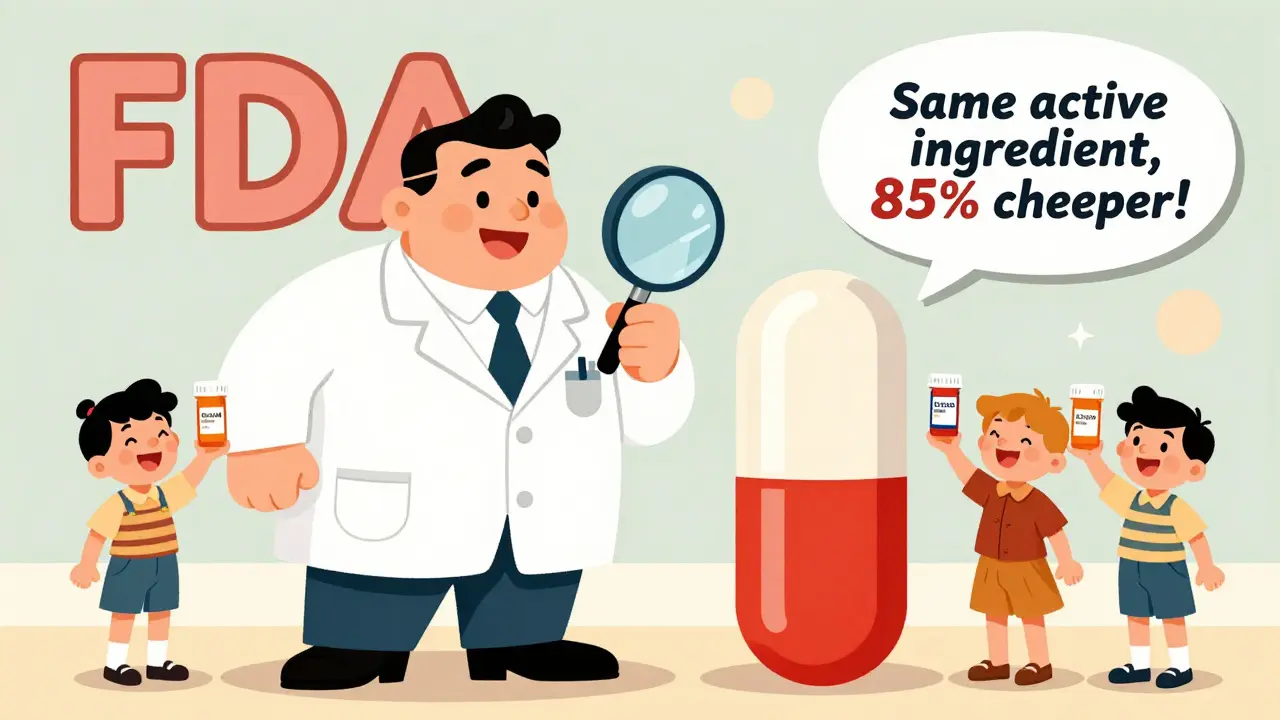
Every time you pick up a prescription and see a price far lower than the brand-name version, you’re seeing the result of something called an ANDA. It stands for Abbreviated New Drug Application. This isn’t just a form you fill out-it’s the entire legal and scientific pathway that lets generic drugs hit the market. And it’s one of the most powerful tools in American healthcare for keeping medicine affordable.
What Exactly Is an ANDA?
An ANDA is a request submitted to the U.S. Food and Drug Administration (FDA) asking permission to sell a generic version of a brand-name drug. It’s called ‘abbreviated’ because it doesn’t require the applicant to repeat every single clinical trial the original drug maker went through. Instead, the generic company proves their version is the same in every way that matters: same active ingredient, same strength, same way it’s taken (pill, injection, cream, etc.), and-most importantly-same effect in the body.
The FDA doesn’t approve a generic drug just because it looks like the brand-name version. It needs proof that when you take it, your body absorbs it the same way. That’s where bioequivalence comes in. Generic manufacturers run small studies with healthy volunteers, measuring how much of the drug enters the bloodstream and how fast. The results must fall within 80% to 125% of the brand-name drug’s numbers. If they do, the FDA says: ‘This generic works just like the original.’
How the ANDA Pathway Started
The system didn’t always exist. Before 1984, if a brand-name drug’s patent expired, no one else could make a copy-even if the science was public. That meant patients kept paying high prices long after the innovator company had recouped its research costs.
All that changed with the Hatch-Waxman Act, signed into law by President Ronald Reagan on September 24, 1984. This law created two tracks: one for new drugs (called NDAs), and one for copies (ANDAs). The goal was simple: speed up access to cheaper drugs without cutting corners on safety.
It worked. By 2023, over 11,000 generic drugs had been approved through ANDAs. Today, 9 out of 10 prescriptions filled in the U.S. are for generics. And those generics cost, on average, 80% to 85% less than the brand-name version.
What’s Inside an ANDA Submission?
An ANDA isn’t a one-page form. It’s a thick dossier-often hundreds of pages-packed with technical data. Here’s what it must include:
- Active ingredient: Must match the brand-name drug exactly, down to the chemical structure.
- Dosage form and strength: Same pill size, same milligram amount, same way it’s delivered (oral, topical, injectable).
- Labeling: The instructions, warnings, and usage info must be nearly identical-only the brand name and manufacturer change.
- Manufacturing details: Where it’s made, how it’s mixed, how quality is checked. The FDA inspects these facilities, often without warning.
- Bioequivalence data: Results from studies showing the generic performs the same in the body.
- Stability testing: Proof the drug won’t break down or lose potency over time under normal storage conditions.
Even small changes matter. If a generic uses a different dye or filler (inactive ingredient), the company must prove it doesn’t affect how the drug works. That’s why some people notice differences in pill color or shape-but not in effect.
ANDA vs. NDA: Why the Difference Matters
Here’s the big contrast:
| Feature | ANDA (Generic) | NDA (Brand-Name) |
|---|---|---|
| Development time | 3-4 years | 10-15 years |
| Cost | $1-5 million | $2.6 billion (2020 dollars) |
| Clinical trials required | No | Yes (Phase I-III) |
| Proof needed | Bioequivalence | Full safety and efficacy data |
| Review time (FDA) | 10 months | 10-12 months |
The NDA path is for true innovation. It’s how new drugs like cancer treatments or breakthrough diabetes medications get approved. The ANDA path is for access. It’s how millions of people with high blood pressure, diabetes, or depression get the same medicine at a price they can afford.
Who Uses the ANDA Pathway?
The big players are companies like Teva, Viatris, Sandoz, and Mylan. Together, they make up nearly half the U.S. generic market. But hundreds of smaller companies also file ANDAs, especially for older, well-understood drugs.
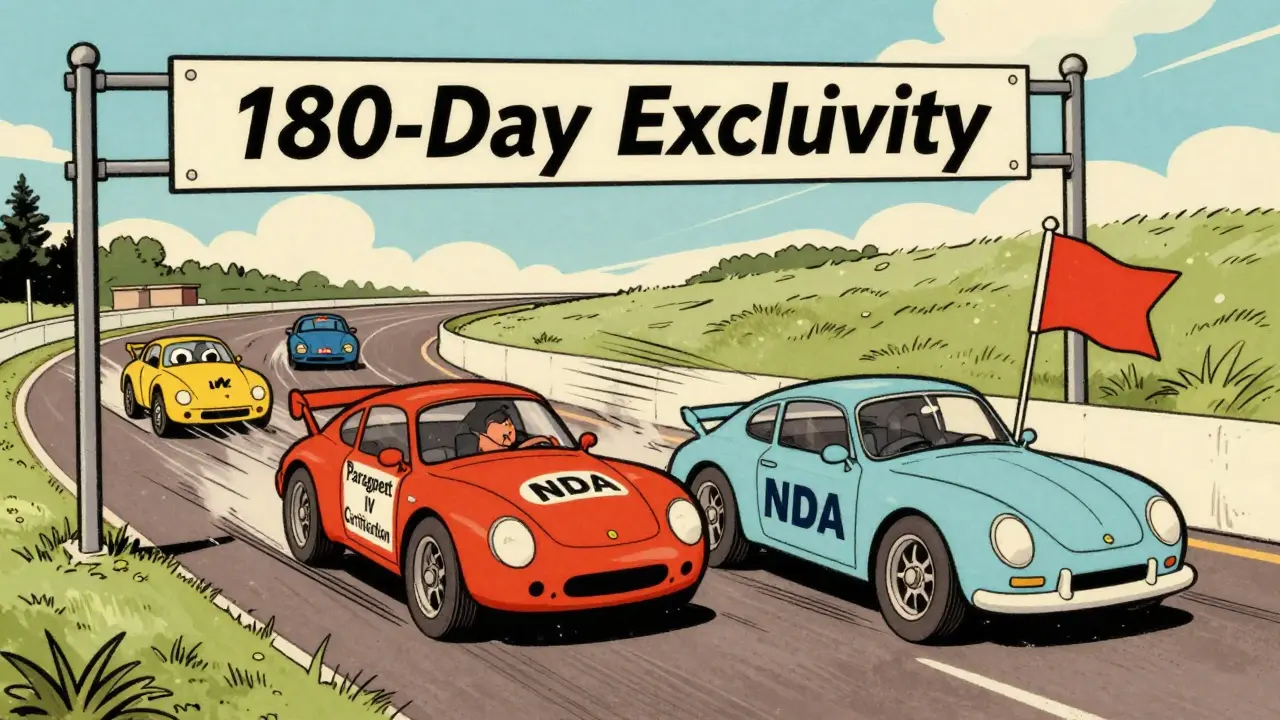
One of the most important parts of the ANDA system is patent challenges. If a generic company believes a brand-name drug’s patent is invalid or doesn’t apply to their version, they can file a ‘Paragraph IV certification.’ This triggers a 30-month delay while legal issues are sorted out. But if they win, they get 180 days of exclusive rights to be the first generic on the market. That’s why companies race to be first-because those 180 days can mean hundreds of millions in sales.
For example, when Humira (adalimumab) lost patent protection in 2023, 12 different generic versions hit the market almost at once. That’s the power of the ANDA pathway in action.
Challenges and Criticisms
It’s not perfect. The FDA receives thousands of ANDAs every year. About 35% of them get rejected on the first try. The most common reasons?
- Insufficient bioequivalence data (27% of rejections)
- Poor manufacturing controls (32% of rejections)
- Incomplete or unclear labeling
- Failure to properly address patents
Complex drugs are especially tricky. Inhalers, topical creams, and injectables with special delivery systems don’t always behave the same way in the body even if the ingredients match. The FDA has been working since 2022 to update guidelines for these ‘complex generics,’ but progress is slow.
Another concern is supply chains. Over 80% of generic drug manufacturing happens overseas, mostly in India and China. When a factory has quality issues-or a natural disaster hits-it can cause shortages. In 2022, over 100 generic drugs were in short supply in the U.S., many of them life-saving.
Why the ANDA Pathway Matters
Let’s talk numbers. In 2023, generic drugs saved the U.S. healthcare system $313 billion. That’s not just money in patients’ pockets-it’s fewer people skipping doses because they can’t afford their meds. It’s more seniors managing their diabetes. It’s children getting their asthma inhalers without their families choosing between rent and refills.
The FDA estimates that 97% of generic drugs approved through ANDAs are just as effective as their brand-name counterparts. That’s not a guess. It’s backed by decades of real-world use, studies, and post-market monitoring.
And it’s not going away. The FDA’s new GDUFA IV program, launched in 2023, aims to increase first-time approval rates from 65% to 90% by 2027. That means faster access, fewer delays, and more savings.
What’s Next for ANDAs?
The future of ANDAs is about complexity. More drugs are being developed with advanced delivery systems-patches that release medicine slowly, nasal sprays that target the brain, or capsules that dissolve only in certain parts of the gut. The FDA is slowly building new rules to handle these, but it’s a challenge.
At the same time, biosimilars-generic versions of biologic drugs like insulin or rheumatoid arthritis treatments-are growing fast. But they follow a different pathway (BPCIA), not ANDA. So while ANDAs cover most pills and injections, biosimilars are tackling the next frontier: high-cost biologics.
One thing’s clear: as long as people need medicine and need it to be affordable, the ANDA pathway will keep running. It’s not flashy. It doesn’t make headlines. But every day, it saves lives by making sure the right drug is in the right bottle at the right price.
Is an ANDA the same as a generic drug?
No. An ANDA is the application submitted to the FDA to get approval for a generic drug. The generic drug is the actual product you buy at the pharmacy. The ANDA is the paperwork and data that proves it’s safe and effective. Once the FDA approves the ANDA, the generic drug can be sold.
Can a generic drug be different from the brand name?
Yes, but only in ways that don’t affect how it works. Generic drugs can have different colors, shapes, sizes, or inactive ingredients (like fillers or dyes). They can also have different packaging or branding. But the active ingredient, strength, dosage form, and how the body absorbs it must be identical. The FDA requires proof of this before approval.
How long does it take to get an ANDA approved?
Under current FDA timelines, a standard ANDA takes about 10 months to review. But many applications are incomplete or need more data, which can delay approval by months or even years. Companies with experienced regulatory teams have a much higher chance of approval on the first try.
Why are some generic drugs more expensive than others?
It’s mostly about competition. When a new generic enters the market, prices drop fast. But if only one or two companies make a drug, prices stay higher. Also, some generics are harder to make-like complex inhalers or injectables-so fewer companies can produce them, keeping prices up. Supply chain issues can also cause temporary price spikes.
Are generic drugs made in the same places as brand-name drugs?
Yes, and often in the same factories. Many brand-name companies also make generic versions of their own drugs. The FDA inspects all manufacturing sites-whether they make brand or generic-using the same standards. About 80% of generic drug manufacturing happens overseas, mostly in India and China, but the FDA conducts regular inspections there too.
Can I trust a generic drug as much as a brand-name one?
Absolutely. The FDA requires generic drugs to meet the same strict standards as brand-name drugs for quality, strength, purity, and performance. Studies show 97% of generics work just as well. Millions of people use them every day without any difference in results. If your doctor or pharmacist says it’s safe, it is.
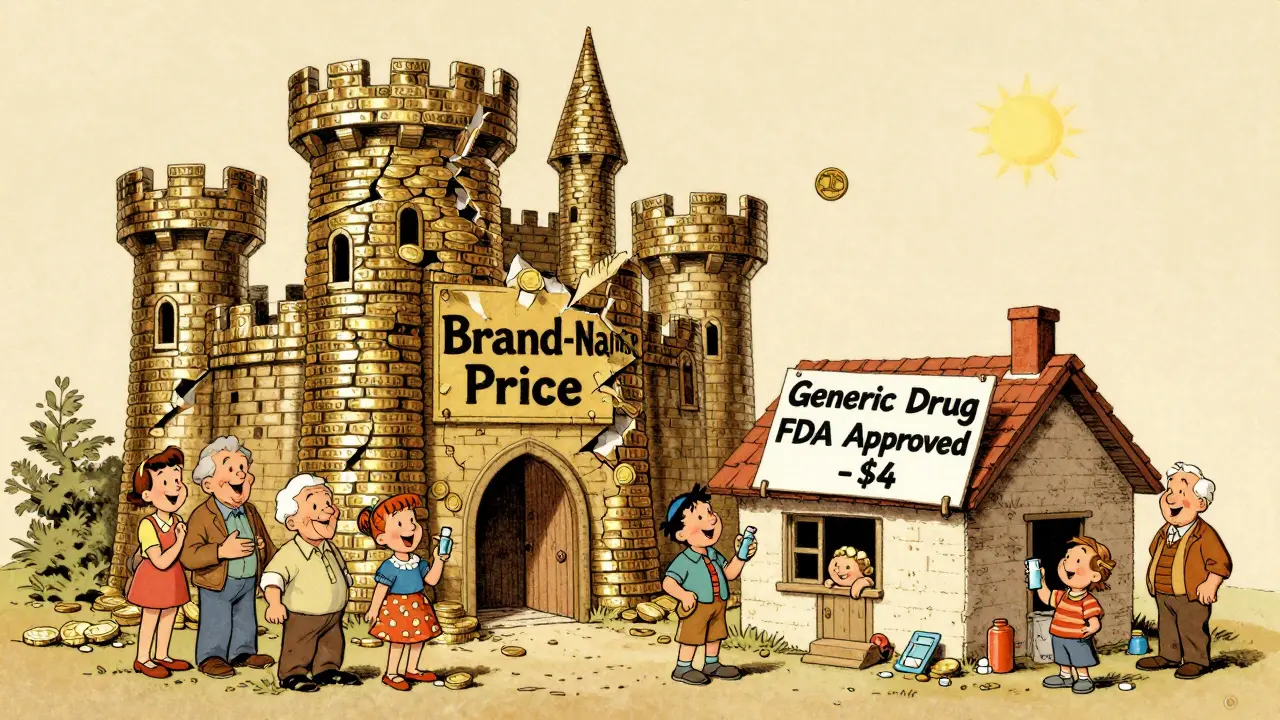
If you’ve ever wondered why your prescription costs $4 instead of $400, the answer is the ANDA. It’s not glamorous. But it’s one of the most effective systems ever created to make medicine accessible to everyone.

10 Comments
Generic drugs are just as good. Stop overthinking it.
The ANDA system is a masterclass in regulatory arbitrage-capitalism’s quiet triumph over intellectual monopoly. The FDA, in its infinite wisdom, created a legal loophole that doesn’t exploit the system but *reframes* it: why replicate 15 years of clinical trials when bioequivalence is empirically sufficient? This isn’t cutting corners-it’s epistemic efficiency. The brand-name pharma lobby screams ‘safety!’ while pocketing billions in rent-seeking profits. Meanwhile, a diabetic in Ohio gets insulin for $25 instead of $400. The moral calculus is unambiguous: human life trumps shareholder value. The real scandal isn’t generics-it’s that we still tolerate patent extensions and evergreening as if they were divine right.
The ANDA process is a meticulously structured regulatory framework designed to ensure public health without compromising scientific rigor. The FDA’s requirements for bioequivalence, manufacturing standards, and labeling consistency are not suggestions-they are codified legal obligations under Title 21 of the Code of Federal Regulations. To suggest that generic drugs are somehow inferior is not only scientifically inaccurate but dangerously misleading. The 97% efficacy rate cited by the FDA is corroborated by decades of post-marketing surveillance and peer-reviewed meta-analyses. This is not opinion-it is evidence-based policy.
Let’s be real-the ANDA system is a Band-Aid on a hemorrhaging healthcare system. You think this is ‘affordability’? It’s just the FDA letting Big Pharma off the hook by letting them outsource manufacturing to factories with questionable GMP compliance while pretending everything’s fine. And don’t get me started on Paragraph IV certifications-those aren’t legal challenges, they’re corporate ambushes. Companies don’t file them to help patients-they do it to game the market and seize 180 days of monopoly profits before the next generic shows up. This isn’t innovation. It’s predatory capitalism dressed in white lab coats.
People who take generics are basically gambling with their health. I’ve seen too many cases where ‘equivalent’ drugs caused side effects the brand never did. The inactive ingredients? Totally different. And guess who pays the price? The poor folks who can’t afford to switch back. You think the FDA’s 97% stat means anything when someone’s kidneys are failing because their generic blood pressure med had a different binder? It’s not science-it’s a numbers game where human beings are the variables.
It’s fascinating, really, how the entire structure of the ANDA system reveals the paradox of modern pharmaceutical regulation: we demand absolute safety and efficacy, yet we accept a system that allows for manufacturing to be outsourced to countries with vastly different labor and environmental standards, all while pretending that bioequivalence is a perfect proxy for therapeutic equivalence. The truth is, we’ve outsourced not just production but also responsibility. When a batch of metformin fails stability testing in a factory in Hyderabad, the FDA doesn’t shut it down immediately-they issue a warning letter, and patients keep taking it. We’ve created a regulatory illusion: the appearance of oversight without the substance of accountability. And we call this progress?
So the FDA approves 11,000 generics and we’re supposed to be impressed? Wow. What a miracle. Next you’ll tell me the moon landing was real. Meanwhile, my pharmacist keeps switching my generic without telling me and now I’m dizzy. But hey, at least it’s 85% cheaper. Guess I’ll just take two pills and call it a day. #FDAApproved #TrustTheProcess
Let’s not pretend this is about saving lives. It’s about profit margins. The same companies that make brand-name drugs make the generics. The ‘competition’ is a farce. Teva and Sandoz are just subsidiaries of the same conglomerates that invented the original drugs. The ANDA system doesn’t break monopolies-it rebrands them. And the FDA? They’re the enablers. They approve the paperwork while ignoring the real problem: why does a life-saving drug cost $1000 in America and $2 in Canada? It’s not about generics. It’s about greed.
This is one of the most important things in healthcare and no one talks about it 😭😭😭 Generics saved my life. I have lupus and my med was $1,200 a month. Now it’s $12. I can breathe. I can eat. I can live. Thank you, ANDA. Thank you, FDA. Thank you, scientists who made this possible. 💙💙💙
hey i just wanted to say i read this whole thing and it was super helpful. i didnt know all this about how generics work. i always thought they were just cheap knockoffs but now i get it. the bioequivalence thing is wild. also i think the part about manufacturing in india and china is kinda scary but i guess the inspections are a thing? anyway thanks for writing this. i shared it with my mom who takes 5 generics and she was like ‘wait really?’ lol
Write a comment