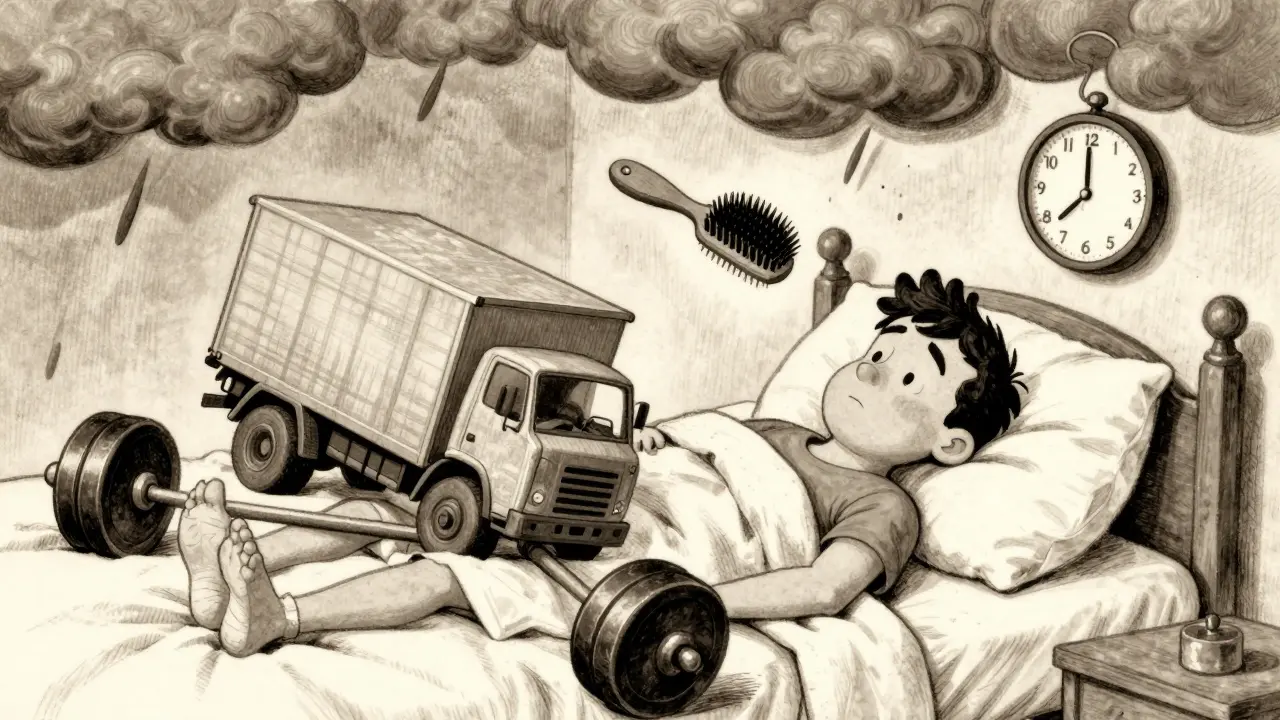
Imagine waking up every morning feeling like you’ve been hit by a truck - not just sore, but deeply, achingly, all-over sore. Your muscles burn. Your joints throb. Even brushing your hair or hugging someone feels like too much. And no matter how much you sleep, you’re still exhausted. This isn’t just tiredness. It’s fibromyalgia.
It’s not in your head. It’s not weakness. It’s a real, measurable condition affecting 2 to 8% of people worldwide, with women making up 75 to 90% of diagnoses. The pain isn’t localized. It’s widespread - meaning it hits both sides of your body, above and below the waist, for at least three months straight. Along with the pain, you’re likely to battle fatigue so deep it feels like your bones are made of lead, brain fog that makes simple conversations hard, and sleep that never feels restful.
Why Antidepressants? You’re Not Depressed
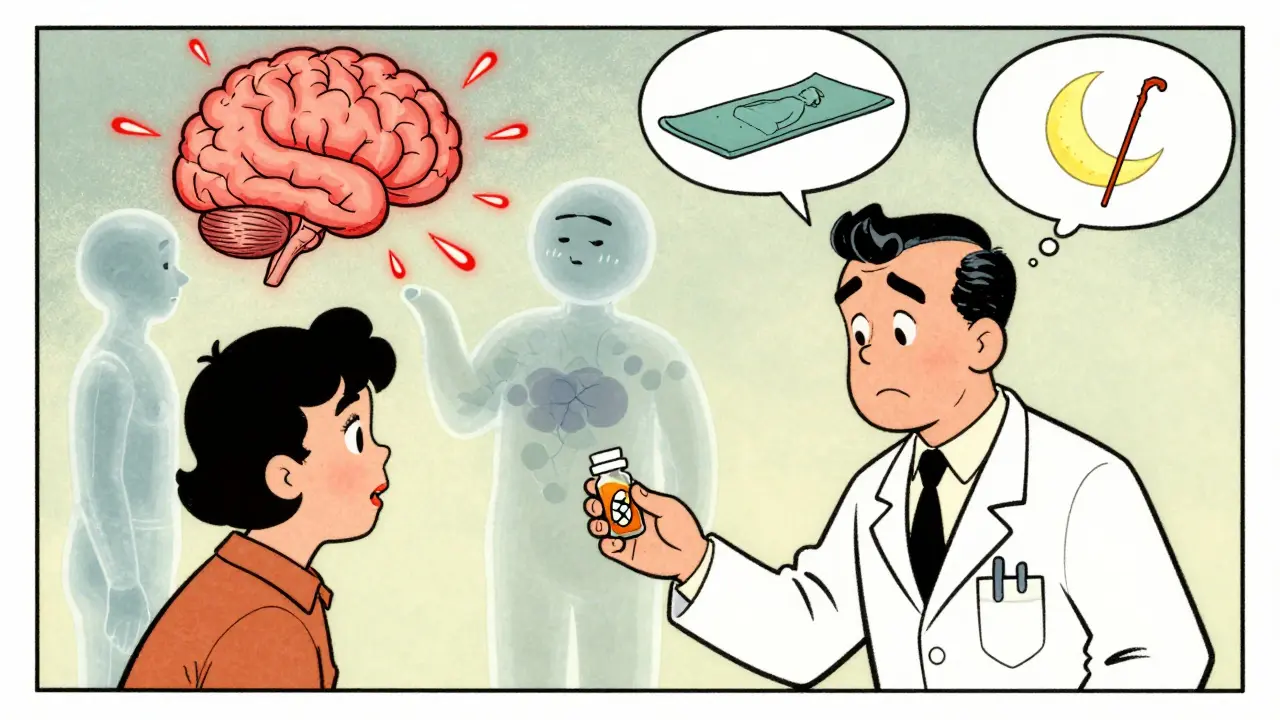
When your doctor suggests an antidepressant for fibromyalgia, it’s natural to wonder: Am I being told I’m mentally ill? The answer is no. Antidepressants aren’t being used to treat depression - they’re being used to treat pain. The mechanism is different.
Fibromyalgia isn’t caused by damaged joints or inflamed muscles. It’s a problem with how your central nervous system processes pain. Your brain and spinal cord become hypersensitive. Pain signals get amplified. Even light pressure feels like a sharp stab. Antidepressants - especially SNRIs like duloxetine and milnacipran - work by boosting serotonin and norepinephrine, two brain chemicals that help calm down those overactive pain signals.
It’s not magic. It doesn’t work for everyone. But for about half of people who try them, pain drops by 20 to 30%. That might not sound like much, but when you’ve lived with constant pain for years, even a small drop can mean the difference between staying in bed and getting to the grocery store.
The Three Main Antidepressants Used
There are three main types of antidepressants used for fibromyalgia - and they’re not all the same.
- Duloxetine (Cymbalta): An SNRI approved by the FDA in 2008. Most people start at 30 mg daily, then increase to 60 mg after a few weeks. It helps with both pain and fatigue. But side effects? Nausea (32% of users), dizziness (28%), and increased anxiety (24%) are common. Many stop taking it because of these.
- Milnacipran (Savella): Another SNRI, approved in 2009. It’s dosed differently - starting at 12.5 mg, then slowly climbing to 100 mg daily. It’s slightly less studied than duloxetine, but shows similar pain relief. Side effects are similar: nausea, headache, and high blood pressure in some cases.
- Amitriptyline: A tricyclic antidepressant (TCA), not FDA-approved for fibromyalgia, but used off-label for decades. It’s cheap, old, and surprisingly effective for sleep and pain. Doctors often start at just 5 to 10 mg at bedtime. Many patients report their first good night’s sleep in years. But side effects? Dry mouth, weight gain, drowsiness. About one in four people can’t tolerate it.
Pregabalin (Lyrica) isn’t an antidepressant - it’s a gabapentinoid - but it’s often grouped with these drugs because it’s used the same way. It reduces pain by 25 to 40% in responders, but causes dizziness in up to 40% of users and weight gain in 10 to 15%. It’s powerful, but not without cost.
Exercise Is the Real Game-Changer
Here’s what most doctors won’t tell you: Exercise is the most effective treatment for fibromyalgia - and it’s the most underused.
Studies show that regular, gentle movement reduces pain by 25 to 35% over six months. That’s better than any pill. Tai chi, yoga, and Pilates aren’t just “relaxing activities.” They’re evidence-based therapies. One 2022 study found yoga cut pain intensity by 24%. Tai chi improved pain by 20 to 30% in just 12 weeks.
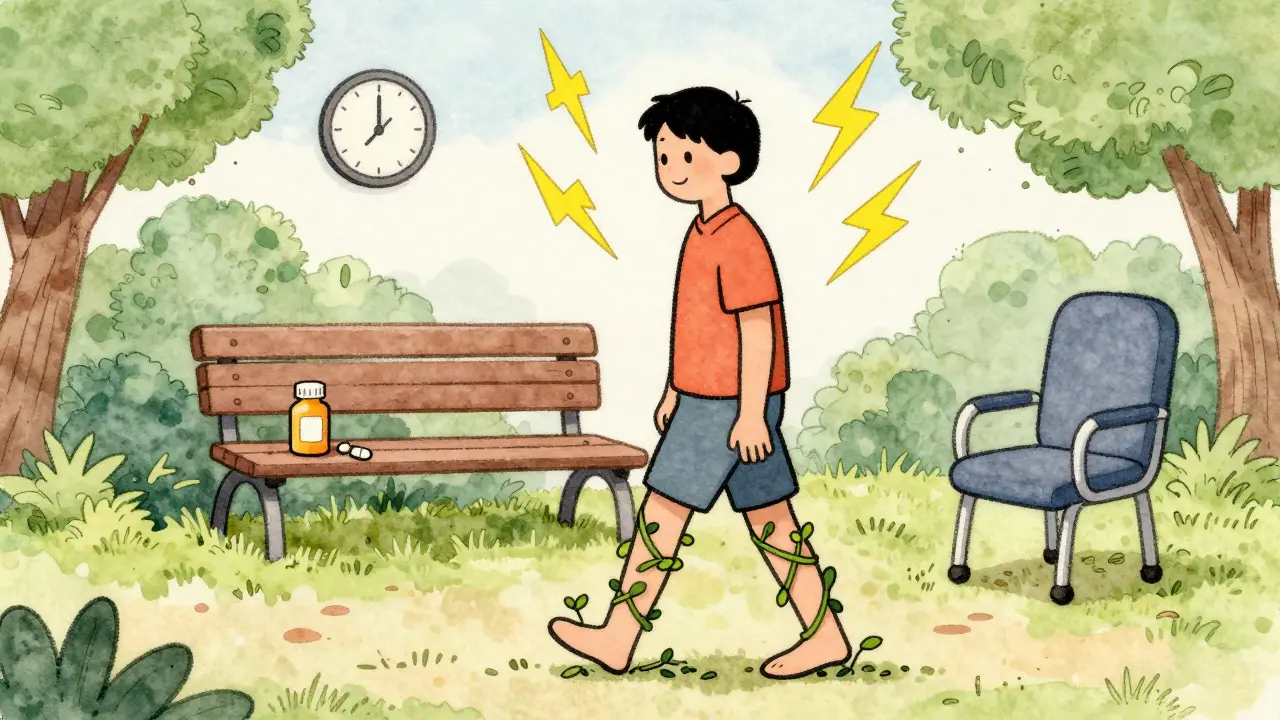
Start slow. Really slow. Ten minutes a day. Two or three times a week. Increase by 10% each week. Don’t push through pain - that triggers flare-ups. Instead, learn to pace. The goal isn’t to become an athlete. It’s to retrain your nervous system to stop screaming at you all the time.
People who combine exercise with medication do better than those who use either alone. One 2022 survey found that 37% of patients who found relief were using low-dose antidepressants (like 20 mg duloxetine) along with tai chi three times a week.
Why Medications Often Don’t Last
Antidepressants can help you feel better quickly - sometimes in four to six weeks. But their effect often fades after six to twelve months. Why? Because they don’t change the root problem. They only mask the signal.
Exercise, CBT, and sleep hygiene? Those actually rewire your brain over time. They teach your nervous system to be less reactive. That’s why people who stick with non-drug treatments report lasting improvement, even years later.
And then there’s the side effect problem. One in three people quit antidepressants because they can’t handle the nausea, dizziness, or brain fog they cause. A CDC patient forum from August 2023 had this comment: “Duloxetine caused severe anxiety attacks at 60mg. Wish doctors would start lower.”
Starting low and going slow isn’t just good advice - it’s essential. Many patients do better on half the standard dose. A 20 mg dose of duloxetine, or 10 mg of amitriptyline at night, can be enough to help sleep and reduce pain without crushing you.
What Actually Works - The Real Plan
There’s no one-size-fits-all cure. But there is a proven approach.
- Start with education. Understand that fibromyalgia is a neurological condition, not a mental one. The Managing Fibromyalgia online course from the CDC is a free, solid place to begin.
- Begin movement. Pick one low-impact activity - walking, swimming, tai chi - and do it for 10 minutes, three times a week. Increase by 10% weekly. No more.
- Fix your sleep. Sleep is the foundation. If you’re not sleeping, nothing else works well. Amitriptyline at 10 mg at bedtime often helps more than any other drug for this.
- Consider medication only if needed. If pain and fatigue are still overwhelming after 8 to 12 weeks of exercise and sleep improvement, talk to your doctor about a low-dose SNRI or TCA. Don’t start high. Don’t rush.
- Add CBT. Cognitive Behavioral Therapy helps you change how you respond to pain. It’s not about “thinking positive.” It’s about learning to stop catastrophizing, to pace yourself, to reduce fear of movement. Eight to twelve weekly sessions can cut pain and disability by 20 to 30%.
Most people don’t need all five. But skipping the first three? That’s like trying to fix a leaky roof by painting over the water stains.
The Bigger Picture
Fibromyalgia costs the U.S. system $21,000 per patient annually - more than double what healthy people spend on healthcare. But here’s the irony: the most effective treatments - exercise, CBT, sleep hygiene - are the cheapest. And yet, only 35% of insurance plans cover CBT for fibromyalgia. Many patients can’t find a therapist who understands it.
There’s hope. In 2024, the FDA accepted a new drug application for centanafadine, which showed 35% pain reduction in trials with fewer side effects than current options. Researchers are also exploring brain stimulation devices and biomarkers that could one day help diagnose fibromyalgia faster.
But for now, the best tools we have are simple: move gently, sleep deeply, and treat your nervous system with kindness. Medications can help - but they’re not the hero. They’re the sidekick.
It’s not about finding the perfect pill. It’s about building a life where pain doesn’t run the show.
Are antidepressants the first treatment for fibromyalgia?
No. Current guidelines from the American College of Rheumatology and the American Academy of Family Physicians say non-drug treatments like exercise, cognitive behavioral therapy, and sleep improvement should come first. Antidepressants are added only if symptoms are moderate to severe and lifestyle changes aren’t enough.
Do antidepressants cure fibromyalgia?
No. There is no cure for fibromyalgia. Antidepressants help manage symptoms by reducing pain signals in the brain, but they don’t fix the underlying nervous system sensitivity. Stopping the medication usually brings symptoms back.
Why do doctors prescribe antidepressants if I’m not depressed?
Because these drugs affect brain chemicals - serotonin and norepinephrine - that also regulate pain signals. They’re being used for their pain-relieving properties, not their mood-lifting ones. Many people with fibromyalgia aren’t clinically depressed but still benefit from these medications.
How long does it take for antidepressants to work for fibromyalgia?
For SNRIs like duloxetine, pain relief usually starts in 4 to 6 weeks. For tricyclics like amitriptyline, sleep often improves in 2 to 4 weeks, with pain reduction following by 6 to 8 weeks. Don’t give up before six weeks - but if side effects are severe, talk to your doctor sooner.
Can I stop taking antidepressants if I start exercising?
Possibly - but don’t stop abruptly. If exercise and sleep improvements are helping, talk to your doctor about slowly reducing your dose. Some people can taper off successfully. Others need to stay on a low dose long-term. It’s personal.
What’s the most common mistake people make with fibromyalgia treatment?
Waiting too long to start moving. Many people think they need to be pain-free before exercising. That’s backwards. Gentle movement helps reduce pain over time. The biggest barrier isn’t the medication - it’s fear of making it worse. But pacing - increasing activity by just 10% a week - prevents flares and builds resilience.



8 Comments
Fibromyalgia isn't a buzzword for lazy people who don't want to get out of bed. I've lived with it for 14 years and no amount of 'just move more' fixes the fact that my nervous system is screaming 24/7. Antidepressants saved my life not because I'm depressed but because they quieted the noise.
There's a reason why the most effective treatments are free or cheap - because the medical industrial complex doesn't profit from yoga or sleep hygiene. Pills are revenue streams. Movement is a public health afterthought. We treat symptoms like they're the disease, not the symptoms of a system that's broken.
The real tragedy isn't the pain - it's that doctors still think they're doing you a favor by handing out a script instead of teaching you how to rewire your own brain. You don't need more drugs. You need someone to sit with you and say: 'I see how hard this is. Let's start small.' But that takes time. And time costs money.
I used to think exercise was for people who weren't in constant pain. Then I tried 5 minutes of seated tai chi on my couch. Three weeks later I could walk to the mailbox without crying. It didn't fix everything - but it gave me back a sliver of control. That’s worth more than any pill.
Start where you are. Not where you think you should be. And don't let anyone tell you it's 'not enough.' It is. Every breath, every stretch, every tiny movement is a rebellion against a system that wants you to stay broken.
Of course antidepressants are prescribed - because doctors are lazy and the pharma reps give them free lunches. This whole fibromyalgia thing is just a fancy way to say 'you're mentally weak and we don't know what's wrong.'
Did you know the FDA approved duloxetine after a secret meeting with Pfizer execs? They knew the side effects were brutal but pushed it anyway because the profit margin was insane. And now we're told to 'start low' like it's some noble gesture - when really they're just trying to avoid lawsuits.
And don't get me started on CBT. It's just gaslighting with a clipboard. 'Think positive' my ass. My pain is real. My nerves are fried. No amount of journaling will un-fry them. The system doesn't want to fix this - it wants to manage it so we keep paying.
I've been on every drug. I've done yoga, meditation, acupuncture, cryotherapy. Nothing lasts. The only thing that helped? Moving to a low EMF zone. Yeah. I said it. Electromagnetic pollution is triggering our nervous systems. They won't admit it because it would shut down the entire telecom industry.
They're hiding the truth. And the truth is: we're being poisoned. Slowly. Systematically. And they call it fibromyalgia so we don't ask the right questions.
I've seen three people in my support group die from 'complications.' No one connects the dots. But I do. And I'm not crazy. I'm just the only one who's still looking.
Why do Americans even care about this? In my country we just take a pill and shut up. This whole 'exercise and sleep' thing sounds like a wellness influencer scam. Who has time for that when you're working two jobs?
They say exercise works - but they never mention that most people with fibromyalgia can't even get out of bed long enough to put on shoes. So yeah, great advice. Real helpful. Meanwhile, my insurance won't cover a damn thing except a 30-day supply of duloxetine that made me feel like I was being electrocuted from the inside.
They call this 'management.' I call it institutional neglect wrapped in a pretty infographic.
I've been on amitriptyline for six years at 10mg at night. It doesn't make me high. It doesn't make me happy. It just lets me sleep. And sleep is the only thing that lets me be a father to my kids without crying every morning. I tried to quit last year after doing yoga three times a week. Lasted two weeks. My pain came back like a freight train. So I went back on the pill. Not because I'm weak. Because I'm smart.
People act like meds are the enemy. But sometimes the enemy is the clock. The clock that ticks while you're in bed unable to move. The clock that ticks while your kid asks why you can't play. The clock that ticks while your partner pretends they don't see you flinch when they touch your shoulder.
Low dose. Slow start. No shame. If it lets you live your life without screaming into a pillow every night then it's not a crutch. It's a tool. And tools don't make you weak. They make you functional.
And yes I know exercise helps. I do 15 minutes of stretching every morning. But I do it because I can. Because the pill let me get to that point. Not the other way around.
Stop judging people who take meds. Start asking why the system forces them to choose between sleep and suffering. That's the real question.
Write a comment