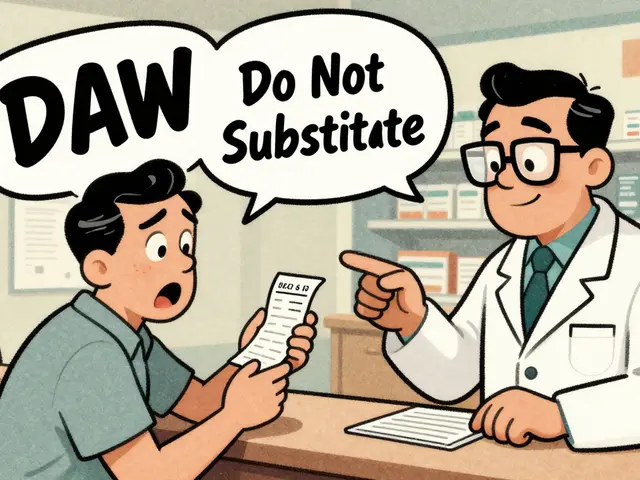
Imagine you are a pharmacist standing behind the counter. A patient hands you a prescription for a single blood pressure medication. You know that a generic combination pill-containing that same drug plus another common agent-is cheaper, easier to take, and clinically appropriate. But before you can swap it, you have to navigate a maze of state laws, liability risks, and clinical guidelines that weren’t written with this scenario in mind. This is the reality of combination drug substitution, a growing area of tension in modern healthcare.
As healthcare costs rise, there is immense pressure to find savings. Combination products, particularly fixed-dose combinations (FDCs) which bundle two or more active ingredients into one tablet or capsule, offer a promising solution. They simplify regimens, improve adherence, and often cost less than buying separate prescriptions. However, the legal frameworks governing what pharmacists can and cannot substitute were built for single-entity drugs. Applying those old rules to complex multi-ingredient medicines creates significant legal and practical hurdles.
The Core Conflict: Old Laws vs. New Medicines
To understand the challenge, we first need to define the players. A combination product is defined by regulatory bodies like the FDA as a product comprising two or more different regulated components, such as drugs, biologics, or devices. When these are all drugs, they are often called FDCs. The goal is usually to treat a single condition or a cluster of related conditions more efficiently.
Traditionally, generic substitution allows a pharmacist to dispense a different brand of the exact same drug molecule if it is deemed therapeutically equivalent. This works smoothly for single ingredients. But when you introduce a second or third ingredient, the concept of "equivalence" becomes muddy. Is a combination of Drug A and Drug B equivalent to a combination of Drug A and Drug C? Most laws say no. Is it equivalent to prescribing Drug A alone and adding Drug B separately? The answer depends entirely on your location.
This mismatch between static laws and dynamic pharmaceutical innovation is the root of the problem. As Amiral A. Pasha notes in recent research, traditional substitution laws have significant flaws when applied to combination products. They rely on a narrow view of equivalency that doesn't account for the synergistic effects or specific dosing ratios required in modern FDCs.
Legal Hurdles: State-by-State Patchwork
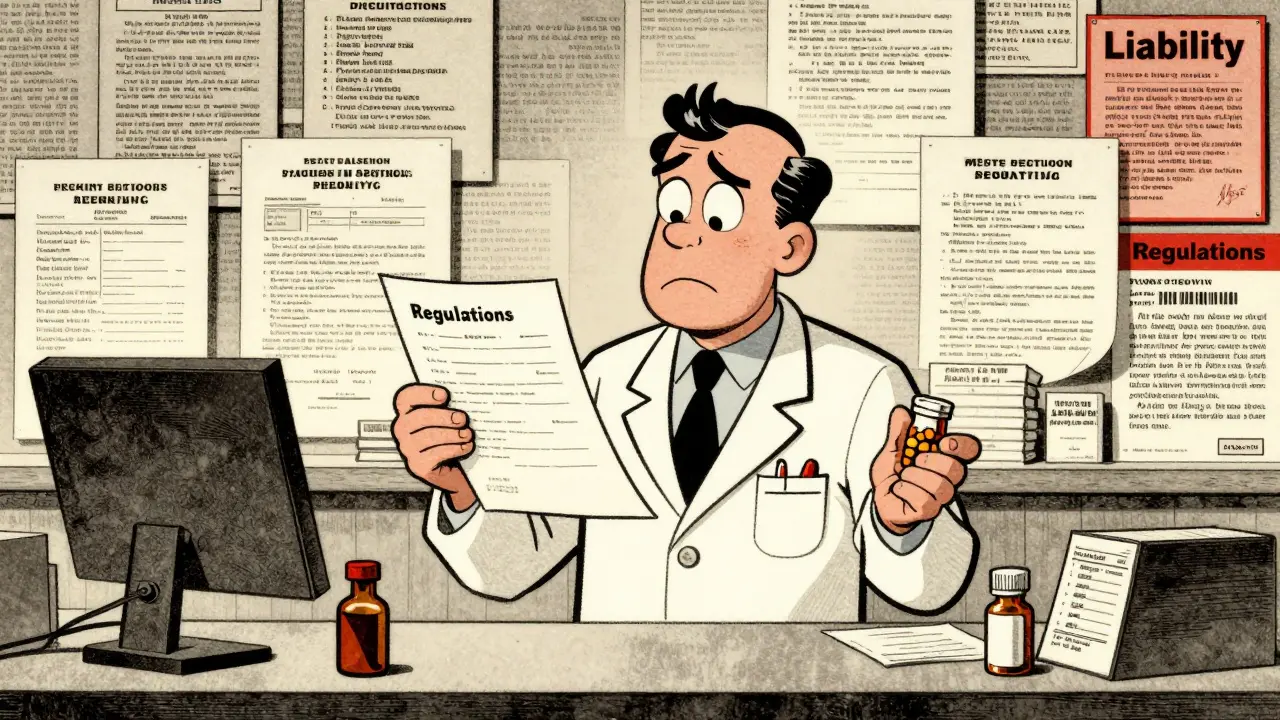
In the United States, pharmacy practice is largely governed at the state level. This creates a fragmented landscape where a substitution that is perfectly legal in Texas might be illegal in California. The National Association of Boards of Pharmacy (NABP) has attempted to create model legislation to standardize these rules, proposing a tiered system that distinguishes between "simple" combinations and "complex" ones. However, adoption has been slow.
Consider the case of Smith v. CVS Caremark (2022). In this landmark ruling, the 9th Circuit Court decided that pharmacists could not substitute a combination product containing additional active ingredients that were not explicitly prescribed without authorization from the prescriber. This decision reinforced the boundary between dispensing and prescribing. It signaled that adding an extra drug component-even if it’s a common, safe, and cheap one-crosses the line into initiating therapy, which requires a doctor’s order.
This legal distinction is crucial. If a patient is prescribed Drug X, and you want to give them Drug X + Drug Y, you are technically changing the therapy. Unless your state grants specific "prescribing by adaptation" authority, you are risking malpractice lawsuits or license revocation. The Alberta College of Pharmacy highlights this clearly: substituting a single drug with a combination product is considered initiating drug therapy and requires additional prescribing authorization.

Clinical Risks and Therapeutic Equivalence
Beyond legality, there is the question of safety. Can we assume that a combination pill is just as safe as taking the individual pills separately? Not always. The concept of therapeutic equivalence ensures that two drugs will have the same clinical effect and safety profile when administered to patients. For single drugs, this is determined through bioequivalence studies. For combinations, it is far more complex.
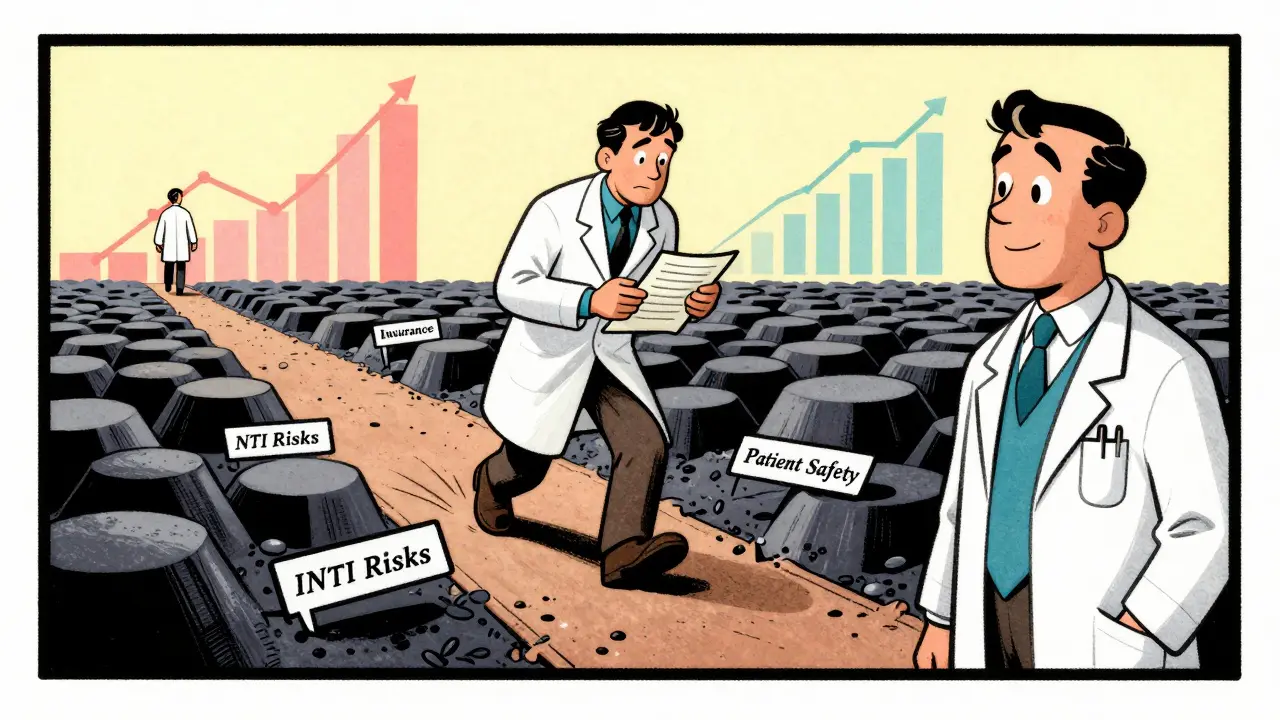
The Therapeutic Substitution Consensus Group, a panel of European experts, warns that switching medications purely for economic reasons can create conflicts between provider needs and patient safety. This is especially true for drugs with a narrow therapeutic index (NTI). NTI drugs, such as warfarin or certain anti-seizure medications, have a very small window between a effective dose and a toxic dose. Substituting these within a combination product without precise oversight can lead to adverse events.
The American Heart Association issued a stark warning in 2023: inappropriate substitution of cardiovascular combination therapies could lead to adverse events in up to 8% of patients, particularly among the elderly who often manage multiple comorbidities. This statistic underscores why clinical judgment must override simple cost-saving algorithms.
Practical Challenges for Pharmacists
On the ground, pharmacists face daily dilemmas. A 2022 survey by the National Community Pharmacists Association found that 68% of independent pharmacists encounter combination product substitution issues at least once a month. Nearly half (42%) admit to refusing substitutions simply because they are unsure of their legal authority.
Common scenarios include:
- Refills vs. New Prescriptions: Many states allow substitution only for new prescriptions. Changing a refill via therapeutic substitution is often viewed as managing ongoing therapy, which requires a new doctor's note.
- Modified-Release Mechanisms: Some combination pills use special coatings to release drugs at different times. Substituting these with immediate-release generics can alter how the body absorbs the medication, leading to spikes or drops in blood levels.
- Insurance Reimbursement: Even if a substitution is legal, insurance plans may not cover the combination pill if the patient was previously covered for two separate generics. This can leave the patient with a surprise bill.
The confusion is exacerbated by the fact that electronic health records and pharmacy software often do not flag these complex interactions automatically. Pharmacists are left to interpret vague statutes while dealing with impatient customers and tight margins.
Economic Pressures and Market Growth
Why is this issue becoming more urgent? Because the market for combination drugs is exploding. IQVIA reported a 12.7% compound annual growth rate in the combination drug market from 2018 to 2022, reaching $184.3 billion globally. These products are increasingly used for chronic conditions like HIV, hypertension, and diabetes.
Generic drugs now account for 90% of prescriptions filled in the U.S., yet they represent only 23% of total drug spending. There is a massive incentive for payers and providers to shift patients toward cheaper alternatives. Dr. Jane Chen from the Institute for Clinical and Economic Review argues that expanding substitution opportunities for combination products could reduce medication expenditures by 15-25% for chronic conditions.
However, the regulatory pipeline hasn't kept pace. Between 2015 and 2022, the FDA approved only 37 combination drug products compared to 1,243 single-entity new molecular entities. This disparity means that most combination products are older, off-patent generics, making them prime targets for substitution-but also raising questions about long-term safety data for newer formulations.
Navigating the Future: Best Practices
So, how should practitioners handle this gray area? Here is a practical checklist for navigating combination drug substitution:
- Check State Law First: Before considering any substitution, verify your state’s specific regulations regarding therapeutic substitution and prescribing by adaptation. Resources like the NABP website are essential here.
- Consult the Prescriber: When in doubt, call the doctor. Document the conversation. If the prescriber agrees to the switch, update the prescription officially. This protects both the patient and the pharmacist.
- Evaluate Therapeutic Index: Never substitute NTI drugs or complex biologics without explicit medical supervision. The risk of harm outweighs the potential cost savings.
- Review Patient History: Look for allergies, drug interactions, and renal/hepatic function issues. A combination pill might contain an ingredient that interacts poorly with another medication the patient is taking.
- Inform the Patient: Transparency is key. Explain why you are suggesting a change, what benefits it offers, and what side effects to watch for. Obtain informed consent.
The landscape is evolving. The FDA released draft guidance in September 2022 on demonstrating therapeutic equivalence for FDCs, and the European Commission has identified harmonizing substitution rules as a priority. By 2025, experts predict that 35% of all new drug approvals will involve combination products. Until clear federal standards emerge, pharmacists must remain vigilant, balancing the drive for affordability with the duty of care.
What is the difference between generic substitution and therapeutic substitution?
Generic substitution involves replacing a brand-name drug with a generic version that contains the exact same active ingredient, dosage form, and strength. Therapeutic substitution involves replacing a prescribed drug with a different drug molecule that has a similar therapeutic effect, such as swapping one beta-blocker for another. Therapeutic substitution carries higher legal and clinical risks because it changes the actual medication being administered.
Can a pharmacist substitute a single drug with a combination pill without a doctor's order?
Generally, no. In most jurisdictions, substituting a single-entity drug with a combination product is considered "initiating drug therapy" because you are adding an active ingredient that was not originally prescribed. This typically requires specific prescribing authority or explicit approval from the original prescriber. Laws vary by state, so pharmacists must check local regulations carefully.
Why are combination drugs harder to substitute than single-drug products?
Combination drugs contain multiple active ingredients, each with its own pharmacokinetics and potential interactions. Determining "therapeutic equivalence" is more complex because you must ensure that the ratio, release mechanism, and absorption profiles of all components are matched. Additionally, legal frameworks often lack clear definitions for multi-ingredient equivalence, leading to ambiguity and liability concerns.
What are Narrow Therapeutic Index (NTI) drugs, and why are they risky for substitution?
NTI drugs are medications where a small change in dose or blood concentration can lead to treatment failure or serious toxicity. Examples include warfarin, levothyroxine, and some anti-seizure drugs. Substituting these drugs, even within a combination product, can alter how the body processes the medication, potentially causing dangerous spikes or drops in drug levels. Therefore, substitution of NTI drugs requires extreme caution and often physician oversight.
How does the Smith v. CVS Caremark ruling affect pharmacy practice?
The 2022 ruling clarified that pharmacists cannot substitute a combination product containing additional active ingredients not prescribed by the doctor without explicit authorization. This reinforces the legal boundary between dispensing and prescribing. It serves as a warning that adding even common, safe ingredients to a prescription without a doctor's order can be considered practicing medicine without a license, exposing pharmacists to legal liability.