Your weekly paycheck gets bigger than you think because of one hidden line item: employer health plans that prioritize generic medications. While brand names might feel more familiar, the financial reality is shifting. According to recent industry analysis, generic medications save approximately $3 billion every week for employers. That is over $150 billion annually in pure spending reduction. If you rely on workplace insurance for prescriptions, understanding how these savings impact your wallet is crucial.
What is a Prescription Formulary?
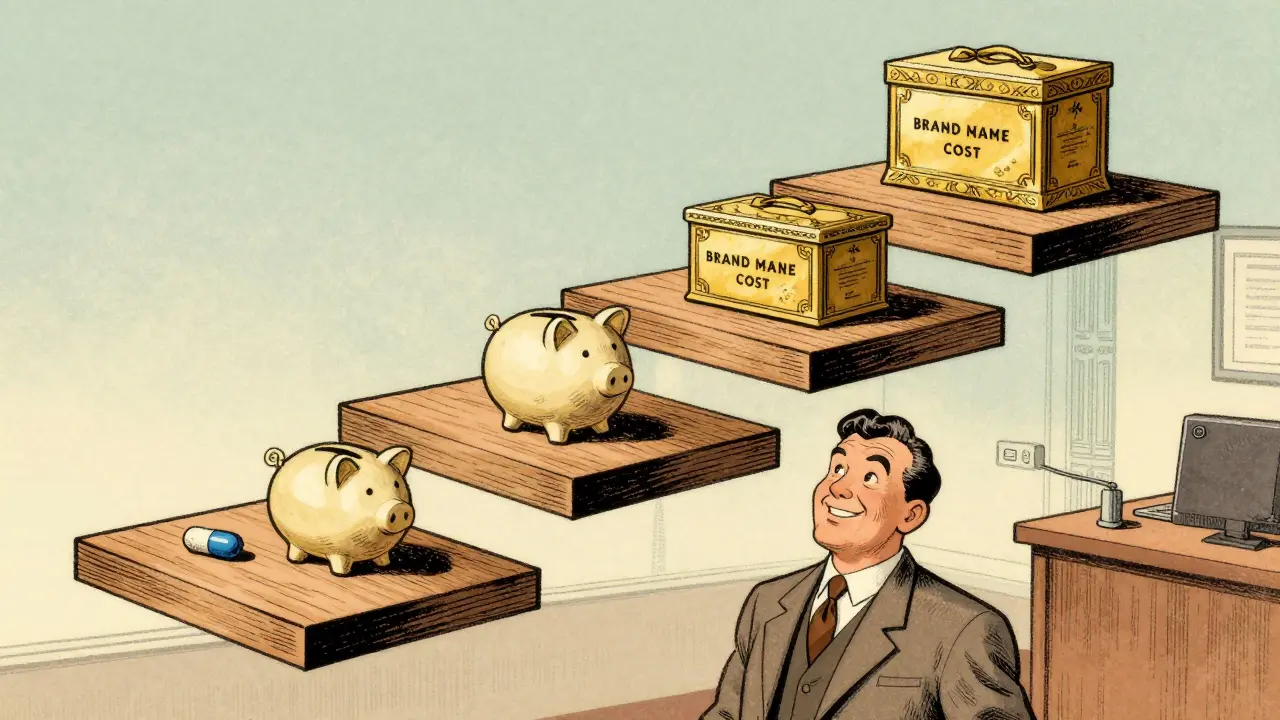
A formulary is essentially the master list of covered medications for your specific insurance plan. It isn't random. Health insurers organize these lists into tiers to encourage behavior. Think of it like airline seating classes. First-class tickets cost less if you sit in economy. Similarly, taking a generic version puts you in the lowest cost tier. Most large group plans categorize drugs into four levels:
| Tier Level | Drug Type | Example Copayment |
|---|---|---|
| Tier 1 | Generic Drugs | $10 (approx) |
| Tier 2 | Preferred Brand Name | $40 (approx) |
| Tier 3 | Non-Preferred Brand | $75 (approx) |
| Tier 4 | Specialty Drugs | High % coinsurance |
The math is stark. If your usual medication shifts from brand to generic availability, the insurance company often moves the brand name up to Tier 4 immediately. Suddenly, the out-of-pocket price jumps from $10 to significantly higher amounts. This isn't accidental; it's a design feature known as 'tier switching' intended to guide you toward the cost-effective option.
The Role of Pharmacy Benefit Managers
You might not see their logos on your pharmacy bag, but Pharmacy Benefit Managers (PBMs) run the backend show. They act as middlemen between insurers, drug manufacturers, and pharmacies. Currently, three major players dominate the market: OptumRx, CVS Caremark, and Express Scripts. These organizations manage the formularies we discussed above.
Here is the trickier part of the equation: pricing transparency. PBMs negotiate rebates with drug companies. This creates what experts call the 'gross-to-net' spread. Let's say a drug lists at $100 wholesale, but the PBM negotiates a $55 rebate from the manufacturer. The net cost drops to $45. However, historically, that savings often stayed within the insurance ecosystem rather than reducing your premium or copay directly. As of early 2024, analysis showed that each of the top PBMs removed over 600 drugs from their formularies to force better negotiation rates. For you, this means your preferred medicine could vanish from coverage overnight if the PBM decides to exclude it entirely to drive volume elsewhere.

Safety and Efficacy of Generic Substitution
A common hesitation employees have is the fear that generics aren't as effective. Regulatory standards dispel this concern firmly. The Food and Drug Administration (FDA) confirms that approved generic drugs meet the same strict safety and quality standards as brand-name versions. Manufacturers do not have to repeat massive clinical trials, which allows them to sell the product at 80-85% of the brand name price.
In practical scenarios, this matters most for chronic conditions. Imagine managing asthma, hypertension, or diabetes. Switching to a generic formulation does not change the biological outcome for the vast majority of patients. The active ingredient is identical. Because the manufacturing process is so standardized, switching usually causes no side effects. The primary barrier is habit or physician inertia, not medical necessity. Employers increasingly use communications to remind staff of this parity, hoping to boost utilization without lowering health outcomes.

Navigating Your Specific Coverage
Because every plan differs slightly, you cannot assume your neighbor's coverage matches yours. Start by locating your Summary of Benefits and Coverage (SBC). This document outlines exactly how many tiers your plan supports. If your plan utilizes Consumer Driven Health Plans (CDHPs), you may face higher deductibles initially. In these models, using generics becomes even more vital because you are paying out-of-pocket until you meet the annual threshold.
When checking coverage, look for "exclusion notes." Sometimes a drug is technically covered but requires a prior authorization. This means your doctor must prove why the generic alternative fails you medically. Without this exception granted, the claim gets denied. Don't guess. Visit your insurer's website portal or call the number on your member card. Ask specifically: "Is my current medication on the Tier 1 list?" If the answer is no, ask what the closest match is.
Future Trends and Strategic Navigation
As we move further into 2026, the pressure on pharmaceutical budgets is intensifying. Employers are pushing harder for generic adoption to offset rising healthcare costs. You might notice tighter restrictions on specialty drugs (Tier 4), especially for non-urgent conditions. The trend suggests that 'steering' mechanisms-like automatic formulary switches when a generic launches-will become more frequent rather than rare.
To stay ahead, monitor your benefits annually during open enrollment. Do not rely solely on auto-renewal settings that favor high-deductible options without reviewing the drug list changes. Some plans offer programs like 'Price Assure,' which automatically captures savings on generics at the point of sale. Knowing these specific tools helps you maximize the value of the coverage you already pay for through payroll deductions.
Does my employer plan allow me to refuse a generic substitution?
Yes, you can usually request to keep the brand-name medication. However, the copayment will likely rise to match the brand's tier level, which could be significantly higher than the generic rate.
How do I know if a drug has been removed from my formulary?
Check the online formulary tool on your insurer's portal or search the 'Change Notice' updates. PBMs often publish quarterly lists of drugs being excluded.
Are generic drugs really the same as brand name?
According to the FDA, yes. They contain the same active ingredients and must demonstrate equivalent performance in tests for absorption and bioavailability.
What is a Gross-to-Net spread in pharmacy pricing?
It is the difference between the list price of a drug and the final net price after rebates are applied. This spread represents the savings negotiated by PBMs.
Can I appeal if my medication is excluded?
Yes. Submit a 'medical necessity' exception request. Your provider must document why generic alternatives would cause harm or are ineffective for your specific case.
Understanding these layers transforms prescription shopping from a chore into a strategic financial decision. By aligning your choices with your plan's formulary tiers, you protect your budget while maintaining access to essential care.

11 Comments
my paycheck gets slashd every month bcs of these generic switches nobody talks abt properly
its jus crazy how the formulary tiers change ovrnight and leave u holding the bill for expnsive stff
u never see the full list b4 open enrollment starts rolling around agin
i think companys care more about thier bottom line thn our actual health outcomes honstly speaking
it feels lik they design these tiers specfically to punish anyon whos needs brand names badly
💸😡
Actually there are regulations regarding prior authorization processes that protect consumers significantly!!!
Many employers do not disclose the exclusions upfront which is illegal under certain federal guidelines!!!
You should always check the SBC document carefully during enrollment!!!
It is crucial to understand the difference between tiered copays and deductibles!!!
Please remember to document every interaction with your pharmacy benefit manager!!!
pbms manipulate market cap through rebate structures designed to obscure true pricing data points
the gross-to-net spread exists solely to enrich middlemen while patients absorb residual costs via higher premiums
transparency remains a myth constructed to sell compliance to the public sector
proprietary algorithms dictate formulary placement based on volume targets rather than clinical necessity
We must consider the ethical implications of steering mechanisms in healthcare delivery systems
It is fascinating how economic pressures reshape patient behavior over decades of policy shifts
True wellness requires alignment between financial incentives and biological needs
Society often overlooks the hidden labor involved in navigating these complex insurance frameworks
Perhaps we should strive for a model where cost does not determine access to essential life-saving interventions
The balance between affordability and efficacy remains a central theme in modern medicine discussions
It is absolutely unacceptable for corporations to prioritize profits over human health 😡
Everyone deserves fair access to medication without facing predatory pricing schemes daily
You have a responsibility to fight back against these unjust practices immediately
Do not let them walk all over your rights as an insured citizen 🛑
We need stronger advocacy groups to hold these giant companies accountable for their actions 🙏
Sharing this information spreads awareness among those who need help most 🌟
Stay positive and keep checking your benefits annually to avoid surprises later on
You got this! :)
u r right tony keeping track of evrything helps alot when renewal times come around
i found my doc had to write letters for me last yr to get my meds covered properly
it was so annoying to deal with the pharma reps buh worth it in end
hope everyone finds what works best for them without stress :)
Interesting perspective on the tier switching mechanics mentioned in the post today
Lots of us are confused about why prices jump so fast without notice
:) Maybe the portals make it easier to search now compared to previous years
Thank you for sharing such valuable insights regarding the pharmacy benefit management landscape here
It is important to review the exclusion notes before claims get denied by the system
🙂 I appreciate the breakdown of how rebates impact the net cost calculation overall
I totally agree with that assessment on portal searches :)
This analysis provides a comprehensive overview of the current pharmacy benefit structure within large group plans.
Understanding the tier architecture allows employees to predict out-of-pocket expenses with greater accuracy.
The shift towards mandatory generic utilization reflects broader macroeconomic trends affecting healthcare spending globally.
Consumers often overlook the role of third-party administrators in determining formulary inclusion lists.
Regulatory bodies continue to update standards regarding bioequivalence testing for substituted medications.
Employers utilize data analytics to optimize their benefit packages against rising inflation rates.
Strategic planning during open enrollment periods prevents unexpected financial burdens for enrolled staff members.
Prior authorization requirements serve as gatekeeping mechanisms that delay access to non-preferred therapies.
Transparency initiatives aim to reveal the gross-to-net pricing discrepancies hiding within standard contracts.
Patients should verify active ingredient consistency when switching from brand name formulations to alternatives.
Documentation of medical necessity exceptions provides a legal safeguard against abrupt coverage cancellations.
Annual reviews ensure that benefit selections align with current health status changes effectively.
Communication channels between providers and insurers require constant monitoring to maintain continuity of care protocols.
Financial literacy regarding health benefits empowers individuals to make informed choices about their treatment paths.
Ultimately managing prescription costs becomes a shared responsibility between the insurer and the insured party.
Write a comment