GLP-1 Weight Loss Calculator
Weight Loss Estimator
Enter your starting weight and select a GLP-1 agonist to see expected weight loss results based on clinical trial data.
Estimated Weight Loss
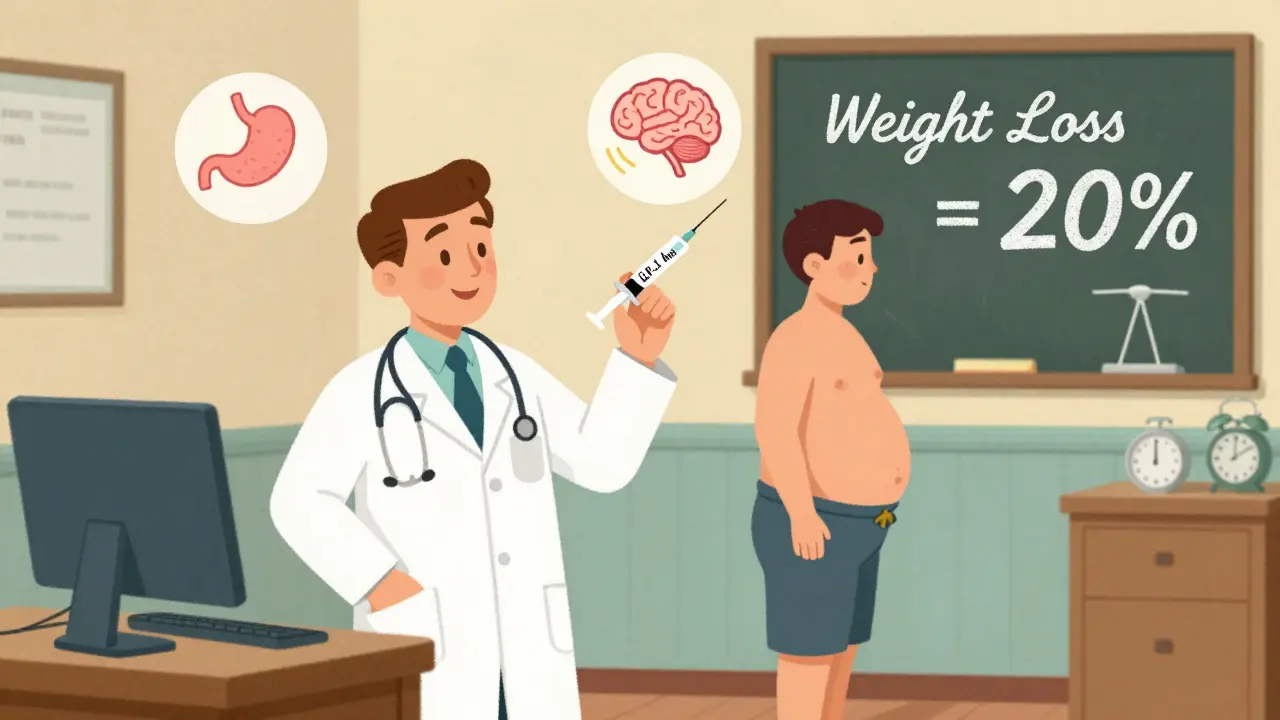
When you think of diabetes medications, you probably imagine pills that lower blood sugar. But today, the most talked-about drugs in this class aren’t just for diabetes-they’re reshaping how we treat obesity. Drugs like Ozempic, Wegovy, and Mounjaro were designed to help people with type 2 diabetes control their glucose. But something unexpected happened: patients lost significant weight. And not just a little. Some lost over 20% of their body weight. That’s not a side effect-it’s a game-changer.
How GLP-1 Agonists Actually Work
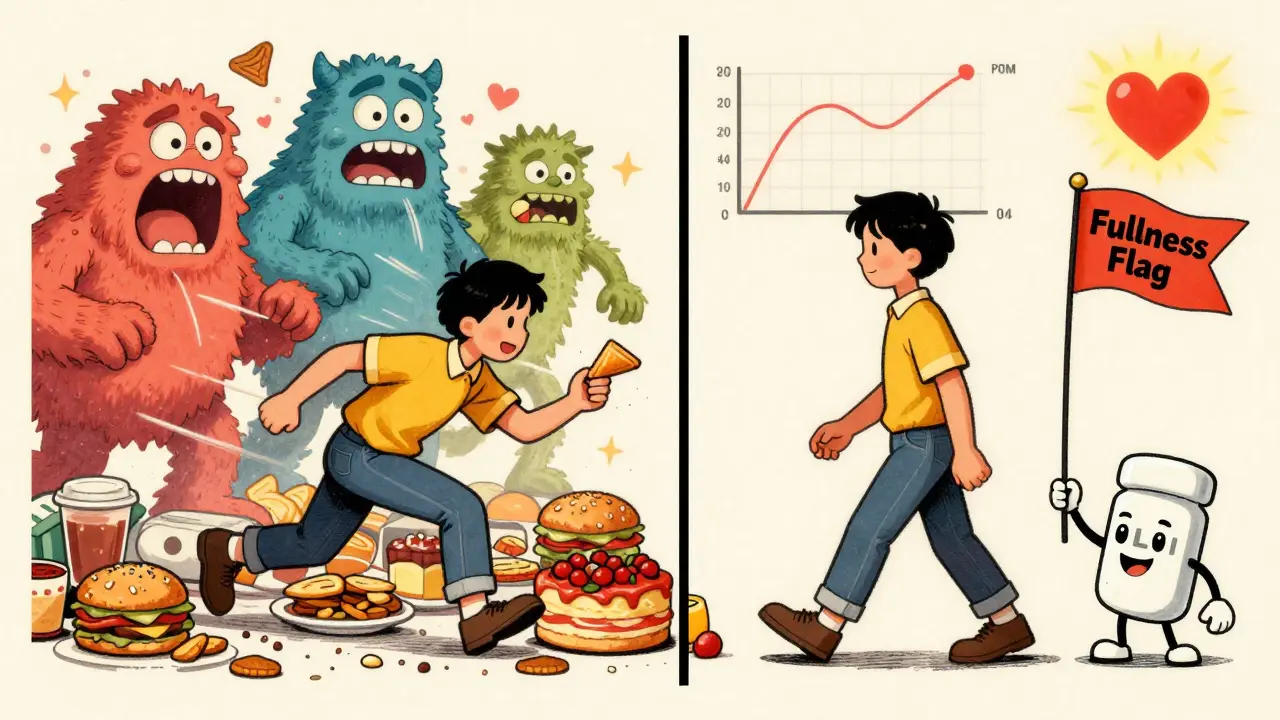
GLP-1 agonists mimic a natural hormone your body makes after eating: glucagon-like peptide-1. This hormone does three big things: it tells your pancreas to release insulin only when blood sugar is high (so you don’t crash), it shuts off glucagon (the hormone that makes your liver dump sugar), and it slows down how fast food leaves your stomach. That last part is key. When food lingers longer in your stomach, you feel full longer. But there’s more. These drugs also act on your brain, specifically the areas that control hunger and cravings. You don’t just eat less-you stop wanting to eat so much in the first place.
Early versions like exenatide (Byetta) and liraglutide (Victoza) were modest in their effects. But the newer ones? They’re in a different league. Semaglutide (Ozempic for diabetes, Wegovy for weight loss) and tirzepatide (Mounjaro for diabetes, Zepbound for weight loss) are the heavyweights now. Tirzepatide is even more powerful because it doesn’t just mimic GLP-1-it also activates GIP, another gut hormone that helps regulate appetite and fat storage. The result? In clinical trials, people on the highest dose of tirzepatide lost an average of 20% of their body weight over a year and a half. That’s not a diet. That’s a physiological reset.
Weight Loss That Actually Sticks (For a While)
Most diets fail. People lose weight, then regain it-often with interest. But GLP-1 agonists work differently. In the STEP-1 trial, people using semaglutide 2.4 mg weekly lost nearly 15% of their body weight on average, compared to just 2.4% with placebo. And they kept it off for at least a year. That’s longer than most weight loss programs last. But here’s the catch: when people stop taking the drug, most regain 50 to 70% of the weight within a year. This isn’t a cure. It’s a tool. Think of it like blood pressure medication-you don’t stop taking it because you feel better. You keep taking it because the condition hasn’t gone away.
Real-world data backs this up. On Reddit’s r/semaglutide, users report losing 1 to 2 pounds per week at first, then slowing to half a pound a week after six months. Many say their cravings vanished. One user wrote, “I used to snack every few hours. Now I go 6 hours without thinking about food.” But others report nausea, vomiting, and diarrhea-side effects that affect up to half of users. Most of these fade over time, but for some, they’re enough to quit.
Beyond the Scale: Heart, Brain, and Beyond
Weight loss is the headline. But the real value of these drugs might be what happens underneath. People using GLP-1 agonists show improvements in blood pressure, cholesterol, and liver fat-all major risk factors for heart disease. In fact, studies show a 12-18% drop in major cardiovascular events like heart attacks and strokes in people with diabetes and existing heart disease. That’s why the American Diabetes Association now recommends GLP-1 agonists as a first-line treatment for type 2 diabetes patients who also have obesity or heart disease.
Even more surprising? Brain effects. A 2024 study of over 2 million U.S. veterans found that people on GLP-1 agonists had a 23% lower risk of seizures, a 17% lower risk of substance use disorders (including alcohol and opioids), and a 14% lower rate of suicidal thoughts. Another study showed a 16% drop in eating disorders like bulimia. Researchers aren’t sure why yet. But it’s clear these drugs don’t just affect your gut-they talk to your brain in ways we’re only beginning to understand.
Who Gets the Most Benefit?
These drugs aren’t magic pills for everyone. They work best in people with obesity, prediabetes, type 2 diabetes, or existing heart disease. In lean individuals without metabolic issues, the weight loss is smaller-and the side effects still happen. That’s why doctors don’t prescribe them to people who just want to lose a few pounds for cosmetic reasons.
And not all GLP-1 agonists are created equal. Here’s how they stack up:
| Drug (Brand) | Primary Use | Typical Weekly Dose | Average Weight Loss (12-72 weeks) |
|---|---|---|---|
| Tirzepatide (Mounjaro, Zepbound) | Diabetes / Obesity | 5-15 mg | 12-20% |
| Semaglutide (Wegovy) | Obesity | 2.4 mg | 14-15% |
| Semaglutide (Ozempic) | Diabetes | 0.5-1 mg | 8-10% |
| Liraglutide (Saxenda) | Obesity | 3 mg | 5-8% |
| Dulaglutide (Trulicity) | Diabetes | 0.75-1.5 mg | 3-5% |
| Exenatide (Byetta) | Diabetes | 5-10 mcg (twice daily) | 2-4% |
Tirzepatide leads in weight loss. Semaglutide is close behind and more widely available. Liraglutide and dulaglutide are older, gentler options. Exenatide? It’s mostly been replaced.
The Cost and Access Problem
These drugs are expensive. Without insurance, Wegovy costs about $1,350 a month. Even with insurance, many people face high copays or outright denials. In 2024, nearly 60% of users reported coverage issues. Some people ration their doses-taking half the prescribed amount to make it last longer. That’s dangerous. It reduces effectiveness and increases side effects.
Some companies are stepping in. Novo Nordisk offers a patient assistance program that covers 75% of out-of-pocket costs for eligible people. Telehealth platforms like Found and Calibrate bundle the medication with coaching, meals, and behavioral support-for $99 to $149 a month on top of the drug cost. Corporate wellness programs at Amazon and Walmart have started covering GLP-1 agonists for employees. But for now, access is still a patchwork.
Side Effects and Long-Term Risks
Nausea, vomiting, and diarrhea are the most common side effects. About 30-50% of users experience them, especially when starting or increasing the dose. Most fade within weeks. But a small number of people can’t tolerate them at all.
Another concern is “Ozempic face”-a term used online to describe facial volume loss. It’s not officially recognized as a medical diagnosis, but dermatologists and plastic surgeons are seeing more patients with hollowed cheeks and sagging skin after major weight loss. Harvard Health reported this in 42% of long-term users. It’s not the drug itself causing it-it’s the rapid fat loss. The solution? Slower weight loss and strength training to preserve muscle and skin tone.
Pancreatitis risk is low-around 0.5-1%-but real. Gallbladder problems are also slightly more common. And while early studies raised alarms about thyroid tumors in rats, no such link has been found in humans after nearly 20 years of use.
What Happens When You Stop?
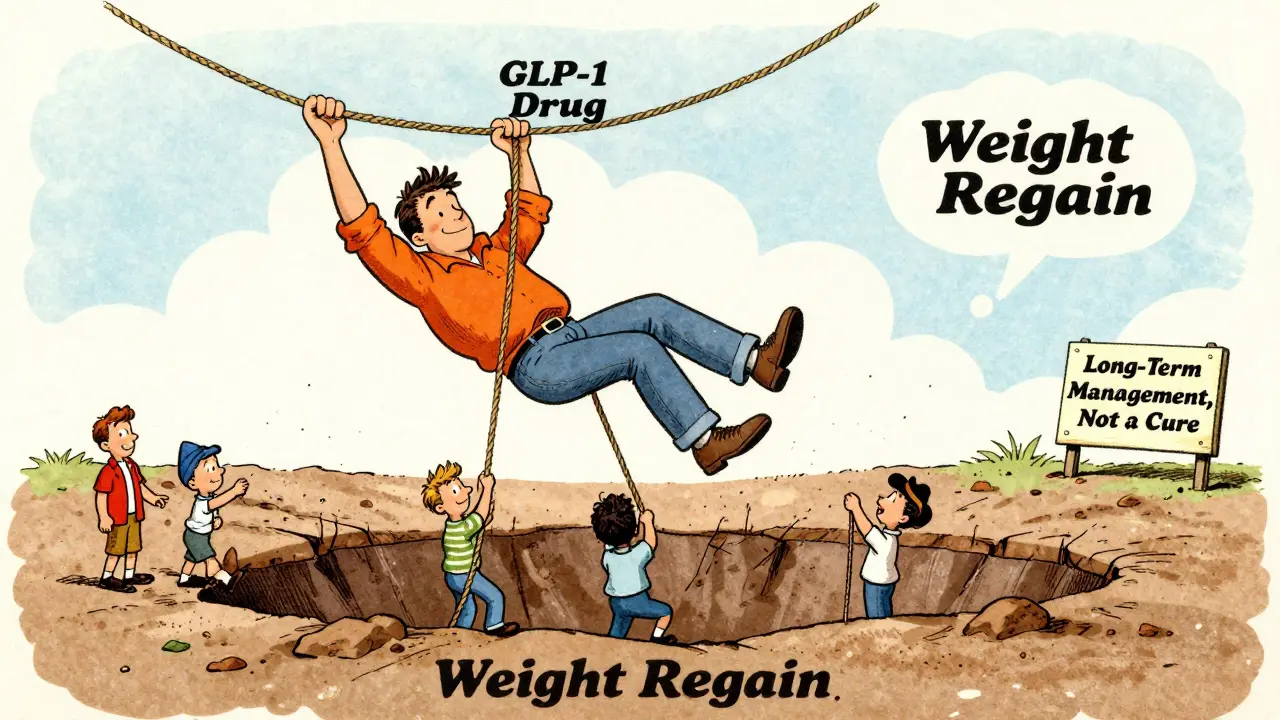
This is the biggest question people don’t ask until it’s too late. If you stop taking a GLP-1 agonist, you will likely regain weight. Studies show 50-70% of the lost weight comes back within a year. That’s not failure. It’s biology. Your body fights to return to its old weight. The drug helped reset your appetite. Once it’s gone, your hunger signals come back full force.
That’s why experts stress: these drugs are not a short-term fix. They’re a long-term management tool-like statins for cholesterol or insulin for diabetes. If you stop, you’re not going back to normal. You’re going back to the same metabolic state you were in before you started. The goal isn’t to lose weight and quit. It’s to use the drug to create space-space to build habits, to retrain your relationship with food, to find sustainable ways to eat and move.
The Future: Oral Pills, Implants, and Triple Agonists
Right now, most GLP-1 agonists require a weekly injection. But that’s changing. Oral semaglutide (Rybelsus) is already available for diabetes, and a stronger 50 mg version is in Phase 3 trials. If it works, it could replace injections for many people.
Even more exciting? Implants that last 6-12 months. And triple agonists-drugs that mimic GLP-1, GIP, and glucagon-all at once. Early results show even greater weight loss and metabolic improvements. J.P. Morgan predicts the global market for these drugs will hit $100 billion by 2030. That’s not hype. It’s demand.
But with growth comes pressure. Can healthcare systems afford to cover millions of people? Will insurance companies keep paying? Will drug companies raise prices further? These aren’t just medical questions-they’re societal ones.
Final Thoughts: A Tool, Not a Miracle
GLP-1 agonists are the most effective weight loss drugs we’ve ever had. They’re not perfect. They’re not cheap. They’re not for everyone. But for people struggling with obesity, diabetes, or heart disease, they offer real, measurable hope. They don’t replace diet or exercise. They make them possible. If you’ve tried everything and nothing worked, this might be the key you’ve been waiting for. But it’s not a magic wand. It’s a lifeline. And like any lifeline, it works best when you hold on-and learn how to swim while you’re holding it.
Are GLP-1 agonists only for people with diabetes?
No. While they were first approved for type 2 diabetes, newer versions like Wegovy and Zepbound are specifically approved for chronic weight management in people without diabetes. Many doctors prescribe diabetes versions like Ozempic off-label for weight loss, but the FDA-approved weight loss versions are formulated for higher doses and are safer for that purpose.
How long does it take to see weight loss with GLP-1 agonists?
Most people start seeing results within the first 4-8 weeks. The biggest drops happen in the first 3-6 months. Weight loss tends to slow after that, but continues steadily for up to a year or more. Full results usually appear after 12-16 months of consistent use.
Can I take GLP-1 agonists if I don’t have diabetes?
Yes-if you have obesity (BMI ≥30) or overweight (BMI ≥27) with at least one weight-related condition like high blood pressure, high cholesterol, or sleep apnea. The FDA has approved Wegovy and Zepbound specifically for this group. They’re not approved for people who are simply trying to lose a few pounds for cosmetic reasons.
Do GLP-1 agonists cause muscle loss?
Some muscle loss can occur with any significant weight loss, especially if you’re not eating enough protein or doing strength training. Studies show that about 25-30% of the weight lost on GLP-1 agonists comes from muscle. To prevent this, experts recommend high-protein diets and resistance training-like lifting weights or bodyweight exercises-at least twice a week.
Is it safe to use GLP-1 agonists long-term?
So far, yes. The longest studies run for 4-5 years and show sustained benefits with no new major safety signals. But long-term data beyond 10 years isn’t available yet. Doctors monitor patients regularly for gastrointestinal issues, gallbladder problems, and thyroid function. For people who benefit from these drugs, the risks of obesity-heart disease, stroke, diabetes, cancer-often outweigh the known risks of the medication.
What should I do if I can’t afford GLP-1 agonists?
Talk to your doctor about alternatives. Some manufacturers offer patient assistance programs that cover most or all of the cost. Telehealth platforms like Found or Calibrate may have sliding scale fees. Lifestyle changes-like eating more protein, reducing ultra-processed foods, and moving more-are still effective and cost nothing. You don’t need a drug to lose weight, but for some, these drugs make it possible.

15 Comments
I’ve been on semaglutide for 8 months and honestly? My cravings just... vanished. Used to snack every few hours. Now I go 6 hours without thinking about food. It’s like my brain finally shut up.
This is wild. I lost 22% of my body weight on tirzepatide but I swear I didn’t even try. I just stopped wanting pizza at 2am. It’s not willpower. It’s biology. We need to stop acting like obesity is a moral failure.
I’m glad this post mentioned muscle loss. I lost 18% body weight but 28% of it was lean mass because I didn’t lift. Now I’m doing protein-focused strength training twice a week and it’s making a huge difference. Don’t just rely on the drug.
The brain effects are the real story here. Lower seizure risk? Lower substance use? Less suicidal ideation? If this is just a gut hormone mimetic, why is it rewiring reward pathways like an SSRI with a side of appetite suppression? We’re not even close to understanding what’s happening.
Let me guess-Big Pharma is pushing this because they know people will become dependent. You think this is medicine? It’s a luxury product for the wealthy, disguised as healthcare. And now they’re calling it a ‘tool’? It’s a chemical leash.
I’ve been reading up on the GIP/GLP-1 dual agonism and it’s fascinating. GIP isn’t just an appetite regulator-it modulates fat storage and insulin sensitivity in ways we didn’t fully appreciate until recently. Tirzepatide isn’t just stronger-it’s smarter.
I used to think weight loss was about calories in, calories out. Then I got on Ozempic and realized my body was running on a corrupted operating system. The drug didn’t change my habits-it changed my biology. I’m not ‘eating less.’ I’m just not hungry anymore. It’s like upgrading from Windows 95 to Linux.
Did you know the FDA approved these drugs after a 3-month trial? And the long-term data? It’s all sponsored by Novo Nordisk. The thyroid tumor thing in rats? They buried that. They’re selling a miracle drug while quietly ignoring the red flags.
The so-called 'Ozempic face' is just a symptom of society’s obsession with thinness. If you lose weight too fast, your skin sags. That’s not the drug’s fault-it’s your failure to maintain muscle tone. People think medicine can fix poor lifestyle choices. It can’t.
I’ve been on this for 10 months. I lost 35 pounds. My blood pressure is normal. My cholesterol is better. But I still cry at night because I miss the taste of bread. This isn’t freedom. It’s a quiet prison.
I’m 58. I’ve had type 2 for 12 years. I lost 20% of my body weight on Wegovy. I can now walk to the mailbox without stopping. I don’t need to explain myself to anyone anymore. This isn’t a miracle. It’s dignity.
The pharmacokinetics of subcutaneous GLP-1R agonists demonstrate nonlinear absorption profiles with prolonged half-lives due to albumin binding-this is why weekly dosing works. The GIP co-agonism in tirzepatide enhances adipocyte insulin sensitivity via PPARγ modulation. You’re not just suppressing appetite-you’re reprogramming metabolic set points.
People are acting like this is some kind of gift from the gods. Meanwhile, the drug companies are raking in billions while people without insurance are rationing their doses. This isn’t medicine-it’s capitalism with a stethoscope.
I appreciate the depth of this post. As a clinician, I’ve seen patients regain weight after stopping these drugs-and I’ve seen others build lasting habits during the window of opportunity they provide. The drug doesn’t cure obesity. But it gives people the breathing room to heal. That’s not nothing.
I lost 40lbs and now my face looks like a deflated balloon and my husband says I’ve become a robot who only talks about protein intake. I miss being able to eat a cookie without feeling guilty. This isn’t freedom. It’s a different kind of hell.
Write a comment