Methadone QT-Prolongation Risk Calculator
Risk Assessment Inputs
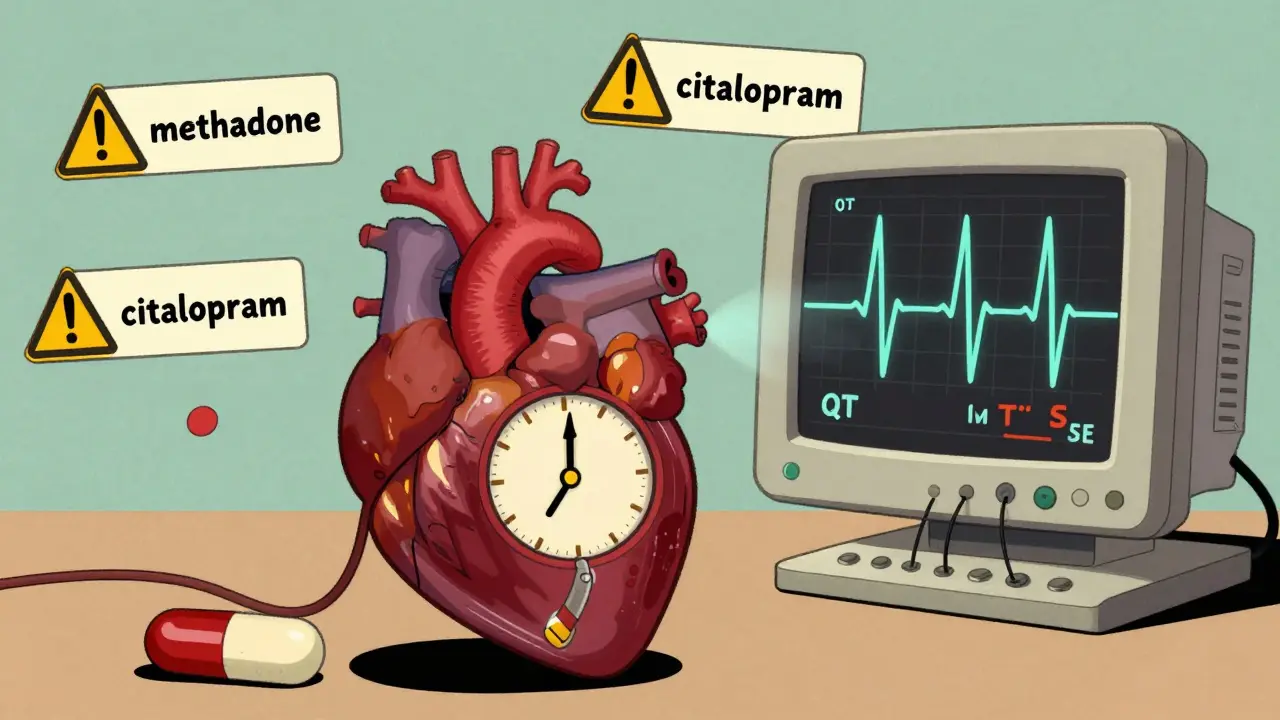
When someone starts methadone for opioid dependence or chronic pain, the focus is usually on managing withdrawal, reducing cravings, or controlling pain. But there’s a quiet, dangerous side effect that many don’t talk about until it’s too late: methadone can stretch the heart’s electrical rhythm in a way that triggers life-threatening arrhythmias-especially when mixed with other common medications.
Why Methadone Is Different
Methadone isn’t just another opioid. While drugs like buprenorphine barely touch the heart’s electrical system, methadone directly blocks two key potassium channels in heart cells: IKr and IK1. This dual blockade is rare. Most drugs that prolong the QT interval only hit one channel. Methadone hits both, making it far more dangerous than it looks on paper.That’s why even at moderate doses, methadone can stretch the QT interval-measured on an ECG-beyond safe limits. A normal QTc (corrected for heart rate) is under 430 ms for men and 450 ms for women. Once it crosses 500 ms, the risk of a chaotic, deadly rhythm called torsades de pointes (TdP) spikes. Studies show that in methadone maintenance patients, nearly 70% of men and over 70% of women see their QTc exceed 470 ms after just a few months of treatment.
And it’s not just the dose. The longer you’re on methadone, the worse it gets. Over 16 weeks, QTc doesn’t just rise-it climbs steadily. Some patients develop prolongation even at doses under 100 mg/day, but the risk jumps sharply above that threshold. That’s why doctors are told to be extra careful when prescribing more than 100 mg daily.
The Perfect Storm: Mixing Methadone with Other QT-Prolonging Drugs
The real danger isn’t methadone alone. It’s what happens when it’s paired with other medications that also delay heart repolarization. These aren’t rare or obscure drugs-they’re common.Antibiotics like clarithromycin and moxifloxacin. Antidepressants like citalopram and venlafaxine. Antifungals like fluconazole. Antipsychotics like haloperidol. Even some HIV drugs like ritonavir. Each of these drugs, on its own, might only nudge the QT interval a few milliseconds. But together with methadone? The effects add up.
One case from 2006 described a patient on methadone who developed TdP after using cocaine-yes, cocaine, a street drug with its own QT-prolonging effect. Even though cocaine leaves the body quickly, its timing with methadone created a deadly window. That’s the problem: you don’t need a long-term interaction. A single dose of a conflicting drug can be enough.
And it’s not just about the drugs themselves. Some, like ritonavir, do double damage: they block the same heart channels AND slow down how quickly the body breaks down methadone. That means methadone builds up in the blood, raising concentrations and making the QT prolongation even worse.
Who’s at Highest Risk?
Not everyone on methadone will have a problem. But certain people are sitting on a ticking clock:- Those with a personal or family history of long QT syndrome
- People with heart failure, prior heart attacks, or structural heart disease
- Patients with low potassium or magnesium levels
- Those taking multiple QT-prolonging drugs at once
- Older adults, especially women
- Anyone on methadone doses over 100 mg/day
Women are at higher risk not just because their baseline QT is longer, but because methadone’s effect on IK1 is more pronounced in female heart cells. Studies show women are more likely to reach dangerous QTc levels than men at the same dose.
What Doctors Should Do-And What Patients Should Ask For
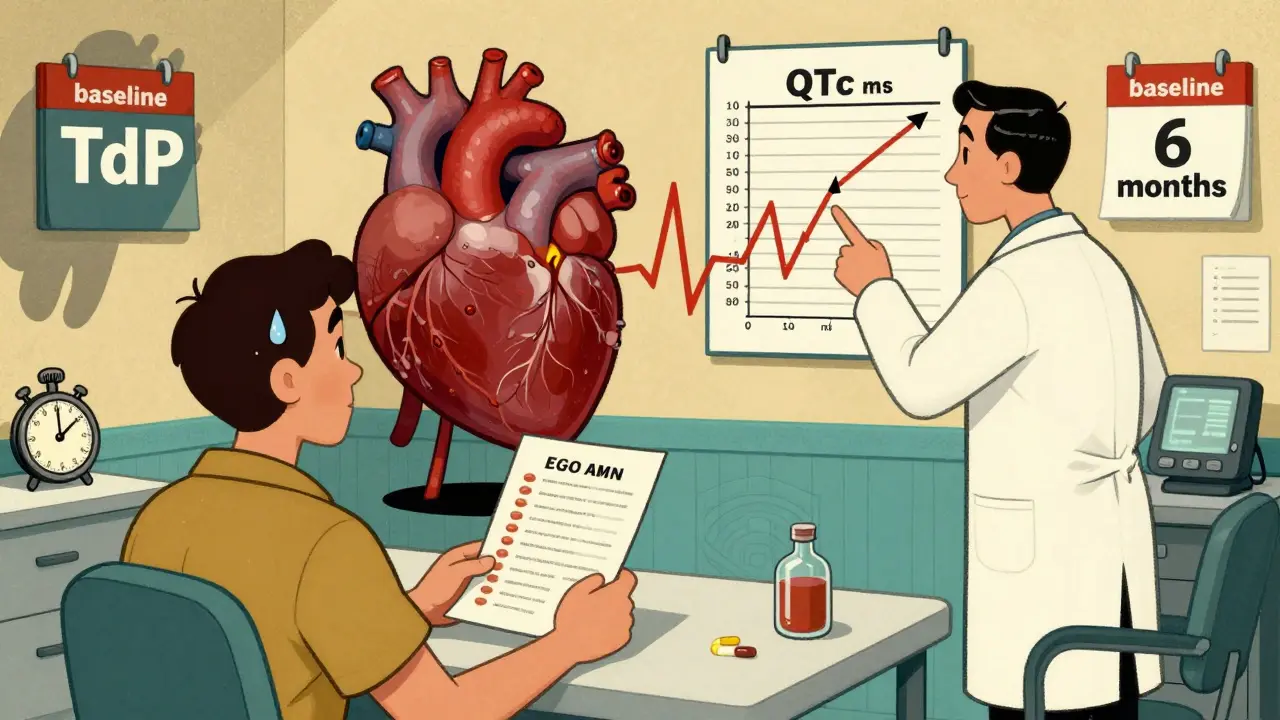
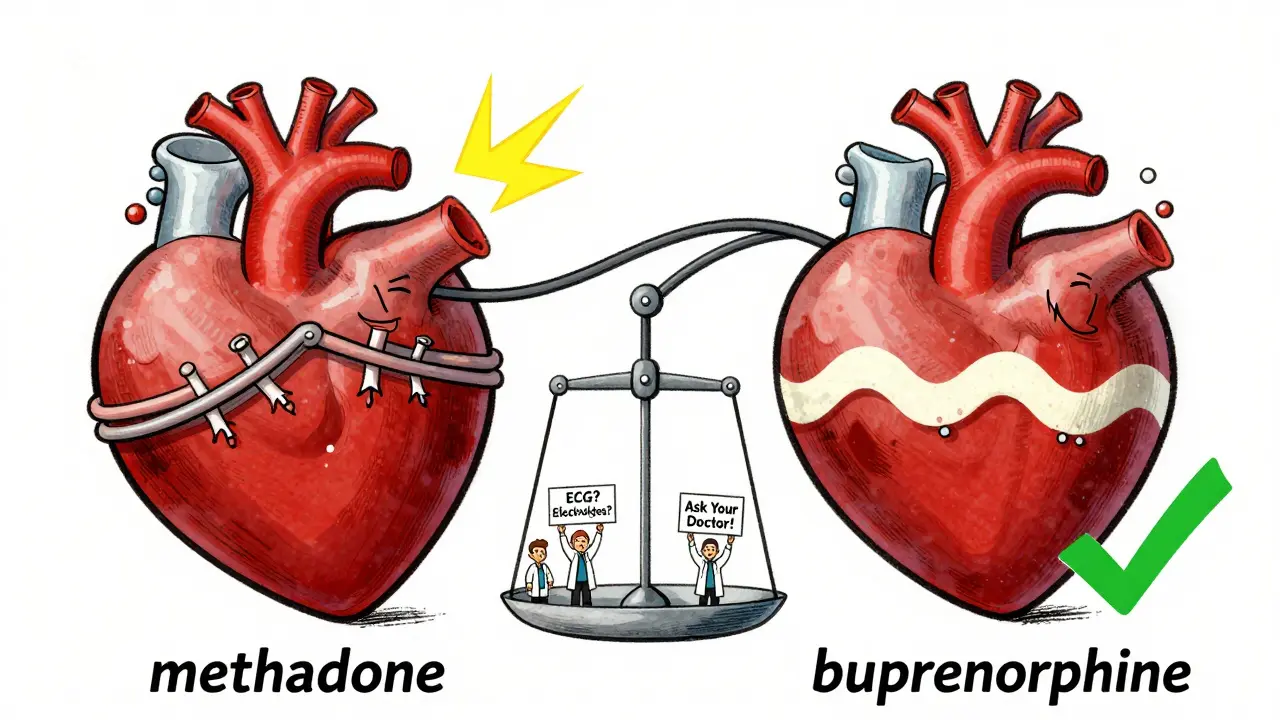
Before starting methadone, every patient should get a baseline ECG. Not optional. Not just for “high-risk” cases. Every single one. Then another ECG after four to six weeks, once the dose stabilizes. And then at least once a year if you’re on long-term therapy.If your QTc goes above 450 ms (men) or 470 ms (women), your doctor should reassess. If it hits 500 ms or increases by more than 60 ms from baseline, the risk is clear: you need a change. That could mean lowering your dose-like the New Zealand patient who went from 120 mg to 60 mg and saw their QTc return to normal. Or switching to buprenorphine, which has 100 times less hERG blockade and virtually no TdP risk.
Electrolytes matter too. Low potassium or magnesium makes QT prolongation worse. If you’re on diuretics, have vomiting or diarrhea, or eat poorly, your levels can drop fast. A simple blood test can catch this before it turns dangerous.
The Bigger Picture: Benefits vs. Risks
Let’s be clear: methadone saves lives. People on methadone maintenance are 20 to 50% less likely to die from overdose. They’re less likely to be in jail, less likely to contract HIV or hepatitis from needle sharing. For many, it’s the only thing that keeps them alive and stable.But that doesn’t mean we ignore the heart risk. The goal isn’t to stop methadone. It’s to use it safely. The FDA’s black box warning in 2006 wasn’t a ban-it was a call to action. To screen. To monitor. To avoid dangerous combinations.
Some clinics still skip ECGs. Some prescribers don’t ask about other meds. Some patients don’t know to tell their doctor they’re taking an antibiotic or antifungal. That’s where the gaps are. That’s where people die.
What You Can Do Right Now
If you’re on methadone:- Ask for your last ECG results. Know your QTc number.
- Make a full list of every medication you take-prescription, over-the-counter, supplements, even herbal teas.
- Before starting any new drug, ask: “Can this affect my heart rhythm?”
- Watch for symptoms: dizziness, fainting, palpitations, unexplained fatigue. Don’t brush them off.
- If you’re on a dose over 100 mg/day, push for more frequent monitoring.
If you’re a caregiver or family member: don’t assume the doctor is watching this. Ask. Push. Be the one who remembers.
The science is clear. Methadone’s cardiac risk isn’t theoretical. It’s documented in thousands of cases, in FDA alerts, in peer-reviewed journals. But it’s preventable. With awareness. With monitoring. With communication.
The heart doesn’t lie. If it’s stretched too far, it will tell you-sometimes in silence, sometimes in a deadly rhythm. Don’t wait for the signal.
Can methadone cause sudden death even at low doses?
Yes. While the risk increases significantly above 100 mg/day, sudden death from torsades de pointes has been reported in patients on doses as low as 40 mg/day-especially if they’re taking other QT-prolonging drugs, have low electrolytes, or have underlying heart conditions. There’s no completely safe dose if other risk factors are present.
Is buprenorphine safer than methadone for the heart?
Yes, significantly. Buprenorphine has about 100 times less effect on the hERG potassium channel than methadone. Studies show it causes little to no QT prolongation and has no documented cases of torsades de pointes in clinical use. For patients with high cardiac risk, buprenorphine is often the preferred alternative.
What medications should I avoid while on methadone?
Avoid or use extreme caution with: macrolide antibiotics (erythromycin, clarithromycin), fluoroquinolones (moxifloxacin), antifungals (fluconazole), certain antidepressants (citalopram, escitalopram, venlafaxine), antipsychotics (haloperidol, ziprasidone), and HIV protease inhibitors (ritonavir). Always check with your pharmacist or doctor before starting anything new.
How often should I get an ECG on methadone?
Get a baseline ECG before starting. Then repeat at 4-6 weeks after dose stabilization. If you’re on a dose under 100 mg/day with no other risk factors, annual ECGs are usually enough. If you’re over 100 mg/day, have heart disease, or take other QT drugs, get checked every 3-6 months.
Can I still take methadone if I have a history of arrhythmias?
It’s possible, but it requires close supervision. You’ll need frequent ECGs, electrolyte checks, and likely a lower starting dose. In many cases, switching to buprenorphine is the safest choice. Never stop methadone abruptly-this can trigger withdrawal or overdose. Work with a team that includes both an addiction specialist and a cardiologist.



13 Comments
Man, I never realized methadone was this sneaky. I thought it was just another opioid, but this whole QT prolongation thing? That’s wild. I’ve got a cousin on it for pain and he’s on like 80mg-never even thought to check his ECG. Gonna send him this post right now.
So basically, if you’re on methadone and take a single antibiotic, you’re playing Russian roulette with your heart? Cool. I’m sure the clinic will love hearing that.
My mom’s on methadone and she takes fluconazole for yeast infections all the time. I’m calling her doctor tomorrow
This is just another chapter in the pharmaceutical-industrial complex’s grand narrative: profit over pulse. Methadone’s danger isn’t accidental-it’s systemic. Capitalism doesn’t care if your QT interval spikes, as long as the prescription keeps flowing. We’re not patients-we’re data points in a profit algorithm.
Y’all are acting like this is news. I’ve been in recovery for 8 years. My clinic does ECGs every 3 months, checks electrolytes, and cross-references every med I take. If your clinic isn’t doing this, it’s not a clinic-it’s a waiting room for disaster.
My cousin died from TdP on methadone. He was 32. Took a Z-pack for a cold. No one warned him. No one asked if he was on anything else. This isn’t theoretical. This is real. And it’s happening every day.
Of course the FDA issued a warning. But let’s be real-most doctors are too lazy to read the damn black box. I’ve seen it. They just scribble ‘methadone maintenance’ and move on. It’s not the drug. It’s the incompetence.
😒It is imperative that all individuals undergoing methadone therapy be provided with comprehensive cardiac risk assessments prior to initiation and at regular intervals thereafter. Furthermore, concurrent administration of QT-prolonging agents must be rigorously evaluated through clinical pharmacokinetic review and electrocardiographic monitoring to mitigate potential adverse outcomes.
THIS IS WHY AMERICA IS FALLING APART. DRUGS AREN’T SAFE, DOCTORS DON’T CARE, AND WE’RE ALL JUST ONE ANTIBIOTIC AWAY FROM A HEART ATTACK. #METHADONEDANGER #AMERICAISDOOMED 💔🩺💣
I get it. Methadone saves lives. But if we’re not checking ECGs, we’re not saving lives-we’re just delaying death. I’ve seen people on it for years who never had a single test. That’s not care. That’s negligence wrapped in good intentions.
Wait… so the government knows this is deadly, but they still let clinics skip ECGs? And you’re telling me this isn’t a cover-up? Who’s getting paid off? Who’s making money off people’s silent heart failure? I’m not just scared-I’m furious.
There’s no villain here. Just a system that’s broken in a hundred little ways. Methadone is a miracle for so many. But we treat it like it’s a magic pill instead of a powerful tool that needs careful handling. We don’t need blame-we need better protocols. And we need to listen to the people who’ve been through it.
I’ve been on methadone for 12 years. 110mg/day. Got my ECG every 6 months like clockwork. My QTc is 468. I’m fine. But I know the risks. I ask every new doctor: ‘What’s this gonna do to my heart?’ If you’re not doing that, you’re not being responsible. Period.
Write a comment