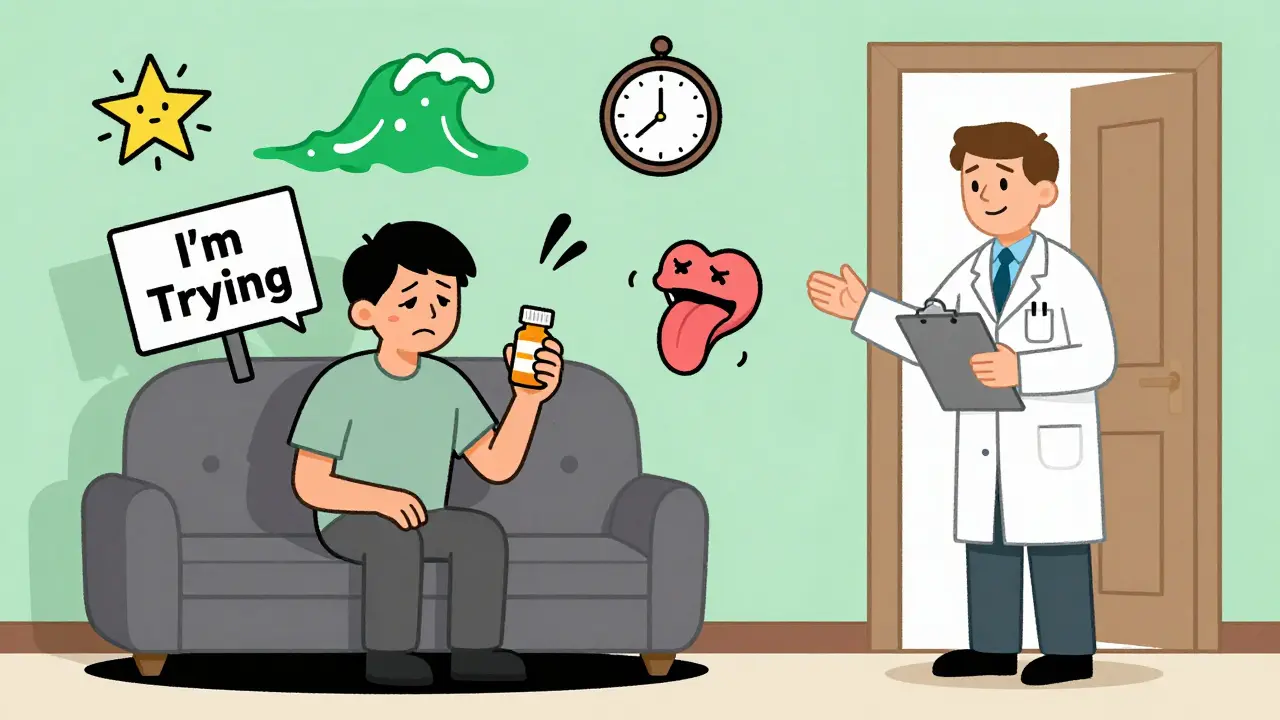
You’ve been prescribed a medication. Your doctor says it’s important. But then the side effects start-dizziness, nausea, fatigue, or maybe just that constant weird taste in your mouth. Suddenly, skipping a dose doesn’t feel like a failure. It feels like self-preservation. You’re not alone. Medication adherence isn’t just about remembering to take your pills. It’s about surviving the price you pay for taking them.
Why Side Effects Break Adherence
Most people don’t stop taking their meds because they forget. They stop because they feel worse. A 2025 study in Frontiers in Pharmacology found that nearly 30% of patients who start a new medication abandon it within the first three months-not because they don’t believe in it, but because the side effects outweigh the benefits in their daily life. For people managing chronic conditions like high blood pressure, diabetes, or depression, this is especially dangerous. The World Health Organization says 30% to 50% of patients don’t take their prescriptions as directed. That’s not laziness. That’s a rational response to real discomfort. If your antidepressant makes you feel numb, or your statin gives you muscle pain every time you climb stairs, it’s hard to stay motivated. And it gets worse over time. The first prescription might get filled. The second might get picked up. But by the third refill? Only 25% of people are still taking it as prescribed. Side effects are the silent killer of long-term treatment.The Real Cost of Skipping Doses
Skipping meds doesn’t just mean your condition won’t improve. It means it can get worse-fast. In the U.S. alone, nonadherence contributes to 125,000 preventable deaths every year. That’s more than traffic accidents. It also leads to up to 69% of medication-related hospitalizations. For someone with heart disease, missing a beta-blocker can spike blood pressure. For someone with epilepsy, skipping an anticonvulsant can trigger a seizure. For someone with depression, stopping an SSRI suddenly can cause brain zaps, anxiety, or even suicidal thoughts. The financial toll is just as heavy. Every year, nonadherence adds between $949 and $44,190 in extra costs per patient. That’s hospital stays, emergency visits, and treatments that could’ve been avoided. Pharmacies and insurers pay for it. But you pay for it too-in lost days at work, missed family events, and the stress of feeling like you’re failing your own health.Why Doctors Don’t Always Know
Here’s the hidden problem: your doctor might not even know you’ve stopped taking your meds. A 2025 study in the British Journal of Clinical Pharmacology found that pharmacists documented nonadherence in only 52% of cases. Nurses did it 85% of the time. Doctors? 70%. That means nearly half the time, your reason for skipping-side effects-isn’t being recorded. Why? Because asking is awkward. Patients don’t want to sound like complainers. Doctors don’t have time to dig deep. And side effects? They’re often dismissed as "normal" or "temporary." But if they’re making you feel worse than your original condition, they’re not temporary. They’re a red flag.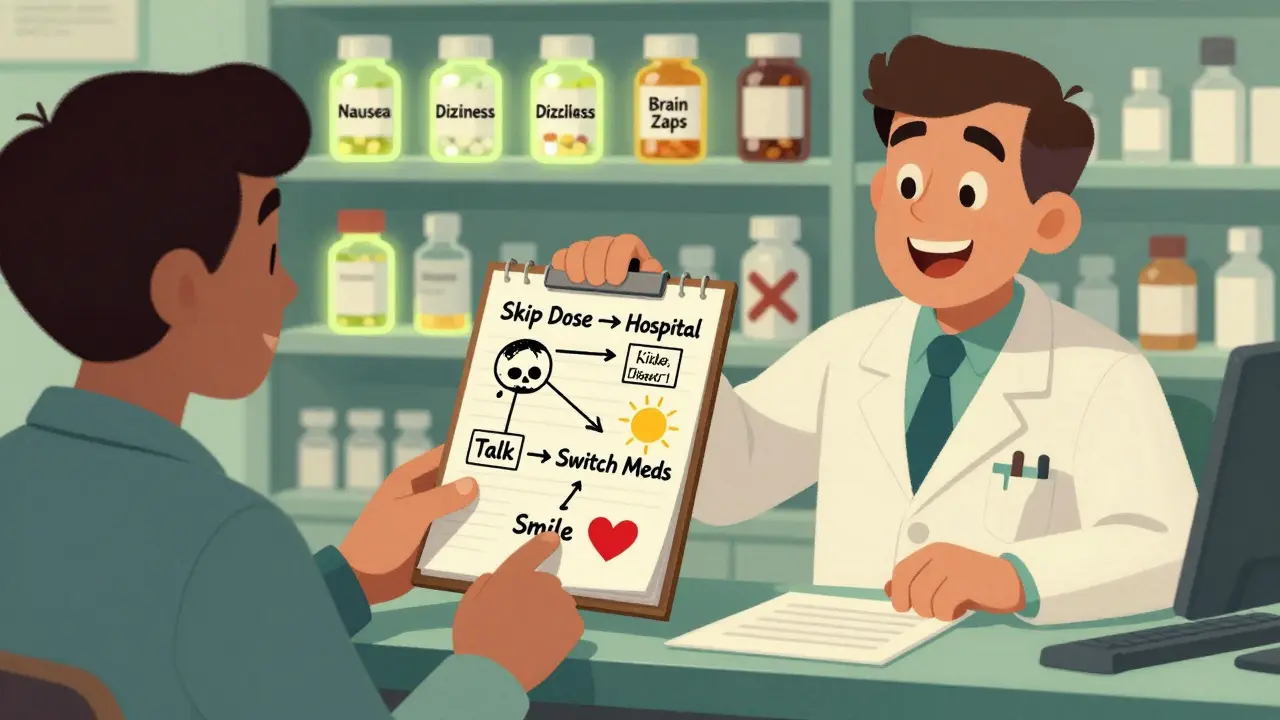
What Actually Works to Fix This
The good news? There are proven ways to fix this-and they don’t involve guilt trips or fancy apps. Pharmacist-led support is the most effective tool. One study showed that when pharmacists sat down with patients to talk through side effects, adherence jumped from 74% to 89%. That’s not magic. That’s listening. Pharmacists can adjust timing, suggest food pairings to reduce nausea, recommend over-the-counter remedies for dry mouth, or even help you switch to a different drug with fewer side effects. Face-to-face conversations beat phone calls by more than double. Hospital discharge programs-where a pharmacist checks in right after you leave-see 67% success. Clinic visits? 47%. Phone reminders? Only 38%. The human connection matters. You don’t need to suffer in silence. If you’re skipping doses because of side effects, say it out loud. Write them down. Bring the list to your next appointment. Say: "This side effect is making it hard for me to keep taking this. What else can we try?"Simple Strategies That Actually Help
You don’t need a high-tech solution. Sometimes, the smallest changes make the biggest difference.- Take meds with food if nausea is an issue. A small snack can cut stomach upset by up to 60% for many drugs.
- Shift timing. If a pill makes you drowsy, take it at night. If it causes jitters, take it after breakfast, not on an empty stomach.
- Use a pill organizer with alarms. Not for memory-because you’ll remember. For peace of mind. Seeing your pills laid out makes you feel in control.
- Ask about generics. Sometimes, a generic version has fewer fillers that cause side effects. Not always, but sometimes.
- Check for interactions. Are you taking something new? A supplement? A different painkiller? Many side effects come from drug combos, not the main medication.
When to Ask for a Change
Not every side effect is a dealbreaker. Mild dry mouth? Usually fine. But if you’re experiencing:- Severe dizziness or fainting
- Unexplained bruising or bleeding
- Swelling in your face, throat, or tongue
- Thoughts of self-harm or extreme anxiety
- Muscle pain so bad you can’t walk
The Bigger Picture: It’s Not Your Fault
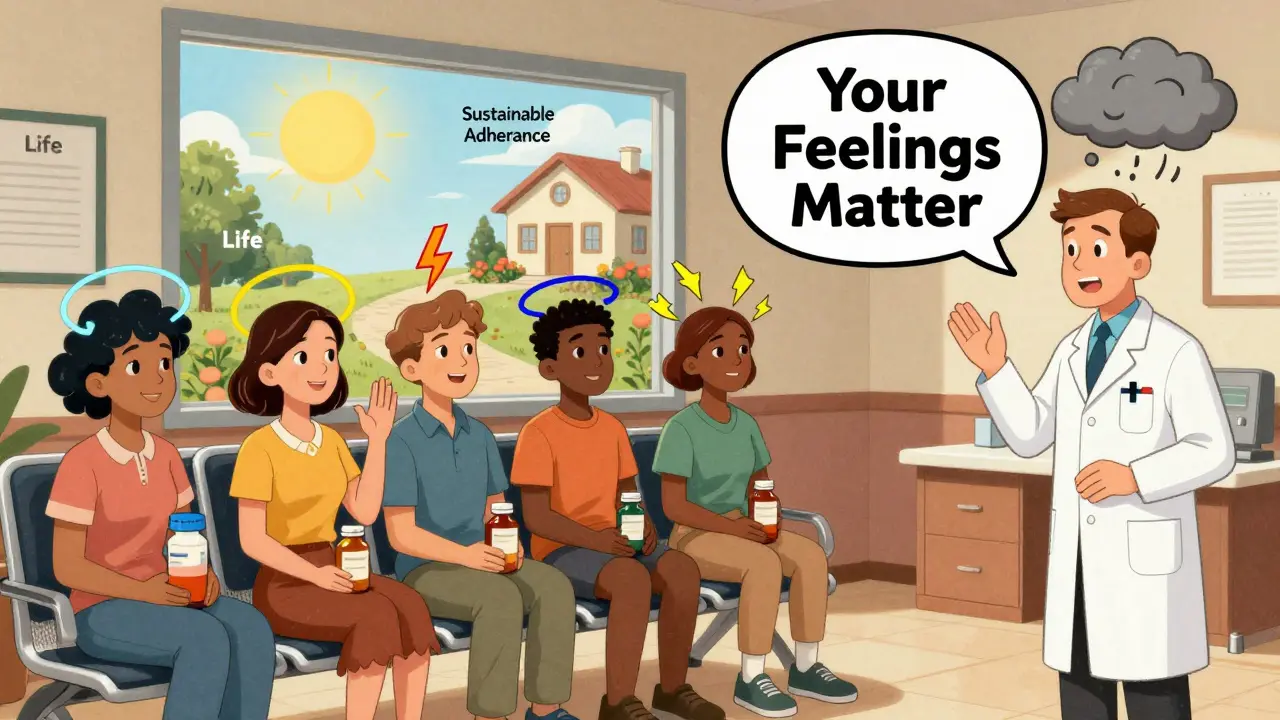
The healthcare system often treats nonadherence like a personal failure. But it’s a system failure. We ask patients to manage complex, lifelong regimens with little support. We don’t train doctors to ask about side effects in a way that invites honesty. We don’t pay pharmacists enough to spend 20 minutes talking to you about how your pill makes you feel. But you’re not broken. You’re not lazy. You’re responding to real, physical discomfort. And the fact that you’re still trying? That’s strength. The goal isn’t perfect adherence. It’s sustainable adherence. Taking your meds in a way that lets you live your life-not just survive them.What Comes Next
The future of medication adherence isn’t about more apps or reminders. It’s about personalized care. AI is already being used to predict who’s likely to drop off based on side effect reports, age, and even social factors. Pharmacies are starting to flag high-risk patients before they stop taking their meds. But until then, your best tool is your voice. Speak up. Ask questions. Demand alternatives. Your health isn’t a checklist. It’s your life.Why do people stop taking their medications even when they know it’s important?
Most people stop because of side effects-nausea, fatigue, dizziness, or mood changes-that make daily life harder than their original condition. Even when they understand the long-term benefits, the short-term discomfort feels too heavy to bear. It’s not forgetfulness. It’s a trade-off they feel forced to make.
Are side effects always temporary, or should I worry if they last?
Some side effects fade in the first few weeks as your body adjusts. But if they’re severe, getting worse, or lasting longer than 4-6 weeks, they’re not temporary. That’s your body’s signal that the medication isn’t right for you. Don’t wait. Talk to your pharmacist or doctor.
Can I switch to a different medication if the side effects are too much?
Yes, absolutely. Many medications have alternatives with different side effect profiles. For example, if one statin causes muscle pain, another might not. If one antidepressant causes weight gain, another might be weight-neutral. Your pharmacist can help you find options that match your tolerance.
Is it safe to skip a dose if I’m feeling sick?
Never skip a dose without checking first. Some meds, like blood pressure or seizure drugs, can cause serious rebound effects if stopped suddenly. Others, like antibiotics, lose effectiveness if not taken on schedule. Always ask your pharmacist what to do if you’re too unwell to take it.
How can I tell if my side effects are from my medication or something else?
Keep a simple log: write down what you took, when, and what you felt-within 1-2 hours after. Do this for 3-5 days. Bring it to your pharmacist. They can spot patterns you might miss. Is the dizziness always after your morning pill? That’s likely the drug. Is it after lunch? Might be low blood sugar.
What’s the most effective way to improve adherence?
The most effective method is a face-to-face conversation with a pharmacist who listens without judgment and helps you adjust your plan. Studies show this boosts adherence to 83%. Phone calls and apps help, but they don’t replace human understanding.
Do generic drugs have more side effects than brand-name ones?
No. Generics contain the same active ingredient and must meet the same safety standards. But sometimes, the inactive ingredients-fillers, dyes, coatings-differ. These can cause reactions in sensitive people. If you react to a generic, ask your pharmacist if switching back or trying a different generic helps.
Can my pharmacist help me reduce the number of pills I take?
Yes. Pharmacists can review all your meds for overlaps, duplicates, or interactions. They can suggest combination pills, adjust dosing schedules, or even recommend stopping ones that are no longer needed. A medication therapy review can cut your daily pills by 20-30% in many cases.



8 Comments
Let’s be real-this whole ‘side effects are normal’ narrative is just pharmaceutical propaganda dressed up as empathy. You think your dizziness is bad? Try living with the fact that your insurance won’t cover the *real* solution: a damn therapist who actually listens. We’re treating symptoms like they’re the disease, not the symptom of a broken system that values profit over people. You don’t need a pill organizer-you need a revolution.
It is imperative to recognize, with the utmost intellectual rigor, that the phenomenon of nonadherence is not merely a behavioral quirk or a failure of individual willpower, but rather a complex, multidimensional outcome of systemic neglect, epistemological dissonance between clinical paradigms and lived experience, and the commodification of healthcare as a transactional service rather than a relational covenant. The data presented, while statistically robust, fails to account for the phenomenological weight of bodily betrayal-when the very substance meant to restore equilibrium instead induces alienation from one’s own physiology. This is not noncompliance; it is somatic resistance.
nah bro just take it at night. problem solved.
I’m from the States but my mom’s from Mexico and she always said, ‘If your body’s screaming, listen.’ We didn’t have fancy apps or pharmacists checking in-but we had abuela’s wisdom. If a pill makes you feel like trash, it’s not you. It’s the pill. My tía switched from her brand-name blood pressure med to a generic and the brain fog lifted in a week. Just because it’s cheaper doesn’t mean it’s worse. Sometimes it’s better.
okay but let’s be honest-most people who skip meds are just lazy and don’t wanna deal with the reality that they’re sick. also, if you’re getting muscle pain from statins, maybe you’re just out of shape. go for a walk. stop blaming Big Pharma for your lack of discipline. also, your pharmacist doesn’t care about your feelings. they’re just scanning barcodes.
Look, I get it. You’re not lazy. You’re not broken. You’re just… existing in a body that’s been weaponized by capitalism. But let’s not romanticize nonadherence as some noble act of bodily autonomy. The truth? Most people stop because they’re too tired to care. The side effects are real, yes-but so is the exhaustion of pretending you’re fighting the system when you’re just trying to get through Tuesday without vomiting. The system’s broken. But your willpower? That’s broken too. And no, a pill organizer won’t fix that.
Oh wow. A 10-page essay on why you can’t take your pills. Did you write this on your iPhone while sipping artisanal oat milk latte and crying over your 3pm cortisol spike? Congrats. You’ve turned medication nonadherence into a TED Talk. Next up: ‘How I Learned to Stop Worrying and Love My Anxiety (And Also My $800 Monthly Co-Pay)’.
I work in a community clinic in Delhi, and what I’ve seen is this: when someone sits with a patient-not as a provider, but as a human-and asks, ‘What does this pill do to your days?’-that’s when change happens. One woman stopped her diabetes meds because they made her dizzy when she walked to the market. We switched her to a once-daily pill, added a small snack before taking it, and now she’s walking 5km every morning. No apps. No guilt. Just care. You don’t need a revolution. You need someone who shows up.
Write a comment