Why Do So Many People Still Doubt Generic Medications?
More than 90% of prescriptions in the U.S. are filled with generic drugs. Yet, nearly half of patients still worry they’re less effective than brand-name versions. Why? Because most people don’t see the science behind them. They see a different shape, a different color, a different name-and assume something’s changed. That’s where infographics come in.
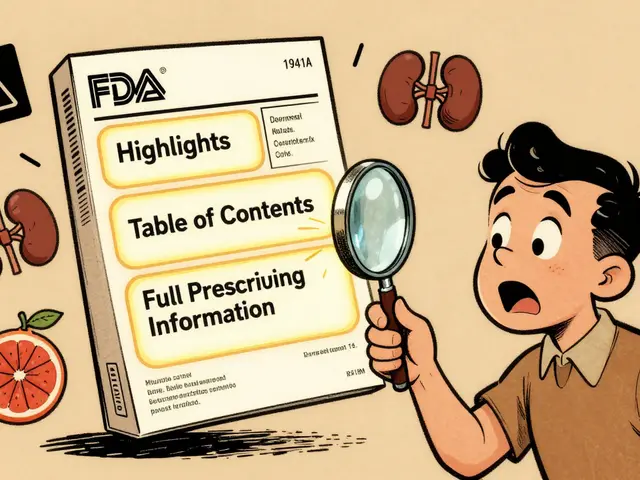
Visual tools like those from the FDA don’t just explain what generics are. They show it. With clear diagrams, side-by-side comparisons, and real data, they turn confusing pharmacy talk into something anyone can understand. And it works. Studies show patients who view these visuals are over three times more likely to grasp that generics are just as safe and effective.
What Makes a Generic Drug the Same?
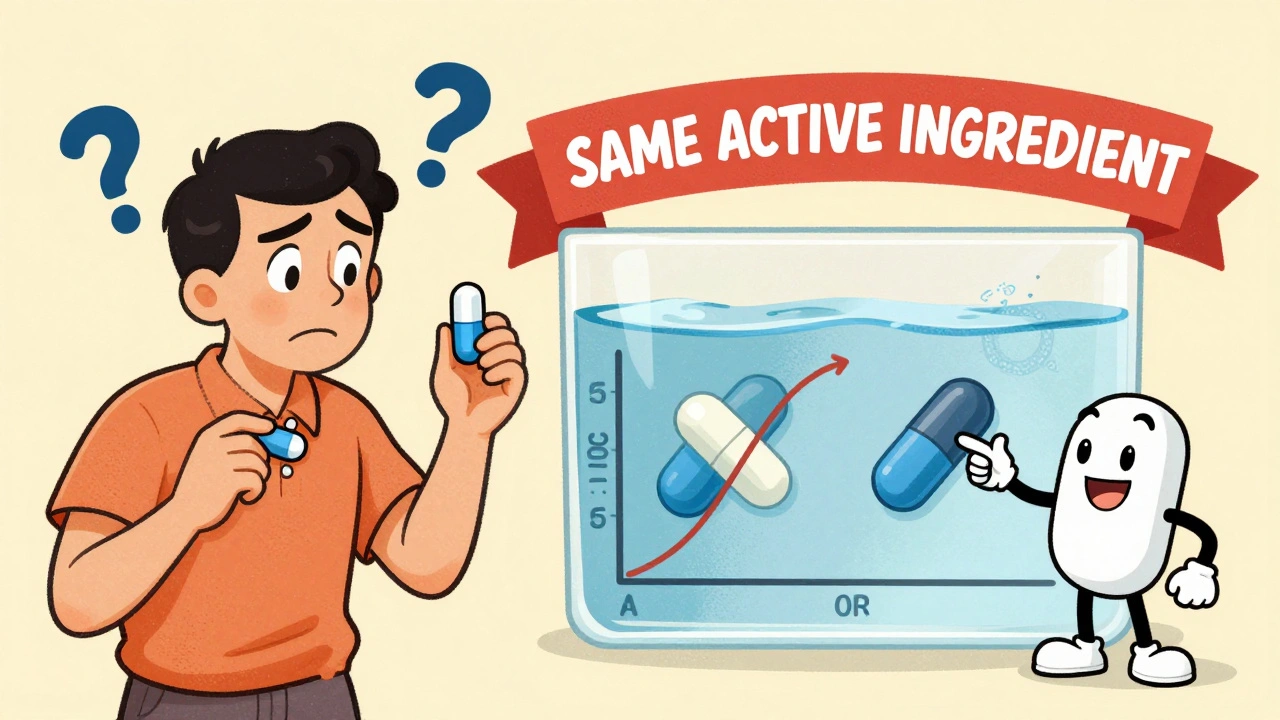
The biggest myth? That generics are cheaper because they’re weaker. That’s not true. A generic drug has the same active ingredient, in the same strength, and works the same way in your body as the brand-name version. The FDA requires proof of this through bioequivalence studies-meaning the drug enters your bloodstream at the same rate and to the same extent.
One of the most powerful FDA infographics uses dissolution rate graphs to show this. Imagine two pills dissolving in water. The brand and the generic dissolve at nearly identical speeds. That’s what matters. Your body doesn’t care if the pill is blue or white. It cares about what’s inside-and that’s identical.
Even inactive ingredients (like fillers or dyes) are regulated. They’re not harmful. They just help the pill hold its shape or make it easier to swallow. The FDA checks these too. And if you’re allergic to something? That’s listed clearly on the label. The infographic doesn’t hide it-it explains it.
How the FDA Ensures Quality
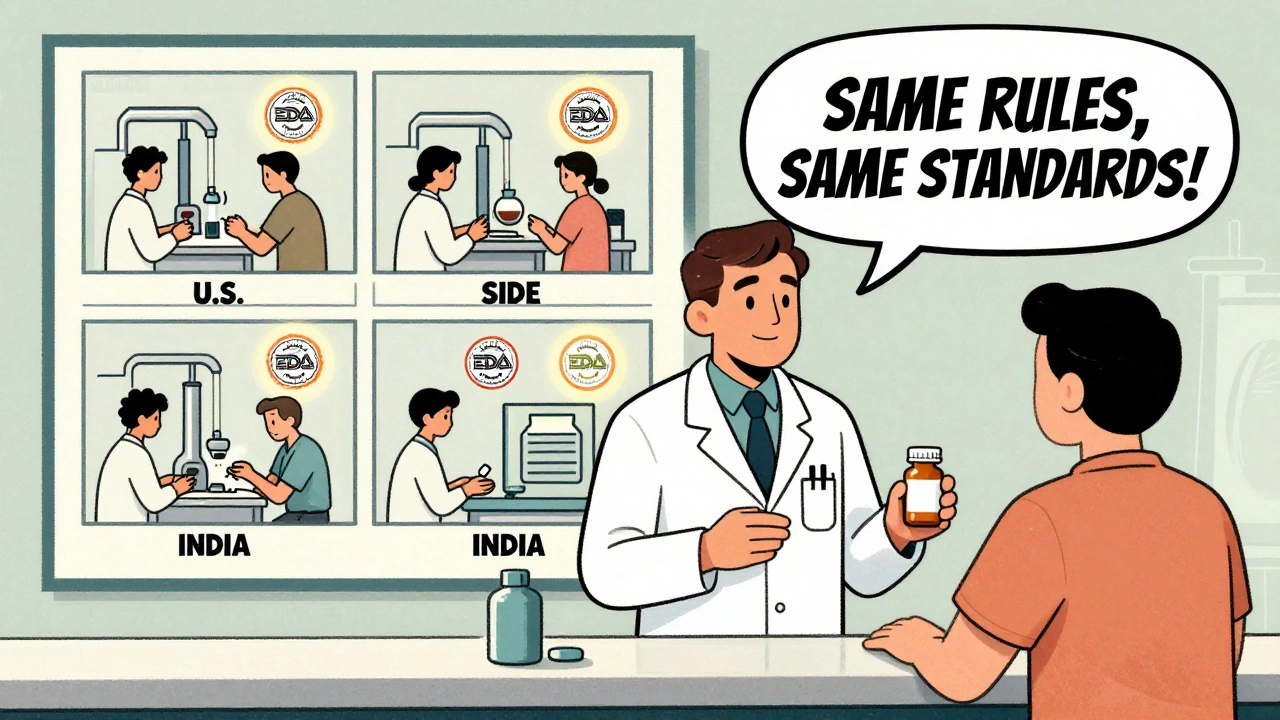
Some people think generics are made in lower-quality factories. That’s false. The same companies that make brand-name drugs often make the generics too. And every single facility-whether in the U.S., India, or Germany-must pass the same strict FDA inspections.
The FDA’s infographic on postmarketing surveillance shows how they keep watching after a drug hits the market. If a batch causes unexpected side effects, they track it down fast. There’s no special rule for generics. They’re held to the same standard as the original. In fact, over 1.7 million copies of these infographics were printed and downloaded in 2022 alone, because people needed to see the proof.
Each infographic goes through patient testing before release. At least 30 people from different backgrounds review them. If more than 15% don’t understand a key point, it gets rewritten. That’s why comprehension scores average 87%. That’s not luck. That’s design.
Why Visuals Work Better Than Brochures
Text-heavy pamphlets get tossed. Infographics get printed and pinned to the fridge. Why? Because visuals stick. A 2021 study in the Journal of Health Communication found that 89% of patients correctly understood bioequivalence when shown the FDA’s dissolution graphs. Only 67% got it from text alone.
Pharmacists report the same thing. At Kaiser Permanente, 78% of staff use the FDA’s ‘What Makes a Generic the Same as a Brand-Name Drug?’ infographic during consultations. One pharmacist said, ‘I’ve printed this and keep it behind the counter-it cuts counseling time in half.’
It’s not just about speed. It’s about trust. When patients see a graph showing identical absorption rates, they stop asking, ‘Is this good enough?’ and start asking, ‘How much will I save?’ That’s the goal.
Who Uses These Infographics-and How?
They’re not just for patients. Doctors use them to explain why switching to a generic won’t hurt their treatment. Nurses hand them out in clinics. Pharmacies display them in waiting rooms. Even insurance companies now require them as part of member education.
Since 2022, Epic Systems-the biggest electronic health record platform-has included FDA infographics directly in patient portals. Over 450,000 people viewed them in just six months. That’s not a small number. That’s a shift in how care is delivered.
Health systems that use the full FDA Toolkit (which includes sample social media posts and printable cards) see a 22% increase in generic acceptance within six months. That’s not just better patient understanding. That’s real cost savings-for individuals and the system.
Where the Current Tools Fall Short
Not everything is perfect. Experts like Dr. Aaron Kesselheim from Harvard warn that some infographics oversimplify things. For drugs like warfarin or levothyroxine-where tiny changes in dosage can matter-the visuals don’t always show the nuance. That’s dangerous if patients assume all generics are exactly interchangeable without pharmacist input.
The Institute for Safe Medication Practices says current tools don’t clearly flag which generics need special attention. That’s a gap. And while the FDA offers all materials in Spanish, other groups like GTMRx only translate 30% of theirs. That leaves millions of non-English speakers without clear guidance.
Another blind spot? Health equity. Only one FDA infographic, the ‘Generic Drugs and Health Equity Handout,’ addresses how generics reduce access gaps for Black and Hispanic patients-who report higher concerns about quality. That’s critical. If we want everyone to benefit, we need visuals that speak to everyone’s fears, not just the general ones.
What’s Next for Generic Drug Education?
The next wave is interactive. In early 2023, GTMRx launched digital infographics where you can plug in your medications and get a personalized risk assessment. Early results show 27% better understanding than static versions.
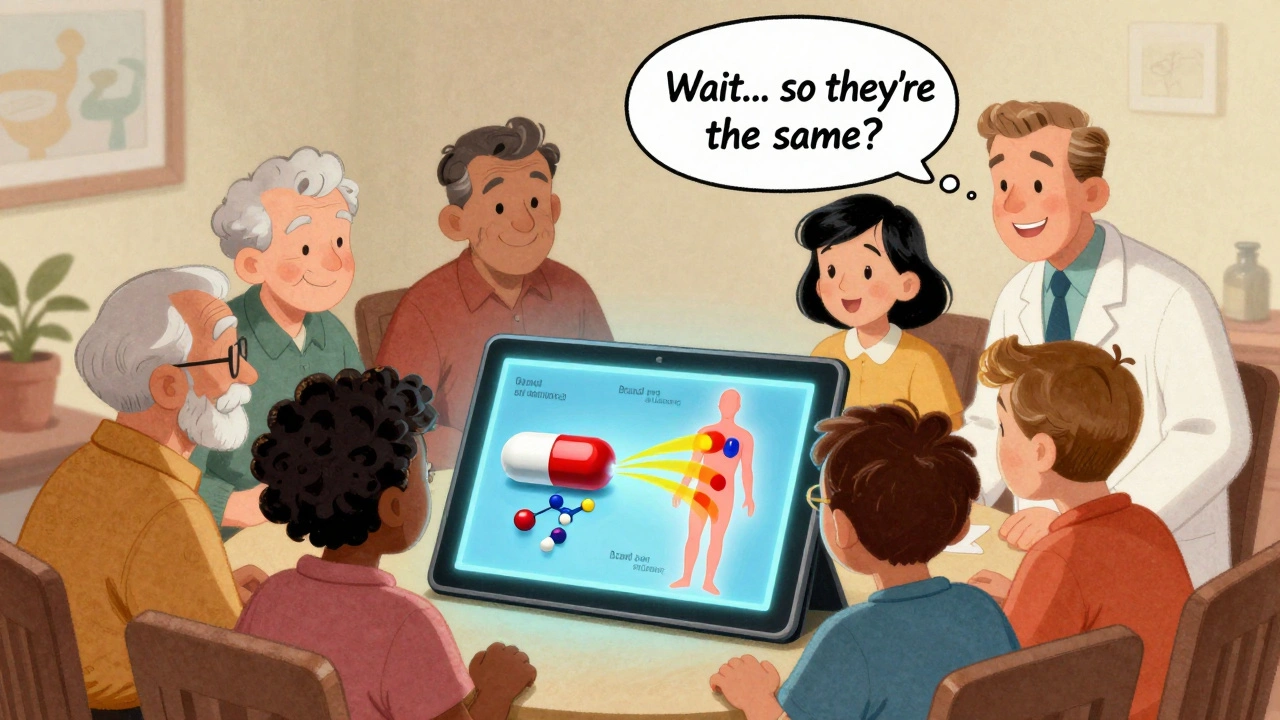
The FDA is testing augmented reality. Imagine scanning your pill bottle with your phone and seeing a 3D model of how the active ingredient behaves in your body-side by side with the brand-name version. That prototype was shown in 2023. It’s coming soon.
By 2028, the Congressional Budget Office projects generic use could hit 95%. That means more savings-$200 billion a year. But only if people trust them. And trust comes from clarity, not just claims.
How to Use These Tools Today
You don’t need to be a tech expert. Go to the FDA’s website. Search ‘Generic Drugs Infographics.’ Download the ones you need. Print them. Keep them in your wallet. Show them to your doctor or pharmacist next time you’re offered a generic.
Healthcare providers: Add them to your patient portal. Print a few copies for your waiting room. Use the 15-minute training module on the FDA’s site-it’s free and takes less time than your coffee break.
And if you’re a patient who’s ever hesitated to take a generic? Look at the dissolution graph. See the numbers. Ask your pharmacist: ‘Can you show me how this is the same?’ They’ll thank you for asking.
Where to Find the Best Resources
- FDA Generic Drug Infographics - The gold standard. Free, accurate, multilingual, and backed by patient testing. Start here.
- GTMRx Institute - Great for complex medication regimens. More clinical depth, less accessibility.
- BeMedWise - Strong for medication tracking, but only covers generics in 3 of 15 infographics.
Stick with the FDA for the clearest, most trusted visuals. Everything else builds on them.
Final Thought: It’s Not About the Pill. It’s About the Trust.
Generics aren’t a compromise. They’re a smart choice. And visual education tools are finally making that clear. The data, the patient feedback, the cost savings-it’s all there. What’s missing is the belief.
Infographics fix that. Not with words. With pictures. With graphs. With proof you can see.
Next time you’re handed a generic, don’t just take it. Look at it. Ask about it. And if you’re unsure? Find the infographic. The answer is there.
Are generic drugs really as effective as brand-name drugs?
Yes. The FDA requires generics to have the same active ingredient, strength, dosage form, and route of administration as the brand-name version. They must also prove they work the same way in the body through bioequivalence testing. Over 90% of prescriptions in the U.S. are for generics, and studies show they produce the same clinical results.
Why do generic pills look different from brand-name ones?
By law, generics can’t look exactly like brand-name drugs because of trademark rules. That’s why the shape, color, or markings are different. But the active ingredient-the part that treats your condition-is identical. The differences are only in inactive ingredients like dyes or fillers, which don’t affect how the drug works.
Are generic drugs made in lower-quality factories?
No. The FDA inspects all manufacturing facilities-whether they make brand-name or generic drugs-with the same standards. Many brand-name companies even produce generics under different labels. The FDA found no difference in inspection violations between brand and generic plants in their 2022 report.
Can I trust generics for serious conditions like heart disease or thyroid issues?
For most people, yes. But for drugs with a narrow therapeutic index-like warfarin, levothyroxine, or phenytoin-small changes in blood levels can matter. That’s why pharmacists are trained to monitor these closely. The FDA’s infographics don’t always highlight this nuance, so always talk to your doctor or pharmacist if you’re on one of these medications.
Where can I find free, reliable infographics about generics?
The U.S. Food and Drug Administration (FDA) offers a free, publicly available library of FDA-approved infographics on their website. These include clear visuals on how generics work, how they’re approved, and how they save money. All materials are available in English and Spanish, and are designed for an 8th-grade reading level.
Do these infographics work for non-English speakers?
The FDA provides all of its generic drug infographics in Spanish under the title ‘Medicamentos Genéricos.’ Other organizations like GTMRx offer far fewer translations. For non-English speakers, the FDA’s Spanish materials are the most complete and reliable resource available.
How do I know if my pharmacy is giving me a true generic?
All FDA-approved generics must be labeled with the generic name and the manufacturer’s name. You can check the FDA’s online database of approved generics to confirm your medication is listed. If you’re unsure, ask your pharmacist to show you the FDA infographic on ‘What Makes a Generic the Same as a Brand-Name Drug?’-it explains exactly how to verify.
Can I use these infographics if I’m on multiple medications?
Yes. While the FDA’s infographics focus on single-drug equivalence, they’re still useful for understanding the basics. For complex regimens, the GTMRx Institute offers interactive tools that let you input your medications and see how generics fit into your overall treatment plan. Always talk to your pharmacist about potential interactions, regardless of whether a drug is generic or brand-name.



10 Comments
Bro. I had a heart attack last year and they switched me to generic metoprolol. I was terrified. Then I saw that FDA dissolution graphic-same curve, same numbers. I printed it and taped it to my medicine cabinet. Now I laugh when people say generics are 'fake.' They're not. They're just cheaper. And that’s the point.
I used to think generics were sketchy too. Then I worked at a pharmacy for a year. Saw the same factories making both. Saw the FDA inspection reports. Saw patients save $80 a month. I stopped arguing. Started handing out the infographics. Now my grandma asks me to print her a new one every time she gets a refill.
Yo I’m from Mumbai and we got generics everywhere here-like, 95% of meds. But guess what? We don’t have the FDA’s slick graphics. We got flyers with tiny fonts and a photo of a pill that looks like a M&M. No wonder folks are scared. The FDA stuff? It’s next level. Someone needs to translate this into Hindi, Tamil, Bengali… seriously. My aunt still thinks generics are ‘Indian water pills.’
Ugh. Another feel-good infographic post. You think a pretty graph fixes the fact that generics sometimes cause different side effects? I had a cousin who went into seizures after switching to a generic levothyroxine. The FDA doesn’t tell you that. Your ‘trust’ is built on ignorance.
Actually, Vivian, that’s exactly why the FDA’s newer infographics include the narrow therapeutic index warning now. They added a red box with ‘Consult Your Pharmacist’ under warfarin and levothyroxine after patient feedback. The tool isn’t perfect-but it’s evolving. And it’s still better than the silence we had before.
My mom’s on warfarin. She refused generics for years because of that one scary story. Then I showed her the FDA dissolution graph-side by side, identical curves. She stared at it for 10 minutes. Then she said, ‘So it’s not a gamble?’ I said, ‘No. It’s math.’ She’s been on generic for six months now. Saved $400. No issues. The graph didn’t lie.
So the FDA makes infographics so we don’t have to think. Cool. Next they’ll give us a sticker for our fridge that says ‘Pill = Safe. No Questions. Trust The Graph.’ Genius. I love how we’ve outsourced critical thinking to a PowerPoint slide. Meanwhile, the real issue? Pharma monopolies and insurance middlemen. But sure. Let’s just color-code the lie.
I get where Jean’s coming from. But honestly? If a dumbass infographic gets someone to stop panicking about a $5 pill instead of a $150 one… I’ll take it. People don’t need a lecture on market capitalism. They need to know their heart meds won’t kill them because they’re blue instead of red. Sometimes simple is the most radical thing.
Trust is built on clarity. Clarity is built on evidence. Evidence is built on visuals. The FDA’s infographics are not a replacement for professional advice. They are a bridge. And bridges are necessary when the chasm is wide.
Just printed the one about generic vs brand absorption. Taped it to my fridge next to the grocery list. My 14-year-old saw it and asked, ‘Why do people think the blue pill is worse?’ I didn’t answer. Just smiled. That’s the win right there.
Write a comment