When ALS Progresses, Breathing and Eating Become the Biggest Battles
ALS doesn’t just steal movement. It slowly takes away the ability to breathe and swallow. By the time someone with ALS starts struggling to catch their breath after walking across the room, or needs to eat pureed food because chewing feels like too much work, the clock is ticking. But here’s what most people don’t know: two simple, noninvasive strategies-noninvasive ventilation and proper nutrition support-can add months, sometimes over a year, to life while keeping people more alert, comfortable, and in control.
It’s not magic. It’s science. And it’s backed by years of data from hospitals, registries, and real patient experiences. The American Academy of Neurology, the Canadian Thoracic Society, and European neurology groups all agree: starting these two interventions early makes a measurable difference. Not just in survival-but in how someone spends those extra months.
How Noninvasive Ventilation Keeps People Breathing Without a Tube
ALS weakens the diaphragm-the main muscle that pulls air into the lungs. As it gets weaker, people start waking up with headaches, feeling exhausted by noon, or needing extra pillows to sleep. These aren’t just inconveniences. They’re signs the body is struggling to get enough oxygen and clear out carbon dioxide.
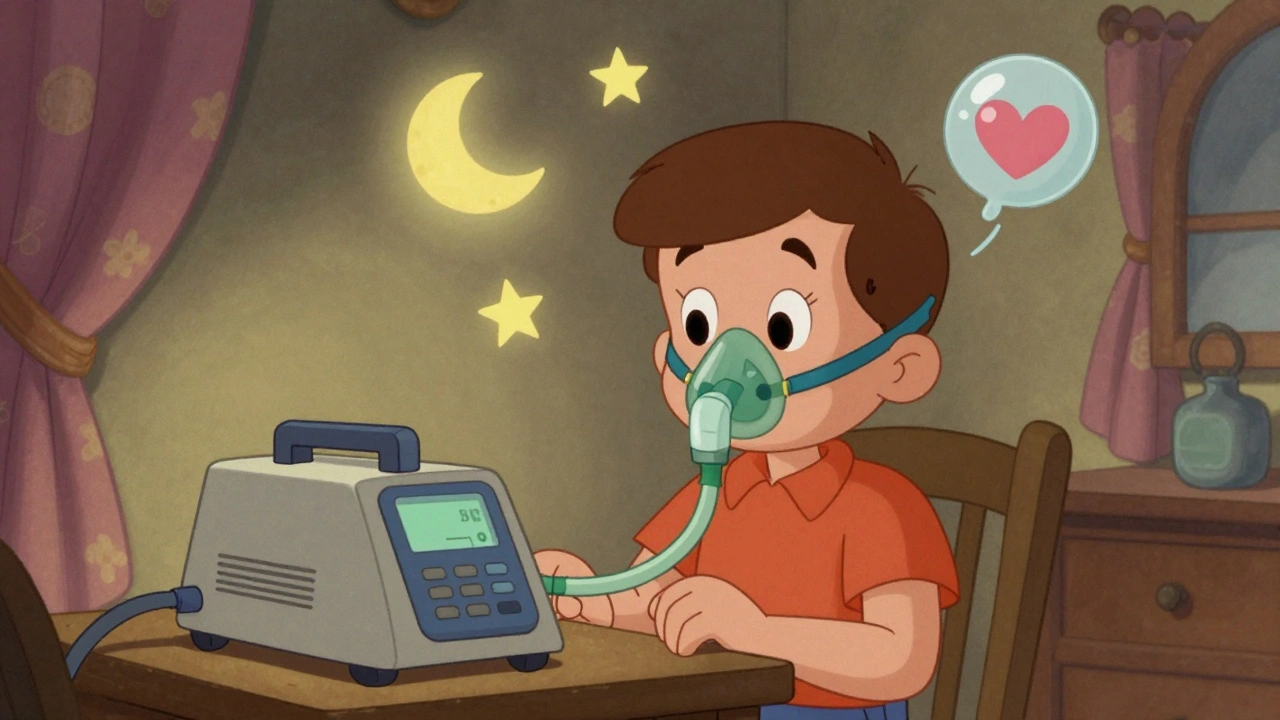
Noninvasive ventilation (NIV) uses a mask-usually over the nose or both nose and mouth-to deliver pressurized air. It doesn’t require a tracheostomy. No surgery. No open airway. Just a machine, a mask, and consistent use.
The most common device is a BiPAP machine. It gives a higher pressure when you breathe in (IPAP), then lowers it when you breathe out (EPAP). This helps push air into tired lungs and makes exhaling easier. For many, it’s set to run only at night at first. But as ALS moves forward, some patients switch to portable ventilators like the Philips Trilogy 100. These are lighter, run on batteries, and can be used during the day. They weigh under 12 pounds and can last 8-12 hours on a charge-meaning someone can sit in a chair, watch TV, or even go outside with support.
Studies show NIV can extend survival by an average of 7 months. One 2006 study found people who used NIV lived 453 days on average-nearly twice as long as those who didn’t. The key? Using it for at least 4 hours a day. That’s not always easy at first. Many patients struggle with mask leaks, skin sores, or the feeling of air pressure. But most adapt. One ALS forum survey found 87% of users reported fewer morning headaches within four weeks. Seventy-nine percent said they slept better. Seventy-two percent felt more awake during the day.
And here’s a myth busted: bulbar weakness (trouble speaking or swallowing) doesn’t make NIV less effective. A 2013 study showed people with bulbar ALS got the same survival benefit as those without it. The mask doesn’t need to work perfectly to help. Even partial use adds time.
When to Start NIV-And Why Waiting Costs Time
Guidelines say to start NIV when forced vital capacity (FVC) drops below 80% of predicted, or when symptoms like daytime sleepiness, morning headaches, or shortness of breath appear. That’s early. Too early for some insurance companies.
In the U.S., many insurers won’t approve NIV unless FVC is below 50%, or sniff nasal pressure is under 40 cm H₂O. That’s a problem. By the time someone hits those numbers, the lungs are already failing. The delay can cost months of quality life.
Real-world data from ALS clinics shows patients who start NIV earlier-based on symptoms, not just numbers-live longer and report better daily function. One 2019 study tracked 120 ALS patients and found those who began NIV at FVC 70% had better survival than those who waited until FVC 45%. The difference? Nearly 5 months.
Initial setup takes time. Respiratory therapists often spend 1.5 hours per patient just fitting masks, adjusting pressure, and teaching how to use the machine. About one in three patients need three or more visits before they’re comfortable. But once they get there, adherence skyrockets. After 30 days, most use NIV 20+ days a month. After a year, that jumps to 27-30 days. The biggest barrier isn’t the machine-it’s the fear of it.

Nutrition Isn’t About Calories-It’s About Timing
Weight loss in ALS isn’t just about eating less. It’s about burning more. Muscles that can’t move still consume energy. Swallowing becomes harder. Food gets stuck. Chewing tires you out. The result? People lose 10-15% of their body weight in a few months.
That weight loss isn’t just uncomfortable. It’s deadly. Every 1% of body weight lost increases the risk of death by 3%. A 2006 study found people who lost more than 10% of their weight survived 4 months less than those who maintained it.
The solution? Percutaneous endoscopic gastrostomy-better known as a PEG tube. It’s a small tube placed through the abdomen directly into the stomach. It’s done under light sedation. Takes less than 30 minutes. No major surgery. No long hospital stay.
But here’s the catch: timing matters. The AAN recommends placing the PEG tube before FVC drops below 50% or BMI falls under 18.5. Why? Because once breathing is severely weak, the risk of aspiration during the procedure goes up. And once you’re too thin, your body can’t heal well.
Studies show PEG tubes stop weight loss dead. One trial found patients who got a PEG lost only 0.5% of their weight over six months-compared to 12.6% in those who didn’t. And survival? They lived an extra 120 days on average.
People worry about losing the joy of eating. But PEG doesn’t mean you stop eating by mouth. You still taste food, enjoy meals with family, and eat what you can. The tube just ensures you get enough calories, protein, and fluids when swallowing isn’t safe or enough.
Some patients delay PEG because they think it’s a sign of giving up. But the opposite is true. It’s a way to stay strong longer-to keep up with NIV, to avoid infections from poor nutrition, to be present for more birthdays, holidays, and quiet mornings.
Why Doing Both Together Makes the Biggest Difference
NIV and PEG aren’t just helpful alone. Together, they’re powerful.
A 2021 analysis of ALS registries across North America, Europe, and Australia found that patients who received both interventions lived 12.3 months longer on average than those who got neither. That’s more than a year of life-more time with family, more control, more dignity.
It’s not just about living longer. It’s about living better. People on NIV report less fatigue. They think more clearly. They can talk more. Those with PEG tubes avoid hospitalizations from dehydration or malnutrition. They have fewer lung infections. Their caregivers have less stress.
One ALS clinic in Exeter tracked 42 patients over two years. Those who started NIV and PEG within 3 months of noticing breathing or swallowing changes had a 78% survival rate at 18 months. Those who waited? Only 41%.
The multidisciplinary ALS clinic model-where neurologists, respiratory therapists, dietitians, and speech therapists work together-isn’t a luxury. It’s the standard for a reason. When these interventions are planned, not rushed, outcomes improve dramatically.
What Doesn’t Work-and What to Avoid
Not all advice is helpful. Here’s what to skip:
- Waiting until you’re too weak to use NIV. If you’re gasping for air, the mask won’t help as much.
- Delaying PEG because you’re afraid of losing “natural” eating. The tube doesn’t take away food-it gives you more of it.
- Using oxygen alone instead of NIV. Oxygen doesn’t fix CO2 buildup. In fact, it can make it worse.
- Trying to manage nutrition with shakes alone. Most people can’t drink enough to stay weight-stable. PEG is more reliable.
- Ignoring mask fit. Skin breakdown from a poorly fitted mask can lead to infection and NIV abandonment.
Also, don’t assume NIV is only for nighttime. As ALS progresses, daytime use becomes necessary. Portable ventilators like the Trilogy 100 make this possible. Patients who use NIV during the day report better energy, less brain fog, and fewer trips to the ER.

Real People, Real Results
One man from Manchester started NIV when his FVC was 72%. He had trouble sleeping, woke up with headaches, and lost 8 pounds in 3 months. He got a PEG tube 2 months later. Within a week, his headaches were gone. He gained back 3 pounds in a month. He traveled to see his grandchildren last Christmas-something he thought he’d never do again.
A woman in Leeds waited until her FVC was 40% before starting NIV. She had three hospital visits for pneumonia in six months. She got her PEG tube after her fourth admission. She lived another 14 months. She spent most of that time at home, reading to her grandkids, watching her garden grow.
These aren’t outliers. They’re the result of timely, consistent care.
What Comes Next?
Research is moving fast. New algorithms are being tested to predict who will benefit most from early NIV. Wearable sensors are being developed to track breathing patterns at home. Some clinics are now using CO2 monitors to adjust ventilation in real time.
But for now, the best tools are simple: a mask, a machine, and a tube. They’re not glamorous. They’re not flashy. But they work.
If you or someone you love has ALS, ask your care team: “Have we talked about NIV yet?” and “Is it time to consider a PEG tube?” Don’t wait for a crisis. Don’t wait for insurance rules. The best time to start is before you’re too tired to ask.
Can NIV be used during the day, or just at night?
Yes, NIV can and often should be used during the day as ALS progresses. While many start with nighttime use only, portable ventilators like the Philips Trilogy 100 are designed for daytime mobility. These devices run on batteries, weigh under 12 pounds, and allow patients to sit up, talk, or even go outside while receiving ventilation support. Daytime use helps reduce fatigue, improve alertness, and prevent dangerous carbon dioxide buildup. Studies show patients who use NIV for more than 4 hours daily-day and night combined-have the best survival outcomes.
Does having trouble swallowing mean NIV won’t work?
No. Bulbar weakness (trouble speaking or swallowing) does not reduce the effectiveness of noninvasive ventilation. A 2013 study published in the Journal of Neurology found that ALS patients with bulbar symptoms had the same survival benefit from NIV as those without. The key is proper mask fit and support from a respiratory therapist. Many patients with speech difficulties use nasal masks or full-face masks successfully. NIV helps with breathing-it doesn’t rely on swallowing ability.
When is the best time to get a PEG tube?
The best time is before your forced vital capacity (FVC) drops below 50% or your BMI falls under 18.5 kg/m². Waiting until you’re severely underweight or having trouble breathing increases the risk of complications during the procedure. Studies show that placing the PEG tube early helps stabilize weight, prevents dangerous weight loss, and adds about 120 days to survival. It’s not a sign of giving up-it’s a way to stay stronger longer and enjoy meals with family while ensuring you get enough nutrition.
Will I still be able to eat regular food after getting a PEG tube?
Yes. A PEG tube doesn’t mean you stop eating by mouth. You can still taste food, enjoy meals with loved ones, and eat what you can safely swallow. The tube simply delivers nutrition directly to your stomach when chewing or swallowing becomes too tiring or risky. Many people use the tube for supplements or full meals at night and continue eating small bites during the day. It gives you control-not less of it.
How much does NIV cost, and is it covered by insurance?
Standard BiPAP machines cost between $1,200 and $2,500, with masks needing replacement every 3-6 months at $100-$300 each. More advanced portable ventilators like the Trilogy 100 cost $6,000-$10,000 but offer features like battery power and daytime use. In the U.S., insurance often requires strict criteria like FVC below 50% for coverage, which can delay access. In the UK and Canada, guidelines are more proactive, and coverage is usually approved based on symptoms or FVC under 80%. Always check with your care team and local ALS association-they often help navigate insurance and equipment access.
Final Thoughts: It’s Not About Extending Life-It’s About Living It
ALS changes everything. But it doesn’t have to take away your ability to be present. Noninvasive ventilation and proper nutrition aren’t just medical interventions. They’re tools for connection-for hearing a grandchild’s laugh, watching the sunset from your porch, or finishing a book you’ve been reading for years.
The science is clear. The tools are available. The biggest obstacle isn’t the technology. It’s the fear of using it too soon. Don’t wait until you’re too weak to ask. Ask now. Start early. And hold on to the moments that matter.


16 Comments
OMG this is literally LIFE-CHANGING 💖 I had no idea NIV could be used during the day!! I just saw my cousin with ALS on her Trilogy 100 while she was watching Netflix in her pajamas and crying happy tears 🥹✨ She said she finally felt like herself again. Why isn’t this on every news channel??
This is why America needs to stop being soft. You want to live longer? Stop whining about masks and get the tube in. We don’t have time for your ‘fear of giving up’ nonsense. In my dad’s day, you either fought or you died. No PEG? No NIV? Then you weren’t trying. #AmericanStrong
YOU GOT THIS. 🙌 I know it feels overwhelming, but every hour of NIV, every drop through the PEG - it’s a victory. Your body is still fighting. You’re still here. And that’s everything. I’ve seen people go from bedridden to laughing at TikToks with this combo. Don’t wait. Start now. You’re stronger than you think.
i just wanted to say thank you for writing this. as someone whose mom is from mexico and now lives with als, i saw how scared she was of the mask at first. but after 3 weeks, she’d fall asleep with it on while watching telenovelas. the pega tube? she calls it her ‘secret energy boost’. we still eat tamales together, just slower. it’s not about losing tradition - it’s about keeping love alive. 🌎❤️
The clinical data presented here is compelling and aligns with current guidelines from the American Academy of Neurology. However, access disparities remain a significant concern, particularly in rural and underserved communities where respiratory therapy support is limited.
I appreciate the thoroughness of this post. It is imperative that medical interventions such as noninvasive ventilation and percutaneous endoscopic gastrostomy be initiated in accordance with established physiological parameters, not merely symptomatic thresholds. The data supporting early intervention is unequivocal.
The neurophysiological cascade in ALS is a perfect storm of motor neuron attrition leading to diaphragmatic inefficiency and bulbar dysphagia - which then triggers a catabolic state via reduced caloric intake and increased resting energy expenditure. NIV mitigates hypercapnic respiratory failure by augmenting alveolar ventilation, while PEG circumvents the energy-costly act of mastication and swallowing, effectively decoupling nutritional status from neuromuscular decline. The 12.3-month survival extension isn’t magic - it’s biomechanical optimization. But here’s the kicker: most clinicians wait until FVC <50% because they’re scared of ‘overmedicalizing’ - but that’s just paternalism dressed as compassion. The patient’s autonomy isn’t served by delay - it’s murdered by inertia.
This is actually really helpful. My uncle just started NIV last month and he’s been a totally different person - less foggy, way more talkative. I didn’t realize how much CO2 buildup was dragging him down. Also, the part about still eating food normally with a PEG? That’s huge. We were so scared he’d lose the joy of meals.
Let’s be real - the survival benefit is statistically significant but clinically marginal. Most of these patients are still dying within 18 months. The real cost? Emotional labor on caregivers, equipment maintenance, insurance battles. And don’t get me started on how often these machines break down mid-night. This isn’t a cure. It’s a prolonged goodbye.
I’ve spent years in ALS support groups and I can tell you - the people who start NIV and PEG early aren’t just living longer. They’re living fuller. They’re reading bedtime stories. They’re attending graduations. They’re laughing at bad jokes with their grandkids. It’s not about the numbers. It’s about the moments. And those moments? They’re priceless. Don’t let fear steal your time. Ask for help. Now.
Thank you for writing this with such care. I’ve been a caregiver for five years and I’ve seen too many families delay these interventions out of fear or guilt. But the truth is - using these tools isn’t giving up. It’s choosing to be present. I’m so glad the science is finally catching up to what we’ve known in our hearts.
NIV and PEG are just the beginning. Wait till you find out how Big Pharma is hiding the real cure - the one they found in 2018 at Johns Hopkins. They’re keeping it quiet because wheelchairs and ventilators are more profitable than a real treatment. You think this is science? It’s a business model. They want you dependent. Don’t trust the system. Ask for the hidden protocol
I remember when my sister got her BiPAP. She was so afraid of the noise - thought it would keep her awake. But after the first week, she said it was like hearing the ocean. Quiet. Steady. Safe. And the PEG? We started with just water, then broth, then mashed potatoes. She still eats a bite of chocolate every Sunday. It’s not about replacing food - it’s about protecting the joy of it. I’m so glad this exists.
So let me get this straight - you’re telling me the government and pharma are pushing these machines because they’re making billions off ALS patients? And the ‘early intervention’ thing? That’s just a marketing ploy to get people hooked on equipment. I’ve seen the videos - those ‘happy patients’ are all actors. They’re drugged. The real cure is ozone therapy and magnesium chloride. But you won’t hear that from your neurologist, will you?
The statistical analysis presented is methodologically sound, particularly the multivariate survival regression controlling for age, bulbar onset, and baseline BMI. However, the generalizability of the Exeter cohort findings may be limited by selection bias, as these patients were under active multidisciplinary care - a model not universally accessible.
i just wanted to say thank you for this. my dad started niv last week and i was so scared he’d hate it. but he said it felt like he could finally breathe again. i keep forgetting to spell p-e-g right. sorry. but this means the world to us.
Write a comment