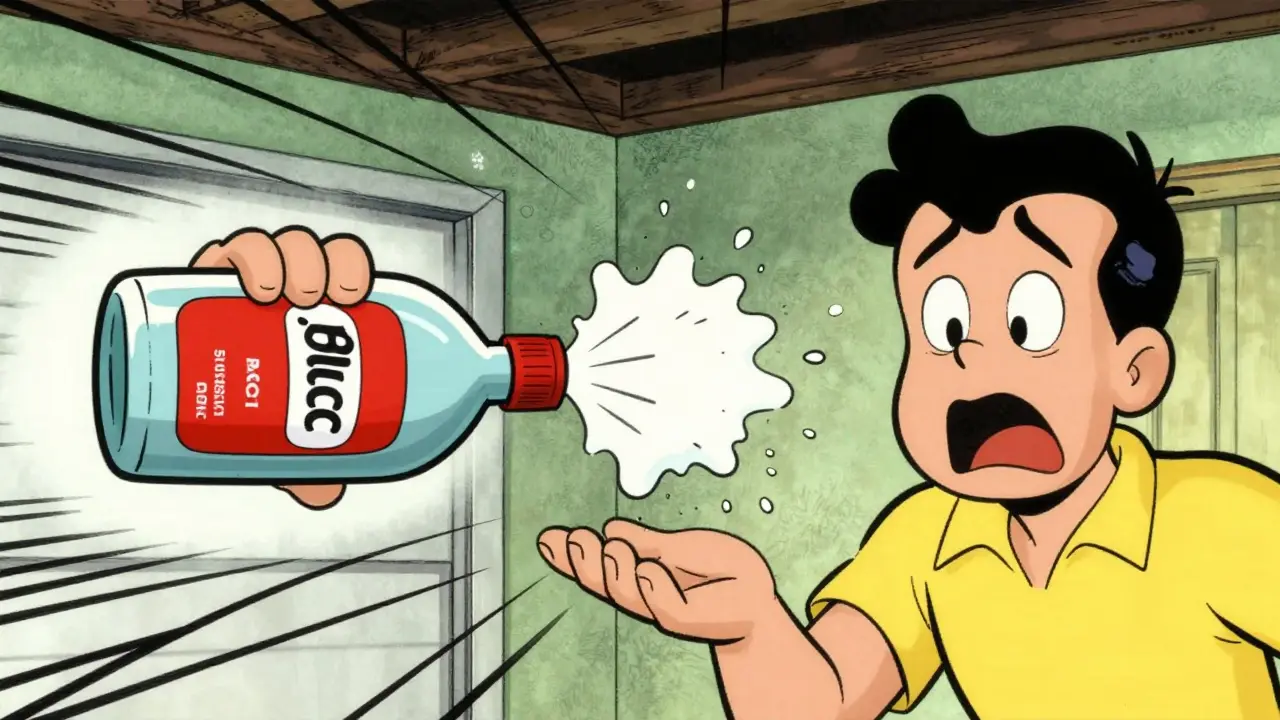
Imagine a bottle of bleach tipping over in your garage. It doesn't just hit the floor; it sprays directly into your face. Your eyes burn instantly. Panic sets in. In that split second, you have a choice that determines whether you keep your sight or lose it forever. The difference isn't luck-it's knowing exactly what to do before the ambulance even arrives.
Chemical eye injuries are not rare accidents. They account for roughly 11.5% to 22.5% of all eye trauma cases treated in emergency rooms. But here is the good news: research shows that if you start flushing your eye within 10 seconds of exposure, you can reduce the risk of permanent vision loss by 76%. That is a massive statistic. It means immediate action is the single most powerful tool you have. This guide breaks down the exact steps, timing, and techniques to neutralize chemicals and protect your eyesight when every second counts.
The Golden Rule: Flush Immediately
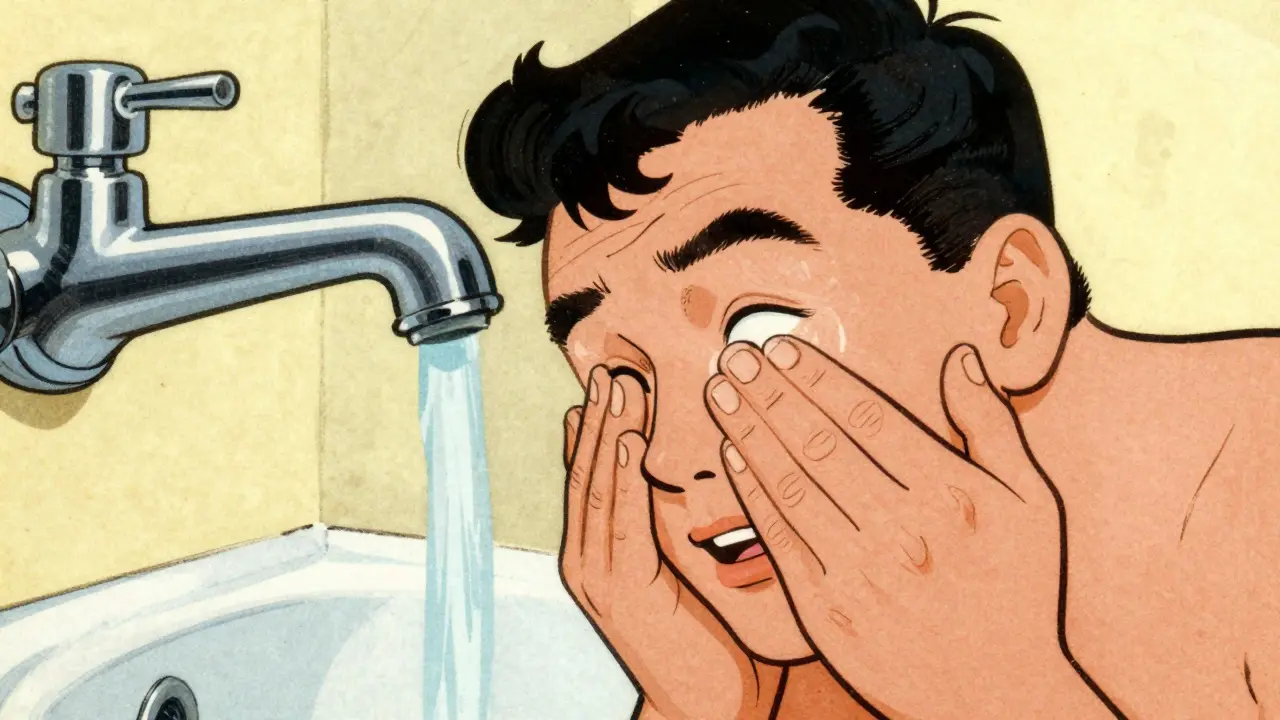
When a chemical hits your eye, time is tissue. Corrosive substances begin destroying the cornea-the clear front window of your eye-within seconds. The goal of first aid is simple: dilute and wash away the chemical agent as fast as possible. Do not wait for symptoms to worsen. Do not search for a specific medical solution at home. Water is your best friend right now.
Copious irrigation is the continuous flooding of the eye with large volumes of water to remove hazardous substances. According to Dr. Paul T. Finger, an ophthalmologist at New York University, the speed and duration of this initial irrigation are the deciding factors in visual outcomes. Many people make the mistake of using small amounts of water or stopping too soon because the pain subsides slightly. This is dangerous. The eye must be flooded continuously to ensure no residue remains trapped under the eyelids.
Here is how to perform immediate irrigation correctly:
- Start immediately: Do not drive to the hospital first unless you are already there. Begin flushing on the spot.
- Use any available water source: Tap water, shower water, or a sink faucet works. While sterile saline is ideal, tap water is perfectly effective for initial decontamination. Dr. Reay Brown from Bascom Palmer Eye Institute notes that saline provides no significant advantage over tap water in the critical first minutes.
- Keep the eye open: Use your fingers to gently pull the upper and lower eyelids apart. Chemicals often hide under the lids, continuing to burn even after the surface looks clean.
- Move the eye: Ask the victim to look up, down, left, and right while water flows. This helps flush out corners where debris might settle.
Positioning Matters: Protect the Good Eye
If only one eye is affected, positioning becomes critical. You want to prevent the chemical runoff from washing into the healthy eye. Healthdirect Australia’s 2023 guidelines offer a specific technique that many standard first aid manuals miss.
Tilt the victim's head back and turn it so the injured side faces downward. For example, if the right eye is hurt, tilt the head back and turn it to the right. This uses gravity to keep the contaminated water flowing away from the left eye. Pour or stream water from the inner corner of the eye (near the nose) outward toward the ear. This direction ensures that any remaining chemical is washed off the face rather than being pushed across the other eye.
This step is often overlooked in panic, but it can save a person from losing vision in both eyes instead of just one. If you are helping someone else, stay calm and guide them through these movements. If you are alone, use your free hand to stabilize your head and position yourself under a faucet or showerhead carefully.
How Long Should You Flush?
One of the biggest mistakes people make is stopping too early. Pain relief does not mean the chemical is gone. Different authorities recommend different durations, but the consensus leans toward longer rather than shorter.
| Source | Minimum Duration | Key Notes |
|---|---|---|
| Healthdirect Australia (2023) | 20 minutes | Specifies cool water; emphasizes head positioning. |
| Better Health Channel (Victoria) | 15-20 minutes | Continuous flow under running water. |
| Unger Eye Wellness (2022) | 10 minutes | Minimum threshold; advises keeping eye wide open. |
| American Red Cross (2022) | Until EMS arrives | No fixed time; focuses on continuous care until professionals take over. |
| ANSI Z358.1-2021 (Workplace) | 15 minutes | Requires tepid water (60-100°F) at 0.4 gallons/minute. |
In a workplace setting, ANSI Z358.1 is the American National Standard for Emergency Eyewash and Shower Equipment. This standard mandates that eyewash stations deliver water for at least 15 minutes. For severe alkali burns, such as those caused by sodium hydroxide (lye), doctors may require much longer irrigation times. Alkali chemicals penetrate deep into eye tissue, causing ongoing damage even after the surface feels better. Acid burns, like those from sulfuric acid, tend to coagulate proteins on the surface, creating a barrier that sometimes limits deeper penetration, but they still require thorough flushing.
If you are unsure, err on the side of caution. Twenty minutes is a safe benchmark for initial first aid. Continue flushing until emergency medical services (EMS) arrive or until you reach an emergency department where they can test the pH of your eye.
Contact Lenses: To Remove or Not?
What if you wear contact lenses? This is a common point of confusion. Some guidelines say remove them immediately; others say don't waste time trying.
Healthdirect Australia advises attempting removal unless the eye surface is severely damaged. However, in a real-world scenario, spending precious seconds fumbling with contacts can delay irrigation. The general rule of thumb is: if you can remove them easily without rubbing the eye, do so. Contacts can trap chemicals against the cornea. But if removing them causes more pain or delays the start of flushing, skip it. The water will likely wash them out or render them harmless during the 15-20 minute irrigation process. Do not rub your eye to get them out. Rubbing grinds the chemical deeper into the tissue and can cause corneal abrasions.
Common Mistakes That Worsen Injury
Panic leads to poor decisions. A study in the Journal of Occupational and Environmental Medicine found that only 43.7% of victims initiated proper irrigation within 60 seconds. The average delay was over two minutes. Here are the pitfalls to avoid:
- Rubbing the eye: Reported in 68.2% of cases, this spreads the chemical and scratches the cornea.
- Using insufficient water: 82.6% of cases involved inadequate volume. A gentle trickle is not enough. You need a steady, strong flow.
- Stopping too soon: 57.3% of people stopped irrigating prematurely. Trust the clock, not your comfort level.
- Applying pressure: Never press on the eyeball. This can rupture weakened tissues, especially in alkali burns.
Also, avoid using neutralizing agents like vinegar for base burns or baking soda for acid burns. This reaction generates heat, which can cause thermal burns on top of the chemical injury. Stick to plain water.
Workplace vs. Home Preparedness
Your environment changes your response options. In industrial or laboratory settings, Eyewash stations are fixed or portable devices designed to provide immediate flushing of eyes and face in case of chemical exposure. OSHA requires these facilities to be within a 10-second travel distance in areas where chemicals are used. ANSI standards specify that the water should be tepid (between 60°F and 100°F). Cold water can cause shock or make the victim close their eyes due to discomfort, reducing effectiveness. Tepid water encourages the victim to keep their eyes open longer.
At home, you likely don’t have an ANSI-compliant station. That’s okay. A kitchen sink or bathroom shower works. Keep a bottle of sterile saline or artificial tears nearby for minor irritants, but rely on tap water for serious splashes. A CDC survey found that 78.4% of households had no emergency eyewash solution readily available. Knowing your nearest water source before an accident happens is part of basic safety planning.
After First Aid: Medical Evaluation
Once you have flushed the eye for at least 15-20 minutes, seek professional medical attention immediately. Even if the pain has subsided, internal damage may be present. At the hospital, doctors will use litmus paper to test the pH of your eye. They will continue irrigation until the pH reaches a neutral range of 7.0 to 7.4. This testing is crucial because residual chemicals can cause delayed complications like corneal melting or glaucoma.
Bring information about the chemical involved if possible. The container label or Safety Data Sheet (SDS) helps doctors determine the specific risks. For instance, hydrogen fluoride requires specialized treatment with calcium gluconate gel, which is different from standard irrigation protocols.
Prevention and Future Trends
Prevention is always better than cure. Wear safety goggles when handling cleaning agents, paints, or laboratory chemicals. Regular sunglasses do not provide adequate protection against splashes from below or behind. Look for goggles with indirect vents that allow airflow without letting liquid in.
New technologies are emerging to improve safety. Smart goggles with pH sensors are currently in beta testing, capable of alerting wearers to chemical exposure instantly. Additionally, specialized decontamination solutions like Diphoterine, approved by the FDA in 2022, actively bind to chemical particles rather than just diluting them, potentially reducing required irrigation time. However, these are supplements to, not replacements for, immediate water flushing.
Should I use saline or tap water for a chemical eye splash?
Use whatever is immediately available. Tap water is highly effective for initial irrigation. Studies show that saline offers no significant advantage over tap water in the critical first minutes. Delaying irrigation to find saline can increase damage. Start flushing with tap water immediately.
How long should I flush my eye after a chemical splash?
Flush for at least 15 to 20 minutes. For severe alkali burns, you may need to flush longer. Continue until emergency medical services arrive or until a doctor confirms the eye's pH is neutral. Do not stop just because the pain decreases.
What if I wear contact lenses during a chemical splash?
If you can remove them quickly and easily without rubbing your eye, do so. Otherwise, prioritize starting irrigation immediately. The water will likely wash the lenses out or minimize their impact. Do not delay flushing to search for contacts.
Can I use vinegar or baking soda to neutralize chemicals in my eye?
No. Never try to neutralize chemicals in the eye with household acids or bases. The chemical reaction produces heat, which can cause thermal burns and worsen the injury. Use only plain water or saline for irrigation.
Why is alkali burn more dangerous than acid burn?
Alkali substances (like lye or ammonia) penetrate deeply into eye tissues, causing liquefactive necrosis that continues damaging cells even after exposure stops. Acids tend to coagulate proteins on the surface, creating a barrier that limits deeper penetration. Both are serious, but alkali burns often require longer irrigation and have higher risks of permanent vision loss.