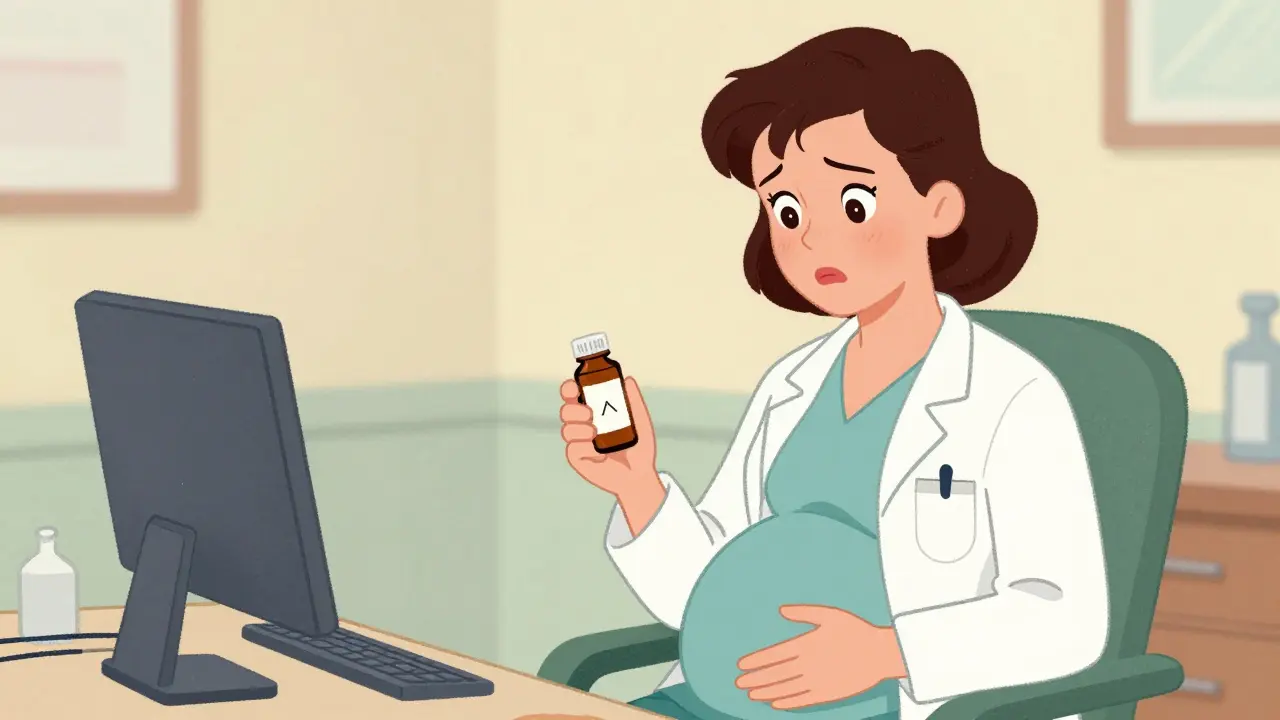
Imagine you are pregnant. You have been taking a daily medication for years-maybe for anxiety, maybe for chronic pain. One day, you look at the bottle and see a warning label that makes your stomach drop. Do you stop taking it? Do you keep going? The answer isn’t always clear, and guessing can be dangerous. This is why discussing medication safety with your healthcare provider is not just a formality; it is one of the most critical steps in protecting both you and your baby.
Many people assume that if a drug was safe before, it is safe now. But pregnancy and breastfeeding change how your body processes chemicals. What works for you might cross the placenta or pass into breast milk in ways that affect your child. The goal here is not to scare you away from necessary treatments, but to give you the tools to have a smart, confident conversation with your doctor or pharmacist. Let’s break down exactly how to do this, step by step.
The Preconception Check: Start Before You Get Pregnant
The best time to talk about medications is before you even conceive. This phase is called preconception counseling, and it is where you lay the groundwork for a healthy pregnancy. If you are planning to start a family, schedule a dedicated appointment with your primary care provider or OB/GYN specifically to review your current health regimen.
Bring a complete list of everything you take. This includes prescription drugs, over-the-counter painkillers, vitamins, herbal supplements, and even recreational substances. Why? Because interactions matter. For example, some antidepressants are perfectly fine during pregnancy, while others require careful monitoring. Similarly, certain acne medications like isotretinoin are strictly forbidden because they cause severe birth defects. By reviewing these early, you can switch to safer alternatives under supervision, rather than making panic-driven changes after you find out you are pregnant.
Ask your provider about the FDA Pregnancy and Lactation Labeling Rule (PLLR). In 2015, the FDA replaced the old letter-based system (A, B, C, D, X) with detailed narrative labels. These new labels explain specific risks based on human data rather than vague categories. Understanding this shift helps you read drug information more accurately. Instead of seeing a scary "Category D" label, you will see a nuanced explanation of what the actual risk level is for your specific situation.
Navigating the Prenatal Conversation
Once you are pregnant, the conversation shifts from prevention to management. According to the Centers for Disease Control and Prevention (CDC), about 90% of pregnant individuals in the U.S. take at least one medication. That means you are not alone in needing medical support. However, only 3% of birth defects are attributed to medication exposure. The key is balancing the risk of the drug against the risk of leaving your condition untreated.
Here is how to structure your prenatal visits:
- Be honest about your symptoms. If your current medication isn’t working, tell your doctor. Untreated conditions like high blood pressure, diabetes, or depression pose significant risks to both mother and baby. Stopping medication without advice can lead to complications far worse than the drug itself.
- Ask for evidence-based resources. Providers who rely on outdated knowledge may give conflicting advice. Ask them to check databases like MotherToBaby, which offers free, expert-reviewed information on medication safety during pregnancy and breastfeeding. They handle over 150,000 consultations annually and provide clarity when general internet searches fail.
- Discuss timing. Some medications are riskier in the first trimester when organs are forming, but safer later on. Others need to be tapered off gradually. Your provider should create a timeline for any changes.
If you feel dismissed or confused, seek a second opinion. A study published in JAMA Internal Medicine found that structured medication safety discussions reduce complications by 27%. You deserve that level of care.

Breastfeeding and Medication Transfer
After birth, the focus moves to lactation. Many mothers worry that all medications will harm their nursing infant. The reality is more nuanced. Most medications do pass into breast milk, but usually in very small amounts that are not harmful. The benefits of breastfeeding often outweigh the minimal exposure to most drugs.
To navigate this, use the LactMed database, available through the National Library of Medicine. It provides detailed data on how specific drugs behave in breast milk. When talking to your provider, ask these specific questions:
- Does this medication enter breast milk in significant quantities?
- Is there a safer alternative with less transfer potential?
- Can I time my doses to minimize exposure? (For example, taking a dose right after feeding so the peak concentration in your blood happens before the next feed.)
- What signs should I watch for in my baby? (Look for unusual sleepiness, irritability, or feeding difficulties.)
Remember, stopping a necessary medication abruptly can also affect your ability to care for your newborn. Mental health medications, for instance, are crucial for many postpartum parents. Working with a psychiatrist or pharmacist who specializes in perinatal care ensures you stay stable while keeping your baby safe.
Tools and Resources for Confidence
You don’t have to memorize every chemical interaction. Use reliable tools to empower your conversations. Here are three essential resources:
| Resource Name | Type | Best Used For | Accessibility |
|---|---|---|---|
| MotherToBaby | Helpline & Database | Pregnancy and breastfeeding queries | Free, 24/7 phone and online |
| LactMed | Scientific Database | Detailed drug levels in breast milk | Free, mobile app available |
| TERIS | Risk Assessment Tool | Teratogen risk evaluations | Professional access primarily |
When you visit your doctor, bring printouts or screenshots from these sources. It shows you are informed and encourages a collaborative discussion. If your provider dismisses these resources, consider finding a new one. Effective care requires partnership.

Common Pitfalls to Avoid
Even with good intentions, mistakes happen. Here are common errors patients and providers make:
- Relying on Google. A 2022 study found that only 43% of top Google search results for medication safety were accurate. Misinformation spreads quickly on social media, where 61% of pregnancy-related posts contain inaccuracies. Stick to verified medical databases.
- Hiding non-prescription use. Herbal remedies and supplements are not automatically safe. St. John’s Wort, for example, can interact dangerously with antidepressants. Always disclose everything.
- Stopping medication suddenly. Abrupt cessation can trigger withdrawal symptoms or relapse. Never change your dosage without a plan from your provider.
- Ignoring mental health. Postpartum depression affects up to 1 in 8 women. Treating it is vital for bonding and development. Safe medications exist, and therapy is highly effective.
Advocating for Yourself in the System
The healthcare system is complex, and disparities exist. Rural clinics often lack access to teratology specialists, and Medicaid patients receive fewer documented medication reviews than privately insured individuals. If you feel unheard, speak up. Say, "I am concerned about this medication’s effect on my baby. Can we review the latest guidelines together?"
If you are in an emergency room, explicitly state your pregnancy status immediately. Studies show that 43% of pregnant patients in ERs are prescribed contraindicated medications like ibuprofen after 20 weeks due to poor communication. Wear a bracelet or carry a card if needed. Your advocacy saves lives.
Is it safe to take paracetamol (acetaminophen) during pregnancy?
Yes, paracetamol is currently the only recommended analgesic for all trimesters of pregnancy according to the FDA. While there have been ongoing studies regarding autism risk, the FDA reviewed over 7 million pregnancies and concluded that the benefits of treating fever and pain outweigh the unproven risks. Always use the lowest effective dose for the shortest duration.
What should I do if I took a harmful medication before knowing I was pregnant?
Do not panic. Contact your healthcare provider immediately. Many exposures in the very early stages (before implantation) follow an "all-or-nothing" principle, meaning the embryo either survives unaffected or does not continue developing. Your provider can assess the specific drug, dose, and timing to determine the actual risk.
Are herbal supplements safe during breastfeeding?
Not necessarily. Herbal supplements are not regulated as strictly as pharmaceutical drugs. Some, like fenugreek, are used to boost milk supply, but others can cause allergic reactions or hormonal imbalances in infants. Always consult your provider or a lactation consultant before starting any supplement.
How often should I discuss medication safety during pregnancy?
Ideally, medication safety should be reviewed at every prenatal visit, especially if your health status changes or you start new treatments. The American College of Obstetricians and Gynecologists recommends structured discussions at preconception, prenatal, and postpartum phases to ensure continuous safety.
What is the iPLEDGE program?
iPLEDGE is a mandatory risk management program for isotretinoin, a powerful acne medication known to cause severe birth defects. Patients must register, use two forms of contraception, and take regular pregnancy tests. It has reduced pregnancy exposures by 86% since its implementation, demonstrating the power of strict safety protocols for high-risk drugs.

10 Comments
honestly this whole thing is just fear mongering designed to keep people dependent on the medical industrial complex.
you dont need a doctor to tell you what to put in your body, you have instincts. most of these warnings are there to protect the company from lawsuits not the baby. stop listening to them.
typical american healthcare nonsense. we pay thousands for advice that tells us to do nothing.
in other countries they actually treat the problem instead of giving you a pamphlet and telling you to pray. pathetic system.
The statistical analysis provided here is fundamentally flawed because it ignores the socioeconomic variables that dictate access to care.
You cannot simply isolate medication risk without considering the environmental toxins that working class mothers are exposed to daily. It is intellectually lazy to present this as a complete picture when the data set is so heavily skewed towards privileged demographics who can afford the "specialists" mentioned in the third paragraph. The narrative fails to address the systemic failure of rural healthcare infrastructure which leaves millions without any option but to rely on outdated protocols.
Oh, the sheer absurdity of modern medicine!
We have reached a point where we are terrified of our own biology. The article suggests that we must consult with experts for every minor decision, creating a society of weaklings who cannot trust their own bodies. It is tragic. We are medicating ourselves into oblivion while pretending it is safety. The real danger is the loss of autonomy. You are being trained to be a passive recipient of chemical interventions rather than an active participant in your own existence. Wake up!
This is basic pharmacology 101. If you are reading this blog post instead of consulting a peer-reviewed journal, you are already behind.
The average person lacks the cognitive framework to understand teratogenicity. Stop trying to play doctor with internet articles. It is embarrassing to watch laypeople attempt to navigate complex biochemical interactions with such naive enthusiasm. Read the actual studies before you comment.
just take what you need and stop worrying about everything. nobody cares. live your life.
The true essence of pregnancy is not found in pill bottles or database entries, but in the spiritual connection between mother and child.
When you overthink the chemistry, you lose the magic. The universe provides balance naturally. These doctors try to impose order on chaos, but chaos is where life begins. Trust the flow. Do not let the fear of statistics poison the joy of creation. Be still and know that you are enough.
I have reviewed the FDA guidelines extensively and can confirm that the information regarding isotretinoin is accurate.
However, many patients fail to understand the legal implications of the iPLEDGE program. It is not just a recommendation; it is a mandatory compliance structure. Ignorance of this protocol is not an excuse for non-compliance. Ensure you register properly to avoid legal and medical complications.
You got this!
It is completely normal to feel overwhelmed by all this information. Take a deep breath. You are doing a great job by seeking out knowledge. Remember that your health is a journey, not a destination. Reach out to your support network. You are strong and capable of making the best decisions for your family. Keep going!
What a disaster of logic!
Everyone says talk to the doctor, but the doctors are the ones who caused the problem in the first place with their endless prescribing habits. It is like asking the thief to guard the house. I say ignore the labels entirely. Nature intended for us to suffer through pain without intervention. This soft approach to parenting is destroying the next generation's resilience. Absolutely ridiculous.
Write a comment