
There is a moment that almost every new mother fears. You are exhausted, in pain, or battling an infection, and your doctor prescribes medication. Then comes the panic: "Can I still breastfeed?" For years, the standard advice was often overly cautious, leading many mothers to stop nursing prematurely. The reality is quite different. According to the American Academy of Pediatrics (AAP), the vast majority of medications are compatible with breastfeeding. In fact, only a tiny fraction of drugs are strictly contraindicated.
The goal here isn't just to list safe drugs; it is to give you the tools to understand medication safety so you can make informed choices without unnecessary stress. We will look at specific evidence-based data, from Relative Infant Dose (RID) percentages to expert consensus guidelines, to help you navigate this complex landscape.
Understanding How Medications Enter Breast Milk
To understand safety, we first need to understand transfer. When you take a pill, a small amount enters your bloodstream. From there, it passes into your breast milk. But how much actually reaches your baby? This is measured by the Relative Infant Dose (RID), which is the percentage of the maternal dose (adjusted for weight) that the infant receives through breast milk.
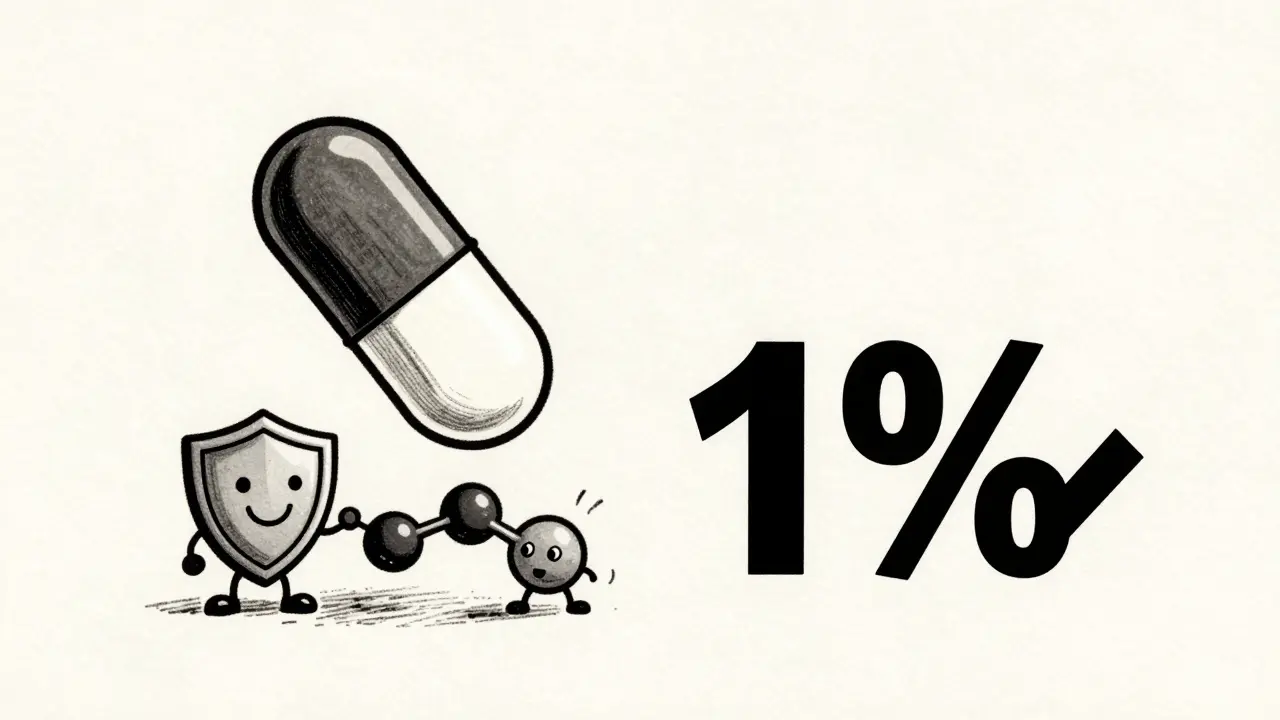
Generally, if the RID is less than 10%, the medication is considered safe for most infants. Most common medications fall well below this threshold, often between 0.1% and 5%. The key factors influencing this transfer include:
- Molecular Weight: Smaller molecules pass more easily.
- Protein Binding: Drugs that bind tightly to proteins in your blood don't cross into milk as readily.
- Half-Life: Shorter half-lives mean the drug clears your system faster, reducing accumulation in the baby.
- Lipid Solubility: Fat-soluble drugs may concentrate in milk but are often metabolized quickly by the infant.
It is also crucial to consider the infant's age. A premature newborn has a less mature liver and kidneys compared to a six-month-old, meaning they process drugs slower. Always discuss timing-taking medication right after a feeding can sometimes minimize peak levels in the next feed.
Pain Relief: First-Line Options
Pain management is one of the most common concerns, especially postpartum. The good news is that the two most common over-the-counter pain relievers are highly recommended by major health organizations like the American Academy of Family Physicians (AAFP).
Acetaminophen (known as Paracetamol in the UK and Europe) is universally regarded as safe. It has a very low RID of 0.04-0.23%. Because it is already prescribed to infants for fever and pain, its safety profile in breastfed babies is well-established.
Ibuprofen is another excellent choice. With an RID of 0.38-1.85%, it transfers minimally into milk. It is preferred for inflammatory pain due to its anti-inflammatory properties and short half-life. Both acetaminophen and ibuprofen are classified as Hale’s Category L1 (Safest), meaning they are extensively studied and pose no known risk.
Avoid long-term use of Naproxen. It has a longer half-life (12-17 hours) and higher RID (0.5-1.5%). There have been rare case reports of bleeding and anemia in breastfed infants exposed to naproxen over extended periods. Stick to ibuprofen or acetaminophen unless directed otherwise.
Antibiotics: Navigating the Classes
Infections require prompt treatment, and antibiotics are generally safe. However, not all classes are created equal. Here is how they break down based on current evidence:
| Antibiotic Class | Examples | RID / Safety Note | Recommendation |
|---|---|---|---|
| Penicillins | Amoxicillin, Ampicillin | RID 0.3-1.5% | First-line choice; minimal adverse effects. |
| Cephalosporins | Cephalexin, Cefdinir | Low transfer | Safe; monitor for rare diarrhea or thrush. |
| Macrolides | Azithromycin, Erythromycin | Azithromycin RID 0.05-0.1% | Azithromycin preferred; erythromycin carries theoretical pyloric stenosis risk. |
| Fluoroquinolones | Ciprofloxacin | RID 0.5-1.0% | Safe in practice; animal cartilage concerns are theoretical. |
| Tetracyclines | Doxycycline | RID 1.5-2.5% | Use for short courses (<21 days); avoid prolonged use. |
Note that Doxycycline was previously avoided due to tooth discoloration fears, but recent data shows short courses (under 21 days) are safe. Avoid Clindamycin if possible, as it frequently causes infant diarrhea.
Mental Health: SSRIs and Anxiety Medications
Postpartum mental health is critical. Untreated depression poses a greater risk to the child than most medications. Selective Serotonin Reuptake Inhibitors (SSRIs) are the most studied class.
Sertraline (Zoloft) and Paroxetine (Paxil) are the top recommendations. Sertraline has an average RID of 1.7-7.0%, but infant serum levels are often undetectable. Paroxetine has an RID of 1.2-10.0% but is heavily protein-bound, limiting free drug transfer. Both are considered first-line.
Fluoxetine (Prozac) requires caution. It has a long half-life (4-6 days) and higher RID (4.0-10.0%). Some studies note infant irritability or poor feeding in about 2% of cases. If you are on fluoxetine, monitor your baby closely for sleep changes or jitteriness.
For anxiety, Lorazepam (Ativan) is preferred over other benzodiazepines because of its short half-life (10-20 hours) and low RID (0.05-1.0%). Avoid Clonazepam due to its long half-life (30-40 hours), which can lead to accumulation and sedation in the infant.
Allergies and Decongestants: Watch Your Supply
Allergy season doesn’t stop when you become a mother. Nasal corticosteroids like Fluticasone (Flonase) and Budesonide (Rhinocort) are excellent choices. They have minimal systemic absorption (less than 0.9% bioavailability), meaning almost none enters your bloodstream or milk.
For oral antihistamines, second-generation options are superior. Loratadine (Claritin) and Cetirizine (Zyrtec) have low RIDs (0.05-0.5%) and cause minimal sedation. Avoid first-generation antihistamines like Diphenhydramine (Benadryl) regularly, as they can cause drowsiness in infants and may reduce milk supply.
Be extremely careful with decongestants. Pseudoephedrine (Sudafed) can reduce milk production by up to 24% in some women. If you must use it, limit duration and monitor your baby’s weight gain. Saline sprays are a safer first-line alternative.

Resources and Risk Categories
You do not have to guess. Use evidence-based resources. The gold standard is LactMed, which is a database maintained by the U.S. National Library of Medicine containing pharmacokinetic data on over 1,000 drugs. It provides exact RID percentages and documented infant effects.
Another helpful framework is Hale’s Lactation Risk Categories, which are a classification system ranging from L1 (safest) to L5 (contraindicated). Most common medications fall into L1 or L2. L5 includes drugs like radioactive iodine and certain chemotherapy agents, which require stopping breastfeeding.
If you have questions, consult the InfantRisk Center or the Breastfeeding Network (UK). These organizations provide real-time, expert-backed guidance tailored to your specific situation.
When to Pause or Stop
While most drugs are safe, some require action. Radioactive iodine (I-131) therapy necessitates stopping breastfeeding for 3-6 weeks to protect the infant’s thyroid. Antineoplastic agents (chemotherapy) generally require cessation. Lithium requires strict monitoring, with infant serum levels kept below 0.6 mmol/L.
Remember, the decision is always a balance of risks. As Dr. Christina Chambers notes, if a medication is safe for a baby to take directly, it is generally safe for a breastfeeding mother. Always verify this with your healthcare provider and reliable databases like LactMed.
Is it safe to take Tylenol while breastfeeding?
Yes, Acetaminophen (Tylenol/Paracetamol) is considered one of the safest medications for breastfeeding mothers. It has a very low Relative Infant Dose (RID) of 0.04-0.23% and is widely used in infants for pain and fever relief.
Which antidepressant is best for breastfeeding moms?
Sertraline (Zoloft) and Paroxetine (Paxil) are typically recommended as first-line SSRIs. They have low transfer rates into breast milk and extensive safety data supporting their use during lactation.
Does Sudafed affect milk supply?
Yes, Pseudoephedrine (Sudafed) can significantly reduce milk production in some women, by up to 24%. It is recommended to use saline sprays instead or limit Sudafed use to short durations while monitoring infant weight.
What is LactMed?
LactMed is a comprehensive, evidence-based database maintained by the U.S. National Library of Medicine. It provides detailed information on drug levels in breast milk, infant blood, and potential adverse effects for over 1,000 substances.
Are antibiotics safe while nursing?
Most antibiotics are safe. Penicillins and cephalosporins are first-line choices. Macrolides like azithromycin are preferred over erythromycin. Tetracyclines should be limited to short courses under 21 days.




13 Comments
This is such a relief to read. 😊 I was so scared to take anything for my headaches while nursing, but knowing ibuprofen is safe makes me feel way better. Thanks for sharing this info! 👍
Most people are just too lazy to read the labels or ask their doctors properly. They want magic pills without doing the work. Stop whining and do your research like everyone else.
Oh my goodness!! This is exactly what we need!!! So many moms suffer in silence because they are afraid!! Please share this with everyone you know!!! It is so important to know that acetaminophen is safe!!! Don't let fear stop you from being healthy!!!
Great article. Finally someone explains it without the usual panic-mongering. People get so worked up over nothing when the data is right there in front of them. Just take the damn pill if you need it.
It is interesting how culture shapes our perception of risk. In my community, we often rely on traditional remedies first, but seeing the scientific backing for common meds like amoxicillin gives peace of mind. The RID metric is a great tool for understanding.
Haha, glad I'm not the only one who thought naproxen was fine until now. 🤣 Good to know about the half-life issue. Guess I'll stick to Tylenol then. 💊
i dont trust any of this stuff really. why should i believe some random internet post over my own gut feeling? feels like corporate propaganda to sell more drugs. whatever.
The epistemological framework here is sound, yet the moral implications of pharmaceutical dependency remain unaddressed. One must question the hegemony of medical institutions dictating maternal health protocols through reductionist metrics like Relative Infant Dose.
Sure, keep telling yourself that. But maybe try reading the actual studies before dismissing everything as propaganda. It's called evidence-based medicine, look it up.
Hey no need to be harsh. Everyone has different concerns. Let's just focus on the facts shared here. Peace out ✌️
I completely agree with the point about timing! When I was breastfeeding my second, my lactation consultant suggested taking meds right after feeding so the levels would be lowest by the next feed. It made such a huge difference in how I felt managing my anxiety medication, and it’s great to see that practical tip included here alongside the hard data!
Good info here. I had a infection last year and took cephalexin. My baby was fine. Doctors said it was safe. Glad to see it confirmed here. No side effects at all for us.
This is incredibly empowering information for new mothers. We must advocate for ourselves and demand accurate, non-fear-based advice from healthcare providers. Your body knows what it needs, and having these tools allows you to make confident choices for your family's well-being.
Write a comment