You take your statin to lower your cholesterol and protect your heart. You take vitamin D because your doctor said it’s good for your bones or immune system. It seems like a harmless combination, right? After all, millions of people are doing exactly that. But if you’ve ever experienced unexplained muscle aches after starting a statin, you might have heard the advice to "just take more vitamin D." Is this helpful medical wisdom, or just an internet myth?
The short answer is complicated. The relationship between these two substances isn’t black and white. While logic suggests they should interact-since both involve cholesterol pathways-the actual clinical evidence paints a messy picture. Some studies show no link at all. Others suggest specific types of statins might actually boost your vitamin D levels. And then there’s the issue of muscle pain, which remains the biggest headache for patients on these drugs.
Why Do We Even Think They Interact?
To understand why doctors and researchers keep looking at this pair, we need to look at how they work in your body. At their core, both statins and vitamin D share a common ancestor: cholesterol.
Statins work by blocking an enzyme called HMG-CoA reductase. This enzyme is the gatekeeper for cholesterol production in your liver. When you block it, your cholesterol drops. Vitamin D, specifically cholecalciferol (vitamin D3), is technically a fat-soluble vitamin derived from cholesterol. Your skin makes it from sunlight, but your body also uses cholesterol precursors to process it.
This creates a theoretical conflict. If statins reduce the amount of cholesterol available, could they also starve your body of the raw materials needed to make vitamin D? Early research in the 2010s raised this possibility. If true, taking statins long-term might lead to vitamin D deficiency, which could then cause other health problems.
However, theory is one thing; biology is another. Your body has complex backup systems. Plus, most people get their vitamin D from supplements or diet, not just internal synthesis. So, does the cholesterol blockade actually result in low vitamin D levels? The data says: sometimes yes, sometimes no, and often it depends on which statin you’re taking.
The Muscle Pain Mystery: Does Vitamin D Help?
If there is one complaint that dominates every forum and doctor’s office regarding statins, it is muscle pain. Medical professionals call this Statin-Associated Muscle Symptoms (SAMS). For years, anecdotal reports swirled that vitamin D deficiency was the root cause. The logic was simple: low vitamin D causes muscle weakness. Statins cause muscle weakness. Therefore, fixing the vitamin D level should fix the statin pain.
This belief led many doctors to prescribe high-dose vitamin D alongside statins as a preventive measure. But when science finally stepped in with rigorous testing, the results were surprising.
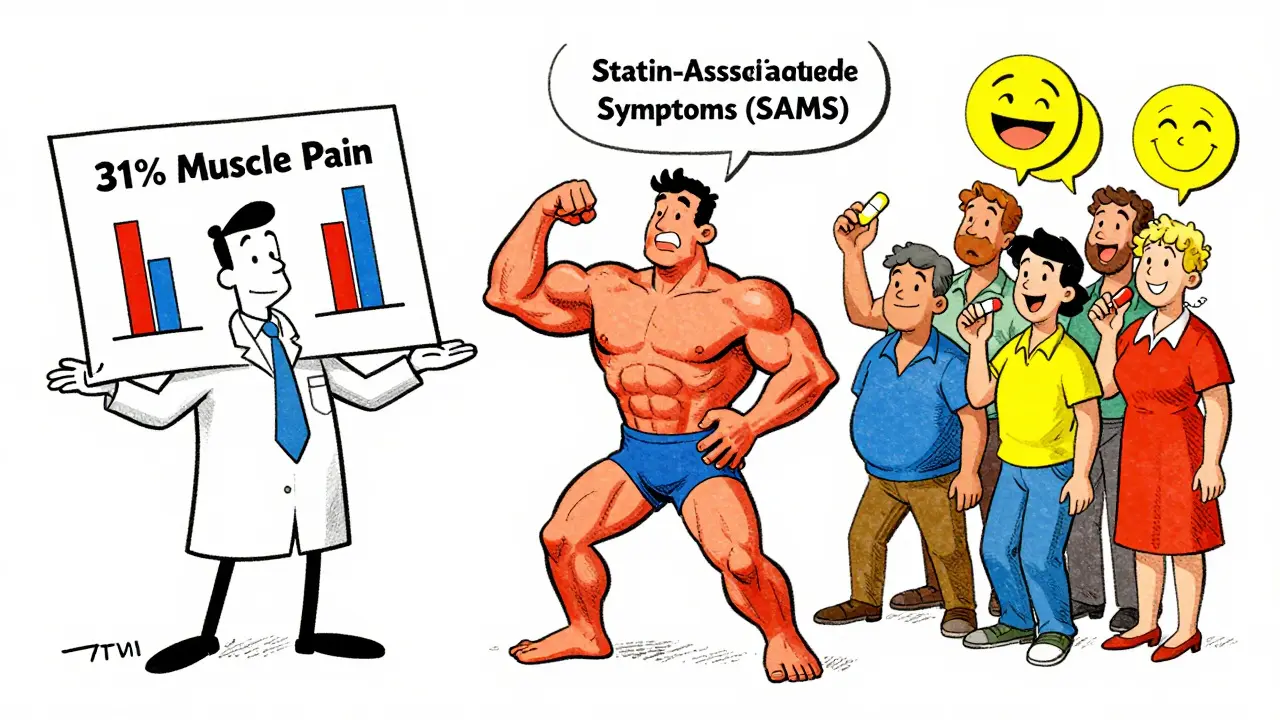
The VITAL trial substudy, published in 2022, is the gold standard here. It was a randomized, double-blind study involving over 2,000 participants who had just started statin therapy. Half got vitamin D supplements; half got a placebo. The researchers tracked them closely for muscle symptoms.
Here is what they found: absolutely no difference. In the group taking vitamin D, 31% developed muscle symptoms. In the placebo group, 31% developed muscle symptoms. The p-value showed no statistical significance. Even among participants who started with very low vitamin D levels (below 20 ng/mL), the supplement did not prevent the onset of pain. Dr. Mark Hlatky, who led the study at Stanford University, concluded clearly that vitamin D supplementation does not prevent statin-associated muscle symptoms.
So, why do so many patients swear it works? Look at the patient forums. On Reddit’s r/Statins community, 62% of surveyed members tried vitamin D for muscle pain, and 54% claimed it helped. Why the disconnect? It likely comes down to two factors:
- The Placebo Effect: Believing you are treating the root cause can genuinely reduce perceived pain intensity.
- Baseline Deficiency: If a patient was severely deficient in vitamin D *before* starting statins, correcting that deficiency might improve general muscle function, making them feel better overall, even if the statin itself hasn’t changed its effect on the muscles.
The American College of Cardiology now states that routine vitamin D testing or supplementation is not recommended specifically for preventing statin muscle pain. However, maintaining healthy vitamin D levels for bone health remains important for everyone, especially older adults on statins.
Do Statins Raise or Lower Vitamin D Levels?
If vitamin D doesn’t help with muscle pain, do statins mess with your vitamin D levels anyway? This is where the research gets contradictory. You’ll find studies saying statins raise levels, and others saying they lower them. The key lies in the specific type of statin.
Not all statins are created equal. They fall into two main categories based on how your liver processes them:
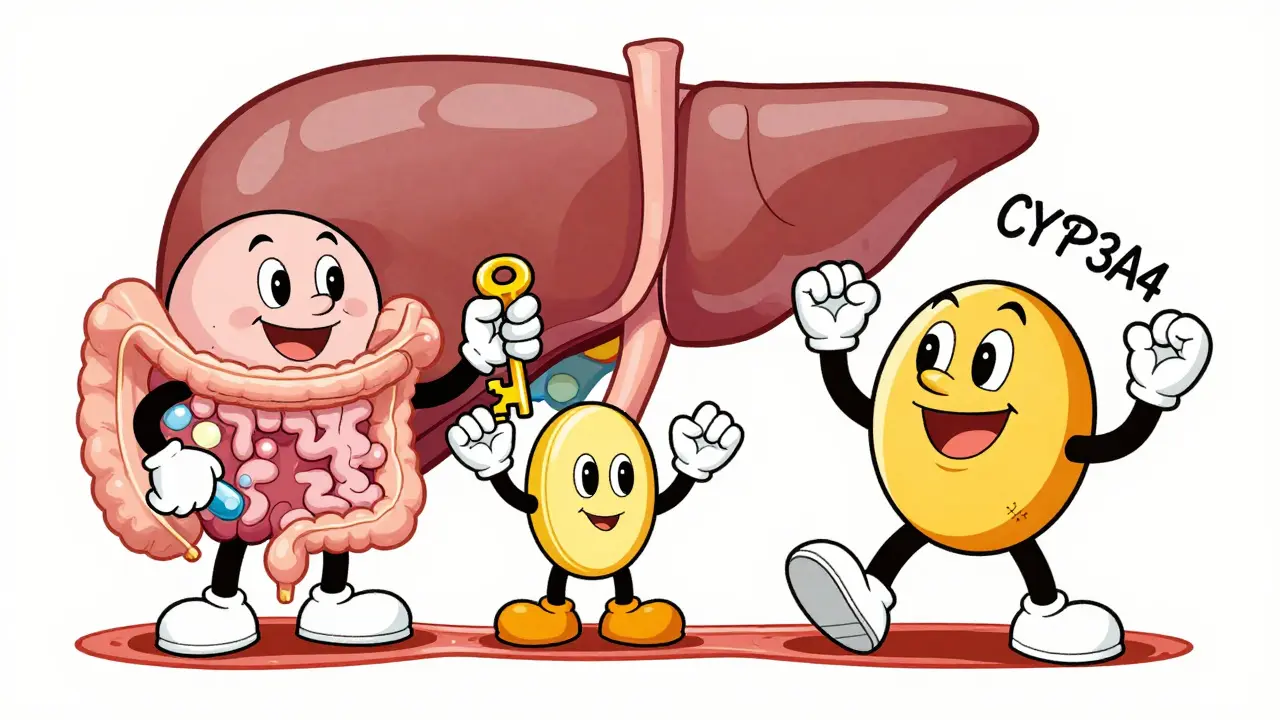
- CYP3A4-metabolized statins: These include atorvastatin (Lipitor), simvastatin (Zocor), and lovastatin. They rely heavily on the cytochrome P450 3A4 enzyme system.
- Non-CYP3A4 statins: These include rosuvastatin (Crestor), pravastatin (Pravachol), and fluvastatin. They use different metabolic pathways.
A pivotal 2012 study by Yavuz et al. looked at this distinction. They found that patients taking rosuvastatin saw a dramatic rise in their mean 25-hydroxy vitamin D levels-from 11.8 ng/mL to 35.2 ng/mL after just eight weeks. Fluvastatin, however, showed no significant change. The researchers hypothesized that certain statins might stimulate the expression of cholesterol transporters, inadvertently helping your gut absorb more vitamin D from food and supplements.
Conversely, a 2018 study by Sharma et al. found that statin users had significantly *lower* vitamin D levels compared to controls (15.82 ng/mL vs. 20.57 ng/mL). This study also noted a higher incidence of myalgia (muscle pain) in the statin group, reinforcing the idea that deficiency might exacerbate side effects, even if supplementation doesn’t prevent them entirely.
| Statin Type | Metabolic Pathway | Observed Effect on Vitamin D | Clinical Note |
|---|---|---|---|
| Rosuvastatin | Minimal CYP3A4 | May Increase | Some studies show significant rises in serum levels |
| Atorvastatin | CYP3A4 | Mixed/Neutral | Some data suggests increased absorption; other data shows neutral effect |
| Simvastatin | CYP3A4 | May Decrease | Competitive metabolism may slightly lower availability |
| Pravastatin | Non-CYP3A4 | Neutral | Likely no significant interaction with vitamin D metabolism |
The takeaway? If you are on rosuvastatin, you might actually be getting a bonus boost in vitamin D absorption. If you are on simvastatin or lovastatin, there is a slight risk of competition for metabolic enzymes, though the clinical impact is usually minor unless you are already deficient.
What Should You Actually Do?
Navigating this information can feel overwhelming. You don’t want to stop your life-saving cholesterol medication, but you also don’t want to deal with chronic muscle pain. Here is a practical, evidence-based approach to managing both your statin and vitamin D intake.
1. Get Tested, Don’t Guess
Before adding any new supplement, ask your doctor for a 25-hydroxy vitamin D blood test. This is the only way to know your baseline. If your levels are below 20 ng/mL, you are deficient regardless of whether you take statins. Correcting a deficiency is always wise for bone health and immunity, even if it doesn’t cure statin-induced muscle pain.
2. Separate Your Doses (Just in Case)
While major interactions are rare, some pharmacokinetic studies suggest that high doses of vitamin D might slightly alter the concentration of certain statins like atorvastatin in the blood. To minimize any potential interference, take your statin in the evening (as many are) and your vitamin D with your morning meal. Vitamin D is fat-soluble, so taking it with breakfast ensures better absorption anyway.
3. Consider Switching Statins if Pain Persists
If you have adequate vitamin D levels (above 30 ng/mL) and still experience debilitating muscle pain, vitamin D supplementation is unlikely to be the solution. Instead, talk to your cardiologist about switching to a hydrophilic statin like pravastatin or rosuvastatin. These water-soluble statins penetrate muscle tissue less than lipophilic (fat-loving) statins like simvastatin, potentially reducing muscle side effects without compromising cholesterol control.
4. Monitor for Rare Severe Reactions
In extremely rare cases, combining certain medications can lead to rhabdomyolysis, a serious condition where muscle tissue breaks down. This is more common when statins are combined with other drugs that inhibit CYP3A4 (like certain antibiotics or antifungals) rather than vitamin D alone. However, if you experience severe muscle weakness, dark urine, or extreme fatigue, seek medical attention immediately. Do not assume it is just "vitamin D deficiency" and keep pushing through.
The Bottom Line on Food and Drug Interactions
The narrative that "vitamin D cures statin muscle pain" is largely a myth debunked by large-scale trials. However, the relationship between the two is not nonexistent. Statins can influence vitamin D metabolism, particularly depending on the specific drug molecule used. Rosuvastatin may enhance absorption, while others may compete for processing enzymes.
Your best strategy is proactive management. Maintain healthy vitamin D levels for your general well-being, but do not expect it to act as a shield against statin side effects. If muscle pain strikes, address it directly with your healthcare provider through dose adjustment or medication switching, rather than relying on supplements to mask the symptom. Your heart health depends on consistent statin use, so finding the right balance is crucial.
Does vitamin D prevent statin-induced muscle pain?
No. Large-scale clinical trials, including the VITAL substudy, have shown that vitamin D supplementation does not significantly reduce the risk of developing statin-associated muscle symptoms (SAMS) compared to a placebo. While correcting a pre-existing deficiency may improve general muscle function, it does not prevent pain caused by the statin itself.
Which statin is least likely to interact with vitamin D?
Rosuvastatin and pravastatin are generally considered to have minimal interaction with vitamin D metabolism because they do not rely heavily on the CYP3A4 enzyme pathway. In fact, some studies suggest rosuvastatin may even increase vitamin D absorption. Simvastatin and atorvastatin, which use the CYP3A4 pathway, have a higher potential for metabolic competition, though clinical effects are usually mild.
Can I take vitamin D and statins at the same time?
Yes, it is generally safe to take them together. However, for optimal absorption, it is recommended to take vitamin D with a meal containing fat, while many statins are taken in the evening. Separating them by several hours (e.g., vitamin D at breakfast, statin at dinner) can minimize any potential minor pharmacokinetic interactions and ensure you get the full benefit of both.
Do statins lower vitamin D levels in the blood?
The evidence is mixed. Some studies indicate that statins may lower vitamin D levels by inhibiting cholesterol synthesis, which is a precursor to vitamin D. Other studies, particularly those involving rosuvastatin, show that statins may actually increase circulating vitamin D levels by enhancing intestinal absorption. The effect likely depends on the specific type of statin prescribed.
Should I stop taking my statin if I have muscle pain?
Do not stop taking your statin without consulting your doctor. Statins are critical for preventing heart attacks and strokes. If you experience muscle pain, your doctor may recommend checking your vitamin D levels, switching to a different type of statin (such as pravastatin or rosuvastatin), or adjusting your dosage. Stopping abruptly can increase your cardiovascular risk.