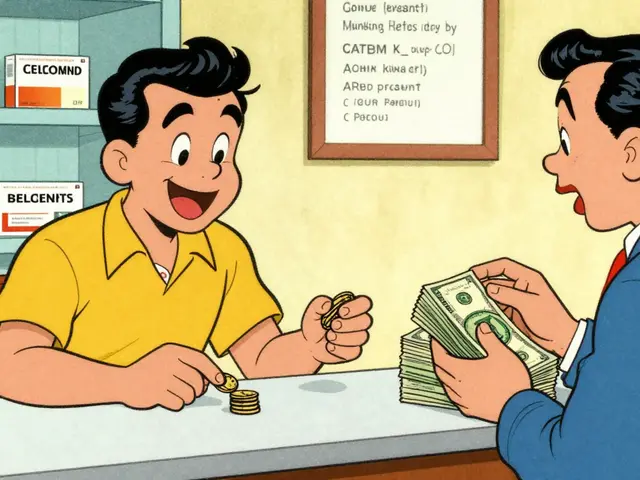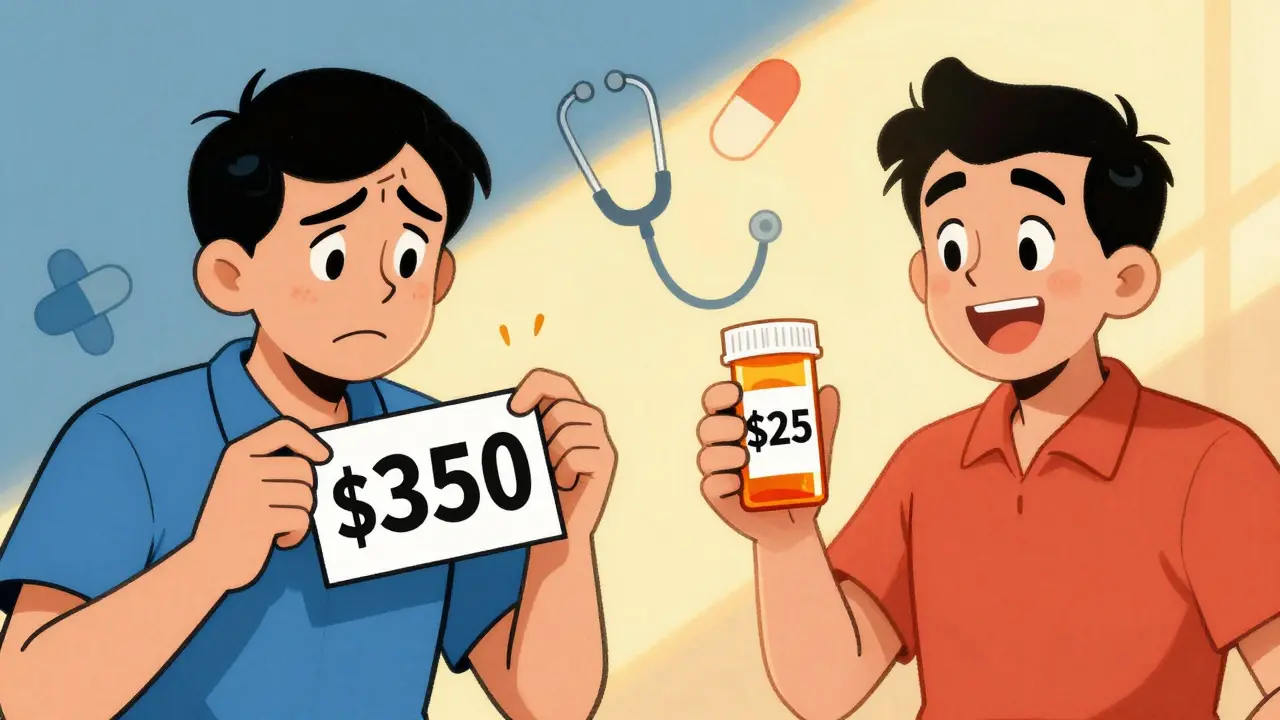
Imagine paying $350 a month for insulin. Now imagine that same medication costs $25. That isn't a fantasy scenario; it’s the reality for millions of patients who switch from brand-name drugs to generics. In 2024, generic medications made up 90% of all prescriptions filled in the United States, yet they accounted for only 12% of total prescription drug spending. This massive disparity-where generics save the system billions while keeping treatment affordable-is the backbone of modern health economics.
If you are trying to understand why your pharmacy bill is lower than your neighbor's, or why policymakers talk endlessly about "patent cliffs," you need to look at generics. They are not just cheaper versions of popular pills; they are the primary mechanism for controlling healthcare inflation. But how do they work? Why don’t we have them for everything? And what happens when the patent on a life-saving biologic expires?
The Economics of Generics: Volume vs. Value
To grasp the role of generic drugs in cost control within healthcare systems, you first need to separate volume from value. Most people assume that because generics are cheap, they must be low quality. The data says otherwise. In fact, generics are chemically identical to their brand-name counterparts in terms of active ingredients, strength, and dosage form.
The economic impact is staggering. According to the 2025 U.S. Generic & Biosimilar Medicines Savings Report, generics generated $445 billion in savings in 2023 alone. When a brand-name drug loses its patent protection, the price typically drops by 80-85% once a generic enters the market. This isn't a gradual decline; it’s an immediate shock to the pricing structure that benefits everyone from Medicare beneficiaries to private insurance holders.
Consider the scale. Brand-name drugs represent just 10% of prescriptions (about 435 million in 2024) but consume 88% of total spending ($700 billion). Generics handle the heavy lifting of volume-3.9 billion prescriptions-while costing only $98 billion. This dynamic allows healthcare systems to allocate resources more efficiently, shifting funds away from routine maintenance medications toward innovative treatments for rare diseases or complex conditions.
| Metric | Generic Drugs | Brand-Name Drugs |
|---|---|---|
| Share of Prescriptions | 90% | 10% |
| Share of Total Spending | 12% | 88% |
| Average Price Reduction | 80-85% vs. Brand | N/A (Baseline) |
| Development Cost | $1M - $5M (ANDA) | $2.6 Billion (NDA) |
| Time to Market | 10-12 Months | 10-15 Years |
How Generics Get Approved: The Science Behind the Savings
You might wonder why generics are so much cheaper if they are therapeutically equivalent. The answer lies in the regulatory pathway established by the 1984 Hatch-Waxman Act. Before this law, every new version of a drug had to undergo full clinical trials, which took years and cost billions. The Hatch-Waxman Act introduced the Abbreviated New Drug Application (ANDA) process.
Instead of repeating expensive human trials, generic manufacturers prove two things: pharmaceutical equivalence and bioequivalence. Pharmaceutical equivalence means the generic has the same active ingredient, strength, dosage form, and route of administration as the brand name. Bioequivalence ensures that the drug behaves the same way in the body. The FDA requires that 90% of test subjects show blood concentration levels (Cmax and AUC) within 80-125% of the reference product.
This streamlined process cuts development time from over a decade to roughly one year. It also slashes costs. While developing a new brand-name drug averages $2.6 billion, filing an ANDA costs around $1 million. These savings are passed directly to consumers. However, this efficiency has limits. Complex molecules, such as those found in inhalers or injectables, cannot always be proven equivalent through simple blood tests. This is where the next frontier comes in: biosimilars.
Biosimilars: The Next Wave of Cost Control
As small-molecule drugs (like aspirin or statins) face generic competition, the focus shifts to biologics. Biologics are large, complex molecules made from living organisms, used to treat cancer, autoimmune diseases, and diabetes. Because they are too complex to be exactly copied, companies create biosimilars, which are highly similar biological medical products to an already approved biological drug.
Biosimilars offer discounts of 15-35% compared to reference biologics, which is less dramatic than the 80% drop seen with traditional generics. Yet, given the high cost of specialty drugs-which account for 51% of total drug spending despite being only 5% of prescriptions-these savings are vital. The RAND Corporation projects that biosimilars could save the healthcare system $133 billion by 2025.
However, adoption remains sluggish. In Europe, biosimilar uptake rates hit 70-85%. In the U.S., they lag at 25-30%. Why? Pharmacy Benefit Managers (PBMs) often prioritize brand-name drugs because of rebate structures. If a brand-name drug offers a larger rebate to the insurer, it may appear cheaper on paper than a biosimilar, even if the list price is higher. This misalignment between list price and net cost creates a barrier to entry for biosimilars, leaving patients paying more than necessary.
Barriers to Entry: Patents, Litigation, and Supply Chains
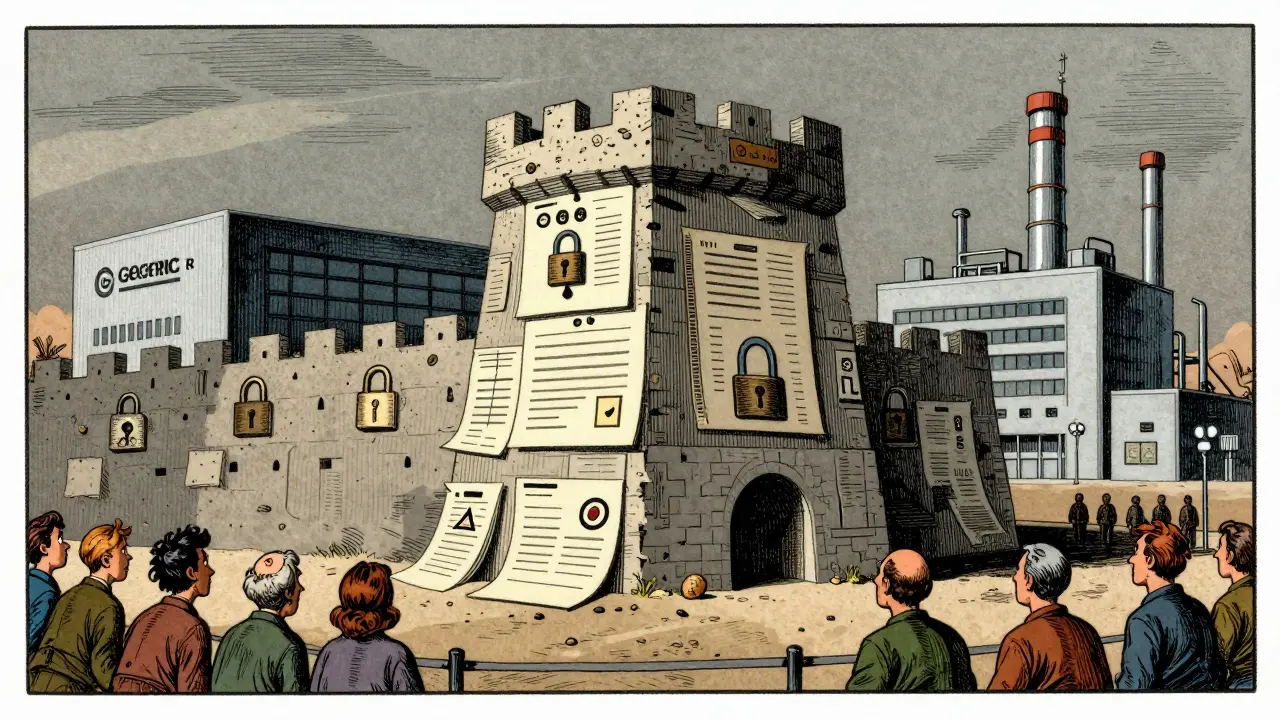
If generics are so effective at lowering costs, why aren’t all drugs genericized immediately? The biggest hurdle is the "patent thicket." Brand-name manufacturers file dozens of patents per drug-not just on the molecule itself, but on the manufacturing process, the packaging, and even the color of the pill. On average, companies file 140+ patents per drug to extend market exclusivity.
This leads to strategic litigation. When a generic company files an ANDA, it triggers automatic legal challenges from the brand owner. The Federal Trade Commission reports that these lawsuits delay generic entry by an average of 28 months. Tactics like "product hopping"-where a brand company releases a slightly modified version of a drug to reset the patent clock-add another 6-12 months of delay. During this time, patients pay premium prices.
Another critical issue is supply chain vulnerability. About 80% of Active Pharmaceutical Ingredients (APIs) for generics are manufactured overseas, primarily in India and China. The pandemic exposed this fragility, leading to over 300 drug shortages between 2020 and 2022. When a single factory fails quality checks, there is often no backup, causing sudden spikes in price and availability issues for essential medications like antibiotics and anticonvulsants.
Real-World Impact: Patient Experiences and Adherence
The theoretical savings of generics translate into real-world outcomes. GoodRx’s 2024 Prescription Cost Burden Report found that 68% of patients skipped doses or split pills when generics weren't available. For Medicare Part D beneficiaries, cost-related non-adherence was 42% for brand-name drugs compared to just 12% for generics.
Patients notice the difference. On forums like Reddit and PatientsLikeMe, users frequently share stories of switching from expensive brand-name insulins or thyroid medications to generics, citing identical efficacy but drastically lower out-of-pocket costs. One user noted saving $325 monthly by switching to generic insulin lispro, allowing them to maintain consistent glucose control without rationing doses.
However, trust is not universal. Some patients report adverse reactions to inactive ingredients (fillers, dyes) that differ between brands and generics. The FDA received 1,247 adverse event reports related to generic substitutions in 2023, mostly gastrointestinal issues. Additionally, for narrow therapeutic index drugs like warfarin or levothyroxine, even minor variations can matter. About 23% of users on patient forums reported negative experiences with switches for these specific drugs, highlighting that while generics are generally safe, individual responses can vary.
Future Outlook: Policy Changes and Market Shifts
The landscape of drug pricing is evolving rapidly. The Inflation Reduction Act (IRA) has introduced Medicare drug price negotiations, achieving discounts of 38-79% on select drugs for 2026. However, these negotiations apply only to a small fraction of the market. Experts argue that robust generic competition remains the most powerful tool for systemic cost reduction.
Looking ahead, the "biosimilar void" poses a significant risk. Ninety percent of brand-name biologics losing patent protection in the next decade currently have zero biosimilar competitors in development. Without policy interventions to accelerate approval pathways and protect manufacturers from liability, we may see a surge in biologic prices rather than a drop.
For consumers and providers, the takeaway is clear: advocate for generic substitution whenever possible. Check your formulary. Ask your doctor if a generic or biosimilar alternative exists. By driving demand toward these cost-effective options, you help sustain a healthcare system that prioritizes access over profit.
Are generic drugs as effective as brand-name drugs?
Yes. The FDA requires generic drugs to be bioequivalent to their brand-name counterparts, meaning they deliver the same amount of active ingredient into the bloodstream in the same amount of time. Clinical studies consistently show no meaningful difference in safety or efficacy for the vast majority of medications.
Why are some generic drugs still expensive?
If only one generic manufacturer produces a drug, it faces little competition, allowing them to keep prices high. This is common for older, less profitable drugs where multiple manufacturers have exited the market due to low margins. True price drops occur when multiple generic competitors enter the market.
What is the difference between a generic and a biosimilar?
Generics are copies of small-molecule drugs (chemical compounds) and are chemically identical to the brand name. Biosimilars are copies of biologic drugs (large, complex molecules made from living cells). Because biologics are complex, biosimilars are highly similar but not identical, requiring more extensive testing to prove comparable safety and efficacy.
Can my pharmacist automatically switch my prescription to a generic?
In most states, yes. Pharmacists are legally permitted to substitute a generic for a brand-name drug unless the prescriber explicitly writes "Dispense As Written" (DAW). However, for narrow therapeutic index drugs, some states require prescriber authorization or have specific restrictions.
Why do brand-name drug companies fight generic entry?
Brand-name drugs sell at a premium price during their patent exclusivity period, generating billions in revenue. Once a generic enters the market, prices drop by 80-85%, severely cutting profits. Companies use patent thickets, litigation, and "pay-for-delay" settlements to prolong exclusivity and maximize returns before losing market share.