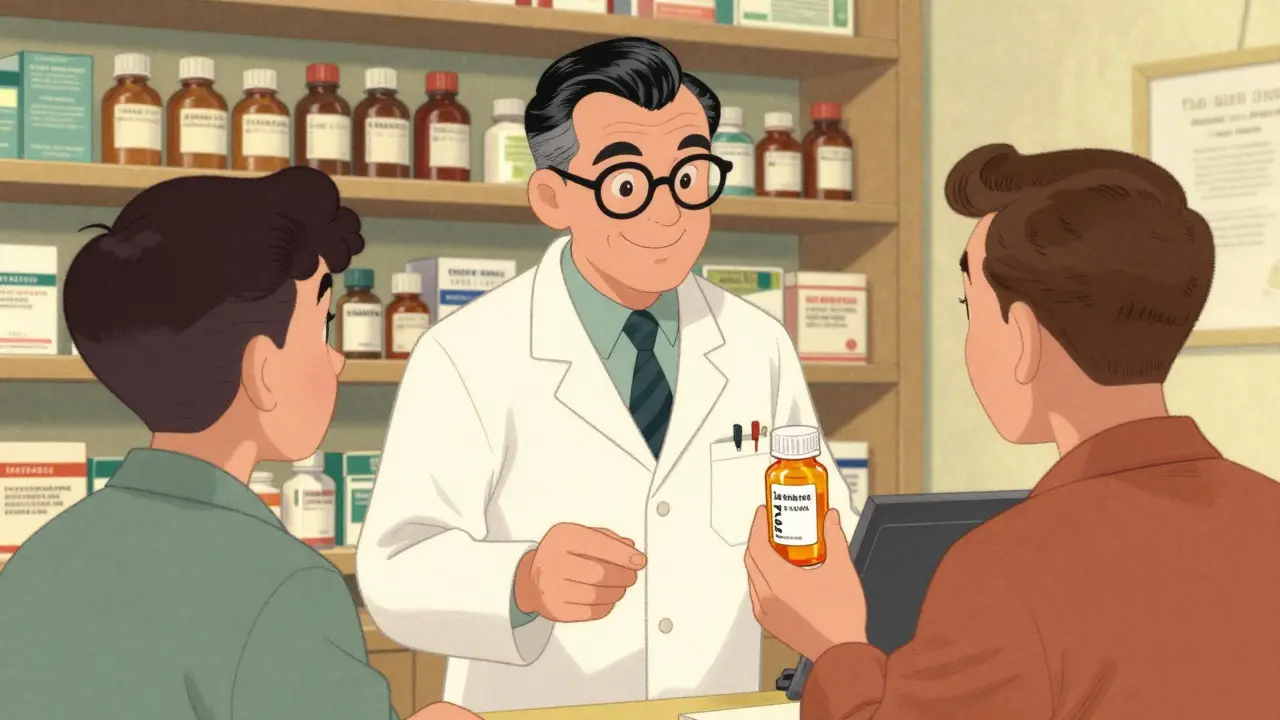
Picture this: you’ve been taking the same medication for years. It works. You feel fine. Then, your pharmacy hands you a different box with a lower price tag and a name you don’t recognize. Do you take it? Most people do because they trust that the science behind generic drugs guarantees they are just as safe and effective as their expensive brand-name counterparts. But have you ever wondered if that trust is fully justified by clinical evidence?
The short answer is yes, for the vast majority of medications. However, the long answer is more nuanced. While regulatory bodies like the U.S. Food and Drug Administration (FDA) mandate strict standards, real-world data shows slight variations in outcomes for specific drug classes. Understanding where generics shine and where caution is needed can help you make smarter health decisions without breaking the bank.
What Makes a Drug "Generic"?
To understand safety, we first need to define what a generic drug is a pharmaceutical product containing the same active ingredient, dosage form, strength, route of administration, quality, performance characteristics, and intended use as its brand-name counterpart. When a brand-name drug’s patent expires, other manufacturers can produce their own version. They cannot simply copy the marketing; they must prove scientific equivalence.
This proof comes through two main pillars: pharmaceutical equivalence and bioequivalence. Pharmaceutical equivalence means the generic has the exact same active chemical ingredient at the same strength and in the same form (tablet, capsule, liquid). Bioequivalence is where the heavy lifting happens. The FDA requires that the generic drug be absorbed into your bloodstream at a similar rate and extent as the brand-name drug. Specifically, the 90% confidence intervals for pharmacokinetic parameters like Cmax (maximum concentration) and AUC (area under the curve) must fall within an 80-125% range compared to the reference listed drug.
Why 80-125%? This range accounts for natural biological variability between humans. If Brand A gives you 100 units of drug in your blood, Generic B might give you 90 or 110. Both are considered therapeutically equivalent because the difference is too small to matter clinically for most conditions. This framework, established by the Hatch-Waxman Act of 1984, allows manufacturers to skip costly full-scale clinical trials while ensuring safety through rigorous laboratory testing.
The Weight of Clinical Evidence
Does meeting these lab standards translate to real-world health outcomes? Large-scale studies generally say yes, often showing surprising benefits. A landmark 2020 study published in Nature Scientific Reports, led by Dr. Aaron Kesselheim of Harvard Medical School, analyzed nearly all insured persons in Austria from 2007 to 2012. The researchers looked at 17 different drugs commonly used for heart disease and diabetes.
The results were striking. For 10 of the 17 drugs, patients taking generic versions had significantly fewer deaths than those on brand-name versions. For 11 of the 17 drugs, generic users experienced fewer major adverse cardiac and cerebrovascular events (MACCE). After adjusting for patient factors, the death rate was 40.6 per 1,000 patient-years for generics versus 45.8 for brands. This suggests that when cost barriers are removed, better adherence to medication leads to better outcomes. Generics aren't just as good; in some population-level metrics, they appear superior because patients can actually afford to keep taking them.
However, not all data points in the same direction. A 2013 review in the Journal of Clinical Pharmacy and Therapeutics highlighted cases where switching caused issues. About 30% of patients in certain case reports discontinued generic treatment due to perceived inefficacy or side effects. Specific examples included therapeutic failure with generic ciprofloxacin compared to the brand Ciproxin. These outliers remind us that while averages favor generics, individual biology can react differently to subtle changes in formulation.
When Differences Matter: Narrow Therapeutic Index Drugs
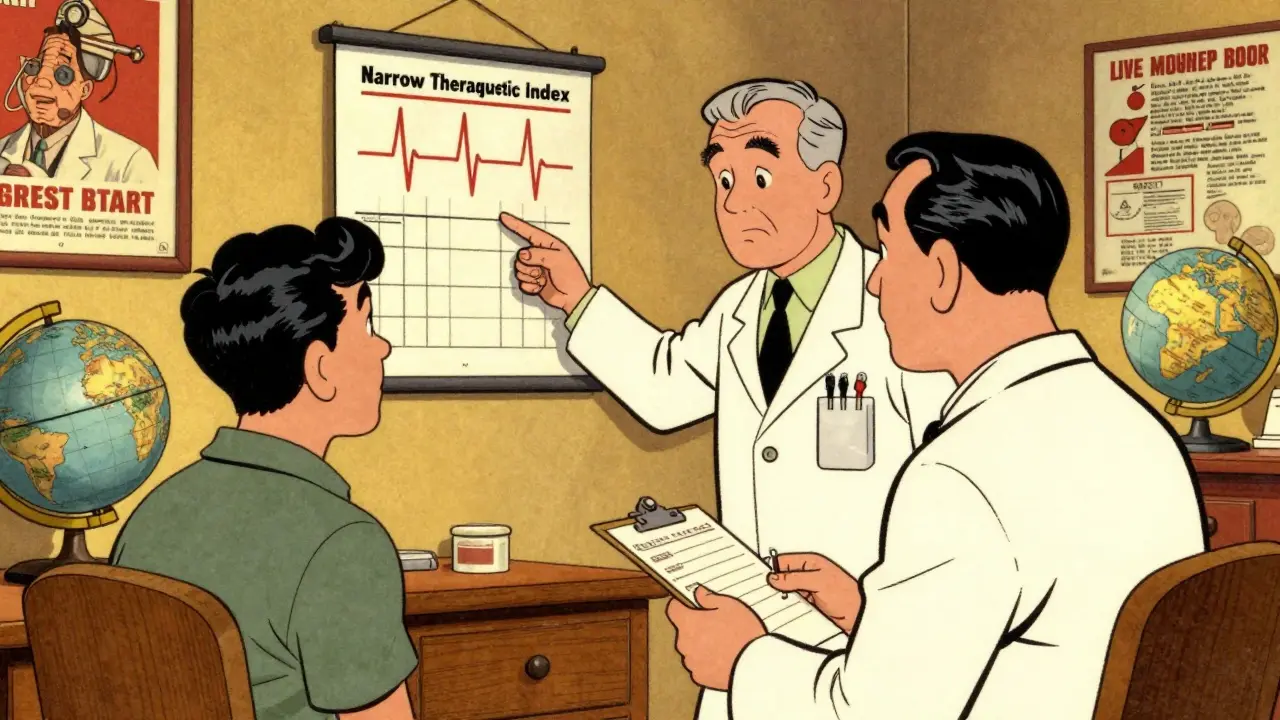
The biggest controversy surrounds Narrow Therapeutic Index (NTI) drugs medications where small differences in blood concentration can lead to toxicity or lack of efficacy. For most drugs, being 20% higher or lower in absorption is negligible. But for NTI drugs, that margin is dangerous.
Common NTI drugs include warfarin (blood thinner), levothyroxine (thyroid hormone), phenytoin (seizure control), and lithium (mood stabilization). With these medications, staying within a tight blood concentration window is critical. If you take too little, your condition worsens. If you take too much, you risk severe side effects or overdose.
A 2017 Canadian study published in Circulation: Cardiovascular Quality and Outcomes found increased adverse events after generic introduction for three blood pressure medications (losartan, valsartan, candesartan) among older adults. While these aren't classic NTI drugs, the finding highlights sensitivity in vulnerable populations. More directly, patient reports and some clinical observations suggest issues with generic levothyroxine. On online forums and in pharmacy surveys, patients frequently report TSH level fluctuations after switching from brand Synthroid to generic alternatives. The American Thyroid Association even recommends maintaining consistent use of either brand or generic levothyroxine without frequent switching to avoid instability.
| Feature | Brand-Name Drug | Generic Drug |
|---|---|---|
| Active Ingredient | Original patented formula | Identical chemical structure |
| Inactive Ingredients | Specific proprietary mix | May differ (colors, fillers, binders) |
| Bioequivalence Standard | N/A (Reference standard) | 80-125% confidence interval |
| Cost Savings | High price | 80-85% cheaper on average |
| Switching Risk | Low (consistent source) | Low for most; Higher for NTI drugs |
The Role of Inactive Ingredients
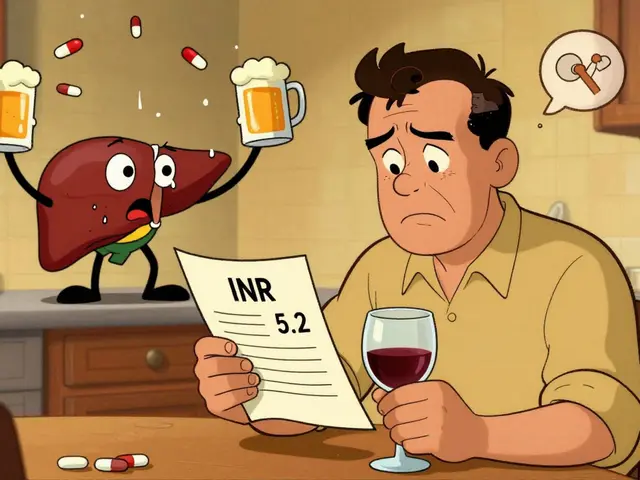
If the active ingredient is the same, why do some people feel a difference? The culprit is often inactive ingredients, also known as excipients. These include fillers, binders, coatings, dyes, and preservatives. While they don't treat your illness, they affect how the pill dissolves and how your body tolerates it.
You might be allergic to a specific dye in the generic but not the brand. Or, a different binding agent might cause mild stomach upset. A 2021 survey by the National Community Pharmacists Association found that 67% of pharmacists occasionally encounter patients who perceive reduced effectiveness or increased side effects after a switch. Psychiatric medications and seizure disorders see the highest rates of these complaints. This doesn't mean the generic is "bad," but it means your unique physiology reacts to the total package, not just the active molecule.
How to Navigate the Choice Safely
So, should you always accept the generic? For most conditions-high cholesterol, hypertension, infections, pain management-the answer is a resounding yes. The savings are substantial (generics account for 90% of prescriptions but only 25% of spending), and the clinical evidence supports their safety. However, you can take proactive steps to ensure optimal care.
- Check the Orange Book: The FDA maintains the "Orange Book," which lists approved drug products and their therapeutic equivalence ratings. Look for an "AB" rating, which indicates the generic is therapeutically equivalent to the brand. Your pharmacist can check this instantly.
- Monitor NTI Drugs Closely: If you take warfarin, levothyroxine, or anti-seizure meds, ask your doctor about sticking to one manufacturer. Frequent switching between different generic suppliers can cause blood levels to fluctuate.
- Communicate Side Effects: If you notice new symptoms after a switch, don't assume it's "all in your head." Report it to your provider. It could be an intolerance to an inactive ingredient.
- Use Reliable Sources: Stick to reputable pharmacies. Manufacturing quality varies globally. The FDA issues import alerts for facilities with quality concerns, so buying from established local or national chains reduces risk.
Dr. Niteesh Choudhry of Harvard Medical School notes that existing data is largely reassuring regarding generic quality. The key is informed usage. You don't need to pay premium prices for most drugs, but you do need to stay engaged with your healthcare team, especially for sensitive medications.
Are generic drugs exactly the same as brand-name drugs?
They contain the identical active ingredient, strength, and dosage form. However, they may differ in inactive ingredients like colors, flavors, and fillers. Regulatory agencies require them to be bioequivalent, meaning they work similarly in the body, but they are not molecularly identical in every aspect.
Can I switch back and forth between generic and brand?
For most drugs, occasional switching is safe. However, for Narrow Therapeutic Index (NTI) drugs like thyroid medication or blood thinners, frequent switching can destabilize blood levels. It is best to stick with one consistent source, whether brand or generic, for these critical medications.
Why are generic drugs so much cheaper?
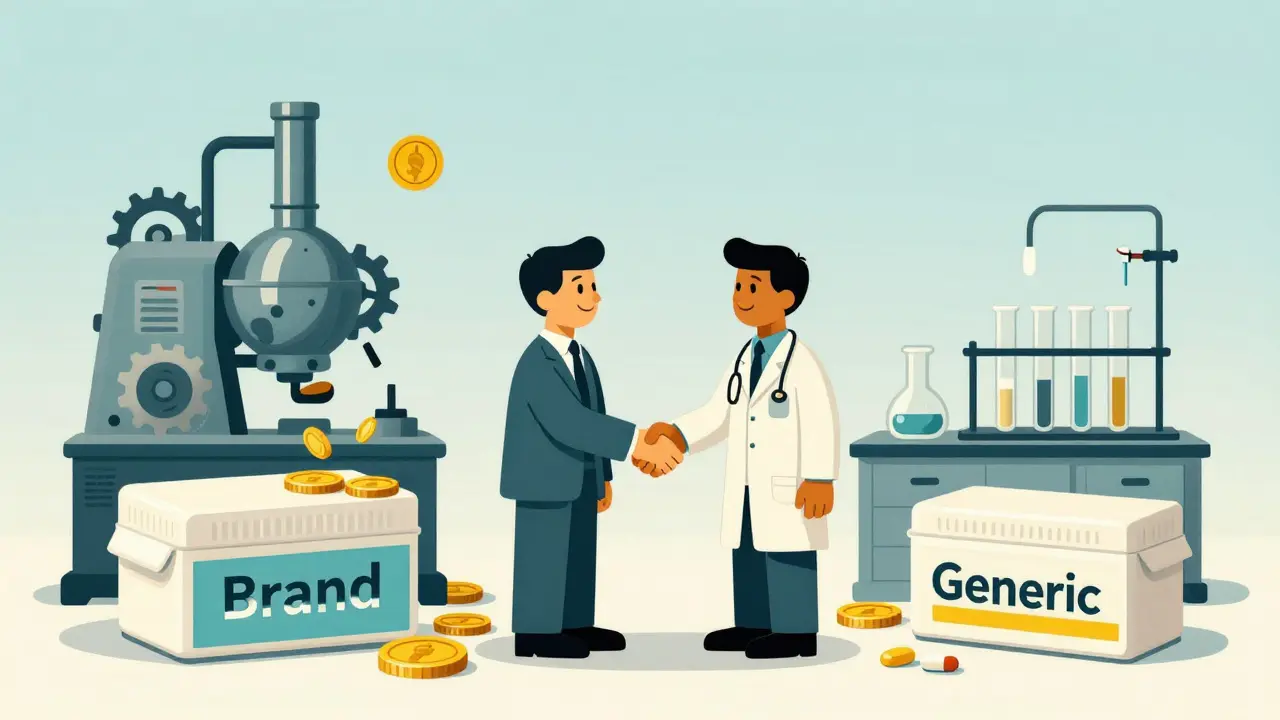
Brand-name companies spend billions on research, development, and marketing before a drug launches. Generic manufacturers skip these costs since the drug's safety and efficacy are already proven. They also face market competition, driving prices down by 80-85% compared to brands.
Do generic drugs have more side effects?
Large-scale data shows no significant difference in adverse event rates for most drugs. However, individual reactions to inactive ingredients can vary. If you experience new side effects after switching, consult your doctor, as it may be related to fillers or dyes rather than the active drug.
How do I know if my generic is high quality?
In the US, look for the FDA approval mark and check the therapeutic equivalence code in the Orange Book (aim for "AB"). Purchase from licensed pharmacies to ensure supply chain integrity. The FDA regularly inspects manufacturing facilities and issues alerts for non-compliant producers.
Is it safe to buy generic drugs online?
Only from verified, licensed online pharmacies. Buying from unregulated sources risks counterfeit products that may lack the active ingredient or contain harmful substances. Always verify the pharmacy's credentials through official regulatory bodies.



11 Comments
Another long article saying what everyone already knows. Generics work fine unless you're on thyroid meds. Just stick to the brand if your insurance covers it, otherwise deal with the filler ingredients. Not rocket science.
I completely understand why people are skeptical; it is a very valid concern! However, I have switched to generics for my blood pressure medication and I feel absolutely fantastic! The savings allow me to buy better food, which also helps my health! Please do not be afraid of the science behind bioequivalence!
We must embrace the therapeutic equivalence metrics that define modern pharmacoeconomics! By leveraging the 80-125% confidence interval for AUC and Cmax parameters, we optimize patient adherence through cost-reduction strategies! It is crucial for stakeholders to recognize that the Hatch-Waxman Act facilitates this paradigm shift in pharmaceutical accessibility! Let us support these evidence-based interventions collectively!
just take the cheap stuff man. saves money. works same. dont overthink it. i did and im fine.
You know what's funny? People trust big pharma more than generic manufacturers even though they're literally the same chemical structure. It's all marketing. I took generic ciprofloxacin once and felt like garbage, but then again, I ate bad sushi that night too. Correlation isn't causation, folks. Stop letting your wallet dictate your health anxiety.
Oh please. I switched from Synthroid to generic levothyroxine and my TSH went through the roof! My doctor couldn't figure out what was wrong for months! It was so stressful I almost cried every morning checking my levels! Why would anyone recommend switching when it ruins your life?! I'm never touching a generic again! It's a total scam!
hey guys! no stress about it really! i just take whatever the pharmacy gives me lol. sometimes its blue, sometimes white, who cares right? as long as i dont die its fine haha. vibes are good tho.
So you're telling me the FDA lets them put different fillers in? That sounds sketchy. What if they're tracking us with microchips in the binders? I bet that's why I get headaches. You think about that? They want to control our minds. I'm sticking to homemade remedies now. Stay safe out there, or don't. Whatever.
The 80-125% range is a lie! They know it doesn't work for everyone! I've been researching this for years! The government hides the data on adverse events! Wake up sheeple! Big Pharma wants you dependent on their specific brand names! Don't let them gaslight you into thinking you're crazy! It's all connected!
This article is painfully obvious to anyone with basic medical literacy. The 'nuance' mentioned is actually just incompetence by patients who don't read labels. If you have an issue with inactive ingredients, check the Orange Book yourself instead of whining online. The AB rating exists for a reason. Use it or remain ignorant.
Generics are cheaper because they skip tests. That's the whole point. You pay less, you get less quality control. It's simple math. Brand name costs billions to make. Generic costs pennies. Why would they be the same? They aren't. But hey, save your money and suffer later. Your choice.
Write a comment