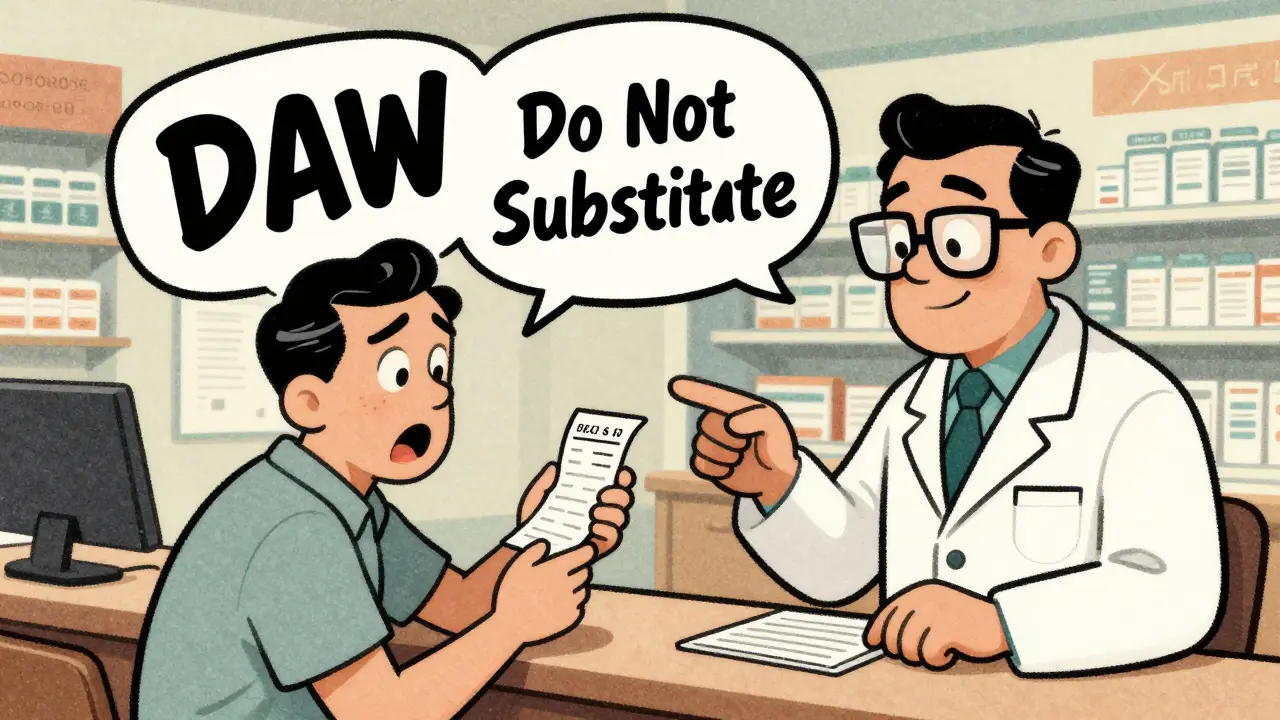
Imagine you're at the pharmacy counter, and instead of the usual $10 copay, the pharmacist tells you the cost is $85. You're confused because you've used this medication for years. The culprit? A small note on your prescription that says "Do Not Substitute" or "DAW." For many, this is a shock, but for others, it's a clinical necessity that prevents a medical crisis. Understanding why a doctor would block a generic version is key to managing both your health and your wallet.
When a doctor writes a Do Not Substitute prescriptions directive, they are essentially telling the pharmacist: "Give the patient this exact brand, and do not swap it for a cheaper generic version." In the medical world, this is often called Dispense as Written is a clinical instruction where the prescriber mandates the use of a specific brand-name medication over a generic equivalent. Also known as DAW, this practice ensures the patient receives a specific formulation that the doctor deems necessary for their safety or recovery.
Why Doctors Block Generic Substitutions
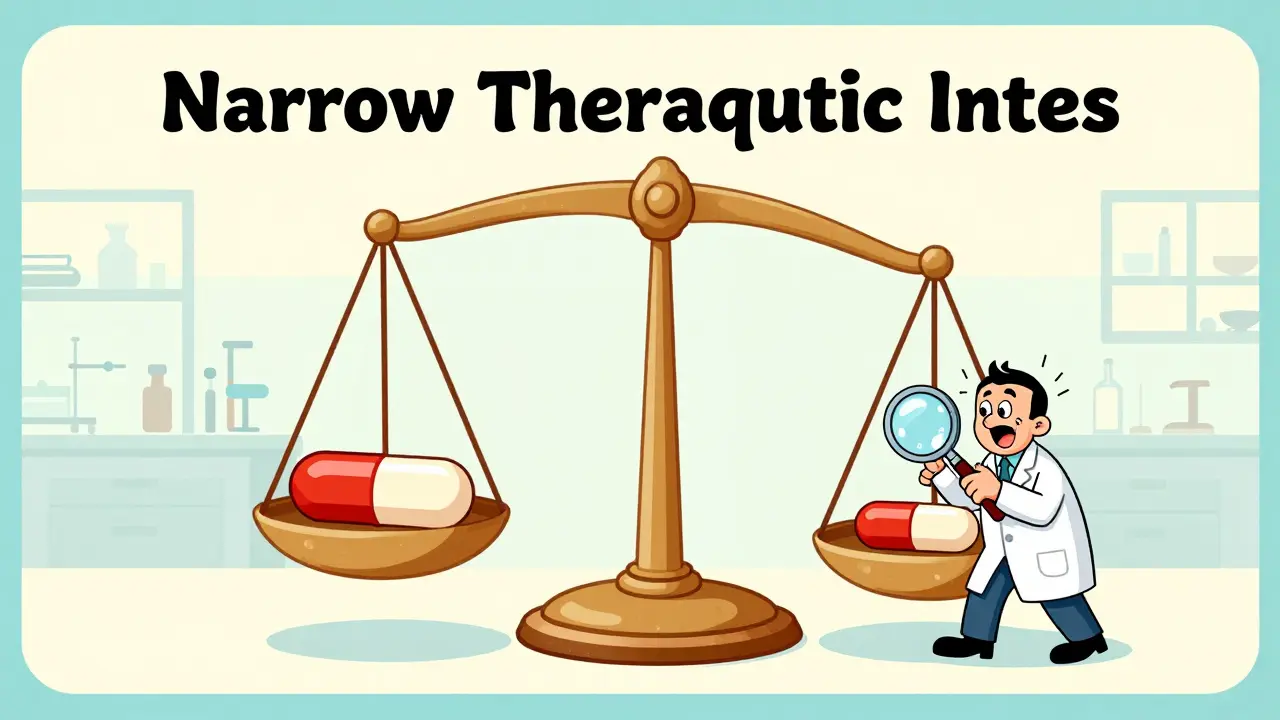
You might wonder why a doctor would do this if generics are designed to be the same. While most generics are virtually identical to brand names, there are specific cases where a swap can be dangerous. One of the biggest reasons is the use of Narrow Therapeutic Index drugs is medications where a very small change in the drug's concentration in the blood can lead to either a failure of the treatment or a dangerous overdose. These are often called NTIDs.
For drugs like warfarin (a blood thinner) or levothyroxine (for thyroid issues), even a tiny variation in how the body absorbs the drug can cause instability. While the FDA requires most generics to be within 80-125% of the brand's performance, NTIDs have much tighter rules, usually 90-112%. If a patient is highly sensitive, switching from Brand A to Generic B might cause their hormone levels to spike or drop, leading to symptoms that feel like the disease is returning.
Beyond the active ingredients, there are also "inactive" ingredients known as excipients. Some people have severe allergies or sensitivities to the dyes, binders, or fillers used in a generic version that aren't present in the brand name. In these cases, a "Do Not Substitute" order isn't about preference-it's about avoiding an allergic reaction.
The Legal Framework: The Orange Book and State Laws
The rules for swapping drugs didn't happen by accident. They started with the Hatch-Waxman Act of 1984, which balanced the need for cheaper generics with the need for companies to innovate. To keep things organized, the FDA maintains the FDA Orange Book is the official federal reference used to determine if a generic drug is therapeutically equivalent to a brand-name drug. Its full name is Approved Drug Products with Therapeutic Equivalence Evaluations.
Most states use this book to decide if a pharmacist can legally swap a drug. However, the law gives the doctor the final say. In almost every U.S. state, if a doctor writes "DAW," "Do Not Substitute," or "Medically Necessary," the pharmacist must comply. In some states, like New York, the doctor must actually sign or initial the request to make it legally binding, preventing random changes to the script.
| Feature | Small-Molecule Generics | Biological Products (Biosimilars) |
|---|---|---|
| Substitution Rate | Very High (~90%) | Low (Below 30%) |
| DNS Frequency | Low (~10%) | High (~65%) |
| FDA Requirement | Bioequivalence | Interchangeability Designation |
| Cost Impact | Significantly Cheaper | Highly Expensive |
The Complexity of Biologics and Biosimilars
It's important to distinguish between a simple pill and a complex biologic. Biosimilars are biologic products that are highly similar to an original approved biological product, but are not exact chemical copies. Unlike chemical generics, these are grown in living cells, making them incredibly complex.
Because of this complexity, the FDA uses a separate category called "interchangeable." A biosimilar can only be swapped without a doctor's specific permission if it has this rare interchangeable status. This is why you'll see "Do Not Substitute" orders far more often with biologics. If the delivery device-like a specific brand of prefilled auto-injector pen-is different, many states prohibit substitution entirely, even if the medicine inside is the same.
The Financial Hit: Why Your Wallet Feels the Pain
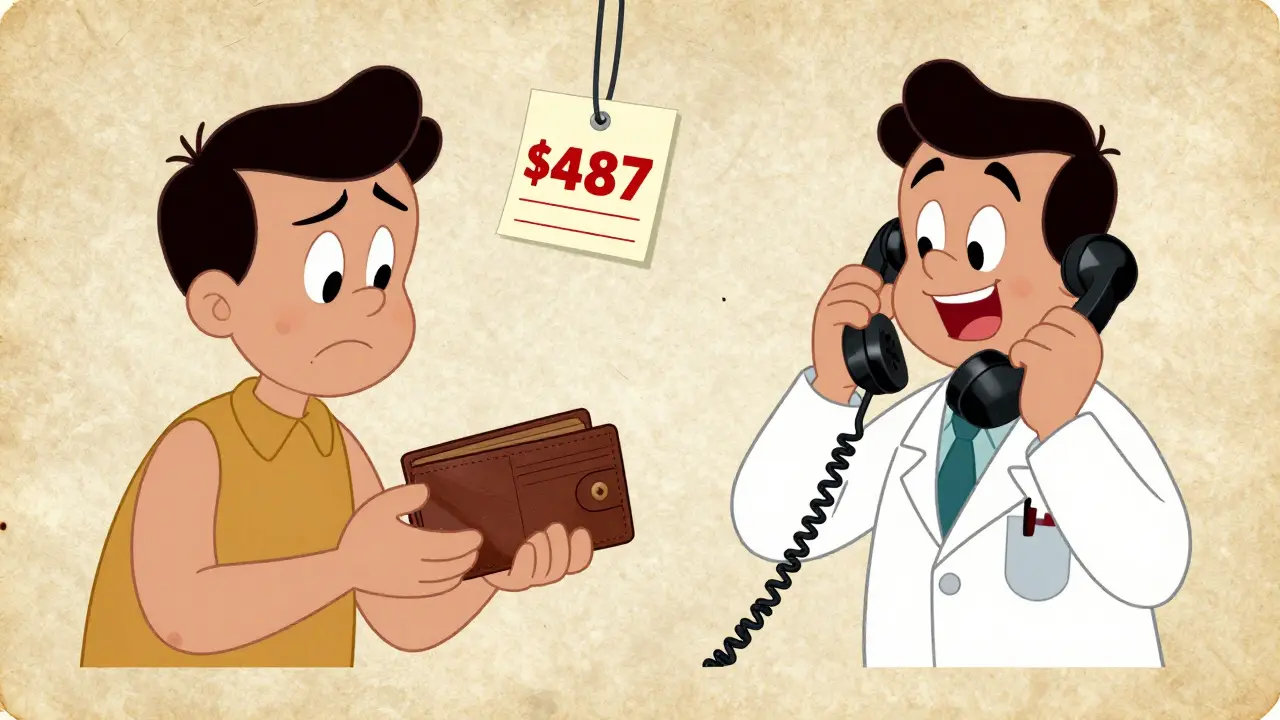
The biggest downside of a DNS prescription is the price. Research shows that these designations can increase the cost of a prescription by over 200% on average. For example, a drug that costs $144 as a generic might jump to $487 as a brand name. Many patients don't find this out until they are already at the pharmacy window, which can lead to "sticker shock" and the inability to afford the medication.
Insurance companies aren't fond of DNS orders either. Many payers require "Prior Authorization," meaning the doctor has to prove to the insurance company why the generic isn't working before they will agree to pay for the expensive brand name. If the doctor just writes "DAW" without the proper paperwork, the insurance may deny the claim entirely, leaving the patient to pay the full retail price.
Common Pitfalls and How to Handle Them
Confusion often arises when a doctor writes a DNS order without explaining it to the patient. You might feel like you're being cheated by the pharmacy, but the pharmacist is simply following a legal order. If you see a price jump, the first thing you should do is ask the pharmacist if the prescription is marked "Dispense as Written."
If it is, don't just assume it's a mistake. Call your doctor and ask: "Is there a specific clinical reason I need the brand name, or can I use the generic to save money?" In some cases, the doctor might have used a default setting in their electronic health record (EHR) software without realizing it. Other times, they may have a very good reason that they forgot to mention during your 15-minute appointment.
Can a pharmacist change a 'Do Not Substitute' order?
No. Legally, a pharmacist cannot ignore a 'Dispense as Written' (DAW) or 'Do Not Substitute' instruction. If they believe a generic would be safer or if the patient cannot afford the brand, they must contact the prescribing physician to get a new prescription or a verbal authorization to substitute.
Are all generic drugs exactly the same as brand names?
In terms of the active ingredient, yes. The FDA requires generics to be bioequivalent. However, the inactive ingredients (fillers, dyes, and binders) can differ. For a small percentage of patients, these differences can cause allergic reactions or affect how the drug is absorbed, which is why some doctors insist on the brand.
What is a Narrow Therapeutic Index (NTI) drug?
NTI drugs are medications where a very small difference in dose or blood concentration can lead to a significant change in the drug's effect. Examples include levothyroxine for thyroid issues and warfarin for blood clotting. Because the margin for error is so slim, switching between brands or generics can cause clinical instability.
Does my insurance always cover brand-name drugs?
Rarely. Most insurance plans prefer generics. If your doctor marks a prescription 'Do Not Substitute,' your insurance may require a 'Prior Authorization' form. If the doctor cannot prove that the brand is medically necessary, you may be required to pay a higher tier copay or the full cost of the drug.
What should I do if I can't afford my brand-name prescription?
First, contact your doctor to see if a generic is truly out of the question. If the brand is medically necessary, ask your doctor for samples or check the pharmaceutical company's website for a 'patient assistance program' or manufacturer coupons, which can often lower the cost significantly.
Next Steps for Patients and Providers
If you are a patient, the best move is to keep a list of your medications and specifically note any that are "Brand Only." This prevents surprises at the pharmacy. If you've had a bad reaction to a generic in the past, make sure that is documented in your medical record so the "Do Not Substitute" order is based on your history, not a guess.
For providers, the goal is to balance clinical safety with patient affordability. Using a DNS designation when it isn't clinically justified adds an unnecessary financial burden to the patient. When in doubt, documenting the specific reason-such as a documented allergy to a generic filler-helps the pharmacist and the insurance company process the request without delays.